



SJG-136
Based on 3 publication(s) in Google Scholar
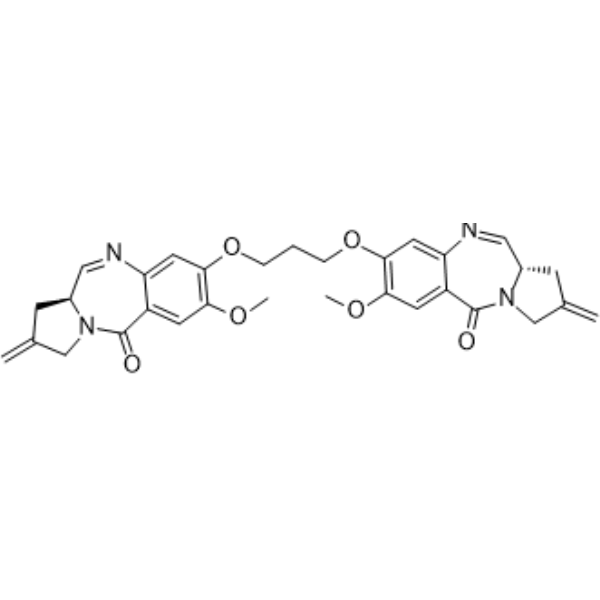
SJG-136 is a DNA cross-linking agent, with an XL50 of 45 nM for pBR322 DNA. SJG-136 has potent antitumor activity.
For research use only. We do not sell to patients.
- Purity : 99.47%
- CAS No.: 232931-57-6
- Formula: C31H32N4O6
- Molecular Weight:556.61
-
Storage:Powder -20°C, 3 years , 4°C, 2 years ; In solvent -80°C, 6 months , -20°C, 1 month

To place orders, for customer services and technical support, please contact: MedChemExpress USA
Tel: 609-228-6898 E-mail: [email protected] [email protected]


-
 Biological Activity
-
Chemical Information
-
Solvent & Solubility
- Protocols
- Purity & Documentation
- References
-
 Help & FAQs


-
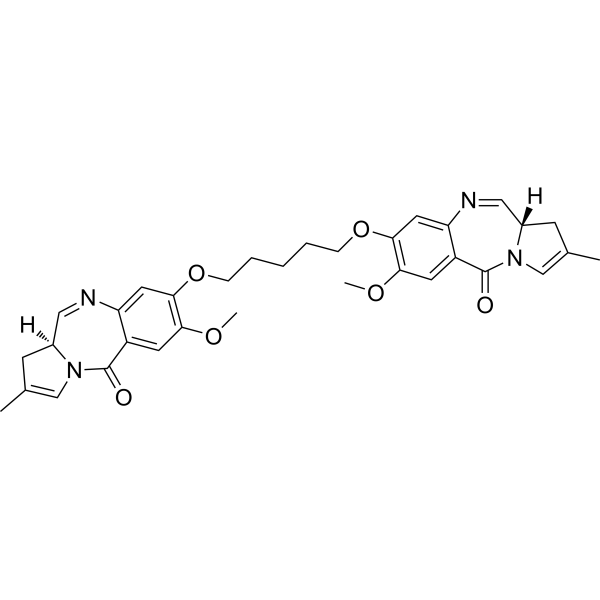
HY-101161
SG3199PBD Dimer -
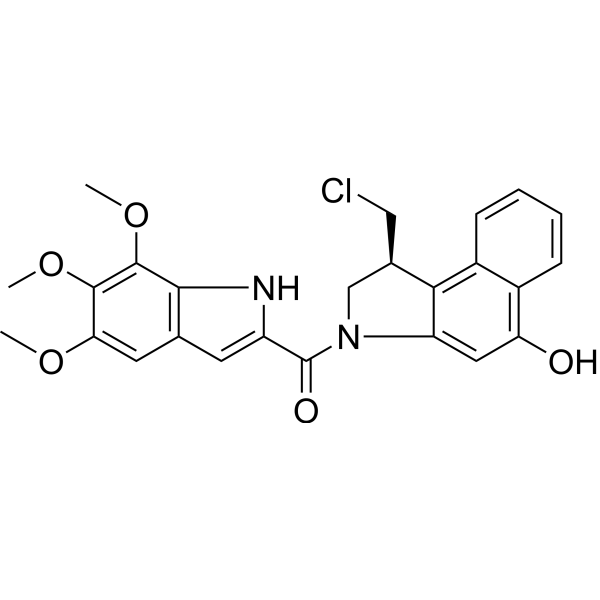
HY-107769
Duocarmycin TMDNA Alkylator -
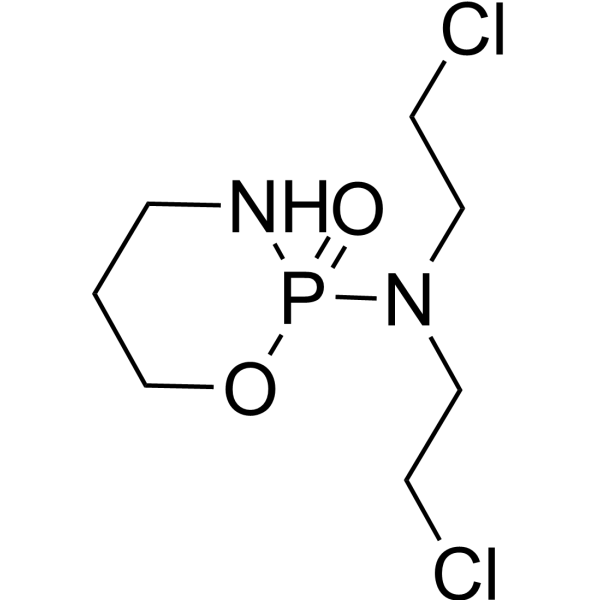
HY-17420
CyclophosphamideAlkylating Agent -
HY-15162
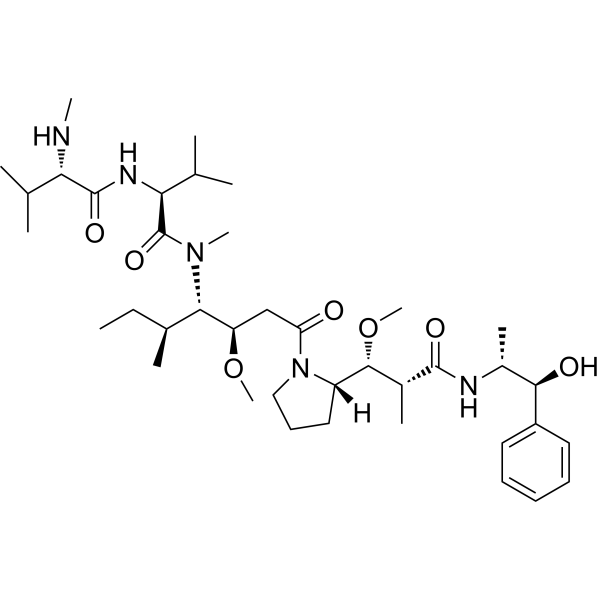
Monomethyl auristatin EAntimitotic Agent -
HY-17371
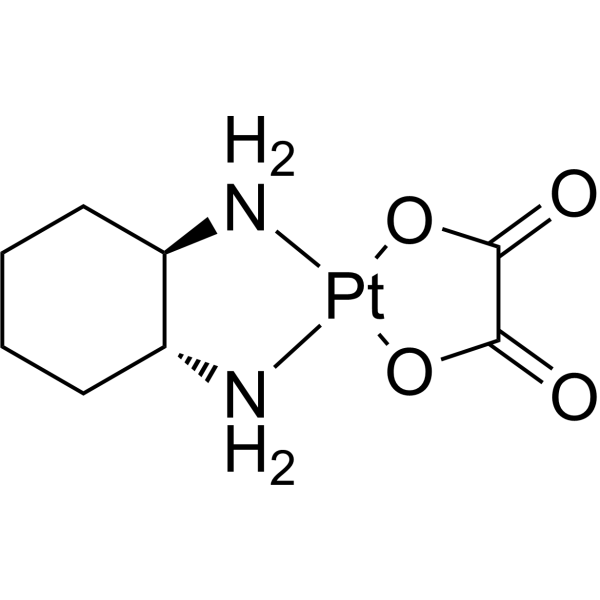
OxaliplatinDNA Synthesis Inhibitor -
HY-13585
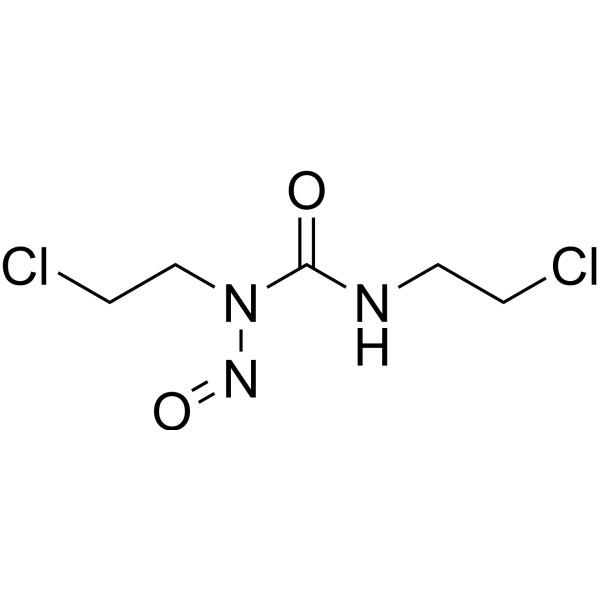
CarmustineDNA/RNA Alkylator -
HY-17419
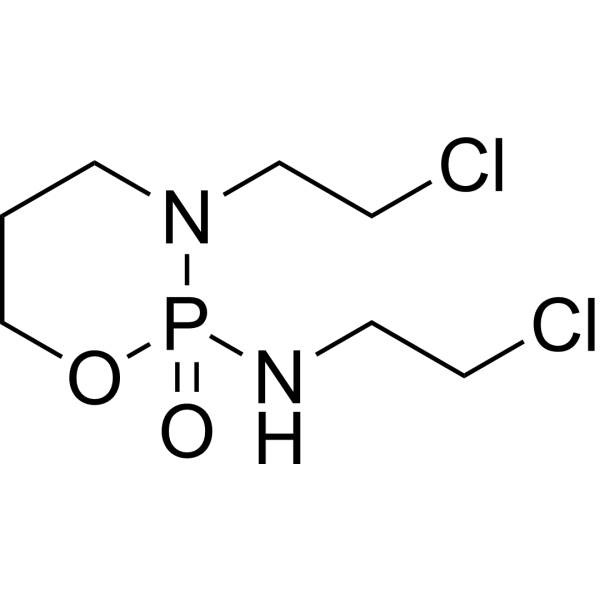
IfosfamideDNA Alkylator/Crosslinker -
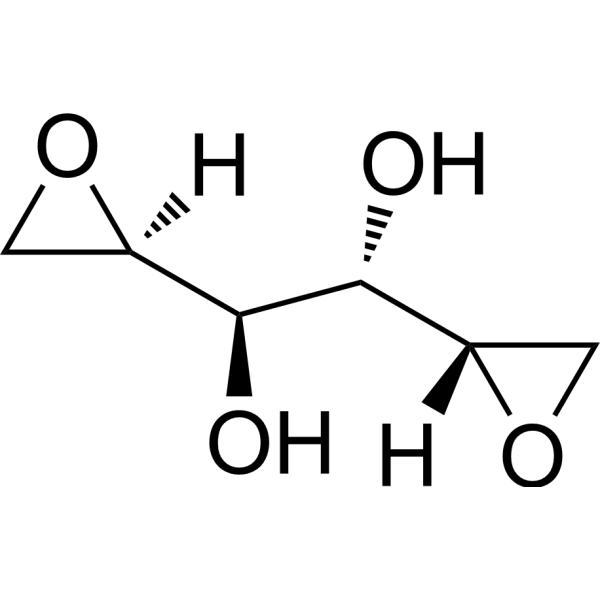
HY-16513
VAL-083Alkylating Agent -
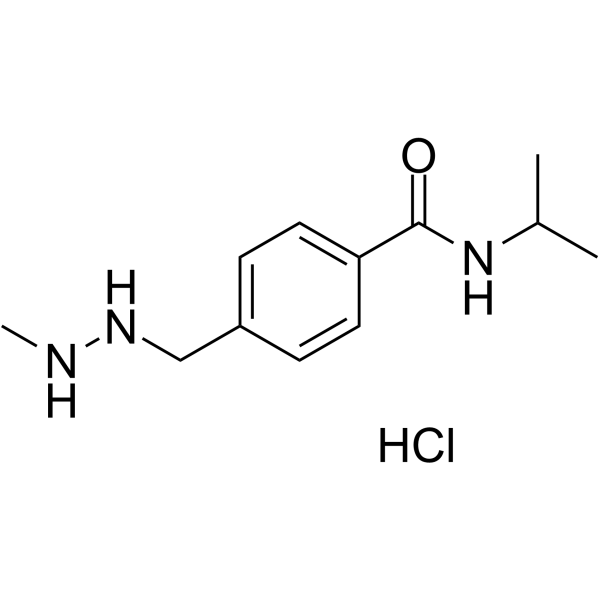
HY-13733
Procarbazine HydrochlorideAlkylating Agent -
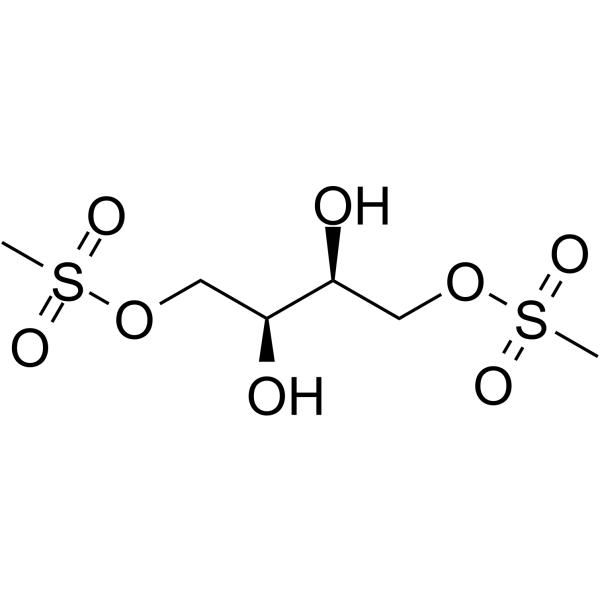
HY-16503
TreosulfanAlkylating Cytotoxic Agent -
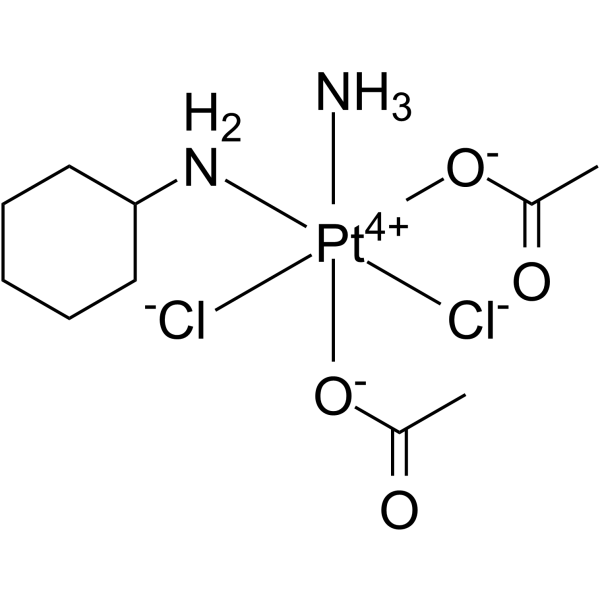
HY-17576
SatraplatinDNA Alkylator -
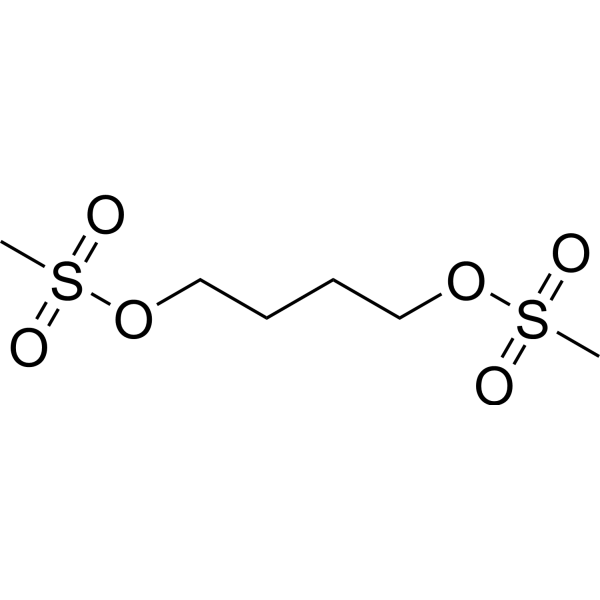
HY-B0245
BusulfanAlkylating Antineoplastic Agent
Publications Citing Use of MedChemExpress (MCE) SJG-136
More

Biological Activity
Description
IC50 & Target
[1]|
Pyrrolobenzodiazepines |
Cellular Effect
|
Cell Line

|
Type | Value | Description | References |
|---|---|---|---|---|
| CH1 | IC50 |
0.00012 μM
Compound: 5
|
Inhibition of cell growth in human ovarian carcinoma cell line (CH1) was determined using the 96 hour continuous exposure sulforhodamine B (SRB) growth delay assay.
Inhibition of cell growth in human ovarian carcinoma cell line (CH1) was determined using the 96 hour continuous exposure sulforhodamine B (SRB) growth delay assay.
|
[PMID: 11262084] |
| CH1 | IC50 |
0.12 nM
Compound: 5
|
Inhibition of cell growth in human ovarian carcinoma cell line (CH1) was determined using the 96 hour continuous exposure sulforhodamine B (SRB) growth delay assay.
Inhibition of cell growth in human ovarian carcinoma cell line (CH1) was determined using the 96 hour continuous exposure sulforhodamine B (SRB) growth delay assay.
|
[PMID: 11262084] |
| K562 | IC50 |
0.0425 μM
Compound: 5
|
Inhibition of cell growth by 50% in human leukemia cell line (K562) was determined using microculture tetrazolium (MTT) assay.
Inhibition of cell growth by 50% in human leukemia cell line (K562) was determined using microculture tetrazolium (MTT) assay.
|
[PMID: 11262084] |
| K562 | IC50 |
0.043 μM
Compound: 4a
|
Inhibitory concentration against human K562 leukemia cells following incubation for 1 hour
Inhibitory concentration against human K562 leukemia cells following incubation for 1 hour
|
[PMID: 14971896] |
| K562 | GI50 |
0.0038 μM
Compound: 4, SJG-136
|
Cytotoxicity against human K562 cell line after 96 hrs by MTT assay
Cytotoxicity against human K562 cell line after 96 hrs by MTT assay
|
[PMID: 16942018] |
| K562 | GI50 |
0.008 μM
Compound: 1
|
Cytotoxicity against human K562 cells
Cytotoxicity against human K562 cells
|
[PMID: 18272367] |
| K562 | GI50 |
0.419 nM
Compound: 6, SJG-136, SG2000
|
Cytotoxicity against human K562 cells by alamar blue assay
Cytotoxicity against human K562 cells by alamar blue assay
|
[PMID: 19811912] |
| Panel NCI-60 (60 carcinoma cell lines) | GI50 |
0.0074 μM
Compound: 4, SJG-136
|
Cytotoxicity against human NCI60 cell line by MTT assay
Cytotoxicity against human NCI60 cell line by MTT assay
|
[PMID: 16942018] |
| Panel NCI-60 cells | GI50 |
0.0074 μM
Compound: 4, SJG-136
|
Cytotoxicity against human NCI60 cell line by MTT assay
Cytotoxicity against human NCI60 cell line by MTT assay
|
[PMID: 16942018] |
| SK-OV-3 | IC50 |
0.0091 μM
Compound: 5
|
Inhibition of cell growth in human ovarian carcinoma cell line(SKOV-3) using the 96 hour continuous exposure sulforhodamine B (SRB) growth delay assay
Inhibition of cell growth in human ovarian carcinoma cell line(SKOV-3) using the 96 hour continuous exposure sulforhodamine B (SRB) growth delay assay
|
[PMID: 11262084] |
In Vitro
SJG-136 (dimer 5) is a DNA cross-linking agent, with an XL50 (concentration of agent required for 50% cross-linking of pBR322 DNA) of 45 nM for pBR322 DNA. SJG-136 is cytotoxic to ovarian cell lines, such as A2780 (IC50, 22.5 pM), A2780cisR (IC50, 24 pM), CH1 (IC50, 0.12 nM), CH1cisR (IC50, 0.6 nM), and SKOV-3 (IC50, 9.1 nM)[1]. SJG-136 (SG2000) also reduces the viability of a panel of canine cancer cells, with GI50 values ranging from 0.33 - >100 nM after a 1 h exposure, and <0.03 - 17.33 nM following continuous exposure[2].
MedChemExpress (MCE) has not independently confirmed the accuracy of these methods. They are for reference only. Further protocols information, click here.
In Vivo
MedChemExpress (MCE) has not independently confirmed the accuracy of these methods. They are for reference only.
Clinical Trial
| NCT Number | Sponsor | Condition | Start Date |
Phase
|
|---|---|---|---|---|
| NCT01329991 | Plexxikon| | 2011-05 | PHASE1 |


Chemical Information
-
CAS No. 232931-57-6
-
Appearance Solid
-
Molecular Weight 556.61
-
Formula C31H32N4O6
-
Color White to yellow
-
SMILES
O=C1N2[C@@H](CC(C2)=C)C=NC3=CC(OCCCOC4=C(OC)C=C(C(N(CC(C5)=C)[C@@H]5C=N6)=O)C6=C4)=C(OC)C=C31
-
Synonyms
NSC-694501
-
Shipping
Room temperature in continental US; may vary elsewhere.
-
Storage
Powder -20°C 3 years 4°C 2 years In solvent -80°C 6 months -20°C 1 month


Publications (3)
-
Journal Impact Factor
-
Most Recent


Solvent & Solubility
In Vitro:
DMSO : 33.33 mg/mL (59.88 mM; Need ultrasonic; Hygroscopic DMSO has a significant impact on the solubility of product, please use newly opened DMSO)
Please refer to the solubility information to select the appropriate solvent. Once prepared, please aliquot and store the solution to prevent product inactivation from repeated freeze-thaw cycles.
Storage method and period of stock solution: -80°C, 6 months; -20°C, 1 month. When stored at -80°C, please use it within 6 months. When stored at -20°C, please use it within 1 month.
Please refer to the solubility information to select the appropriate solvent. Once prepared, please aliquot and store the solution to prevent product inactivation from repeated freeze-thaw cycles.
Storage method and period of stock solution: -80°C, 6 months; -20°C, 1 month. When stored at -80°C, please use it within 6 months. When stored at -20°C, please use it within 1 month.
Concentration (start) × Volume (start) = Concentration (final) × Volume (final)
In Vivo:
Select the appropriate dissolution method based on your experimental animal and administration route.
- For the following dissolution methods, please ensure to first prepare a clear stock solution using an In Vitro approach and then sequentially add co-solvents:
- To ensure reliable experimental results, the clarified stock solution can be appropriately stored based on storage conditions. As for the working solution for In Vivo experiments, it is recommended to prepare freshly and use it on the same day.
- The percentages shown for the solvents indicate their volumetric ratio in the final prepared solution. If precipitation or phase separation occurs during preparation, heat and/or sonication can be used to aid dissolution.
Add each solvent one by one: 10% DMSO 90% (20% SBE-β-CD in Saline)
Solubility: ≥ 2.5 mg/mL (4.49 mM); Clear solution
This protocol yields a clear solution of ≥ 2.5 mg/mL (saturation unknown).
Taking 1 mL working solution as an example, add 100 μL DMSO stock solution (25.0 mg/mL) to 900 μL 20% SBE-β-CD in Saline, and mix evenly.
Preparation of 20% SBE-β-CD in Saline (4°C, storage for one week): 2 g SBE-β-CD powder is dissolved in 10 mL Saline, completely dissolve until clear.
Add each solvent one by one: 10% DMSO 40% PEG300 5% Tween-80 45% Saline
Solubility: 2.08 mg/mL (3.74 mM); Suspended solution; Need ultrasonic
This protocol yields a suspended solution of 2.08 mg/mL. Suspended solution can be used for oral and intraperitoneal injection.
Taking 1 mL working solution as an example, add 100 μL DMSO stock solution (20.8 mg/mL) to 400 μL PEG300, and mix evenly; then add 50 μL Tween-80 and mix evenly; then add 450 μL Saline to adjust the volume to 1 mL.
Preparation of Saline: Dissolve 0.9 g sodium chloride in ddH₂O and dilute to 100 mL to obtain a clear Saline solution.
In Vivo Dissolution Calculator
Please enter the basic information of animal experiments:
-
-
-
-
Recommended: Prepare an additional quantity of animals to account for potential losses during experiments.
Please enter your animal formula composition:
-
%DMSO +
Recommended: Keep the proportion of DMSO in working solution below 2% if your animal is weak.
-
%+
-
+%Tween-80 + +
-
%Saline +
The co-solvents required include: DMSO, . All of co-solvents are available by MedChemExpress (MCE). , Tween 80. All of co-solvents are available by MedChemExpress (MCE).
Working solution concentration: 0.22 mg/mL
Method for preparing stock solution: mg drug dissolved in μL DMSO. Stock solution concentration: mg/mL.
1. Take μL DMSO stock solution;
2. Add μL .
μL , mix evenly;
3. Then add μL Tween 80, mix evenly;
4. Then add μL
Please ensure that the stock solution in the first step is dissolved to a clear state, and add co-solvents in sequence. You can use ultrasonic heating (ultrasonic cleaner, recommended frequency 20-40 kHz), vortexing, etc. to assist dissolution.

Protocols
-
Subcutaneous Cell-Line-Derived Xenograft
Subcutaneous cell-line-derived xenograft (CDX) models are established by implanting cultured human cancer cell lines into immunodeficient mice, where the injected cells form localized tumors that can be monitored in vivo as a measure of tumorigenic potential, growth kinetics, and treatment response. These models are widely used in oncology research because they allow reproducible tumor formation and enable comparative assessment of tumor growth between different cell lines or genetic manipulations in a controlled in vivo microenvironment. Subcutaneous implantation of cancer cells in immunodeficient mice is a standard approach for evaluating tumor growth behavior and therapeutic response across multiple cancer types, including prostate, esophageal, pancreatic, and colon cancer models.


Purity & Documentation
-
Data Sheet (280 KB)
-
SDS (396 KB)
- English - EN (396 KB)
- Français - FR (396 KB)
- Deutsch - DE (396 KB)
- Norwegian - NO (396 KB)
- Español - ES (396 KB)
- Swedish - SV (396 KB)
- Italian - IT (396 KB)
- Korean - KR (396 KB)
- Portuguese - PT (396 KB)
-
Handling Instructions (2659 KB)
References
[1]. Gregson SJ, et al. Design, synthesis, and evaluation of a novel pyrrolobenzodiazepine DNA-interactive agent with highly efficient cross-linking ability and potent cytotoxicity. J Med Chem. 2001 Mar 1;44(5):737-48. [Content Brief]
[2]. Mellinas-Gomez M, et al. Activity of the DNA minor groove cross-linking agent SG2000 (SJG-136) against canine tumours. BMC Vet Res. 2015 Aug 19;11:215. [Content Brief]


Complete Stock Solution Preparation Table
Please refer to the solubility information to select the appropriate solvent. Once prepared, please aliquot and store the solution to prevent product inactivation from repeated freeze-thaw cycles.
Storage method and period of stock solution: -80°C, 6 months; -20°C, 1 month. When stored at -80°C, please use it within 6 months. When stored at -20°C, please use it within 1 month.
| Optional Solvent | Concentration Solvent Mass | 1 mg | 5 mg | 10 mg | 25 mg |
|---|---|---|---|---|---|
| DMSO | 1 mM | 1.7966 mL | 8.9830 mL | 17.9659 mL | 44.9148 mL |
| 5 mM | 0.3593 mL | 1.7966 mL | 3.5932 mL | 8.9830 mL | |
| 10 mM | 0.1797 mL | 0.8983 mL | 1.7966 mL | 4.4915 mL | |
| 15 mM | 0.1198 mL | 0.5989 mL | 1.1977 mL | 2.9943 mL | |
| 20 mM | 0.0898 mL | 0.4491 mL | 0.8983 mL | 2.2457 mL | |
| 25 mM | 0.0719 mL | 0.3593 mL | 0.7186 mL | 1.7966 mL | |
| 30 mM | 0.0599 mL | 0.2994 mL | 0.5989 mL | 1.4972 mL | |
| 40 mM | 0.0449 mL | 0.2246 mL | 0.4491 mL | 1.1229 mL | |
| 50 mM | 0.0359 mL | 0.1797 mL | 0.3593 mL | 0.8983 mL |


SJG-136 Related Classifications
HY-14573 Related Classifications
 Powered by Bioz