



Syntide 2
Based on 2 publication(s) in Google Scholar
Syntide 2, a Ca2+- and calmodulin (CaM)-dependent protein kinase II (CaMKII) substrate peptide, selectively inhibits the gibberellin (GA) response, leaving constitutive and abscisic acid-regulated events unaffected.
For research use only. We do not sell to patients.
- CAS No.: 108334-68-5
- Formula: C68H122N20O18
- Molecular Weight:1507.82
-
Storage:
Please store the product under the recommended conditions in the Certificate of Analysis.


To place orders, for customer services and technical support, please contact: MedChemExpress USA
Tel: 609-228-6898 E-mail: [email protected] [email protected]


-
 Biological Activity
-
Chemical Information
-
Solvent & Solubility
- Protocols
- Purity & Documentation
- References
-
 Help & FAQs


-
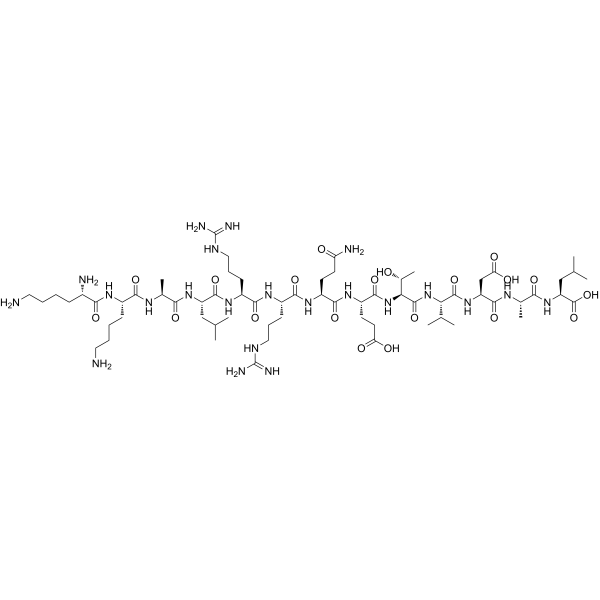
HY-P0225
Autocamtide 2CaMKII Substrate -
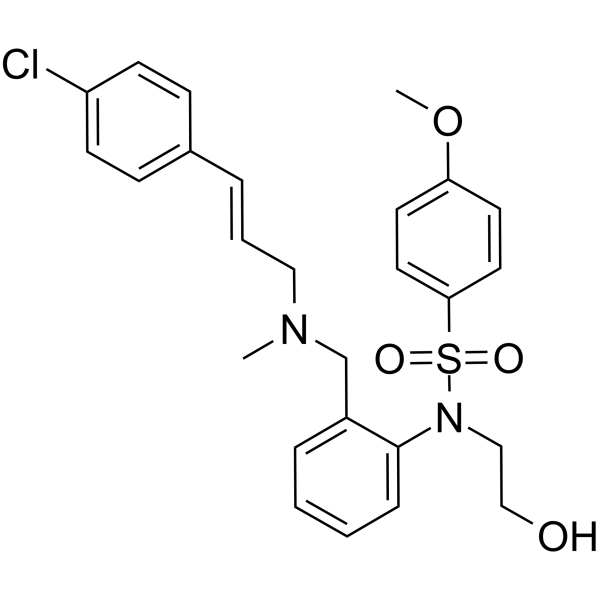
HY-15465
KN-93CaMK II Inhibitor -
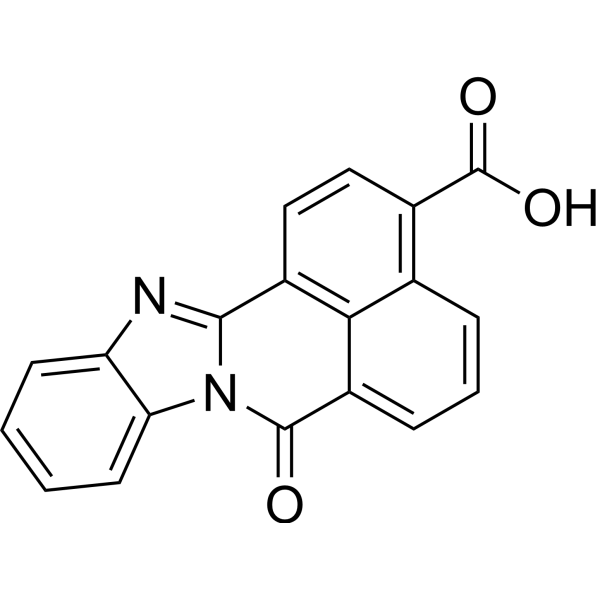
HY-19805
STO-609CaMKK Inhibitor -
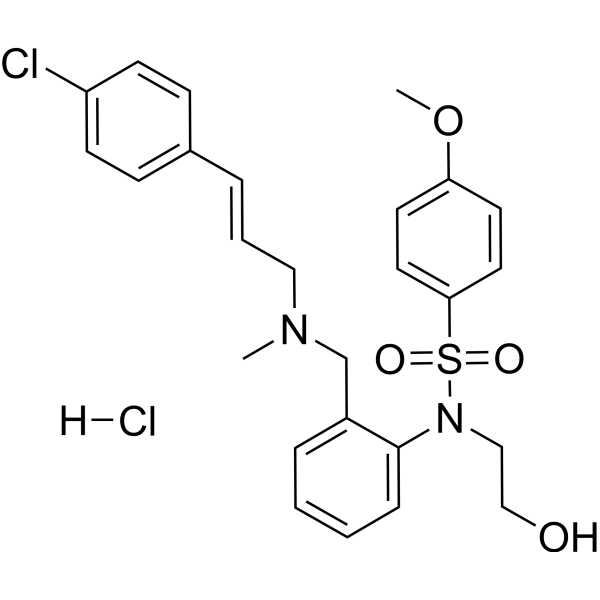
HY-15465A
KN-93 hydrochlorideCaMK II Inhibitor -
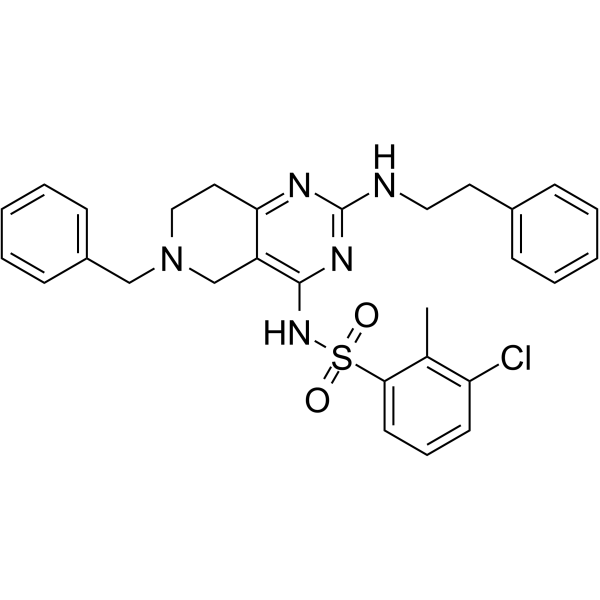
HY-18271
CaMKII-IN-1CaMKII Inhibitor -
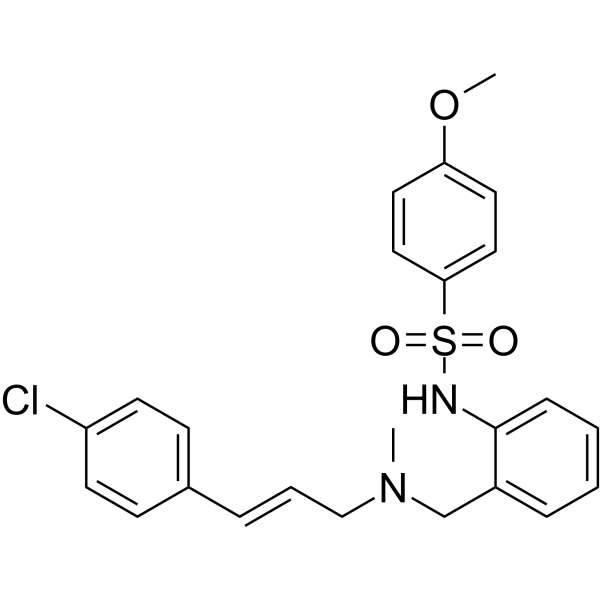
HY-15517
KN-92KN-93 Negative Control -
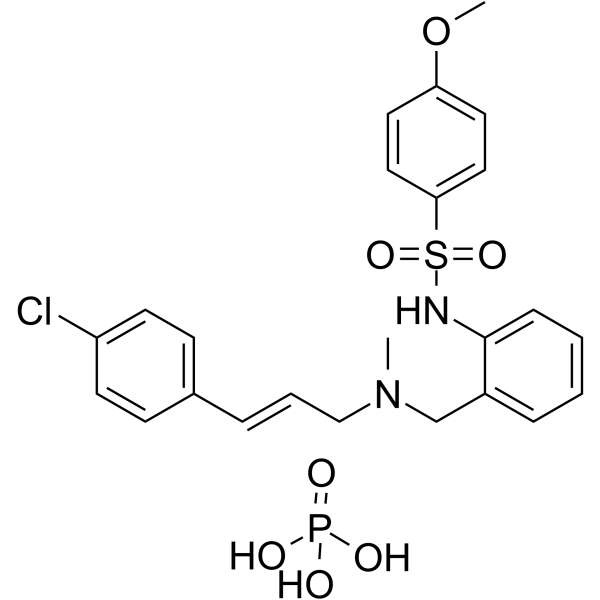
HY-15517A
KN-92 phosphateInactive KN 93 Analog -
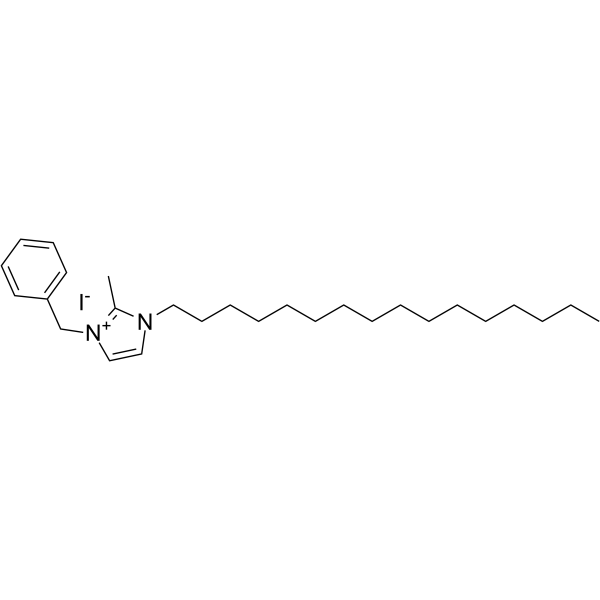
HY-100576
NH125eEF-2K/CaMKIII Inhibitor -

HY-P1479
Calmodulin-Dependent Protein Kinase II (290-309)CaMK Antagonist -
HY-P0215
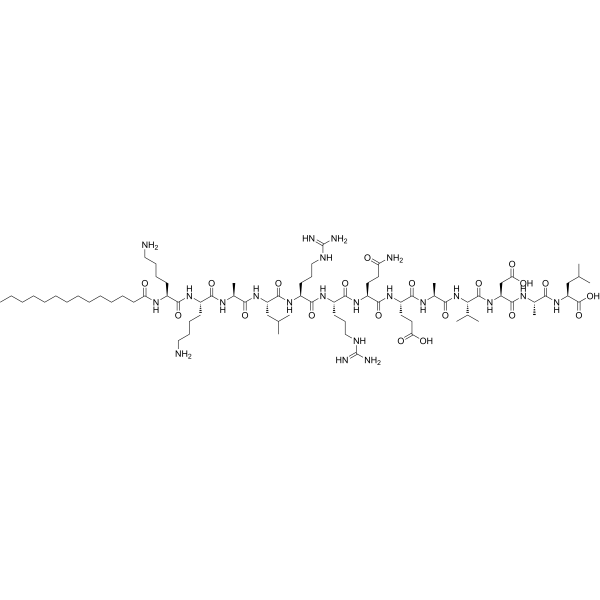
Autocamtide-2-related inhibitory peptide, myristoylatedCaMKII Inhibitor -
HY-110096
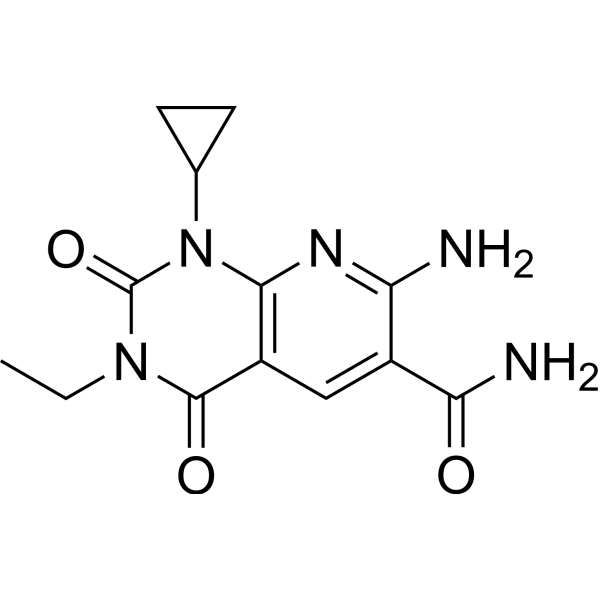
A-484954eEF2K Inhibitor -

HY-P0214
Autocamtide-2-related inhibitory peptideCaMKII Inhibitor
Publications Citing Use of MedChemExpress (MCE) Syntide 2
More

Biological Activity
Description
IC50 & Target
[1]|
CaMK II |


Chemical Information
-
CAS No. 108334-68-5
-
Molecular Weight 1507.82
-
Formula C68H122N20O18
-
Sequence
Pro-Leu-Ala-Arg-Thr-Leu-Ser-Val-Ala-Gly-Leu-Pro-Gly-Lys-Lys
-
Sequence Shortening
PLARTLSVAGLPGKK
-
Shipping
Room temperature in continental US; may vary elsewhere.
-
Storage
Please store the product under the recommended conditions in the Certificate of Analysis.


Publications (2)
-
Journal Impact Factor
-
Most Recent
-
Apoptosis
Sphingosylphosphorylcholine alleviates hypoxia-caused apoptosis in cardiac myofibroblasts via CaM/p38/STAT3 pathway. [Abstract]2020 Dec;25(11-12):853-863. PMID: 33068199 -
Anal Chem
Racetrack FAIMS for High-Resolution and High-Sensitivity Characterization of Peptide Conformers. [Abstract]2024 Aug 17. PMID: 39153009


Solvent & Solubility
In Vitro
H2O
Peptide Solubility and Storage Guidelines:
1. Calculate the length of the peptide.
2. Calculate the overall charge of the entire peptide according to the following table:
| Contents | Assign value | |
|---|---|---|
| Acidic amino acid | Asp (D), Glu (E), and the C-terminal -COOH. | -1 |
| Basic amino acid | Arg (R), Lys (K), His (H), and the N-terminal -NH2 | +1 |
| Neutral amino acid | Gly (G), Ala (A), Leu (L), Ile (I), Val (V), Cys (C), Met (M), Thr (T), Ser (S), Phe (F), Tyr (Y), Trp (W), Pro (P), Asn (N), Gln (Q) | 0 |
3. Recommended solution:
| Overall charge of peptide | Details |
|---|---|
| Negative (<0) |
1. Try to dissolve the peptide in water first. 2. If water fails, add NH4OH (<50 μL). 3. If the peptide still does not dissolve, add DMSO (50-100 μL) to solubilize the peptide. |
| Positive (>0) |
1. Try to dissolve the peptide in water first. 2. If water fails, try dissolving the peptide in a 10%-30% acetic acid solution. 3. If the peptide still does not dissolve, try dissolving the peptide in a small amount of DMSO. |
| Zero (=0) |
1. Try to dissolve the peptide in organic solvent (acetonitrile, methanol, etc.) first. 2. For very hydrophobic peptides, try dissolving the peptide in a small amount of DMSO, and then dilute the solution with water to the desired concentration. |

Protocols
-
Ca2+ Staining Technique
Ca2+ staining is an experimental technique that utilizes specific fluorescent probes (such as Fluo-4 AM, Fura-2, etc.) to qualitatively or quantitatively detect dynamic changes in intracellular Ca2+ concentrations; this is achieved by monitoring the changes in fluorescent signals generated when these probes bind to free intracellular calcium ions. The underlying principle relies primarily on the presence of chelating groups within the probe's molecular structure that possess high affinity for calcium ions.


Purity & Documentation
References

Calculators
Concentration (start) × Volume (start) = Concentration (final) × Volume (final)


Syntide 2 Related Classifications
HY-P0271 Related Classifications
 Powered by Bioz