



Amyloid-β
β-amyloid peptide; Aβ; Abeta
Amyloid-β (Aβ) denotes peptides of 36–43 amino acids that are crucially involved in Alzheimer's disease as the main component of theamyloid plaques found in the brains of Alzheimer patients. The peptides result from the amyloid precursor protein (APP), which is being cut by certain enzymes to yield Aβ. Amyloid-β molecules can aggregate to form flexible soluble oligomers which may exist in several forms. Amyloid-β peptide is due to overproduction of Aβ and/or the failure of clearance mechanisms. Amyloid-β self-aggregates into oligomers, which can be of various sizes, and forms diffuse and neuritic plaques in the parenchyma and blood vessels. Amyloid-β oligomers and plaques are potent synaptotoxins, block proteasome function, inhibit mitochondrial activity, alter intracellular Ca2+levels and stimulate inflammatory processes. Loss of the normal physiological functions of Aβ is also thought to contribute to neuronal dysfunction.
All Product Categories
-
Amyloid-β Inhibitors
(481)
View all products
-
Amyloid-β Agonists
(2)
View all products
-
Amyloid-β Antagonists
(5)
View all products
-
Amyloid-β Activators
(5)
View all products
-
Amyloid-β Modulators
(4)
View all products
-
Amyloid-β Chemicals
(7)
View all products
-
Amyloid-β Inducers
(5)
View all products
-
Amyloid-β Degraders
(6)
View all products
-
Amyloid-β Controls
(3)
View all products
-
Amyloid-β Substrate
(1)
View all products
-
Amyloid-β Ligands
(11)
View all products
-
Amyloid-β Related Products (757)
Related Products (757)

-
Antibodies (9)
-
MEDI-1814
 0 ImagesCat. No.: HY-P991073MEDI-1814 is a fully human IgG1 antibody that targets the C terminus of Aβ42. MEDI-1814 binds to and sweeps away the circulated Aβ peptides, hence, restricting them from aggregating into toxic oligomers. MEDI-1814 can be used for the study of Alzheimer's diseases. The isotype control for MEDI-1814 can refer to Human IgG1 kappa, Isotype Control (HY-P99001).
-
R-MA-SLM
 0 ImagesCat. No.: HY-D2963R-MA-SLM is an Aβ-targeted and blood-brain barrier-permeable ratiometric H2O2-responsive fluorescent probe. When excited at 490 nm, the fluorescence intensity of the R-MA-SLM gradually decreases at 574 nm, while the emission intensity gradually increases at 661 nm. R-MA-SLM can detect and exhibits a ratiometric response to Aβ-induced endogenous H2O2. R-MA-SLM can be used in the research of Alzheimer's disease.
-
β-Amyloid (35-25)
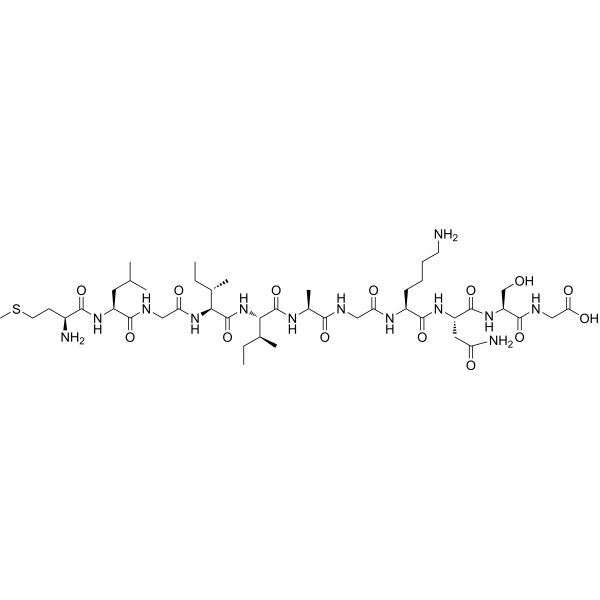 0 ImagesCat. No.: HY-P4740CAS No.: 147740-73-6β-Amyloid (35-25) is areverse version of β-Amyloid (25-35) (HY-P0128).
-
Amyloid β-Protein (1-6)
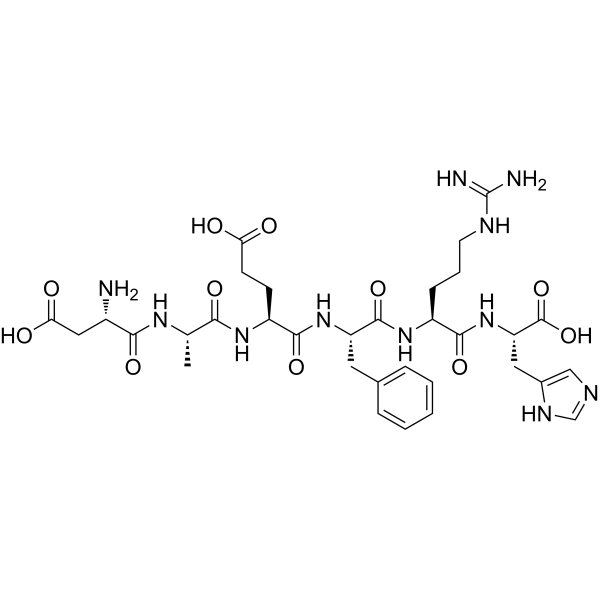 0 ImagesCat. No.: HY-P4887CAS No.: 214550-64-8Amyloid β-Protein (1-6) is aAβ Fragment.
-
CLR01 sodium
 0 ImagesCat. No.: HY-182304CAS No.: 1338489-62-5CLR01 sodium is a blood-brain barrier-permeable anti-aggregation agent. CLR01 sodium inhibits the de novo aggregation of Amyloid-β 40/42, α-synuclein, IAPP, tau protein and SOD1. CLR01 sodium reduces amyloid plaque burden in the cortex of triple-transgenic mice and improves the memory and motor abilities of these mice. CLR01 sodium can be used in research related to Alzheimer's disease, Parkinson's disease, and amyotrophic lateral sclerosis (ALS).
-
Santacruzamate A (Standard)
 0 ImagesSynonyms: CAY-10683 (Standard)Santacruzamate A (Standard) is the analytical standard of Santacruzamate A. This product is intended for research and analytical applications. Santacruzamate A (CAY-10683, STA) is a potent and selective HDAC2 inhibitor with an IC50 of 119 pM. STA also exerts neuroprotective property against amyloid-β protein fragment 25–35. STA can be used for cancer and neurological disease research[1][2].
-
SAR228810
 0 ImagesCat. No.: HY-P991654SAR228810 is a humanized IgG4 monoclonal antibody inhibitor targeting amyloid β (Aβ) with a KD? of ?0.43 ?nM for protofibrillar Aβ over monomeric Aβ. SAR228810 significantly inhibits the brain amyloid plaque formation and oligomer-induced synaptic dysfunction and neurite loss. SAR228810 has significant protection against Aβ-mediated neuritotoxicity. MINT1526A can be used for Alzheimer’s disease imaging and immunotherapy research.
-
Aβ-IN-1
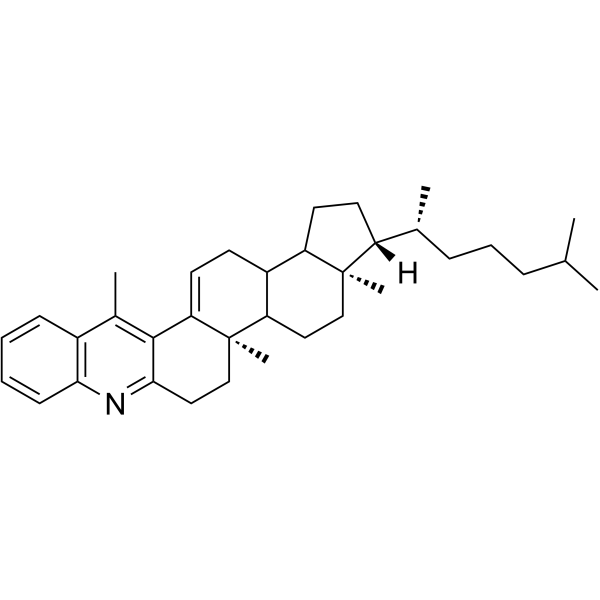 0 ImagesCat. No.: HY-144326CAS No.: 2766509-32-2Aβ-IN-1 is a Aβ1-42 aggregation inhibitor. Aβ-IN-1 inhibits Aβ1-42 self-aggregation in vitro by delaying the exponential growth phase or reduces the quantity of fibrils in the steady state. Aβ-IN-1 can be used for the research of conformational disorders.
-
3-(1H-Pyrrolo[2,3-c]pyridin-1-yl)-7-isoquinolinol
![3-(1H-Pyrrolo[2,3-c]pyridin-1-yl)-7-isoquinolinol](https://file.medchemexpress.com/product_pic/hy-187114.gif "Click to View 3-(1H-Pyrrolo[2,3-c]pyridin-1-yl)-7-isoquinolinol Product Detail") 0 ImagesCat. No.: HY-187114CAS No.: 1841078-84-93-(1H-Pyrrolo[2,3-c]pyridin-1-yl)-7-isoquinolinol is a pyrrolopyridine compound that binds to tau aggregates and β-amyloid aggregates. 3-(1H-Pyrrolo[2,3-c]pyridin-1-yl)-7-isoquinolinol serves as a positron emission tomography (PET) tracer for research related to Alzheimer's disease and other neurodegenerative diseases characterized by tau pathology.
0 ImagesCat. No.: HY-187114CAS No.: 1841078-84-93-(1H-Pyrrolo[2,3-c]pyridin-1-yl)-7-isoquinolinol is a pyrrolopyridine compound that binds to tau aggregates and β-amyloid aggregates. 3-(1H-Pyrrolo[2,3-c]pyridin-1-yl)-7-isoquinolinol serves as a positron emission tomography (PET) tracer for research related to Alzheimer's disease and other neurodegenerative diseases characterized by tau pathology.
-
(Glu20)-Amyloid β-Protein (1-42)
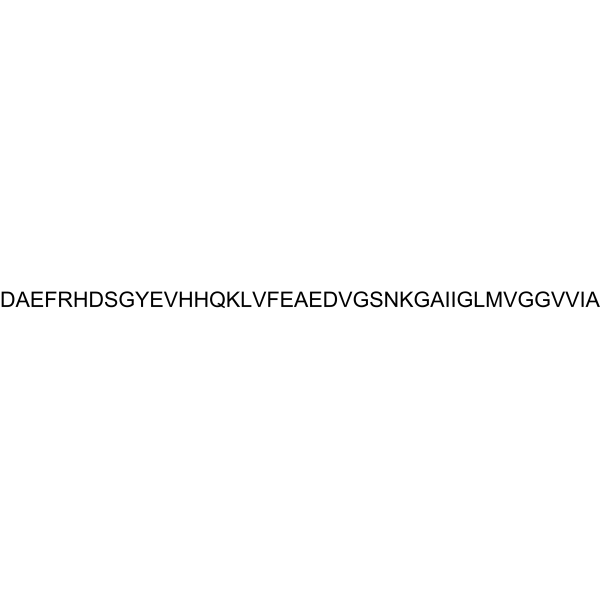 0 ImagesCat. No.: HY-P3846CAS No.: 1802086-22-1(Glu20)-Amyloid β-Protein (1-42) is a slower fibrillizing variant of amyloid β-protein (Aβ). The Glu20 mutation reduces the aggregation propensity of Aβ42 and prevents accumulation of the slowly fibrillizing peptide. Amyloid β-protein is the primary component of both vascular and parenchymal amyloid deposits in Alzheimer's disease.
-
BMS-869780
 0 ImagesCat. No.: HY-18326CAS No.: 1235493-78-3BMS-869780 is an orally active non-acidic γ-secretase (γ-secretase) modulator. BMS-869780 regulates the activity of γ-secretase, thereby altering the production profile of β-amyloid proteins. When acting alone, it changes the relative levels of specific β-amyloid subtypes without inhibiting the total production of β-amyloid proteins. BMS-869780 exerts a synergistic effect with γ-secretase modulators of the acidic structural class to inhibit the total production of β-amyloid proteins in cell cultures.
-
JNK3 inhibitor-9
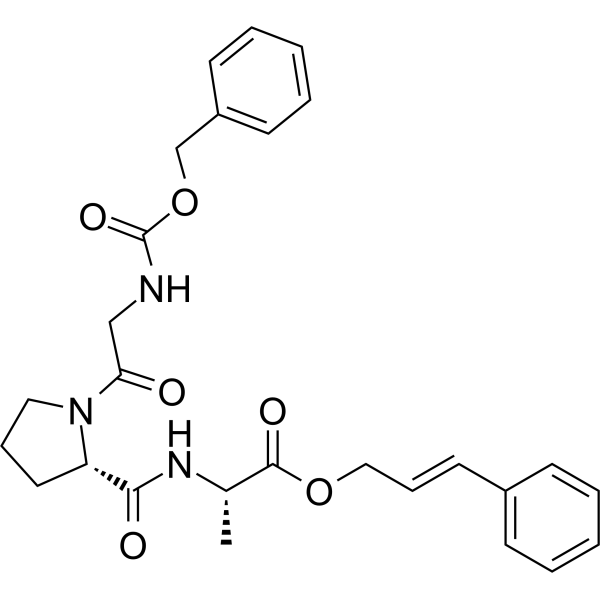
 0 ImagesCat. No.: HY-168859JNK3 inhibitor-9 (Compound 24a) is a potent, selective and BBB-permeable JNK3 inhibitor with an IC50 value of 12 nM. JNK3 inhibitor-9 also potently inhibits GSK3α/β (IC50s: 14 and 35 nM, respectively) involved in Tau phosphorylation. JNK3 inhibitor-9 reduces c-Jun and APP phosphorylation. JNK3 inhibitor-9 protects neurons from Aβ1-42 toxicity.
-
Anti-APP/Amyloid beta Antibody (3D6)
 0 ImagesCat. No.: HY-P992157Synonyms: murine version of BapineuzumabAnti-APP/Amyloid beta Antibody (3D6) (murine version of Bapineuzumab) is an antibody targeting β-amyloid protein (Aβ) with free Asp1. Anti-APP/Amyloid beta Antibody (3D6) recognizes and binds to the amino acid epitope at positions 1-5 of β-amyloid protein carrying the free Asp1 residue. Anti-APP/Amyloid beta Antibody (3D6) can be used in research related to Alzheimer's disease.
-
Aβ1–42 aggregation inhibitor 3
 0 ImagesCat. No.: HY-173621CAS No.: 32527-84-7Aβ1–42 aggregation inhibitor 3 (Compound 3b) is an acetylcholinesterase (AChE) and butyrylcholinesterase (BuChE) inhibitor (IC50 values are 1.634 and 0.0285 μM, respectively). Aβ1–42 aggregation inhibitor 3 can inhibit the aggregation of Aβ1-42. Aβ1–42 aggregation inhibitor can be used in Alzheimer's disease (AD) research.
-
hBChE-IN-1
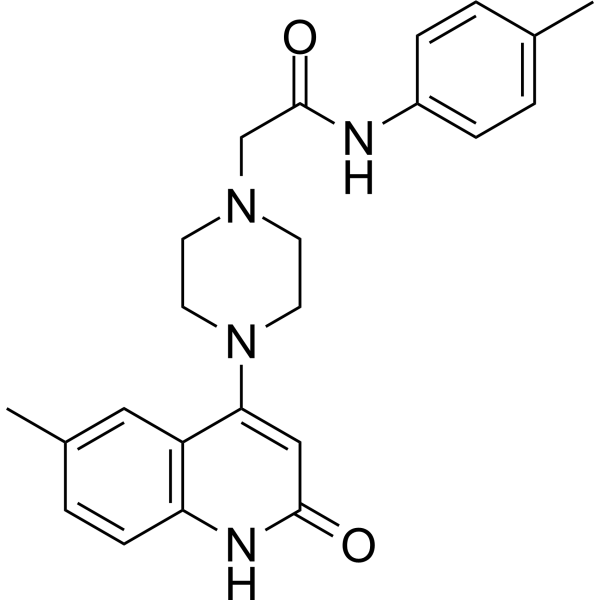
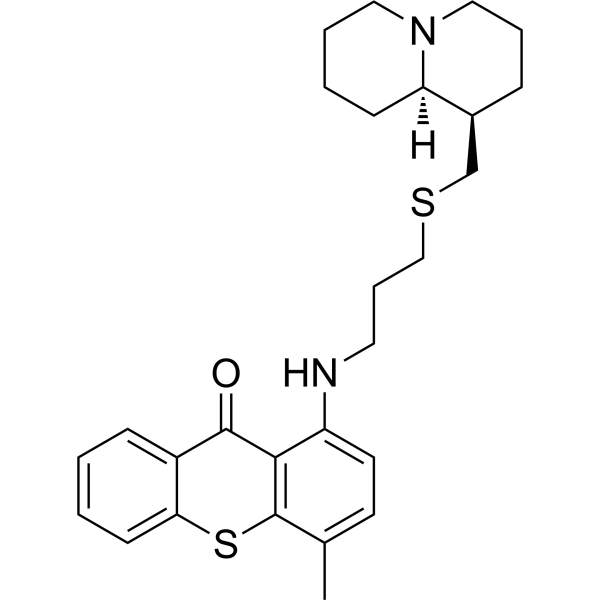 0 ImagesCat. No.: HY-149273CAS No.: 1776948-12-9hBChE-IN-1 (compound 4), a quinolizidinyl derivative, is a potent hBChE inhibitor (IC50=7 nM) and highly selective over hAChE. hBChE-IN-1 shows inhibitory activity against tau and Aβ40 protein aggregation, with IC50 values of 20 and 4.3 μM, respectively. hBChE-IN-1 can be used for Alzheimer's disease research.
-
P021
 0 ImagesCat. No.: HY-184832CAS No.: 1246751-68-7Synonyms: Peptide 021P021 (Peptide 021) is an orally active, blood-brain barrier penetrant neurotrophic/neurogenic pentapeptide derived from the most active region of ciliary neurotrophic factor (CNTF). P021 competitively inhibits leukemia inhibitory factor (LIF) and promotes BDNF transcription. P021 targets neurogenesis and synaptic plasticity. P021 prevents neurodegeneration, Amyloid-β pathology, tau protein pathology and cognitive deficits, rescues episodic memory impairment and reduces mortality in 3xTg-AD mice. P021 is applicable to the research of Alzheimer's disease.
-
Mca-SEVKMDAEFRK(Dnp)RR-NH2
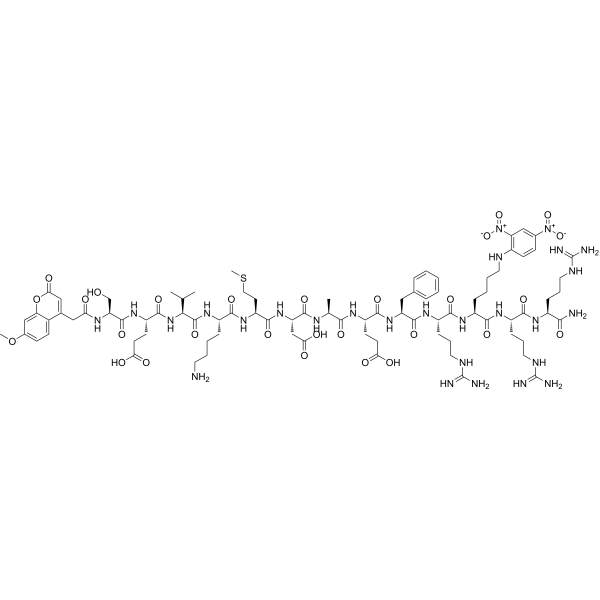 0 ImagesCat. No.: HY-P4926CAS No.: 1802078-33-6Mca-SEVKMDAEFRK(Dnp)RR-NH2, containing the wild-type amyloid precursor protein (APP) beta-secretase cleavage site, is the substrate of thimet oligopeptidase (TOP). It is used for Alzheimer's disease research.
-
β-Amyloid (11-22)
 0 ImagesCat. No.: HY-P1893CAS No.: 885323-98-8β-Amyloid (11-22) is a peptide fragment of β-Amyloid.




