



Apoptosis Activator
-
FLT3-IN-29
 0 ImagesCat. No.: HY-170640CAS No.: 3105111-26-7
FLT3-IN-29 (Compound MY-10) is a FLT3 inhibitor (IC50s: 6.5 and 10.3 nM for FLT3-ITD and FLT3-D835Y mutants). FLT3-IN-29 arrests cell cycle at the G0/G1 phase and efficiently induces Apoptosis. FLT3-IN-29 also reduces reactive oxygen species (ROS) production and mitochondrial membrane potential (MMP). FLT3-IN-29 displays antileukemic activity.

-
Z19024498
 0 ImagesCat. No.: HY-181794CAS No.: 1005147-23-8
Z19024498 is a heat sensitizer. Z19024498 inhibits SAFB granule formation under heat stress conditions. Z19024498 enhances heat stress-induced Apoptosis. Z19024498 exerts anticancer activity against cervical cancer in synergy with heat stress.
-
(E/Z)-Sinigrin free base
 0 ImagesSynonyms: (E/Z)-Allyl-glucosinolate free base; (E/Z)-2-Propenyl-glucosinolate free base
(E/Z)-Sinigrin ((E/Z)-Allyl-glucosinolate; (E/Z)-2-Propenyl-glucosinolate) free base is an orally active aliphatic thioglucoside anti-leukemia compound. Allyl isothiocyanate, produced by the hydrolysis of (E/Z)-sinigrin free base by myrosinase, has an IC50 of 2.71 μM against HL60 leukemia cells. The hydrolysis products of (E/Z)-sinigrin free base can further activate apoptosis pathways, inhibit NF-κB and MAPK signaling pathways, and induce phase II metabolic enzyme activity, thus exhibiting anti-cancer, anti-inflammatory, antibacterial, antioxidant, and wound healing activities. (E/Z)-Sinigrin free base can be used in research on cancer, inflammation-related diseases (such as atherosclerosis), and infectious diseases. (E/Z)-Sinigrin free base can be naturally extracted from the seeds of Brassica nigra, Brassica juncea, and other Brassicaceae plants such as broccoli and Brussels sprouts. Methyl pechueloate is a guaiane-type sesquiterpene ester compound and a potential precursor of xerantholide. It is useful in the structural elucidation and biosynthetic pathway studies of sesquiterpenoids. Methyl pechueloate can be naturally extracted from the aerial parts of Pechuel-Loeschea leibnitziae (Kuntze) O. Hoffm.
-
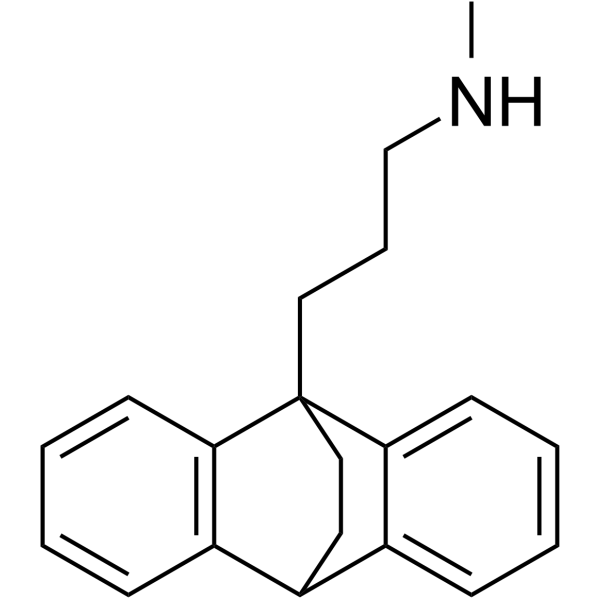
BNNC
 0 ImagesCat. No.: HY-184452
BNNC is a Photomolecular glue. BNNC selectively releases (R)-CR8 (HY-18340) (a Cyclin K molecular glue) and BSS-Et in hypoxic tumor microenvironments, thereby triggering Cyclin K degradation dependent on the ubiquitin-proteasome pathway. BNNC generates ROS and singlet oxygen in hypoxic tumor cells under light irradiation. BNNC enhances DNA damage and Apoptosis through the combined effects of Cyclin K degradation and phototherapy. BNNC enhances the tumor selectivity of molecular glue via specific activation in hypoxic tumor microenvironments. BNNC can be used in breast cancer-related research.
-
Antitumor agent-41
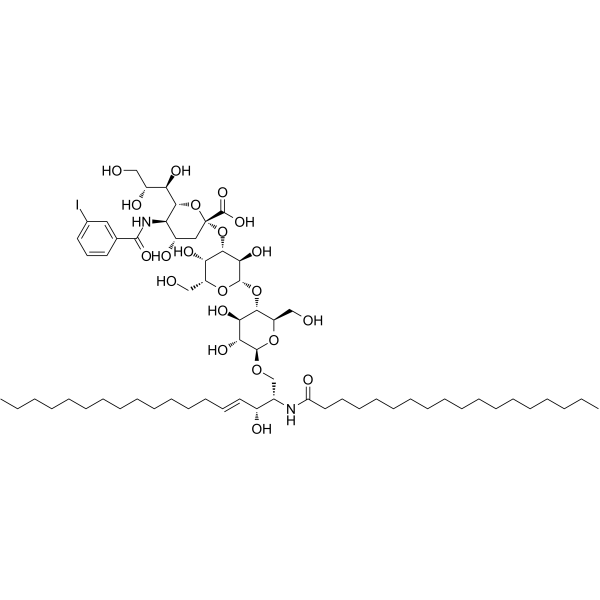 0 ImagesCat. No.: HY-144125CAS No.: 3035564-55-4
Antitumor agent-41 (compound N-12), a potent antitumor agent, enhibits excellent antimigration and anti-invasion activity. Antitumor agent-41 (compound N-12) induces tumor inhibition via tumor necrosis and inflammatory response.
-
GTGKT
 0 ImagesCat. No.: HY-P11782CAS No.: 254732-11-1
GTGKT is a CAGE inhibitor. GTGKT binds to CAGE and blocks the binding of CAGE to GSK3β. GTGKT alters the localization of CAGE and inhibits the binding of CAGE to the promoter sequence of Cyclin D1. GTGKT enhances the Apoptotic effect of anticancer agents. GTGKT reduces the expression of Cyclin D1. GTGKT decreases the tumorigenic potential of melanoma and hepatocellular carcinoma cells.
-
Eriosematin
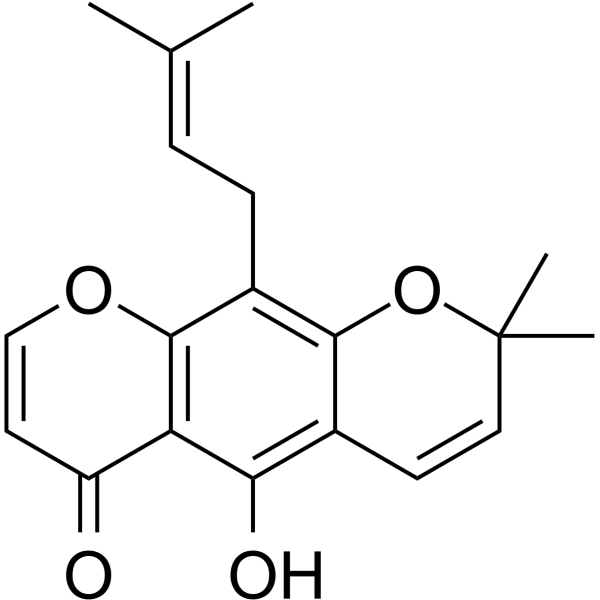 0 ImagesCat. No.: HY-N4313CAS No.: 168010-17-1
Eriosematin is a compound from the roots of Flemingia philippinensis with antiproliferative activity and apoptosis-inducing property.
-
Licochalcone B (Standard)
 0 ImagesCat. No.: HY-N0373RCAS No.: 58749-23-8
Licochalcone B (Standard) is the analytical standard of Licochalcone B. This product is intended for research and analytical applications. Licochalcone B is an extract from the root of Glycyrrhiza uralensis. Licochalcone B inhibits amyloid β (42) self-aggregation (IC50=2.16 μM) and disaggregate pre-formed Aβ42 fibrils, reduce metal-induced Aβ42 aggregation through chelating metal ionsLicochalcone B inhibits phosphorylation of NF-κB p65 in LPS signaling pathway. Licochalcone B inhibits growth and induces apoptosis of NSCLC cells. Licochalcone B specifically inhibits the NLRP3 inflammasome by disrupting NEK7‐NLRP3 interaction.
-
Bavachalcone (Standard)
 0 ImagesCat. No.: HY-N0231RCAS No.: 28448-85-3Synonyms: Broussochalcone B (Standard)
Bavachalcone (Standard) is the analytical standard of Bavachalcone. This product is intended for research and analytical applications. Bavachalcone is a potent inducer of apoptosis. Bavachalcone exerts anticancer activity by promoting autophagy and apoptosis in HepG2 cells. Bavachalcone acts as an anti-neuroinflammatory and antidepressant through the NF-κB pathway. Bavachalcone inhibits osteoclasts by interfering with ERK and Akt signaling pathways and the expression of c-Fos and NFATc1. Bavachalcone exhibits a significant inhibitory effect on baculovirus-expressed BACE-1 in vitro.
-
ROCK2-IN-13
 0 ImagesCat. No.: HY-179498
ROCK2-IN-13 is a selective ROCK2 inhibitor. ROCK2-IN-13 reduces nuclear expression by disrupting the interaction of ROCK2 with transcriptional co activators p300> and PGC 1α, repressing oncogenic transcription. ROCK2-IN-13 activates FOXO1 driven PTEN expression, leading to suppression of the PI3K/Akt pathway, induction of G2/M cell cycle arrest, and promotion of apoptosis. ROCK2-IN-13 ablates the nuclear transcriptional function of ROCK2 that sustains oncogenic signaling and restores the tumor suppressive PTEN/FOXO1 axis. ROCK2-IN-13 can be used for prostate cancer reseach.
-
AKT-IN-24
 0 ImagesCat. No.: HY-169407CAS No.: 3114773-24-6
KT-IN-24 (Compound M17) is a AKT allosteric inhibitor with anti-tumor activity. KT-IN-24 can target the AKT/mTOR and MEK/ERK signaling pathways and inhibit epithelial-mesenchymal transition, which has a synergistic suppressive effect on TNBC, promoting cell apoptosis while inhibiting proliferation and migration when used in combination with Trametinib (HY-10999).
-
K882
 0 ImagesCat. No.: HY-168893
K882 (Compound 4e) is a Src inhibitor, with KD of 0.315 μM. K882 induces Apoptosis. K882 inhibits XIAP and Survivin. K882 inhibits the activation of PI3K/Akt/mTOR, Jak1/Stat3, Ras/MAPK signaling pathways. K882 shows anti-tumor activity against non-small cell lung cancer.
-
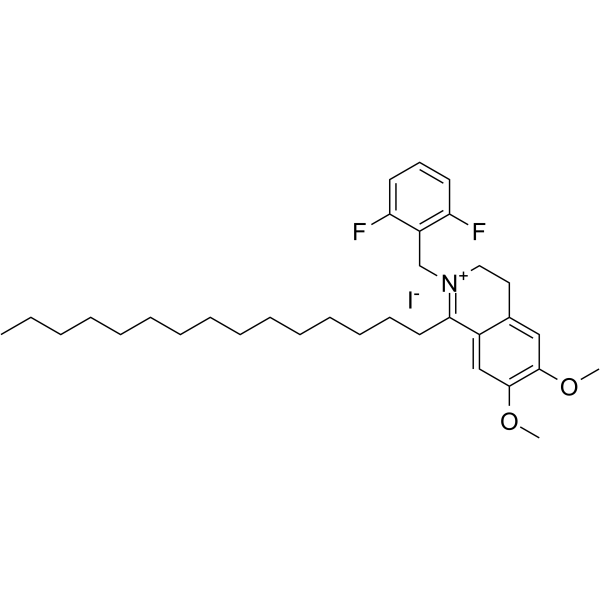
Topoisomerase ll/ME-1-IN-1
 0 ImagesCat. No.: HY-182054
Topoisomerase ll/ME-1-IN-1 (Compound 7a) is a Topoisomerase ll and ME-1 inhibitor with an IC50 of 5.03 μM against Topoisomerase ll. Topoisomerase ll/ME-1-IN-1 functionally inhibits the activity of Topoisomerase II and functionally blocks the activity of ME-1. Topoisomerase ll/ME-1-IN-1 induces Autophagy by upregulating the expression of Beclin-1 and LC3-II. Topoisomerase ll/ME-1-IN-1 promotes Apoptosis. Topoisomerase ll/ME-1-IN-1 exhibits antiproliferative activity against breast cancer cells and shows no toxicity to normal mammary epithelial cells. Topoisomerase ll/ME-1-IN-1 can be used in studies related to breast cancer (including triple-negative breast cancer).
-
EGFR-IN-216
 0 ImagesCat. No.: HY-187334CAS No.: 1923767-20-7
EGFR-IN-216 is an epidermal growth factor receptor (EGFR) tyrosine kinase (TK) inhibitor. EGFR-IN-216 inhibits EGFR tyrosine kinase phosphorylation, blocks downstream signaling pathway activation, suppresses cancer cell proliferation and promotes tumor cell apoptosis (apoptosis). EGFR-IN-216 can be used for the research of non-small cell lung cancer.
-
PD0166285 dihydrochloride
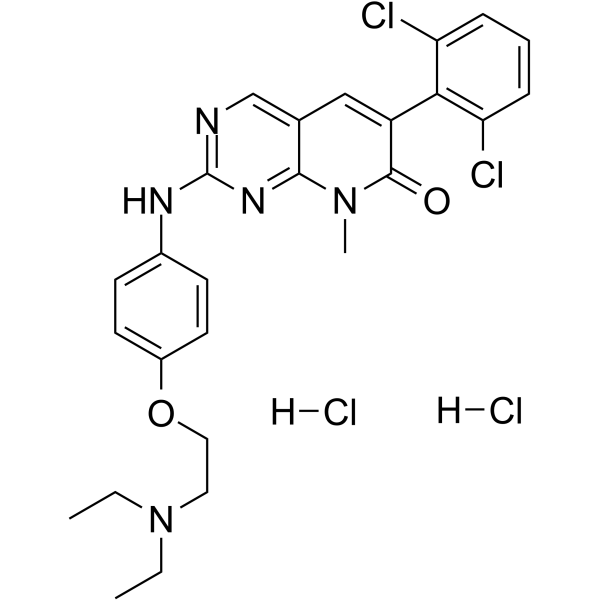 0 ImagesCat. No.: HY-13925ACAS No.: 212391-63-4
-
Ch-319
 0 ImagesCat. No.: HY-122894CAS No.: 2589088-07-1
Ch-319 is a Triphenyltin (IV) carboxylate derivative. Ch-319 reduces androgen receptor expression, AKT and PRAS40 phosphorylation levels, and increases FOXO3a expression. Ch-319 increases Apoptosis. Ch-319 can be used in the research of prostate cancer.
-
EGFR/BRAFV600E-IN-1
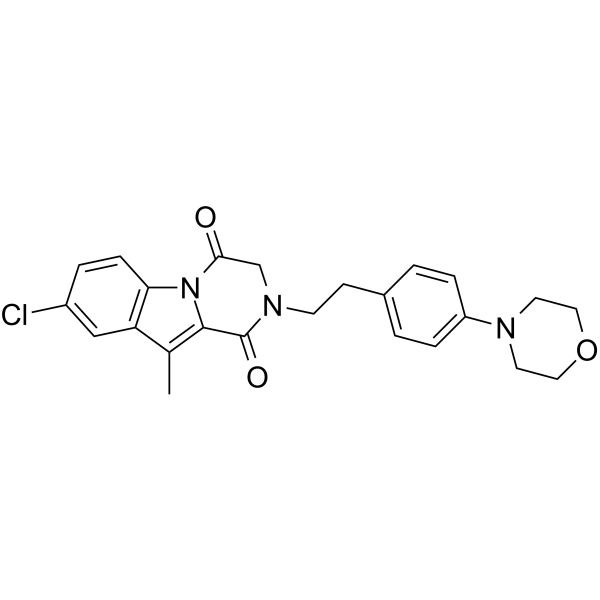 0 ImagesCat. No.: HY-147825CAS No.: 2492429-45-3
EGFR/BRAFV600E-IN-1 (Compound 23) is a potent EGFR and BRAFV600E dual inhibitor with IC50s of 0.08 and 0.15 µM, respectively. EGFR/BRAFV600E-IN-1 induces apoptosis and cell cycle arrest in both pre-G1 and G2/M phases. EGFR/BRAFV600E-IN-1 exhibits antiproliferative activity againist A-549, MCF-7, Panc-1, HT-29 with IC50s of 1.2, 0.79, 1.3, and 1.23 µM, respectively.



