



Bacterial
Anything that destroys bacteria or suppresses their growth or their ability to reproduce. Heat, chemicals such as chlorine, and antibiotic drugs all have antibacterial properties. Many antibacterial products for cleaning and handwashing are sold today. Such products do not reduce the risk for symptoms of viral infectious diseases in otherwise healthy persons. This does not preclude the potential contribution of antibacterial products to reducing symptoms of bacterial diseases in the home.
All Product Categories
-
Bacterial Inhibitors
(7501)
View all products
-
Bacterial Agonists
(3)
View all products
-
Bacterial Antagonists
(9)
View all products
-
Bacterial Activators
(23)
View all products
-
Bacterial Modulators
(27)
View all products
-
Bacterial Chemicals
(2)
View all products
-
Bacterial Inducers
(7)
View all products
-
Bacterial Controls
(14)
View all products
-
Bacterial Substrates
(2)
View all products
-
Bacterial Ligand
(1)
View all products
-
Bacterial Related Products (8826)
Related Products (8826)

-
Antibodies (14)
-
Related Compound Screening Libraries (1)
-
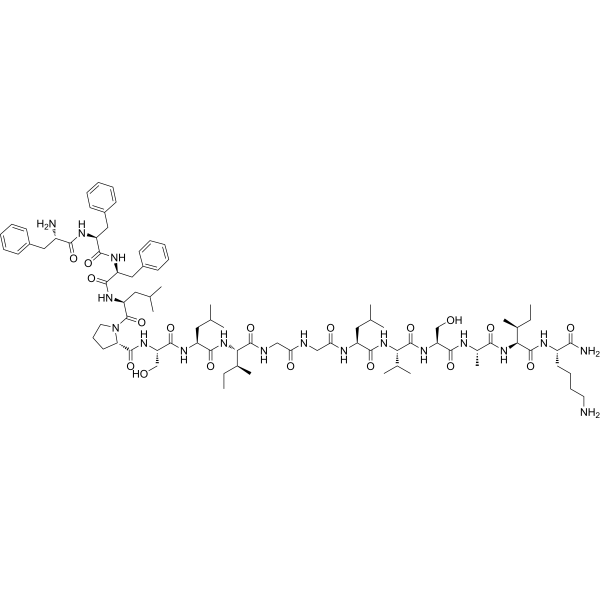
Lincomycin-13C,d3
 0 ImagesCat. No.: HY-117660S1Synonyms: U-10149-13C,d3Lincomycin-13C,d3 (U-10149-13C,d3) is the deuterium and 13C-labeled Lincomycin (HY-117660). Lincomycin (U-10149) is an orally active lincosamide antibiotic. Lincomycin binds to the ribosomes of Gram-positive bacteria to inhibit protein synthesis. Lincomycin can inhibit chloroplast translation, disrupt chloroplast integrity, and activate chloroplast-to-nucleus retrograde signaling in Arabidopsis thaliana seedlings. Lincomycin induces alterations in lipid profiles and liver injury, disrupts blood glucose and insulin levels, and increases growth rate in mice.
-
KPC-2-IN-3
 0 ImagesCat. No.: HY-174980KPC-2-IN-3 (Compound 3b) is a KPC-2 inhibitor with IC50 of 0.533 μM and Kiof 0.194 μM. KPC-2-IN-3 has an antimicrobial activity against carbapenem-resistant K. pneumonia K47-25 and reduces bacterial count with a postantibiotic effect in synergy with Meropenem (HY-13678). KPC-2-IN-3 significantly reduces lung bacterial load in a murine pneumonia model.
-
OCA 983
 0 ImagesCat. No.: HY-105914CAS No.: 161856-02-6OCA 983 is an orally active tetrahydrofuranyl 1β-methylcarbapenem antibiotic. OCA 983 exhibits potent inhibitory activity against class A and class C β-lactamases. OCA 983 possesses a broad antibacterial spectrum, and can be used in the research of infectious diseases.
-
Antistaphylococcal agent 1
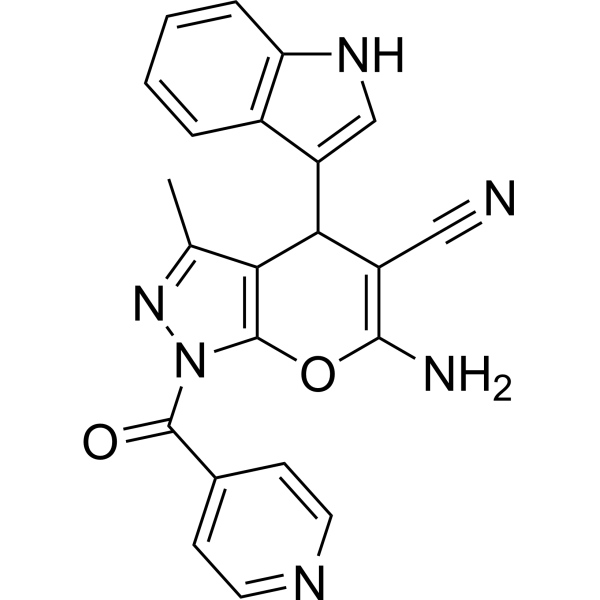 0 ImagesCat. No.: HY-139834CAS No.: 2350182-68-0Antistaphylococcal agent 1 is an antistaphylococcal therapeutic agent.
-
Oxyphenbutazone-13C6
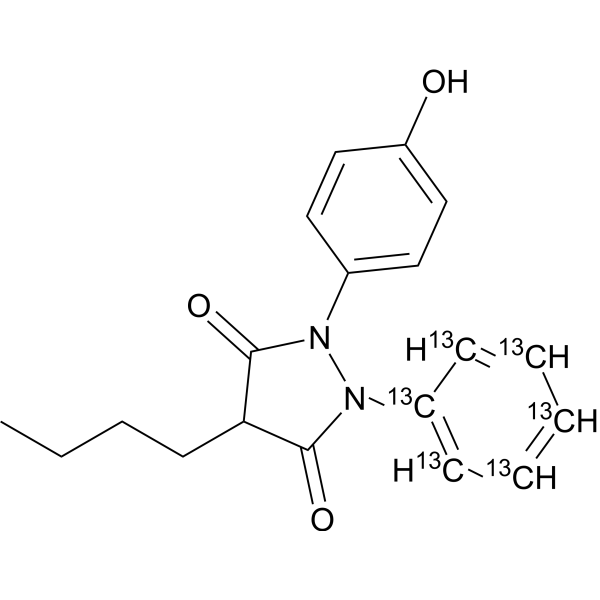 0 ImagesCat. No.: HY-B1355AS1Oxyphenbutazone-13C6 is the 13C6 labeled Oxyphenbutazone (HY-B1355A). Oxyphenbutazone is a phenylbutazone derivative, with anti-inflammatory effect. Oxyphenbutazone is a non-selective COX inhibitor. Oxyphenbutazone is the metabolite of Phenylbutazone (HY-B0230). Oxyphenbutazone selectively kills non-replicating Mycobaterium tuberculosis.
-
Mtb-cyt-bd oxidase-IN-6
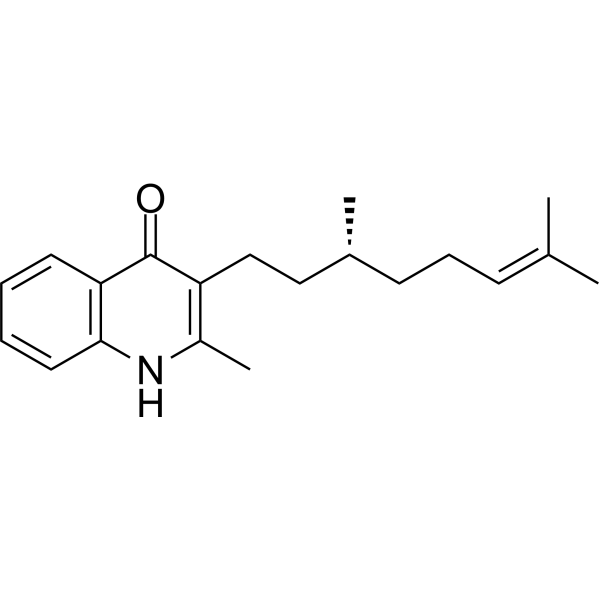 0 ImagesCat. No.: HY-151553CAS No.: 1246461-10-8Mtb-cyt-bd oxidase-IN-6 is a potent Mycobacterium tuberculosis (Mtb) cytochrome bd (cyt-bd) oxidase (MtbCyt-bd Oxidase) inhibitor with an IC50 value of 0.35 μM. Mtb-cyt-bd oxidase-IN-6 can effectively inhibit the growth of Mtb (MIC= 4 μM). Mtb-cyt-bd oxidase-IN-6 can be used in the study of tuberculosis.
-
Antibacterial agent 101
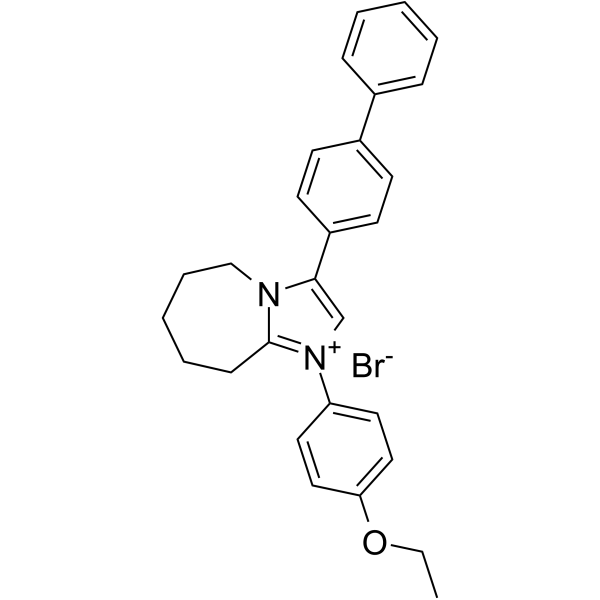 0 ImagesCat. No.: HY-146062CAS No.: 2452306-15-7Antibacterial agent 101 (Compd 7f) is an antimicrobial (antibacterial and antifungal) agent, with MIC values between 4 and 32 µg/mL.
-
Ro 20-0657/000
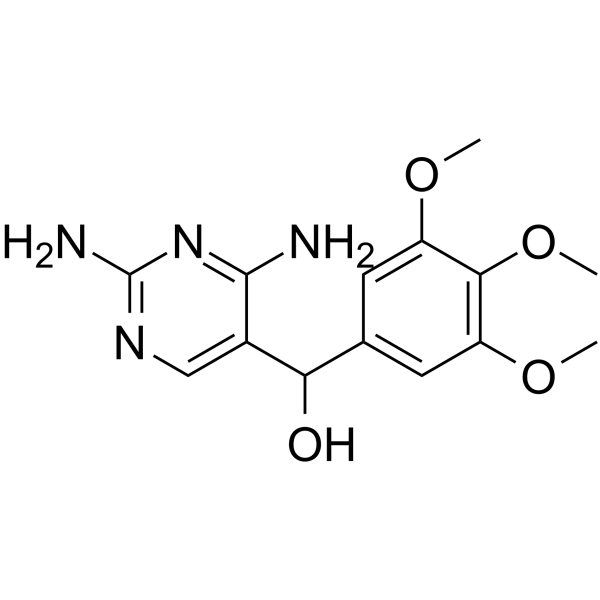 0 ImagesCat. No.: HY-100622CAS No.: 29606-06-2Ro 20-0657/000 is a metabolite of Trimethoprim. Trimethoprim is a dihydrofolate reductase inhibitor, used as an antibacterial agent in human and veterinary medicine.
-
Lefamulin acetate (Standard)
 0 ImagesSynonyms: BC-3781 acetate (Standard)Lefamulin (acetate) (Standard) is the analytical standard of Lefamulin (acetate). This product is intended for research and analytical applications. Lefamulin (BC-3781) acetate is an orally active antibiotic. Lefamulin acetate inhibits protein synthesis by binding to the peptidyl transferase center of the 50S bacterial ribosome. Lefamulin acetate has anti-inflammatory activity. Lefamulin acetate can be used in the research of bacterial infections, such as bacterial pneumonia[1].
-
Cefotiam-13C,15N2
 0 ImagesCat. No.: HY-W770956Synonyms: SCE-963-15N2; Cefotiam Dihydrochloride-15N2
-
Antibacterial agent 252 hydrochloride
 0 ImagesCat. No.: HY-168626ACAS No.: 2841472-37-3Antibacterial agent 252 hydrochloride is an amino acid derivative with antibacterial activity. Antibacterial agent 252 hydrochloride enhances the killing of colistin sulfate (HY-A0089) against a variety of gram-negative bacteria by targeting the bacterial membrane.
-
N-Acetyldemethylphosphinothricin tripeptide
 0 ImagesCat. No.: HY-180685CAS No.: 845880-13-9N-Acetyldemethylphosphinothricin tripeptide, a peptide antibiotic, is a compound with herbicidal activity. N-Acetyldemethylphosphinothricin tripeptide consists of the unusual amino acid phosphinothricin (PT) and two alanine residues. N-Acetyldemethylphosphinothricin tripeptide penetrates bacterial cells as a prodrug via peptide uptake systems with subsequent release of PT.
-
Pseudomonic acid C (Standard)
 0 ImagesCat. No.: HY-133056RCAS No.: 71980-98-8Algestone acetophenide (Standard) is the analytical standard of Algestone acetophenide. This product is intended for research and analytical applications. Algestone acetophenide is a progesterone drug. Algestone acetophenide can be used in combination with estrogen as a long-acting injectable contraceptive.
-
8-Br-GTP
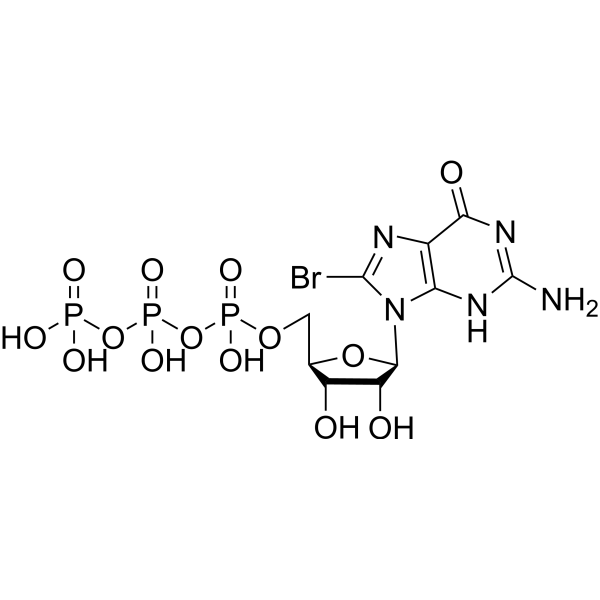 0 ImagesCat. No.: HY-134274CAS No.: 23197-98-0Synonyms: 8-Bromoguanosine-5'-triphosphate8-Br-GTP, a GTP analog, is a competitive FtsZ polymerization and GTPase activity (Ki of 31.8 μM) inhibitor. 8-Br-GTP can be used for nucleic acid modification.
-
ATD-3169
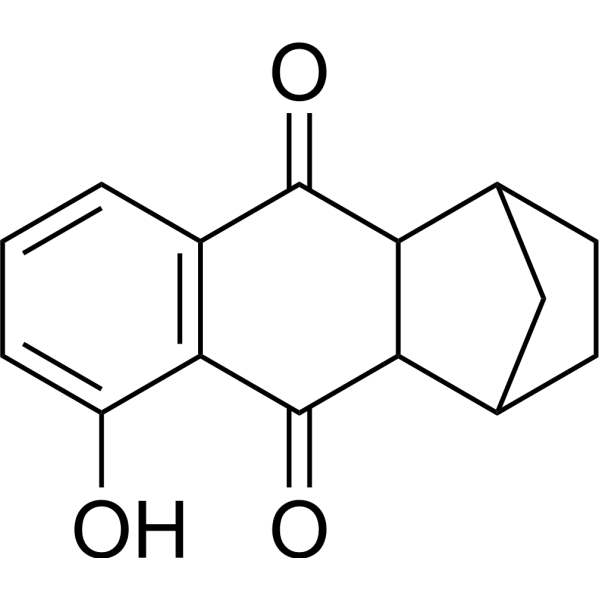 0 ImagesCat. No.: HY-118281CAS No.: 1788105-63-4ATD-3169 is an antibacterial agent. ATD-3169 enhances endogenous ROS, including superoxide radicals, to inhibit Mycobacterium tuberculosis (Mtb).
-
Bz-DL-Arg-βNA hydrochloride
 0 ImagesBz-DL-Arg-βNA hydrochloride is a substrate for endopeptidases but is not hydrolyzed by bacterial dipeptidyl peptidase DPP-III.
-
Antimicrobial agent-7
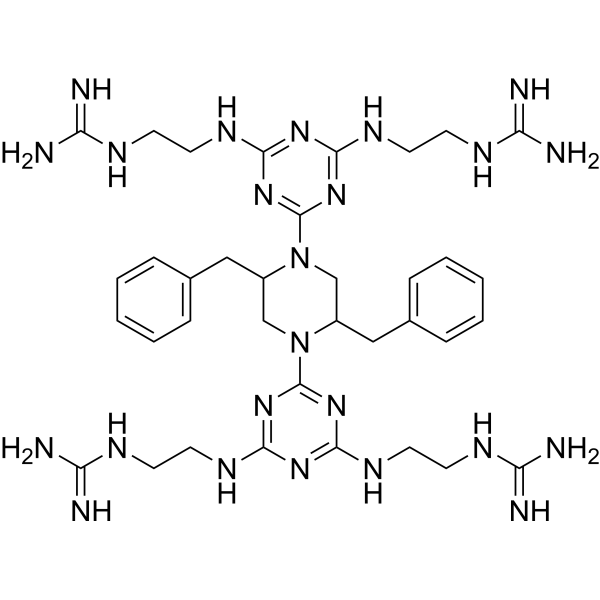 0 ImagesCat. No.: HY-151401Antimicrobial agent-7 (Compound 12) is a potent antimicrobial agent, and shows potent antimicrobial activity with an MIC range of 2-8 μg/mL against Gram-negative and Gram-positive bacteria. Antimicrobial agent-7 shows anti-inflammatory activity against lipopolysaccharide-induced inflammation.
-
Moxifloxacin prodrug-1 TFA
 0 ImagesCat. No.: HY-180118Moxifloxacin prodrug-1 TFA (Compound 1e) is a Moxifloxacin (HY-66011A) prodrug and antibacterial agent. Moxifloxacin prodrug-1 TFA exhibits comparable potent activity as Moxifloxacin against E. coli, S. aureus, K. pneumoniae, A. baumannii, and P. aeruginosa. Moxifloxacin prodrug-1 TFA inhibits Mtb.
-
Myxopyronin B
 0 ImagesCat. No.: HY-N21879CAS No.: 88192-99-8Myxopyronin B is an α-pyrone natural product derived from Myxococcus fulvus and acts as an inhibitor of the switch region of bacterial RNA polymerase (RNAP) (IC50 = 24 μM). Myxopyronin B binds to the switch region of RNA polymerase, locking the polymerase clamp into a closed conformation and thereby inhibiting transcription initiation. Myxopyronin B exhibits antibacterial activity against Staphylococcus aureus and Clostridioides difficile, inhibits the early synthesis of toxins A and B, and reduces the abundance of proteins in the branched-chain amino acid fermentation pathway. Myxopyronin B is useful for research related to bacterial infections.




