



CCR
CC chemokine receptor
CCR (Chemokine receptors) are cytokine receptors found on the surface of certain cells that interact with a type of cytokine called achemokine. There have been 19 distinct chemokine receptors described in mammals. Each has a 7-transmembrane (7TM) structure and couples to G-protein for signal transduction within a cell, making them members of a large protein family of G protein-coupled receptors. Following interaction with their specific chemokine ligands, chemokine receptors trigger a flux in intracellular calcium (Ca2+) ions (calcium signaling). This causes cell responses, including the onset of a process known as chemotaxis that traffics the cell to a desired location within the organism. Chemokine receptors are divided into different families, CXC chemokine receptors, CC chemokine receptors, CX3C chemokine receptors and XC chemokine receptors that correspond to the 4 distinct subfamilies of chemokines they bind. Specific chemokine receptors provide the portals for HIV to get into cells, and others contribute to inflammatory diseases and cancer.
CCR Isoform Specific Products
All Product Categories
-
CCR Inhibitors
(106)
View all products
-
CCR Agonists
(7)
View all products
-
CCR Antagonists
(148)
View all products
-
CCR Activators
(5)
View all products
-
CCR Modulators
(2)
View all products
-
CCR Chemical
(1)
View all products
-
CCR Degraders
(2)
View all products
-
CCR Controls
(2)
View all products
-
CCR Ligands
(4)
View all products
-
CC Chemokines Proteins
(144)
View all products
-
CCR1 Proteins
(2)
View all products
-
CCR4 Proteins
(2)
View all products
-
CCR5 Proteins
(5)
View all products
-
CCR6 Proteins
(1)
View all products
-
CCR7 Proteins
(1)
View all products
-
CCR8 Proteins
(4)
View all products
-
CCR9 Proteins
(2)
View all products
-
CCR2/CD192 Proteins
(3)
View all products
-
CCR Related Products (302)
Related Products (302)

-
Recombinant Proteins (164)
-
Antibodies (12)
-
CCR Isoform Comparison
-
CCR6 inhibitor 1
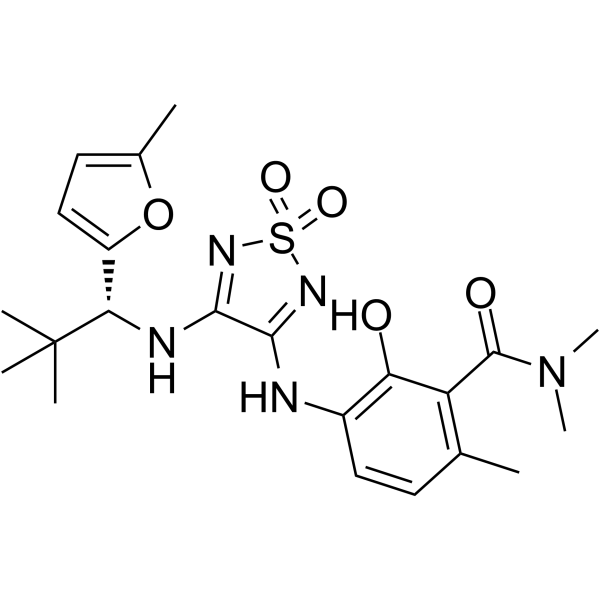
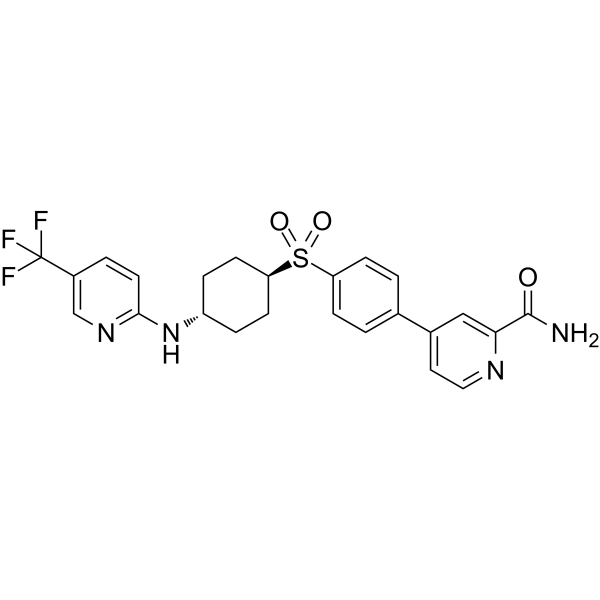 0 ImagesCCR6 inhibitor 1 is a potent and selective CCR6 inhibitor, with IC50s of 0.45 and 6 nM for monkey and human CCR6, much more selective at CCR6 over human CCR1 (IC50, > 30000 nM), and CCR7 (IC50, 9400 nM). CCR6 inhibitor 1 markedly blocks ERK phosphorylation. CCR6 inhibitor 1 is used in the research of autoimmune diseases and cancer.
-
Cosalane
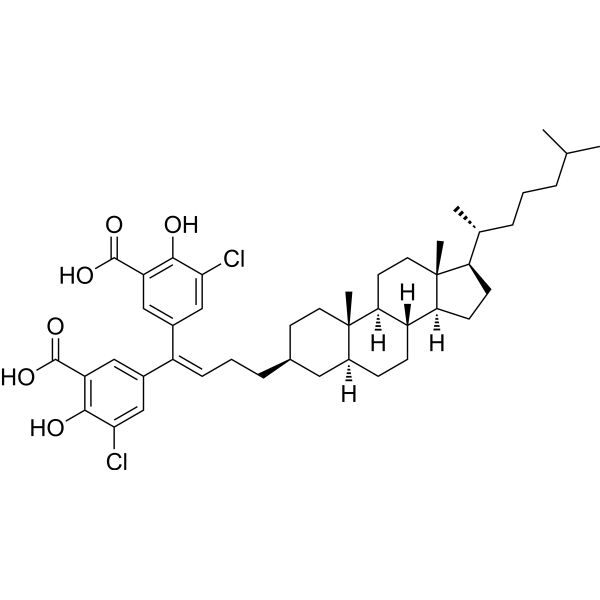 0 ImagesSynonyms: NSC 658586Cosalane (NSC 658586) is a CCR7 (IC50 = 2.43 μM) and CXCR2 antagonist (IC50 = 0.66 μM). Cosalane is an inhibitor of HIV replication with a wide range of activity against HIV-1 isolates, HIV-2, Rauscher murine leukemia virus, HSV-1, HSV-2 and human cytomegalovirus. Cosalane inhibits both attachment of gp120 to CD4. Cosalane inhibits human and murine CCR7 in response to both CCL19 and CCL21 agonists. Cosalane can be studied in research for HIV or attenuating acute graft-versus-host disease (aGVHD) in allogeneic hematopoietic stem cell transplantation (HSCT).
-
Carlumab
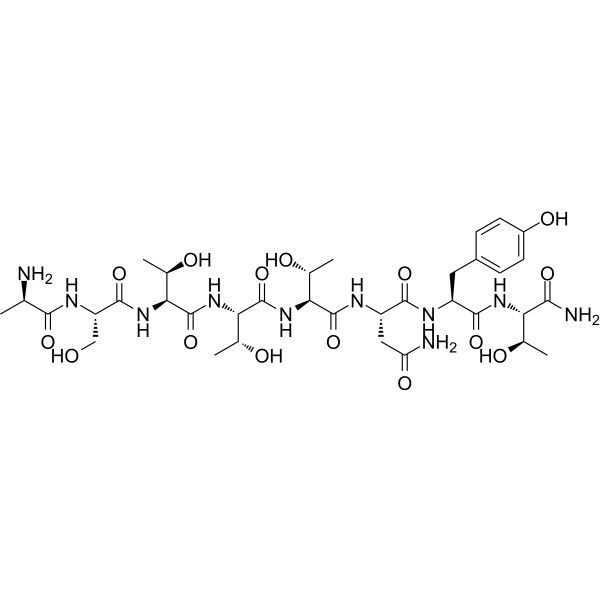
 0 ImagesCat. No.: HY-P99188CAS No.: 915404-94-3Synonyms: CNTO 888Carlumab (CNTO 888) is a human anti-CCL2 (chemokine ligand 2) monoclonal antibody. Carlumab binds and neutralises profibrotic activities of human CCL2. Carlumab inhibits tumor growth by reducing macrophage infiltration and decreasing tumor microvascular density. Carlumab can be used for the research of cancer, suah as prostate cancer.
-
C-021 dihydrochloride
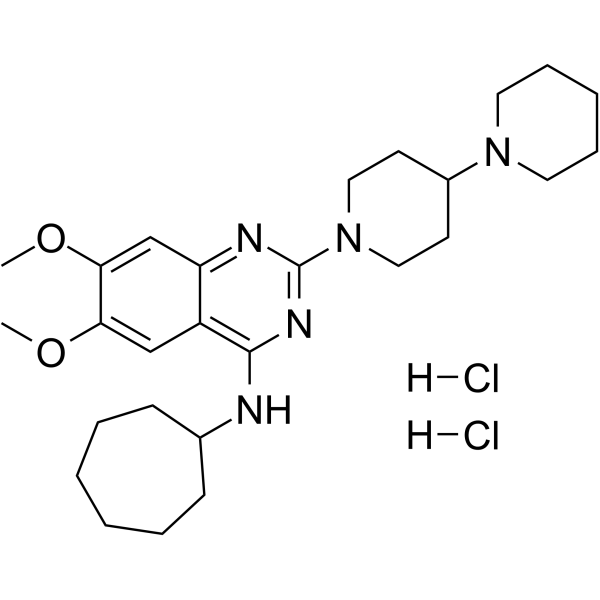 0 ImagesC-021 dihydrochloride is a potent CC chemokine receptor-4 (CCR4) antagonist. C-021 dihydrochloride potently inhibits functional chemotaxis in human and mouse with IC50s of 140 nM and 39 nM, respectively. C-021 dihydrochloride effectively prevents human CCL22-derived [35S]GTPγS from binding to the receptor with an IC50 of 18 nM.
-
Zelnecirnon
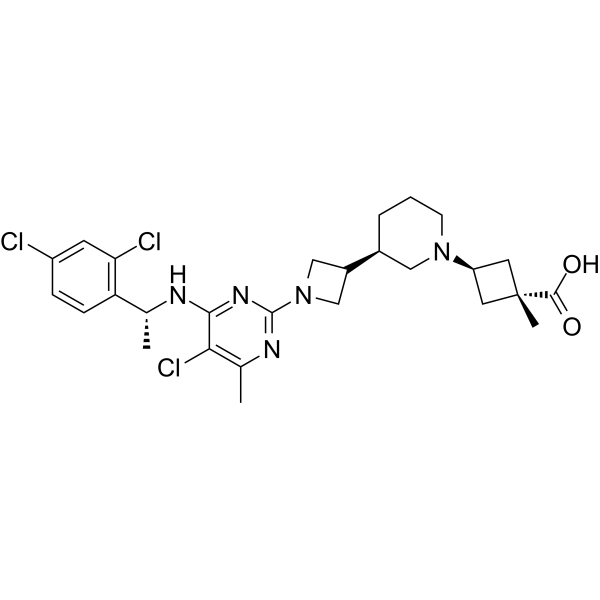 0 ImagesSynonyms: RPT193Zelnecirnon (RPT193) is an orally active inhibitor of CCR4, blocks the recruitment of Th2 inflammatory immune cells into inflamed tissues. Zelnecirnon can be used for allergic inflammation in atopic dermatitis, asthma, and other diseases research.
-
J-113863
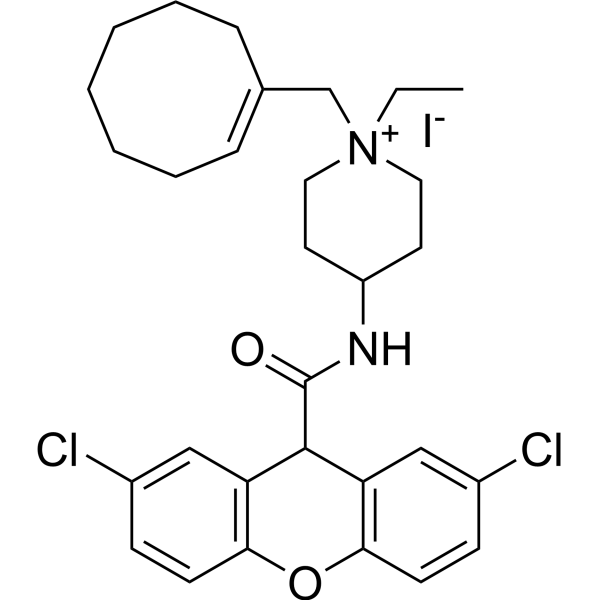 0 ImagesCat. No.: HY-103360CAS No.: 353791-85-2J-113863 is a potent and selective CCR1 antagonist with IC50 values of 0.9 nM and 5.8 nM for human and mouse CCR1 receptors, respectively. J-113863 is also a potent antagonist of the human CCR3 (IC50 of 0.58 nM) , but a weak antagonist of the mouse CCR3 (IC50 of 460 nM). J-113863 is inactive against CCR2, CCR4 and CCR5, as well as the LTB4 or TNF-α receptors. Anti-inflammatory effect.
-
Vercirnon
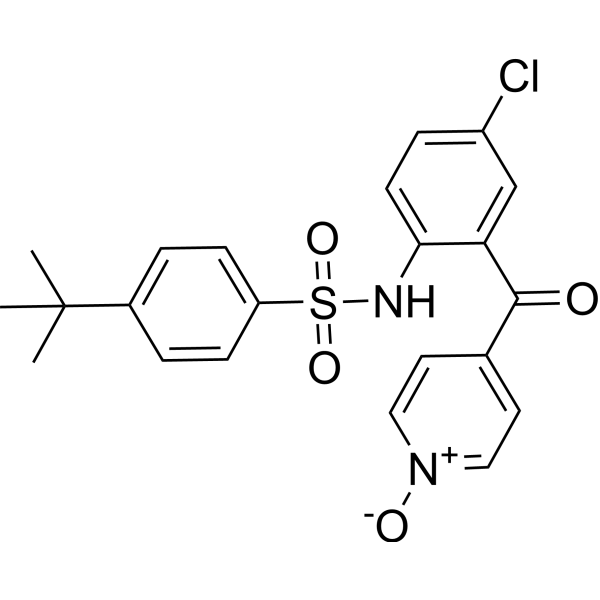 0 ImagesSynonyms: GSK-1605786; CCX282-B; Traficet-ENVercirnon (GSK1605786A) is an orally bioavailable, selective, and potent antagonist of CCR9. Vercirnon inhibits CCR9-mediated Ca2+ mobilization and chemotaxis on Molt-4 cells with IC50 values of 5.4 and 3.4 nM, respectively. Vercirnon is selective for CCR9 over CCR1-12 and CX3CR1-7 (IC50s>10 μM for all). Vercirnon is an equipotent inhibitor of CCL25-directed chemotaxis of both splice forms of CCR9 (CCR9A and CCR9B) with IC50 values of 2.8 and 2.6 nM, respectively.
-
7,4'-Dihydroxyflavone
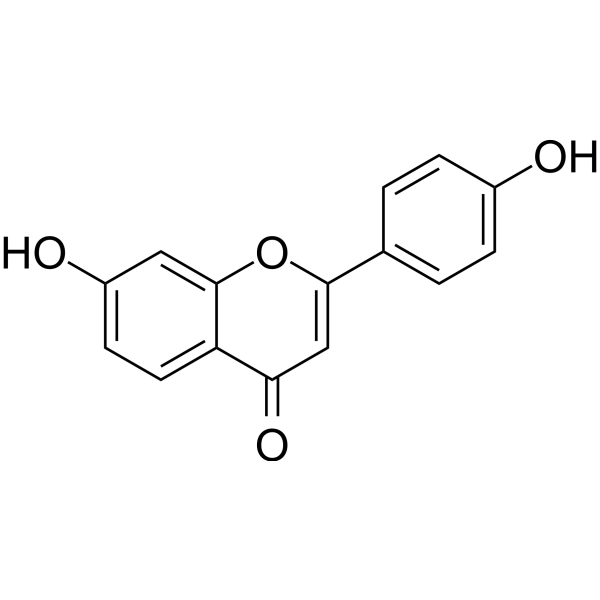 0 Images7,4'-Dihydroxyflavone (7,4'-DHF) is a flavonoid, which can be isolated from Glycyrrhiza uralensis. 7,4'-Dihydroxyflavone is eotaxin/CCL11 inhibitor and CBR1 inhibitor (IC50=0.28 μM). 7,4'-Dihydroxyflavone has the ability to consistently suppress eotaxin production and prevent dexamethasone (Dex)‐paradoxical adverse effects on eotaxin production. 7,4'-Dihydroxyflavone (7,4'-DHF) inhibits MUC5AC gene expression, mucus production and secretion via regulation of NF-κB, STAT6 and HDAC2.7,4'-Dihydroxyflavone (7,4'-DHF) decreases phorbol 12-myristate 13-acetate (PMA) stimulated NCI-H292 human airway epithelial cell MUC5AC gene expression and mucus production with IC50 value of 1.4 µM.
-
AZ084
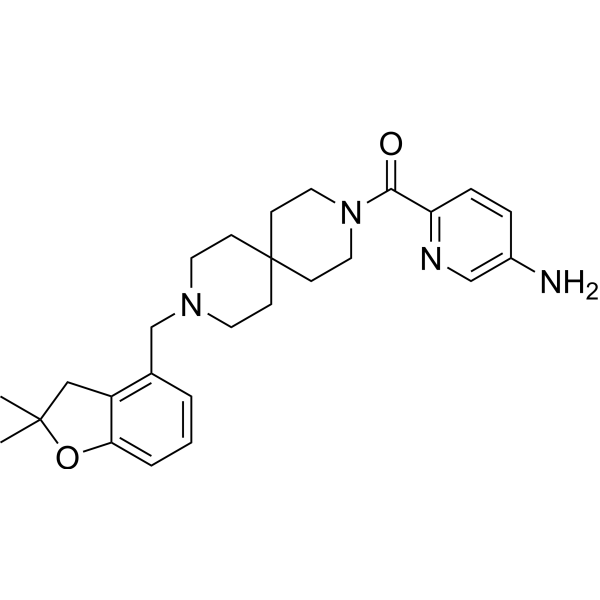 0 ImagesAZ084 is a potent, selective, allosteric and oral active CCR8 allosteric antagonist, with a Ki of 0.9 nM. Has potential to treat asthma. AZ084 restrains the formation of the immunologically tolerant pre-metastatic niche (PMN) and tumor cells metastasis in lung by downregulating Treg differentiation. AZ084 can be used in studies of asthma and cancer.
-
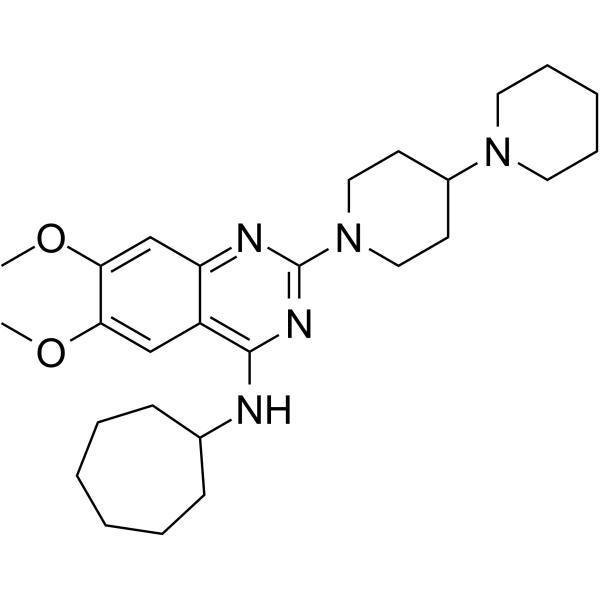
Mogamulizumab
 0 ImagesCat. No.: HY-P99253CAS No.: 1159266-37-1Synonyms: KW-0761Mogamulizumab (KW-0761) is a recombinant anti-CCR4 monoclonal antibody (MAb). Mogamulizumab can eliminate tumor cells by antibody-dependent cellular cytotoxicity (ADCC). Mogamulizumab can be used in the research of cancers, adult T-cell leukemia/lymphoma (ATLL), cutaneous T-cell lymphoma (CTCL).
-
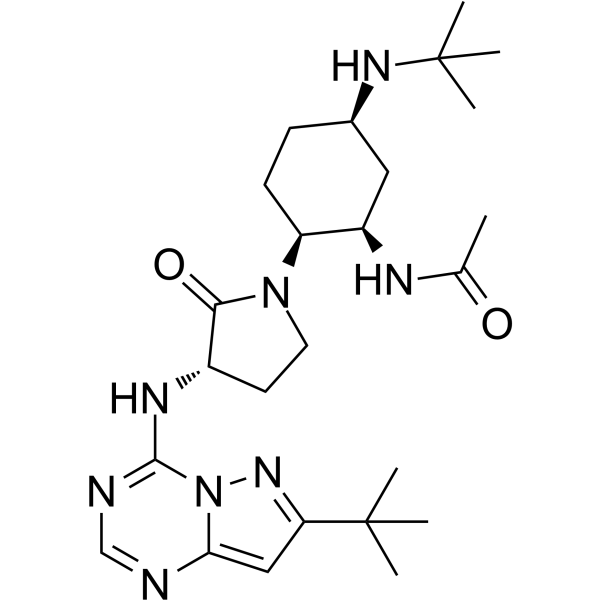
Pirfenidone (Standard)
 0 ImagesSynonyms: AMR69 (Standard)Pirfenidone (Standard) is the analytical standard of Pirfenidone. This product is intended for research and analytical applications. Pirfenidone (AMR69) is an antifibrotic agent that attenuates CCL2 and CCL12 production in fibrocyte cells. Pirfenidone has growth-inhibitory effect and reduces TGF-β2 protein levels in human glioma cell lines. Pirfenidone also has anti-inflammatory activities.
-
PF-07054894
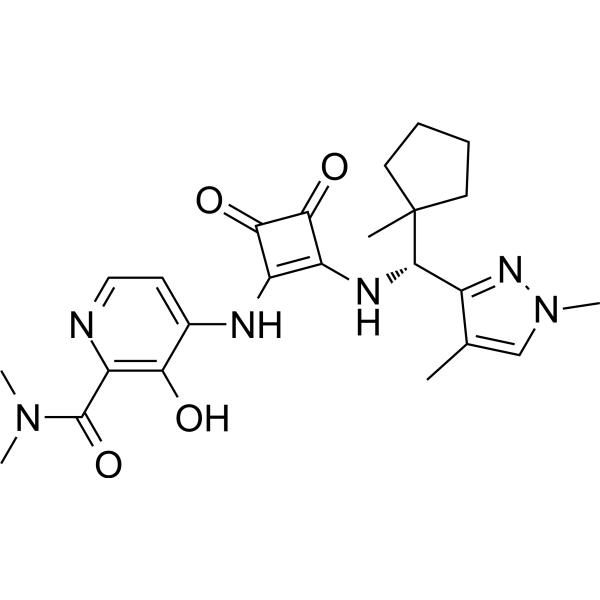 0 ImagesPF-07054894 is an orally active and potent C-C Chemoattractant Cytokine (Chemokine) Receptor 6 (CCR6) antagonist that blocks CCR6-mediated chemotaxis with an IC50 value of 5.7 nM in vitro. PF-07054894 targets G protein-coupled receptor (GPCR). PF-07054894 can be used in research of inflammatory bowel disease.
-
CCR2 antagonist 4
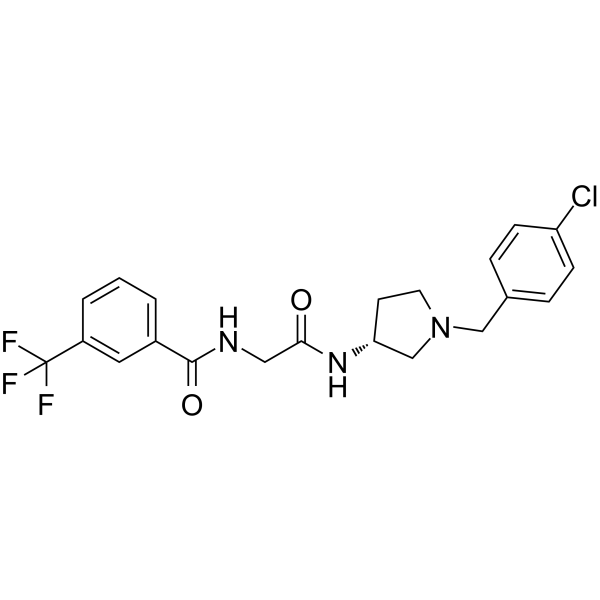 0 ImagesSynonyms: Teijin compound 1CCR2 antagonist 4 (Teijin compound 1) is a potent and specific CCR2 antagonist, with IC50s of 180 nM for CCR2b. CCR2 antagonist 4 potently inhibits MCP-1-induced chemotaxis with an IC50 of 24 nM.
-
Tivumecirnon
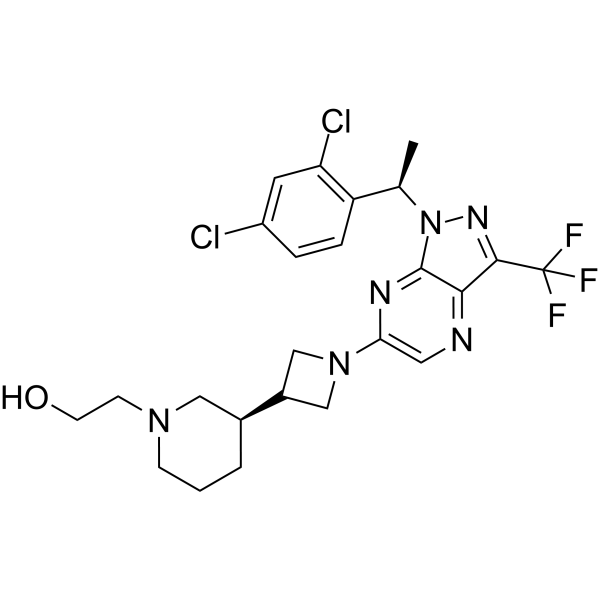 0 ImagesSynonyms: FLX475




