



FAK Inhibitor
-
Defactinib-d6
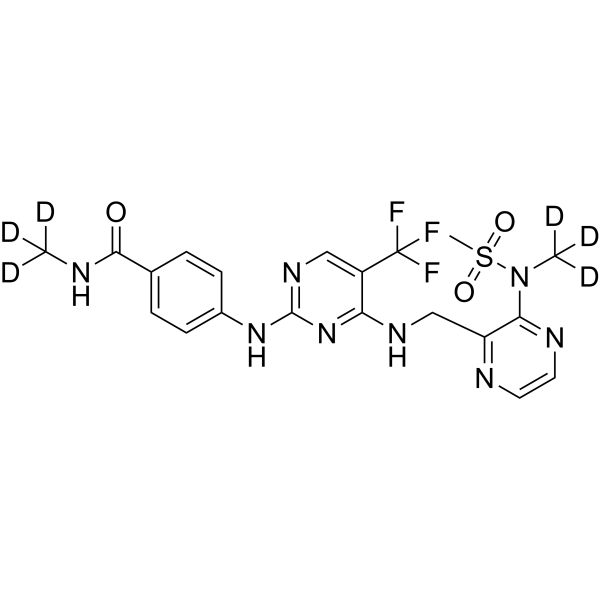 0 ImagesCat. No.: HY-12289SCAS No.: 2384121-03-1Synonyms: VS-6063-d6; PF-04554878-d6
Defactinib-d6 is a deuterium labeled Defactinib (HY-12289). Defactinib is a novel FAK inhibitor with potential antiangiogenic and antineoplastic activities.
-
Vernodalin
 0 ImagesCat. No.: HY-N19029CAS No.: 21871-10-3
Vernodalin is an orally active, cytotoxic sesquiterpene lactone with a Kd value of 9.55 μM for p38 MAPK. Vernodalin downregulates the expression of phosphorylated ERK, JNK, AKT, PI3K, mTOR, p38MAPK, FAK, MMP-2, MMP-9, and uPA, while upregulates the expression of TIMP-1 and TIMP-2. Vernodalin increases ROS production, upregulates the expression of Bax and caspase 3, downregulates the expression of Bcl-2, and induces apoptosis (apoptosis), oxidative stress response and cell cycle arrest. Vernodalin inhibits the proliferation, adhesion and metastasis of cancer cells. Vernodalin enhances the activity of VEGF-B, AMPK and eNOS signaling pathways. Vernodalin alleviates myocardial injury and restores hemodynamic parameters. Vernodalin inhibits the growth of Trypanosoma brucei rhodesiense. Vernodalin can be used in research related to various cancers including gastric cancer, colorectal cancer and lung cancer, as well as African human trypanosomiasis and myocardial infarction.
-
Multi-kinase-IN-7
 0 ImagesCat. No.: HY-178142
Multi-kinase-IN-7 is a multikinase inhibitor with IC50s of 2.19, 2.95, 3.59 and 9.31 μM against EGFR, VEGFR2, TrKA and CDK2, respectively. Multi-kinase-IN-7 shows moderate and weaker activity against FAK, AKT1, GSK3β and CDK5 with IC50 values of 6.3, 9.2, 11.7 and 23.4 μM, respectively. Multi-kinase-IN-7 displays broad spectrum antiproliferative potential against NCI cancer cell lines. Multi-kinase-IN-7 induces cell cycle arrest, apoptosis and necrosis. Multi-kinase-IN-7 Inhibitor can be used for the study of breast cancer.
-
GZD-257
 0 ImagesCat. No.: HY-178969
GZD-257 is a brain-penetrant, ATP-competitive FAK inhibitor (IC50 = 14.3 nM), performing 4.77-fold selectivity with FAK to Pyk2 (IC50 = 68.2 nM). GZD-257 can significantly induce apoptosis of U118MG cells and arrest the cell cycle at the G2/M phase. GZD-257 can be used for the study of Glioblastoma (GBM).
-
Fangchinoline (Standard)
 0 Images
Fangchinoline (Standard) is the analytical standard of Fangchinoline. This product is intended for research and analytical applications. Fangchinoline is isolated from Stephania tetrandra with extensive biological activities, such as enhancing immunity, anti-inflammatory sterilization and anti-atherosclerosis. Fangchinoline, a novel HIV-1 inhibitor, inhibits HIV-1 replication by impairing gp160 proteolytic processing. Fangchinoline targets Focal adhesion kinase (FAK) and suppresses FAK-mediated signaling pathway in tumor cells which highly expressed FAK. Fangchinoline induces apoptosis and adaptive autophagy in bladder cancer.
-
Chloropyramine hydrochloride (Standard)
 0 Images
Chloropyramine hydrochloride (Standard) is the analytical standard of Chloropyramine hydrochloride. This product is intended for research and analytical applications. Chloropyramine hydrochloride is a histamine receptor H1 antagonist which can also inhibit the biochemical function of VEGFR-3 and FAK.
-
PROTAC FAK degrader 5
 0 ImagesCat. No.: HY-183768
PROTAC FAK degrader 5 is a potent PROTAC degrader targeting FAK, with a DC50 of 11.65 nM. PROTAC FAK degrader 5 induces FAK protein degradation, selectively inhibits colony formation of human colorectal cancer HCT116 cells, and blocks the proliferation of human umbilical vein endothelial HUVEC cells, exhibiting anti-angiogenic activity. PROTAC FAK degrader 5 can be used in the research of colorectal cancer and angiogenesis.
-
FAK-IN-29
 0 ImagesCat. No.: HY-179679CAS No.: 3104566-26-6
FAK-IN-29 is a selective FAK inhibitor with an IC50 of 0.5 nM. FAK-IN-29 can inhibit the proliferation and colony formation of MDA-MB-231 cells, and induce cell cycle arrest and apoptosis. FAK-IN-29 exhibits antitumor activity and can be used for the research of tumors such as triple-negative breast cancer.
-
FAK-IN-9
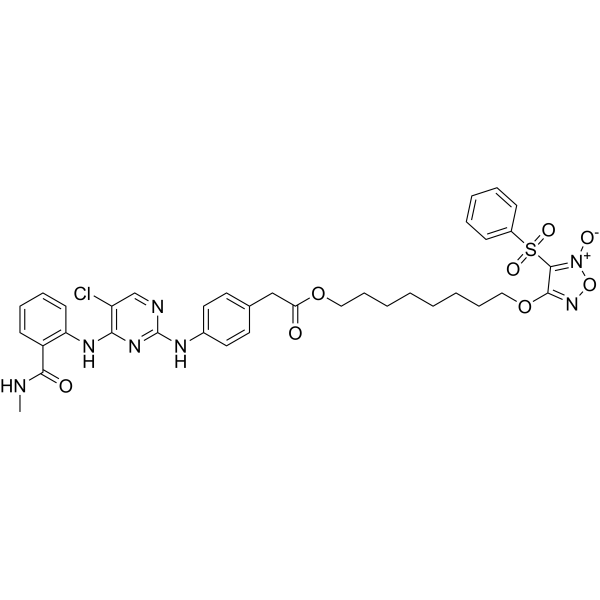 0 ImagesCat. No.: HY-149259CAS No.: 2911655-93-9
FAK-IN-9 (Compound 8f) is a potent and orally active FAK inhibitor with an IC50 of 27.44 nM. FAK-IN-9 induces triple-negative breast cancer (TNBC) cell apoptosis.
-
COX/5-LO-IN-2
 0 ImagesCat. No.: HY-181061
COX/5-LO-IN-2 is a COX2, EGFR, COX1, 5-LOX, BRAF and FAK inhibitor with IC50 of 1.22 μM, 2.5 μM, 2.95 μM, 4.65 μM, 7.4 μM, 12.2 μM, respectively. COX/5-LO-IN-2 induces cell growth arrest at G2/M phase. COX/5-LO-IN-2 triggers apoptotic activity by up-regulating proapoptotic proteins p53, Bax, and caspase-7 and down-regulating anti-apoptotic protein Bcl-2. COX/5-LO-IN-2 can be used for the research of breast cancer.

-
FAK-IN-33
 0 ImagesCat. No.: HY-187711
FAK-IN-33 is a potent focal adhesion kinase (FAK) inhibitor with an IC50 value of 10.23 nM against FAK. FAK-IN-33 inhibits the viability of U118-MG glioblastoma cells with an IC50 of 0.29 μM, and shows low cytotoxicity toward LO2 and 2BS cells. FAK-IN-33 can be used in studies related to glioblastoma.
-
FAK-IN-12
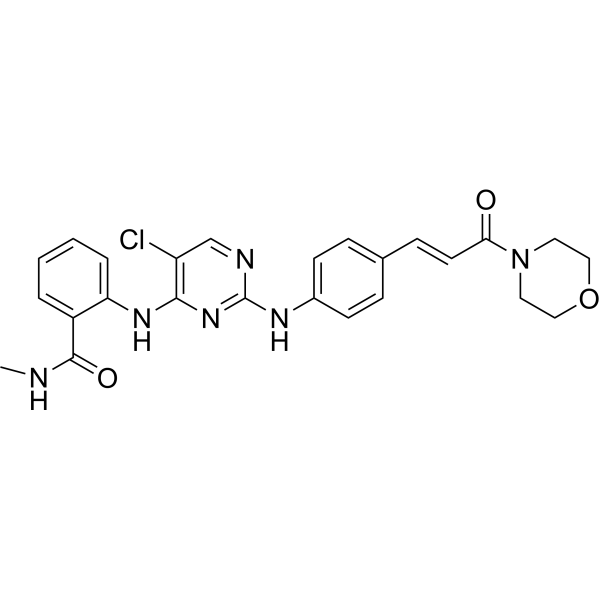 0 ImagesCat. No.: HY-156334
FAK-IN-12 (Compound 12S) is a FAK inhibitor (IC50 = 47 nM). FAK-IN-12 inhibits MGC-803, HCT-116 and KYSE30 cell proliferation (IC50: 0.24, 0.45, 0.44 μM). FAK-IN-12 induces apoptosis and cellular senescence.
-
Creosol-d4
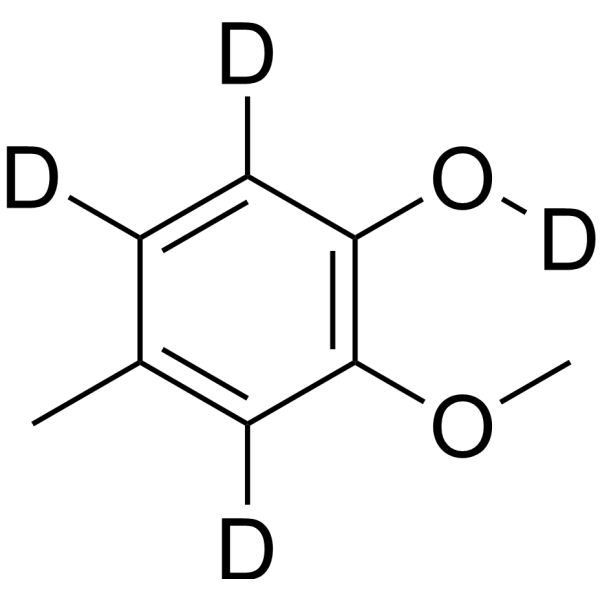 0 ImagesCat. No.: HY-W040971SCAS No.: 20189-08-6Synonyms: 2-Methoxy-4-methylphenol-d4
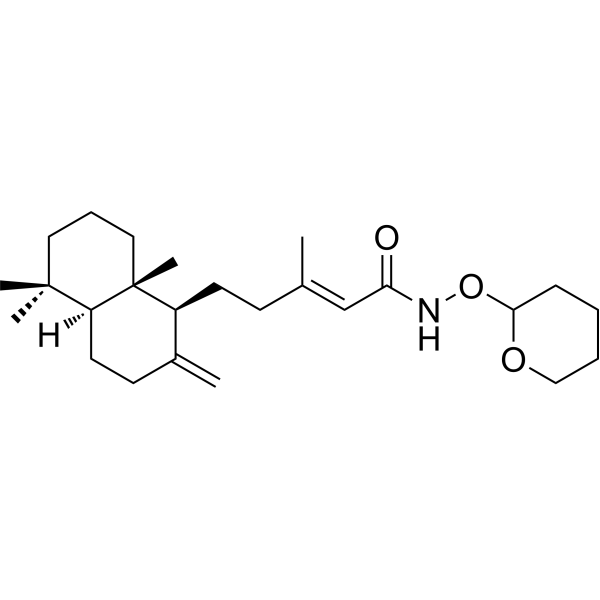
Creosol-d4 (2-Methoxy-4-methylphenol-d4) is the deuterium labeled Creosol (HY-W040971). Creosol (2-Methoxy-4-methylphenol) is an endogenous metabolite that acts as an important chemical intermediate and potential biofuel mainly derived from lignocellulosic biomass. Creosol is blood brain barrier penetrable.
-
FAK inhibitor 7
 0 ImagesCat. No.: HY-162879CAS No.: 2890814-94-3
FAK inhibitor 7 is a type of FAK inhibitor with an IC50 value of 3.58 nM. FAK inhibitor 7 can inhibit the downstream signaling cascades of FAK (like Src and AKT), causing ovarian cancer cells to stall in the G0/G1 phase and induce cytotoxic autophagy. FAK inhibitor 7 can also suppress tumor metastasis and growth in ovarian cancer mice.
-
FAK-IN-6
 0 ImagesCat. No.: HY-150730CAS No.: 3033299-38-3
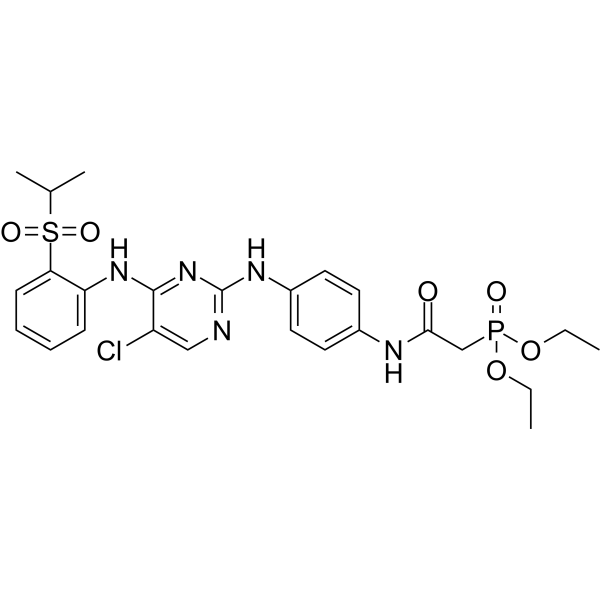
FAK-IN-6 is a potent FAK inhibitor with an IC50 value of 1.415 nM. FAK-IN-6 has anti-proliferative activity against certain cancer cell lines. FAK-IN-6 can be used for researching pancreatic cancer.
-
ZINC09875266
 0 ImagesCat. No.: HY-157965CAS No.: 925200-00-6
-
FAK-IN-31
 0 ImagesCat. No.: HY-183769
FAK-IN-31 is a FAK inhibitor with antiproliferative activity against a variety of cancer cell lines. FAK-IN-31 serves as a PROTAC target protein ligand for the development of FAK-targeted PROTAC degrader heads, such as PROTAC FAK degrader 5 (HY-183768). FAK-IN-31 can be used in the research of colorectal cancer, pancreatic cancer, breast cancer, hepatocellular carcinoma and lung cancer.
-
PROTAC CYP1B1 degrader-2
 0 ImagesCat. No.: HY-158429CAS No.: 2836297-26-6
PROTAC CYP1B1 degrader-2 is a CYP1B1 PROTAC degrader with a DC50 of approximately 0.1 nM. PROTAC CYP1B1 degrader-2 induces ubiquitination and proteasomal degradation of CYP1B1, and forms a ternary complex with VHL ubiquitin ligase and CYP1B1. PROTAC CYP1B1 degrader-2 inhibits P-gp. PROTAC CYP1B1 degrader-2 inhibits FAK/SRC. PROTAC CYP1B1 degrader-2 exhibits anticancer activity against paclitaxel (HY-B0015)-resistant non-small cell lung cancer. PROTAC CYP1B1 degrader-2 can be used in studies related to non-small cell lung cancer.



