



Fluorescent Dye
Fluorescence is a phenomenon of photoluminescence in luminescence. When an atom is irradiated by light, some electrons around the nucleus jump from their original orbitals to higher energy orbitals under the influence of light energy, i.e., from the ground state to the first or second excited single-line state, etc. Due to the instability of the first or second excited singlet state, the electron returns from the excited singlet state to the ground state accompanied by released energy, resulting in fluorescence.
Fluorescent dyes can be covalently bound or physically adsorbed in the structure of the substance. The fluorescence properties allow for the characterization, localization and quantitative analysis of the labeled object. Fluorescent dyes have shown great potential for the detection of proteins, nucleic acids, cells, and immunoassays, attributed to the advantages in non-radioactive contamination, simple experimental operation and easy observation.
Fluorescent dyes have penetrated many fields such as pharmacology, physiology, environmental science, and information science, as well as functional studies of proteins and drug screening.
All Product Categories
-
Fluorescent Dye Related Products (4914)
Related Products (4914)

-
Antibodies (4)
-
Cy3 labled Evazarsen sodium
 0 ImagesCat. No.: HY-147267ECy3 labled Evazarsen sodium is a Cy3 labled Evazarsen sodium.
-
7-Hydroxy-4-methylcoumarin-3-acetic acid, SE
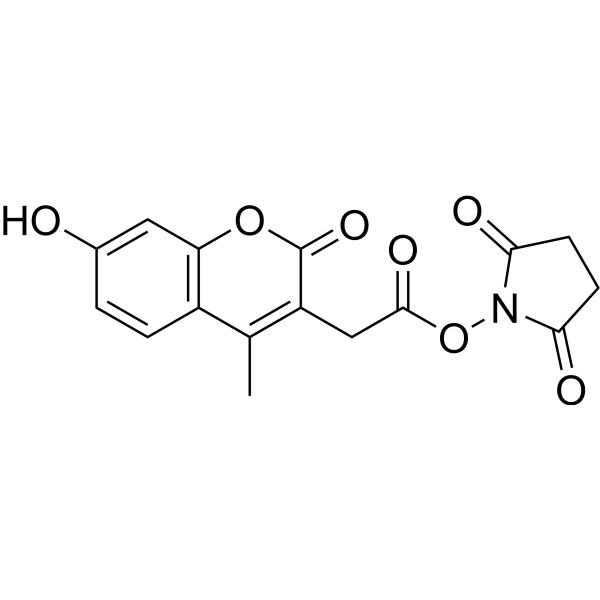 0 ImagesCat. No.: HY-W040291CAS No.: 96735-88-57-Hydroxy-4-methylcoumarin-3-acetic acid, SE is a blue fluorophore that has pH-dependent and environment-sensitive fluorescence. It is widely used for preparing bioconjugates of blue fluorescence.
-
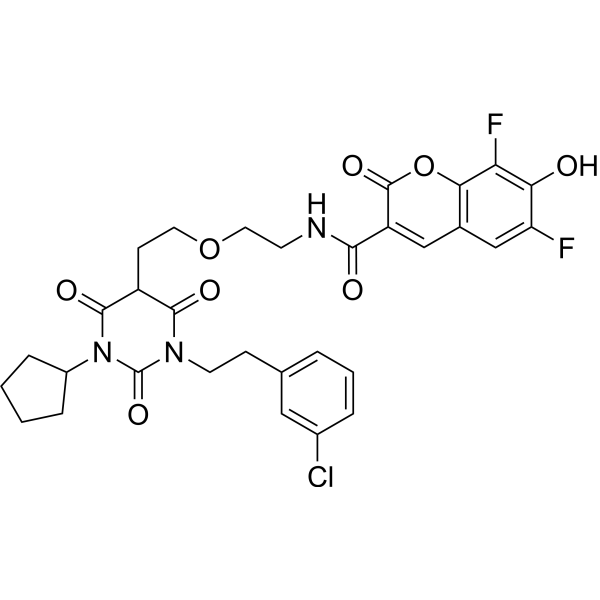
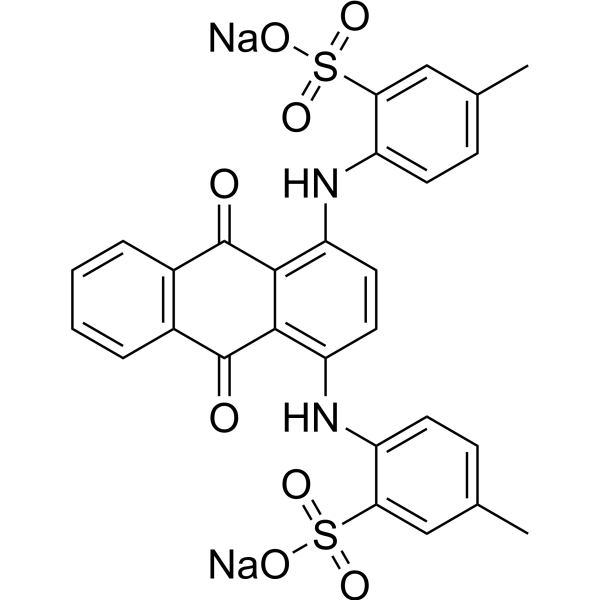
Nile-TPA
 0 ImagesCat. No.: HY-D3101Nile-TPA is a fluorescent probe for polarity detection, which can be used for lipid droplet targeting, cell polarity analysis, in vivo polarity imaging, and blood polarity monitoring in circulating tumor mouse models. The detection mechanism of Nile-TPA relies on the dual intramolecular charge transfer (ICT) effect generated by the electron-donating triphenylamine and Nile Red moieties and the electron-withdrawing carbonyl group; this probe emits strong red fluorescence in a low-polarity environment, and as polarity increases, the fluorescence intensity decreases and a red shift occurs due to changes in the excited-state dipole moment. In spectral tests, its excitation wavelength is 540 nm, and the emission wavelength varies in the range of 550-800 nm depending on solvent polarity; for cell, zebrafish and mouse imaging, Ex/Em = 561/570-620 nm, and for in vivo mouse imaging, Ex/Em = 560/620 nm.
-
PNO1
 0 ImagesCat. No.: HY-D3351CAS No.: 2668963-61-7PNO1 is a fluorescent probe for pulmonary fibrosis detection. The detection mechanism of PNO1 relies on sensing upregulated nitric oxide (NO) in the pulmonary fibrosis (PF) microenvironment. PNO1 contains an aniline group that reacts with NO or its derivatives under acidic conditions to form an N-nitrosylated intermediate, which is subsequently converted into a diazonium salt and undergoes deamination, eliminating the intramolecular electron transfer quenching effect and triggering a fluorescence turn-on response. The excitation wavelength of PNO1 includes 545 nm in in vitro solution studies, while an excitation range of 520-550 nm is used for cell, tissue and in vivo imaging; its emission wavelength centers at 572 nm in the unreacted state, and shifts to 559 nm with enhanced fluorescence intensity upon binding to NO. PNO1 can be used for pulmonary fibrosis research.
-
Sulfo-Cyanine5.5 amine
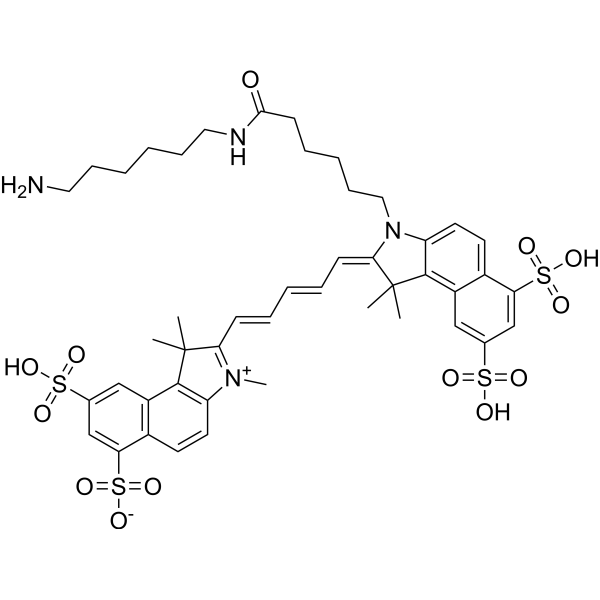 0 ImagesCat. No.: HY-D1376ACAS No.: 2183440-45-9Sulfo-Cyanine5.5 amine is a water-soluble cyanine dye suitable for far-red/near-infrared applications such as in vivo imaging.
-
Cy7.5-COOH TEA
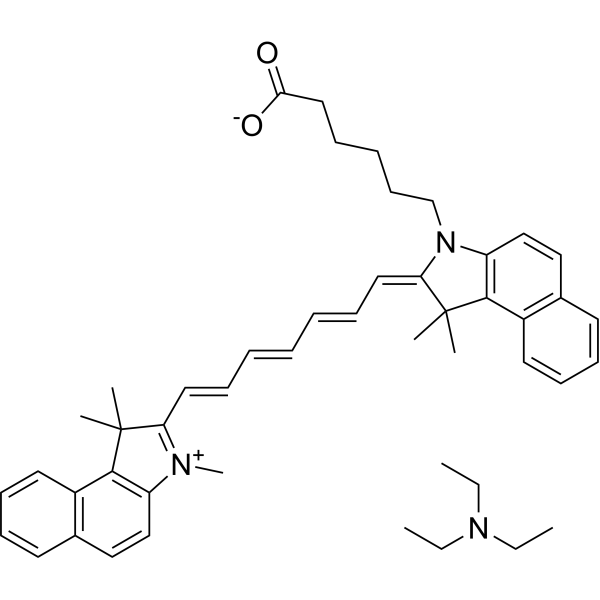 0 ImagesCat. No.: HY-D1883ACy7.5-COOH TEA (compound 8f), a cyanine dye, is a highly fluorescent compound (Abs/Em = 781/808 nm). Cy7.5-COOH TEA can be used as a fluorescent probe in a wide-range of applications such as DNA sequencing, flow cytometry and in vivo imaging.

-
NIR-Thiol dinitrobenzenesulfonate
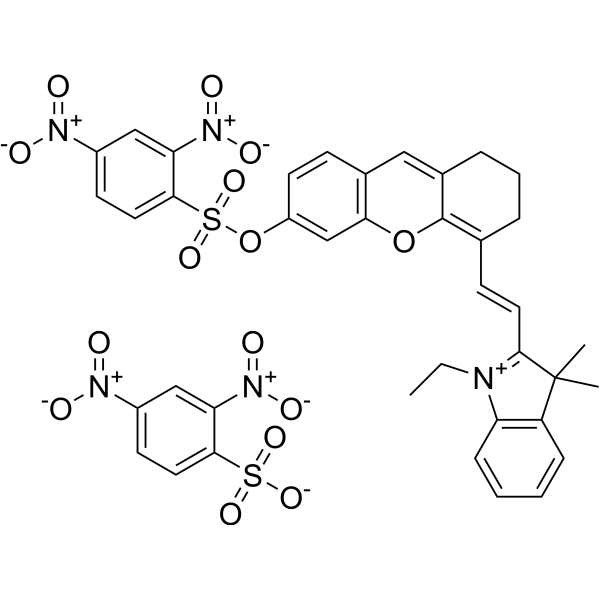 0 ImagesCat. No.: HY-D1066NIR-Thiol dinitrobenzenesulfonate has both absorption and emission in the NIR region. NIR-Thiol dinitrobenzenesulfonate responds to thiol with a large turn-on NIR fluorescence signal upon excitation in the NIR region. NIR-Thiol dinitrobenzenesulfonate is capable of imaging endogenously produced thiol in living cells and mice.
-
5-FITC-Tetrazine
 0 Images5-FITC-Tetrazine is an fluorescent dye composed of FITC (HY-66019) and Tetrazine (Ex/Em = 494 nm/520 nm). 5-FITC-Tetrazine can be used for fluorescent labeling and imaging.
-
NBD Dihexadecylamine
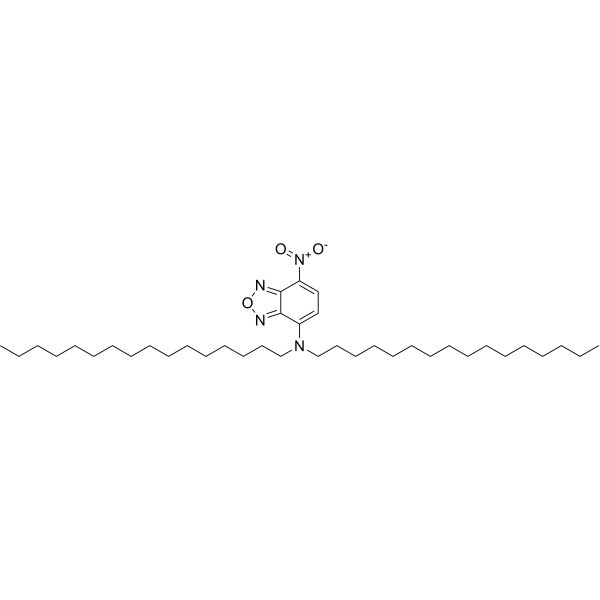 0 ImagesCat. No.: HY-D1770CAS No.: 117056-66-3NBD Dihexadecylamine is a fluorescent probe used for labeling phospholipids.
-
FAM labled Pixofisiran sodium
 0 ImagesCat. No.: HY-177657CFAM labled Pixofisiran sodiumis a FAM labled Pixofisiran sodium.
-
610CP
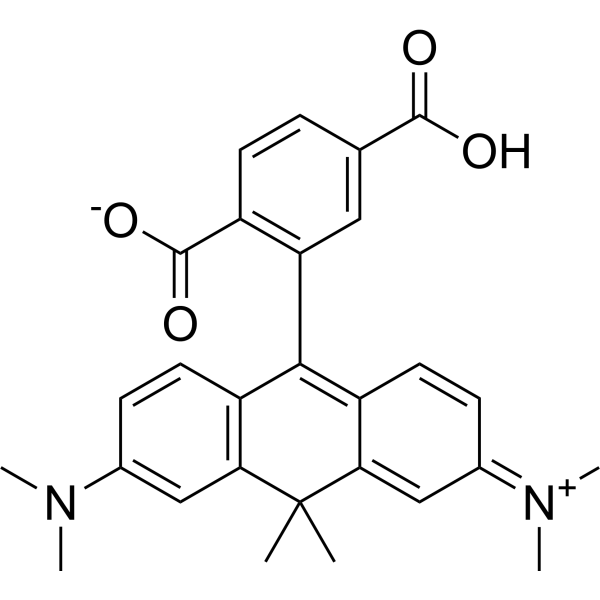 0 ImagesCat. No.: HY-D1346CAS No.: 1877282-17-1610CP is a new type of actin labeling dye. It dissolves in organic solvents. In DMSO the 610CP excitation/emission wavelength is between 609 and 634 nm. 610CP is a fluorescent dye that penetrates living cells. Upon cell entry, 610CP binds to Bromo-des-methyl-Jasplakinolide Therefore, 610CP dye can be used to stain actin fluorescence images with low background and high resolution.
-
Oxonol V
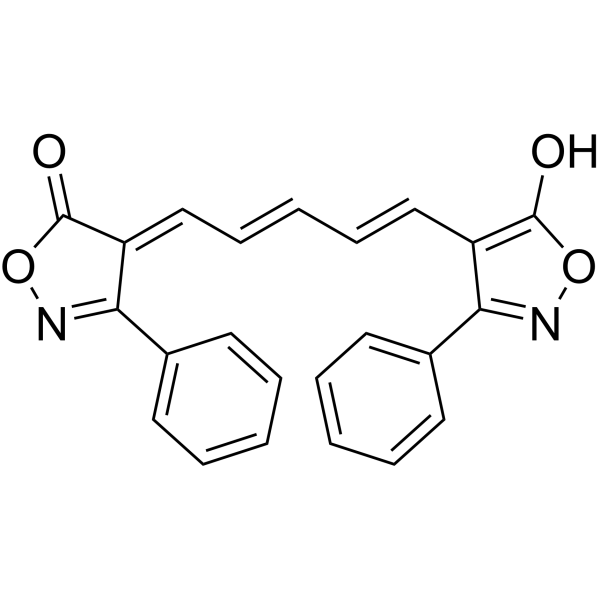 0 ImagesCat. No.: HY-130210CAS No.: 61389-30-8Oxonol V is a slow-response sensitive probe for measuring cellular membrane potential.
-
Cy3 labled Inclisiran sodium
 0 ImagesCat. No.: HY-132591ECy3 labled Inclisiran sodium is a Cy3 labled Inclisiran sodium.
-
FAM labled Donidalorsen sodium
 0 ImagesCat. No.: HY-139787D
-
Biotin-PEG4-AF647
 0 ImagesCat. No.: HY-D3479Biotin-PEG4-AF647 is a biotin-labeled derivative of Alexa Fluor 647 designed for binding to streptavidin or avidin. It features a PEG4 linker that enhances solubility and reduces steric hindrance, making it suitable for streptavidin/avidin-based detection (Ex/Em = 650/668 nm) .
-
L-Arginine 7-amido-4-methylcoumarin dihydrochloride
 0 ImagesCat. No.: HY-W750190CAS No.: 113712-08-6L-Arginine 7-amido-4-methylcoumarin dihydrochloride is a special fluorescent substrate with the potential to be used for detecting cathepsin H activity. L-Arginine 7-amido-4-methylcoumarin dihydrochloride can be used to provide highly sensitive fluorescent signals for biological research. L-Arginine 7-amido-4-methylcoumarin dihydrochloride has important applications in enzyme activity analysis.
-
Griffonia Simplicifolia Lectin II (Biotinylated)
 0 ImagesCat. No.: HY-NP152Synonyms: GSL II (Biotinylated)Griffonia Simplicifolia Lectin II Biotinylated is a plant lectin that can be used as a probe to specifically bind biomolecules (such as polysaccharides, peptides, etc.). Griffonia Simplicifolia Lectin II Biotinylated is a biological material or organic compound that can be used in life science research.




