



IRE1
Inositol requiring enzyme 1
Inositol-requiring enzyme 1 (IRE1) is a bifunctional serine/threonine kinase and endoribonuclease that is a major mediator of the unfolded protein response (UPR) during endoplasmic reticulum (ER) stress. It represents a potential therapeutic target for a number of diseases associated with endoplasmic reticulum stress.
IRE1 is the only identified ER stress sensor in yeast and essential for UPR in animals and plants. As an ER transmembrane protein, IRE1 monitors ER homeostasis through an ER luminal stress-sensing domain and triggers UPR through a cytoplasmic kinase domain and an RNase domain. Upon ER stress, IRE1 RNase is activated through conformational change, autophosphorylation, and higher order oligomerization. Mammalian IRE1 initiates diverse downstream signaling of the UPR either through unconventional splicing of the transcription factor Xbp-1 or and through posttranscriptional modifications via Regulated IRE1-Dependent Decay (RIDD) of multiple substrates.
All Product Categories
-
IRE1 Related Products (72)
Related Products (72)

-
Recombinant Proteins (2)
-
Antibodies (2)
-
IRE1a-IN-1
 0 ImagesCat. No.: HY-158386CAS No.: 3033375-01-5

-
G6374
 0 ImagesCat. No.: HY-180787G6374 is a IRE1 PRORAC degrader with DC50 values of 0.04 μM (AMO1) and 0.13 μM (KMS27), an EC50 value of 0.11 μM, and KD values of 0.56 nM and 90.2 nM for IRE1 and VHL, respectively. G6374 binds to the ATP pocket of the IRE1 kinase domain and VHL to form a ternary complex that recruits CRL2VHL, inducing K48-linked polyubiquitination of IRE1 at lysine residues K704 and K717, which in turn drives proteasomal degradation of monomeric and dimeric IRE1. G6374 can be used for the research of multiple myeloma.
-
IRE1α kinase-IN-9
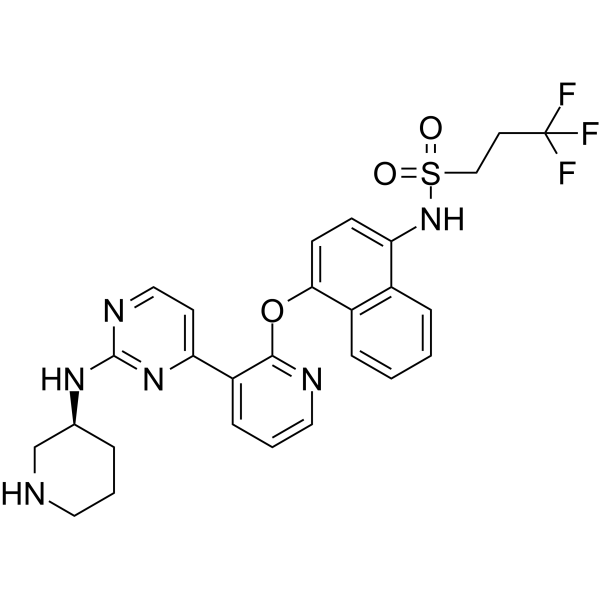
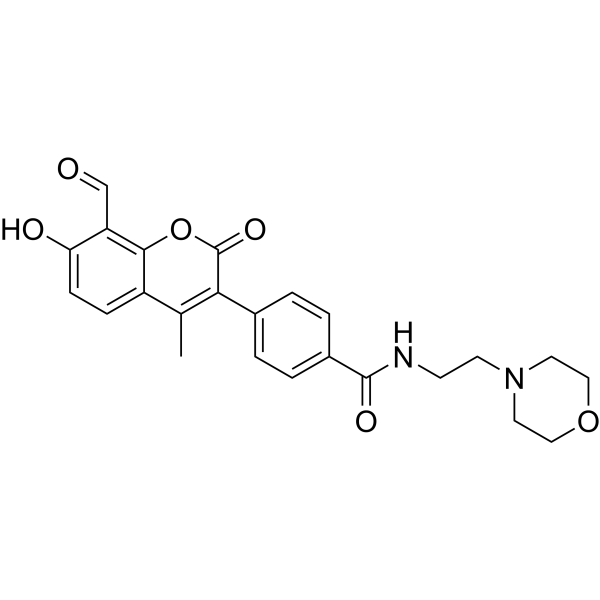 0 ImagesCat. No.: HY-153475CAS No.: 1338933-30-4IRE1α kinase-IN-9 (compound 2) is a potent IRE-1α inhibitor,exhibits an average IC50 value of <0.1 μM. IRE1α kinase-IN-9 can be used for research in diseases associated with the unfolded protein response or with regulated IRE1-dependent decay (RIDD).

-
IRE1α kinase-IN-4
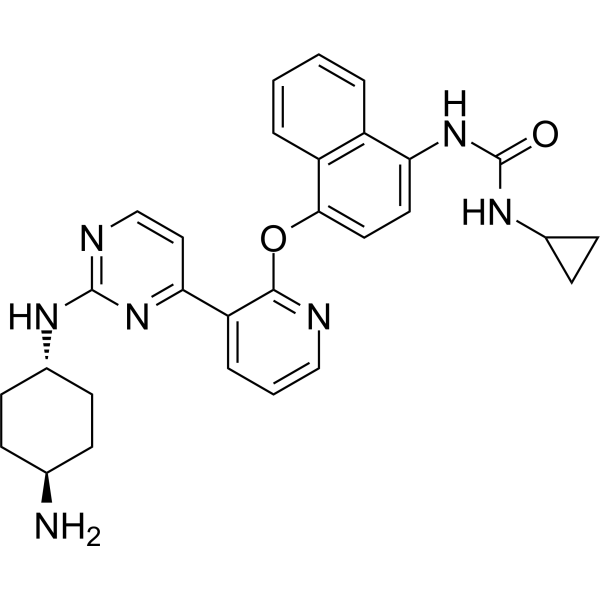 0 ImagesCat. No.: HY-145419CAS No.: 2771006-45-0IRE1α kinase-IN-4 (compound 6) is a potent IRE1α inhibitor with an Ki of 140 nM. IRE1α kinase-IN-4 is the ATP-competitive ligands of IRE1α.
-
IRE1α kinase-IN-8
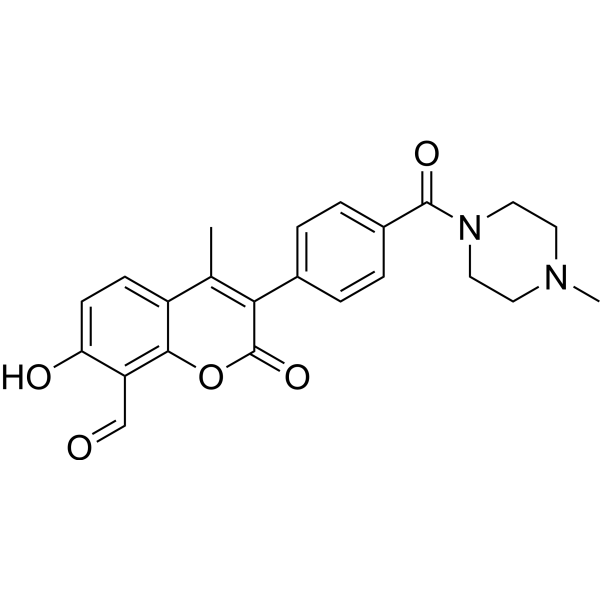 0 ImagesCat. No.: HY-153474CAS No.: 1338933-29-1IRE1α kinase-IN-8, a benzoheterocyclecarboxaldehyde derivative, is a potent IRE-1α inhibitor. IRE1α kinase-IN-8 can be used for research in diseases associated with the unfolded protein response or with regulated IRE1-dependent decay (RIDD).
-
Nur77 modulator 4
 0 ImagesCat. No.: HY-170849Nur77 modulator 4 (Compound 15h) is a Nur77 inducer with a KD of 0.477 μM. Nur77 modulator 4 significantly induces Nur77 expression and apoptosis, showing excellent growth inhibition in HepG2 and MCF-7 cells, with an IC50 of less than 5 μM. Nur77 modulator 4 activates Nur77-mediated ER stress through the PERK-ATF4 and IRE1 signaling pathways, thereby inducing cell apoptosis. Nur77 modulator 4 can be used in cancer research applications .
-
AK177
 0 ImagesCat. No.: HY-181886AK177 is an allosteric activator of IRE1α ribonuclease, with values of 480 nM and 180 nM against non-phosphorylated and phosphorylated IRE1α, respectively. AK177 promotes IRE1α-mediated cleavage of XBP1 mRNA probe in a concentration-dependent manner and binds stably to its kinase domain. However, AK177 shows poor kinase selectivity, and due to poor membrane permeability at the cellular level, it induces no significant downstream pathway activation or antiproliferative activity.
-
Hexadecanedioic acid-d28
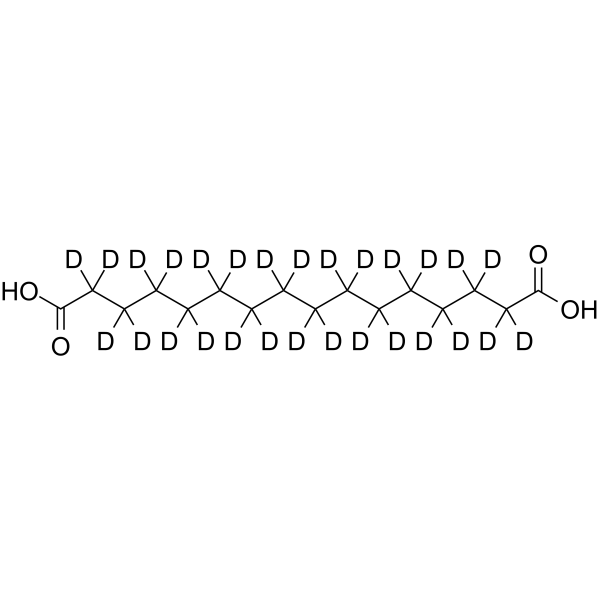 0 ImagesHexadecanedioic acid-d28 is the deuterium labeled Hexadecanedioic acid (HY-W018161). Hexadecanedioic acid (Thapsic acid) is an orally active metabolite produced by B. uniformis. Hexadecanedioic acid inhibits IRE1α-XBP1s-mediated flipogenesis and ferroptosis. Hexadecanedioic acid downregulates XBP1 and Hrd1 expression, activates the Nrf2/SLC7A11/GPX4 pathway. Hexadecanedioic acid can be used for the research of metabolic-associated fatty liver disease.
-
3-Ethoxy-5,6-dibromosalicylaldehyde
 0 Images3-Ethoxy-5,6-dibromosalicylaldehyde is an IRE1/ERN1 inhibitor, with an IC50 of 0.12 μM, a Ki of 71-88 nM, and a Kd of 100 nM against the ribonuclease activity of hIRE1α, as well as an IC50 of 4.8 μM against yeast Ire1. It shows selectivity toward IRE1 ribonuclease. 3-Ethoxy-5,6-dibromosalicylaldehyde blocks the IRE1/ERN1-mediated unfolded protein response (UPR) signaling pathway, including XBP-1 mRNA splicing, induction of XBP1 target genes, and activation of MAPK8/9/10, but does not alter the phosphorylation level of IRE1α or the PERK/ATF6 pathway. 3-Ethoxy-5,6-dibromosalicylaldehyde inhibits chikungunya virus replication, induces growth arrest, apoptosis and clonogenic inhibition in pancreatic cancer cells, reduces FB1 (Fumonisin B1) (HY-N6719)-induced autophagy and cell death, regulates PGG-induced senescence and apoptosis, and alleviates Sorafenib (HY-10201)-induced vacuolization and damage in hepatic stellate cells. 3-Ethoxy-5,6-dibromosalicylaldehyde can be used in research related to chikungunya virus infection, pancreatic cancer, FB1-induced nephrotoxicity, liver cancer, breast cancer, lung cancer and liver fibrosis.
-
BDM44768
 0 ImagesCat. No.: HY-114611CAS No.: 2011754-00-8
-
1ACTA
 0 ImagesCat. No.: HY-169939CAS No.: 2196076-49-81ACTA is an IRE1α S-Nitrosylation inhibtor, maintaining the endoplasmic reticulum stress response under nitrosative stress.
-
PAIR2
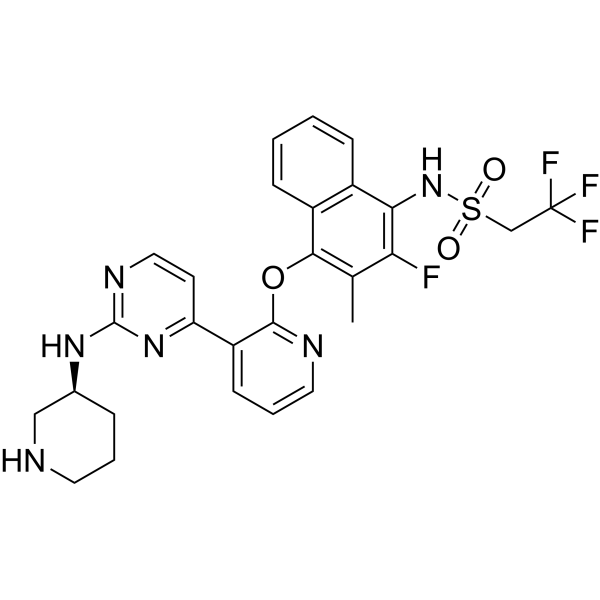 0 ImagesCat. No.: HY-145425CAS No.: 2771006-54-1PAIR2 is a highly selective inhibitor targeting the kinase domain of human IRE1α, with a Ki value of 8.8 nM against human IRE1α. PAIR2 fully occupies the ATP-binding site of the IRE1α kinase domain, partially antagonizes the ribonuclease activity of IRE1α, specifically inhibits regulated IRE1α-dependent decay (RIDD) and its mediated substrate cleavage, while preserving the splicing function of Xbp1 mRNA. PAIR2 also promotes the differentiation of B cells into plasma cells, blocks IRE1α-induced cell apoptosis, and restores the expression of Fgfr2 mRNA in AT2 cells. PAIR2 effectively reaches a steady-state concentration in the lung tissues of Mus musculus, and serves as an important tool for investigating the function of the IRE1α signaling pathway in diseases such as pulmonary fibrosis.
-
3,6-DMAD dihydrochloride
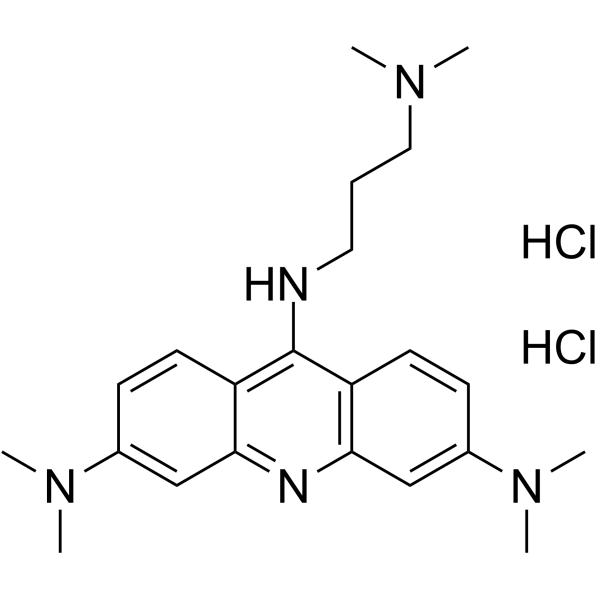 0 ImagesCat. No.: HY-U00460BCAS No.: 2226511-77-73,6-DMAD dihydrochloride, an acridine derivative, is a potent IRE1α-XBP1s pathway inhibitor. 3,6-DMAD dihydrochloride promotes IL-6 secretion via the IRE1α-XBP1s pathway. 3,6-DMAD dihydrochloride inhibits IRE1α oligomerization and endoribonuclease (RNase) activity. 3,6-DMAD dihydrochloride can be used for research of cancer.

-
IRE1α kinase-IN-5
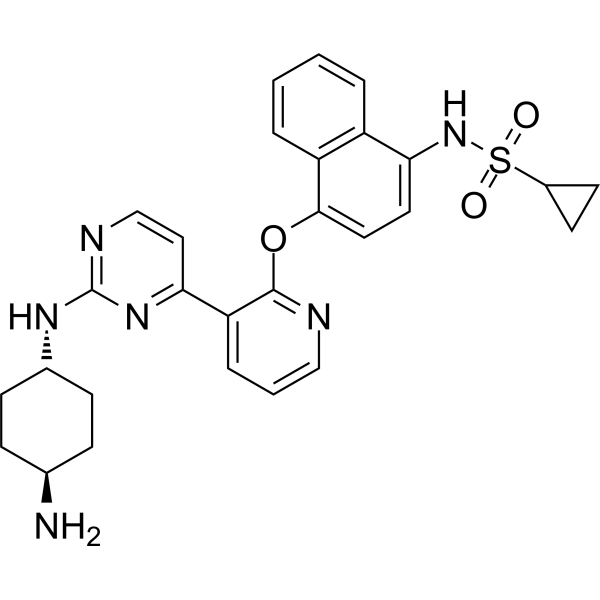 0 ImagesCat. No.: HY-145420CAS No.: 2771006-47-2IRE1α kinase-IN-5 (compound 7) is a potent IRE1α inhibitor with an Ki of 98 nM. IRE1α kinase-IN-5 is the ATP-competitive ligands of IRE1α.
-
Toyocamycin (Standard)
 0 ImagesCat. No.: HY-103248RCAS No.: 606-58-6Synonyms: Vengicide (Standard)DL-Aspartic acid (Standard) is the analytical standard of DL-Aspartic acid. This product is intended for research and analytical applications. DL-Aspartic acid (DL-Asp-OH) is a kind of biological materials or organic compounds that are widely used in life science research.
-
IRE1α kinase-IN-3
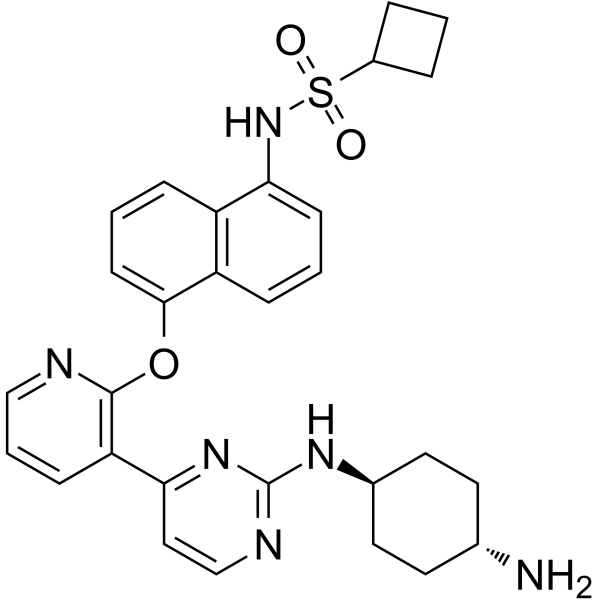 0 ImagesCat. No.: HY-145418CAS No.: 2416223-41-9IRE1α kinase-IN-3 (compound 2) is a potent IRE1α inhibitor with an Ki of 480 nM. IRE1α kinase-IN-3 is the ATP-competitive ligands of IRE1α.




