



IRE1
Inositol requiring enzyme 1
Inositol-requiring enzyme 1 (IRE1) is a bifunctional serine/threonine kinase and endoribonuclease that is a major mediator of the unfolded protein response (UPR) during endoplasmic reticulum (ER) stress. It represents a potential therapeutic target for a number of diseases associated with endoplasmic reticulum stress.
IRE1 is the only identified ER stress sensor in yeast and essential for UPR in animals and plants. As an ER transmembrane protein, IRE1 monitors ER homeostasis through an ER luminal stress-sensing domain and triggers UPR through a cytoplasmic kinase domain and an RNase domain. Upon ER stress, IRE1 RNase is activated through conformational change, autophosphorylation, and higher order oligomerization. Mammalian IRE1 initiates diverse downstream signaling of the UPR either through unconventional splicing of the transcription factor Xbp-1 or and through posttranscriptional modifications via Regulated IRE1-Dependent Decay (RIDD) of multiple substrates.
All Product Categories
-
IRE1 Related Products (74)
Related Products (74)

-
Recombinant Proteins (2)
-
Antibodies (2)
-
IRE1α kinase-IN-7
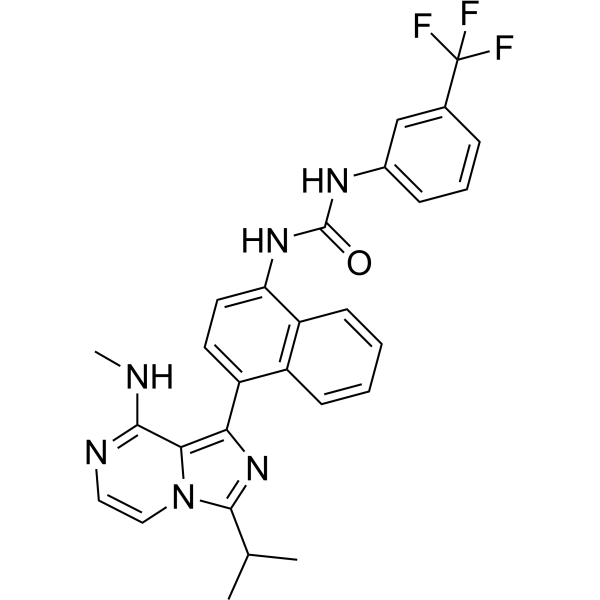 0 ImagesCat. No.: HY-18510CAS No.: 1414938-22-9IRE1α kinase-IN-7 (compound 4) is an IRE1α kinase inhibitor. IRE1α kinase-IN-7 can be used for research of endoplasmic reticulum stress-related diseases.
-
6-Methoxydihydrosanguinarine hydrochloride
 0 ImagesCat. No.: HY-N3000A6-Methoxydihydrosanguinarine hydrochloride is an alkaloid with activity across multiple cancer cell types. 6-Methoxydihydrosanguinarine hydrochloride activates IRE1/JNK signaling, blocks Akt/mTOR and PI3K/AKT/mTOR pathways, reduces expression of Cdc25C, CyclinB1, Cdc2, YAP/TAZ, Survivin, GPX4, and EGFR, upregulates IRE1 and DR5, and activates JNK and caspases. 6-Methoxydihydrosanguinarine hydrochloride induces apoptosis, G2/M phase arrest, DNA damage, ROS generation, lipid peroxidation, ferroptosis, autophagy, and suppresses cancer cell growth. 6-Methoxydihydrosanguinarine hydrochloride disruptes the biofilm formation of Candida albicans (C. albicans). 6-Methoxydihydrosanguinarine hydrochloride can be used for the research of non-small cell lung cancer, hepatocellular carcinoma, melanoma, colon carcinoma, ovarian cancer and breast cancer.
-
D-F07
 0 ImagesCat. No.: HY-169763CAS No.: 2361297-58-5D-F07 is a prodrug with an aldehyde shielding group and an IRE-1 inhibitor that induces Apoptosis. D-F07 has antitumor activity.
-
IBT21
 0 ImagesCat. No.: HY-134800CAS No.: 692744-81-3IBT21 is an endoplasmic reticulum stress inhibitor that binds to unfolded or misfolded proteins and prevents their aggregation. IBT21 inhibits UPR activation of the ATF6, IRE1 and PERK branches under ER stress, with IC50 values of 0.24 μM, 0.33 μM, and 0.46 μM, respectively. IBT21 protects cells from ER stress-induced death and mutant prion protein (protein toxin)-induced growth inhibition. IBT21 exhibits chemical chaperone activity distinct from UPR modulators, does not affect protein translation, moderately reduces DTT (HY-15917)-induced ER stress, and fails to inhibit the heat shock response. IBT21 is useful for research related to prion diseases.
-
Lard oil
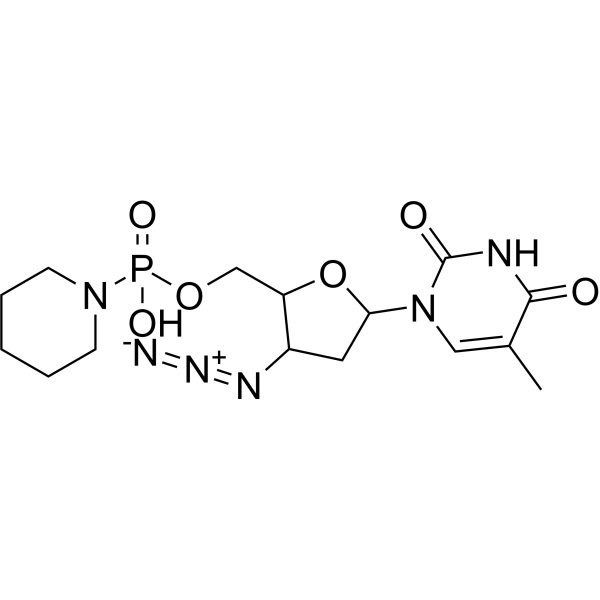 0 ImagesCat. No.: HY-W127601CAS No.: 8016-28-2Lard oil is an orally active biochemical reagent. Lard oil upregulates PERK, eIF2a, CHOP, OPN, TLR2, TLR4, TNF-α, and downregulates GRP78 and IRE1a. Lard oil induces responses such as body fat accumulation, elevated serum insulin levels, increased HOMA-IR, hepatic ectopic lipid deposition, hepatic endoplasmic reticulum stress, and hepatic inflammation. Lard oil can be used in studies related to diet-induced obesity, insulin resistance, and non-alcoholic fatty liver disease.

-
IRE1α kinase-IN-10
 0 ImagesCat. No.: HY-129348CAS No.: 1415050-59-7IRE1α kinase-IN-10 (GP29) is an IRE1α kinase inhibitor. IRE1α kinase-IN-10 can be used for the research of endoplasmic reticulum stress-related diseases.
-
6-Bromo-2-hydroxy-3-methoxybenzaldehyde (Standard)
 0 ImagesCat. No.: HY-107371RCAS No.: 20035-41-0Synonyms: NSC95682 (Standard)6-Bromo-2-hydroxy-3-methoxybenzaldehyde (Standard) (NSC95682 (Standard)) is the analytical standard of 6-Bromo-2-hydroxy-3-methoxybenzaldehyde (HY-107371). This product is intended for research and analytical applications. 6-Bromo-2-hydroxy-3-methoxybenzaldehyde (NSC95682) (Compound 3-5) is a selective and potent IRE-1α inhibitor with an IC50 value of 0.08 μM. 6-Bromo-2-hydroxy-3-methoxybenzaldehyde can be used for research on diseases associated with the unfolded protein response (UPR), such as cancer and autoimmune diseases.
-
B I09 (Standard)
 0 ImagesCat. No.: HY-107400RCAS No.: 1607803-67-7B I09 (Standard) is the analytical standard of B I09 (HY-107400). This product is intended for research and analytical applications. B I09 is an IRE-1 RNase inhibitor, with an IC50 of 1230 nM.
-
Sunitinib-d4
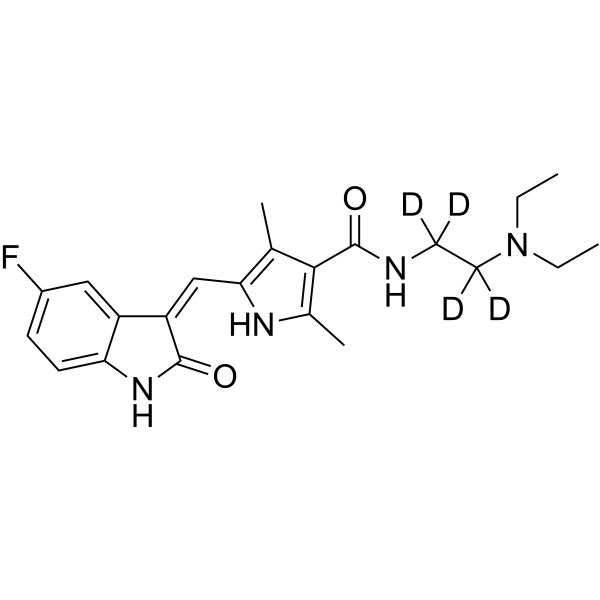 0 ImagesCat. No.: HY-10255AS1CAS No.: 1126721-79-6Sunitinib-d4 is the deuterium labeled Sunitinib. Sunitinib (SU 11248) is a multi-targeted receptor tyrosine kinase inhibitor with IC50s of 80 nM and 2 nM for VEGFR2 and PDGFRβ, respectively. Sunitinib, an ATP-competitive inhibitor, effectively inhibits autophosphorylation of Ire1α by inhibiting autophosphorylation and consequent RNase activation.
-
MKC8866 (Standard)
 0 ImagesCat. No.: HY-104040RCAS No.: 1338934-59-0Synonyms: Orin1001 (Standard)MKC8866 (Standard) is the analytical standard of MKC8866 (HY-104040). This product is intended for research and analytical applications. MKC8866, a salicylaldehyde analog, is a potent, selective IRE1 RNase inhibitor with an IC50 of 0.29 μM in human vitro. MKC8866 strongly inhibits Dithiothreitol-induced X-box-binding protein 1-spliced (XBP1s) expression with an EC50 of 0.52 μM and unstresses RPMI 8226 cells with an IC50 of 0.14 μM. MKC8866 inhibits IRE1 RNase in breast cancer cells leading to the decreased production of pro-tumorigenic factors and it can inhibits prostate cancer (PCa) tumor growth.
-
DSA8
 0 ImagesCat. No.: HY-18903CAS No.: 1157857-37-8DSA8 is a type II kinase inhibitor with IRE1 RNase modulating activity. DSA8 can be used for the research of cancer, metabolic disease, suah as diabetes.
-
GSK2850163 (S enantiomer)
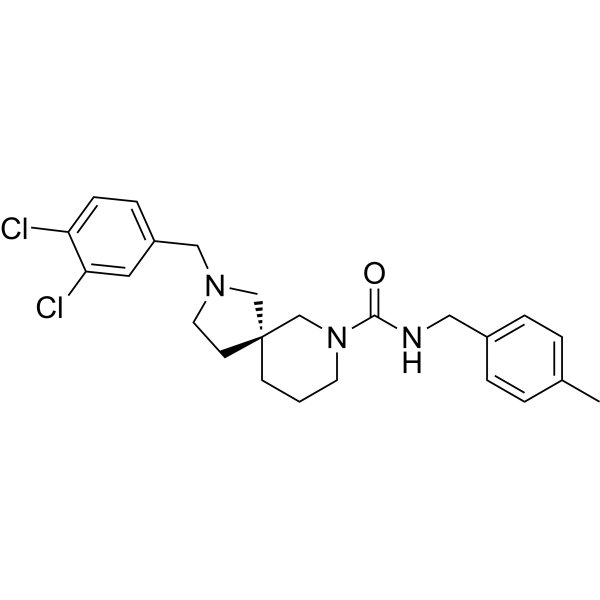 0 ImagesCat. No.: HY-U00459ACAS No.: 2309519-81-9Synonyms: GSK163 (S enantiomer)GSK2850163 S enantiomer is the inactive enantiomer of GSK2850163. GSK2850163 is an inositol-requiring enzyme-1 alpha (IRE1a) inhibitor.
-
Hexadecanedioic acid (Standard)
 0 ImagesSynonyms: Thapsic acid (Standard)Hexadecanedioic acid (Thapsic acid) (Standard) is the analytical standard of Hexadecanedioic acid (HY-W018161). This product is intended for research and analytical applications. Hexadecanedioic acid is an orally active metabolite produced by B. uniformis. Hexadecanedioic acid inhibits IRE1α-XBP1s-mediated flipogenesis and ferroptosis. Hexadecanedioic acid downregulates XBP1 and Hrd1 expression, activates the Nrf2/SLC7A11/GPX4 pathway. Hexadecanedioic acid can be used for the research of metabolic-associated fatty liver disease.




