



Mitophagy
Mitochondrial Autophagy
Mitophagy is the selective degradation of mitochondria by autophagy.
Mitochondria are essential organelles that regulate cellular energy homeostasis and cell death. The removal of damaged mitochondria through autophagy, a process called mitophagy, is thus critical for maintaining proper cellular functions. Indeed, mitophagy has been recently proposed to play critical roles in terminal differentiation of red blood cells, paternal mitochondrial degradation, neurodegenerative diseases, and ischemia or drug-induced tissue injury.
Autophagy and mitophagy are important cellular processes that are responsible for breaking down cellular contents, preserving energy and safeguarding against accumulation of damaged and aggregated biomolecules.
All Product Categories
-
Mitophagy Related Products (269)
Related Products (269)

-
Related Compound Screening Libraries (1)
-
Dexamethasone-d5-1
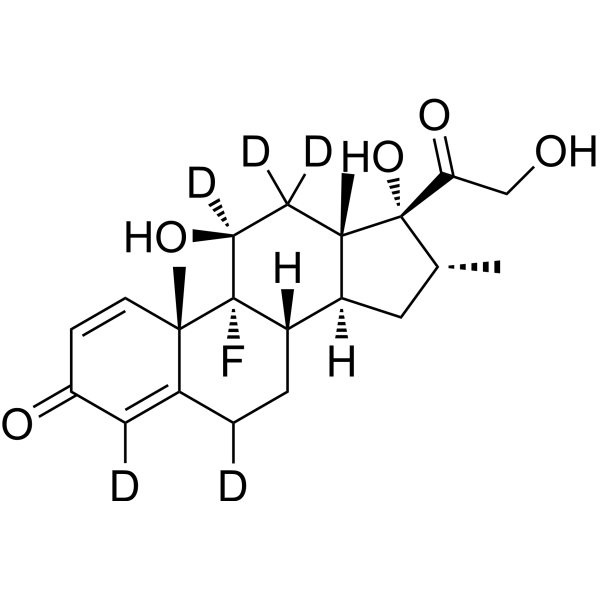 0 ImagesCat. No.: HY-14648S1Synonyms: Hexadecadrol-d5-1; Prednisolone F-d5-1Dexamethasone-d5-1 is deuterium labeled Dexamethasone. Dexamethasone (Hexadecadrol) is a glucocorticoid receptor agonist. Dexamethasone also significantly decreases CD11b, CD18, and CD62L expression on neutrophils, and CD11b and CD18 expression on monocytes. Dexamethasone is highly effective in the control of COVID-19 infection. Dexamethasone inhibits production of exosomes containing inflammatory microRNA-155 in lipopolysaccharide-induced macrophage inflammatory responses.
-
Esmolol-d7 hydrochloride
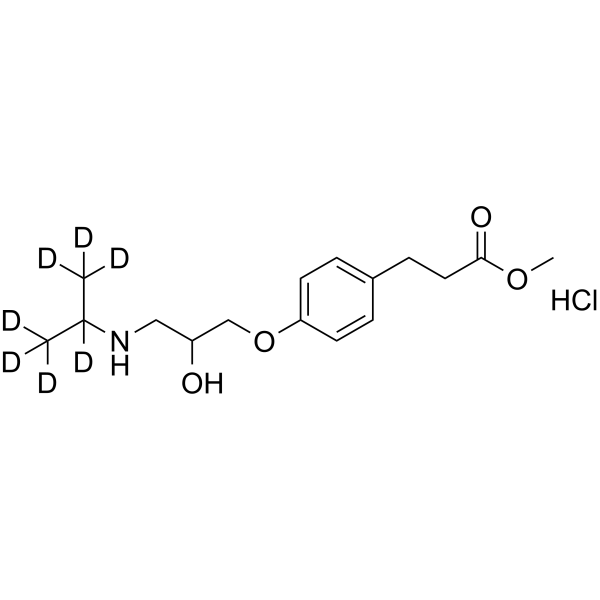 0 ImagesCat. No.: HY-B1392SCAS No.: 1346598-13-7Esmolol-d7 hydrochloride is the deuterium labeled Esmolol hydrochloride (HY-B1392). Esmolol hydrochloride is an ultra-short-acting cardioselective β1-adrenergic blocker. Esmolol hydrochloride exerts its antiarrhythmic effect by activating Neurokinin 1 ReceptorEsmolol hydrochloride attenuates post resuscitation myocardial dysfunction. Esmolol hydrochloride improves diabetic wound healing by inhibiting (aldose reductase) and the production of advanced glycation end products and promoting fibroblast migration. Esmolol hydrochloride can be used to study cardiac diseases such as arrhythmias and diabetic foot ulcers.
-
Torkinib (Standard)
 0 ImagesCat. No.: HY-10474RCAS No.: 1092351-67-1Synonyms: PP 242 (Standard)Torkinib (Standard) is the analytical standard of Torkinib. This product is intended for research and analytical applications. Torkinib (PP 242) is a selective and ATP-competitive mTOR inhibitor with an IC50 of 8 nM. PP242 inhibits both mTORC1 and mTORC2 with IC50s of 30 nM and 58 nM, respectively.
-
Olanzapine-d4
 0 ImagesCat. No.: HY-14541S1CAS No.: 1252611-62-3Synonyms: LY170053-d4
-
Quinacrine dihydrochloride (Standard)
 0 ImagesCat. No.: HY-13735ARCAS No.: 69-05-6Synonyms: Mepacrine dihydrochloride (Standard); SN-390 dihydrochloride (Standard)Quinacrine (dihydrochloride) (Standard) is the analytical standard of Quinacrine (dihydrochloride). This product is intended for research and analytical applications. Quinacrine (Mepacrine) dihydrochloride is an orally bioavailable antimalarial agent, which possess anticancer effect both in vitro and vivo. Quinacrine dihydrochloride suppresses NF-κB and activate p53 signaling, which results in the induction of the apoptosis.
-
Dexpramipexole-d3 dihydrochloride
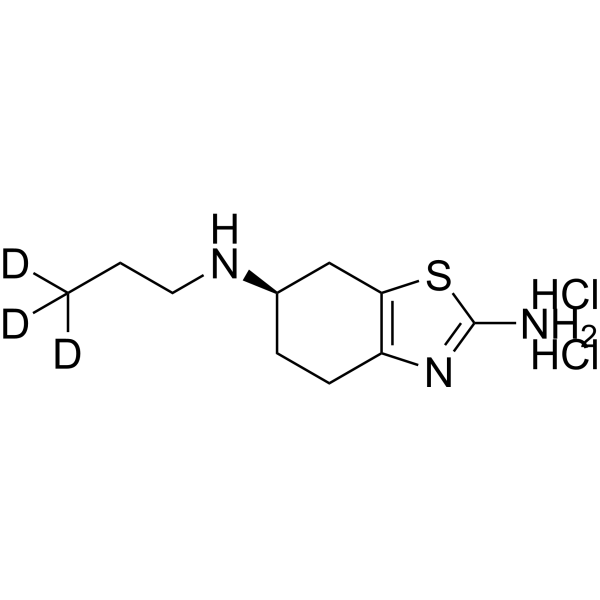 0 ImagesCat. No.: HY-17355BSCAS No.: 1432230-09-5Synonyms: (R)-Pramipexole-d3 dihydrochloride; R-(+)-Pramipexole-d3 dihydrochloride; KNS-760704-d3 dihydrochlorideDexpramipexole-d3 ((R)-Pramipexole-d3) dihydrochloride is the deuterium labeled Dexpramipexole. Dexpramipexole ((R)-Pramipexole) dihydrochloride is an orally active, blood-brain barrier permeable mitochondrial protective agent. Dexpramipexole dihydrochloride upregulates the expression of Parkin, PINK1, GPX4 and FSP1; binds to mitochondrial F1/Fo-ATP synthase; blocks the Nav1.8 sodium channel; and inhibits the activation of the NLRP3 inflammasome. Dexpramipexole dihydrochloride induces mitophagy, inhibits ferroptosis, pyroptosis, apoptosis, neuroinflammation and eosinophilopoiesis; maintains mitochondrial function and redox homeostasis; reduces reactive oxygen species production; and decreases myocardial infarct size. Dexpramipexole dihydrochloride is applicable to studies on eosinophilic asthma, myocardial ischemia/reperfusion injury, sepsis-associated encephalopathy, analgesia, and more.
-
Zaluzanin C
 0 ImagesCat. No.: HY-N15415CAS No.: 16838-87-2Zaluzanin C is a sesquiterpene lactone and antifungal agent. Zaluzanin C is isolated from the leaves of Vernonia arborea. Zaluzanin C inhibits mtROS-mediated NF-κB activity, as well as LPS- and TNF-α-induced mtROS production. Zaluzanin C alleviates mtROS-mediated mitochondrial dysfunction, enhances Mitophagy, and increases the mRNA levels of fatty acid oxidation genes and mitochondrial biogenesis factors. Zaluzanin C inhibits the formation of advanced glycation end products and α-glucosidase activity. Zaluzanin C improves intracellular lipid accumulation. Zaluzanin C exhibits anti-inflammatory, antioxidant, antifungal, anticancer and pro-osteogenic activities. Zaluzanin C can be used in studies related to non-alcoholic fatty liver disease and obesity.
-
Tranexamic acid-13C6
 0 ImagesCat. No.: HY-B0149S2Synonyms: Cyclocapron-13C6Tranexamic acid-13C6 (Cyclocapron-13C6) is 13C labeled Tranexamic acid. Tranexamic acid (cyclocapron), a cyclic analog of lysine, is an orally active antifibrinolytic agent. Tranexamic acid attenuates the effects of severe trauma, inhibits urokinase plasminogen activator and ameliorates dry wrinkles. Tranexamic acid can used for the research of hemostasis .
-
DS96432529 (Standard)
 0 ImagesDS96432529 (Standard) is the analytical standard of DS96432529 (HY-145121). This product is intended for research and analytical applications. DS96432529 is an orally active CDK8 inhibitor with an IC50 of 33 nM. DS96432529 enhances ALPase activity, with an EC200 of 63 nM. DS96432529 inhibits TNF-α-induced activation of the RLR signaling pathway, activates mitophagy, accelerates mineralized nodule formation, and suppresses the proliferation of periodontal ligament stem cells. DS96432529 promotes bone formation, alleviates ligation-induced alveolar bone loss, and increases bone mineral density in ovariectomized animal models. DS96432529 can be used in studies related to periodontitis and osteoporosis.
-
Molephantin
 0 ImagesCat. No.: HY-N12531CAS No.: 50656-66-1Molephantin is a blood-brain barrier permeable anti-glioblastoma compound. Molephantin induces ROS generation, leading to mitochondrial damage, Mitophagy flux blockage and Apoptosis induction. Molephantin can suppress the PI3K/Akt/mTOR signaling pathway. Molephantin demonstrates antitumor effects against glioblastoma.
-
Oxidopamine hydrobromide (Standard)
 0 ImagesCat. No.: HY-B1081ARCAS No.: 636-00-0Synonyms: 6-Hydroxydopamine hydrobromide (Standard); 6-OHDA hydrobromide (Standard)Oxidopamine hydrobromide (Standard) is the analytical standard of Oxidopamine hydrobromide (HY-B1081A). This product is intended for research and analytical applications. Oxidopamine (6-OHDA) hydrobromide is an antagonist of the neurotransmitter dopamine. Oxidopamine hydrobromide is a widely used neurotoxin and selectively destroys dopaminergic neurons. Oxidopamine hydrobromide promotes COX-2 activation, leading to PGE2 synthesis and pro-inflammatory cytoKine IL-1β secretion. Oxidopamine hydrobromide can be used for the research of ParKinson’s disease (PD), attention-deficit hyperactivity disorder (ADHD), and Lesch-Nyhan syndrome.
-
Olanzapine hydrochloride
 0 ImagesCat. No.: HY-14541ACAS No.: 783334-36-1Synonyms: LY170053 hydrochlorideOlanzapine hydrochloride is a selective, orally active monoaminergic antagonist with high affinity binding to serotonin H1, 5HT2A/2C, 5HT3, 5HT6 (Ki=7, 4, 11, 57, and 5 nM, respectively), dopamine D1-4 (Ki=11 to 31 nM), muscarinic M1-5 (Ki=1.9-25 nM), and adrenergic α1 receptor (Ki=19 nM). Olanzapine hydrochloride is an atypical antipsychotic.
-
Diquat dibromide hydrate (Standard)
 0 ImagesDiquat (dibromide hydrate) (Standard) is the analytical standard of Diquat (dibromide hydrate). This product is intended for research and analytical applications. Diquat dibromide hydrate is a comprehensive herbicide. Diquat dibromide hydrate increases the production of ROS and triggers mitophagy. Diquat dibromide hydrate generates free radicals such as superoxide anions through redox cycles, which induce oxidative stress. Diquat dibromide hydrate is cytotoxic, reproductive, and neurotoxic. Diquat dibromide hydrate is used in cotton, soybean, and other crops to combat noxious weeds.
-
Quinacrine hydrochloride hydrate (Standard)
 0 ImagesCat. No.: HY-13735BRCAS No.: 6151-30-0Synonyms: Mepacrine hydrochloride hydrate (Standard); SN-390 hydrochloride hydrate (Standard)Quinacrine (hydrochloride hydrate) (Standard) is the analytical standard of Quinacrine (hydrochloride hydrate). This product is intended for research and analytical applications. Quinacrine hydrochloride hydrate (Mepacrine hydrochloride hydrate) is an antimalarial agent, which possess anticancer effect both in vitro and vivo. Quinacrine hydrochloride hydrate suppresses NF-κB and activates p53 signaling, which results in the induction of the apoptosis.
-
Doxazosin mesylate (Standard)
 0 ImagesCat. No.: HY-B0098ARCAS No.: 77883-43-3Synonyms: UK 33274 mesylate (Standard)Doxazosin (mesylate) (Standard) is the analytical standard of Doxazosin (mesylate). This product is intended for research and analytical applications. Doxazosin mesylate (UK 33274) is a quinazoline-derivative that selectively antagonizes postsynaptic α1-adrenergic receptors.
-
Nivitol
 0 ImagesCat. No.: HY-108046CAS No.: 869743-37-3Synonyms: UP302Nivitol (UP302) is a natural phenolic compound discovered from Dianella ensifolia and also acts as a Tyrosinase inhibitor. Nivitol competitively and reversibly inhibits tyrosinase, suppressing melanin production. Nivitol inhibits homogentisate 1,2-dioxygenase (HGD). In human leukemia cells, Nivitol inhibits PI3K/AKT pathway phosphorylation, increases ROS, decreases mitochondrial membrane potential, and induces G2/M cell cycle arrest, apoptosis, and PINK1/Parkin-mediated mitophagy. Nivitol exhibits inhibition of tumor growth in the MV411 xenograft mouse model. Nivitol is used for research on exogenous ochronosis, hyperpigmentation, and leukemia.
-
Sunitinib-d4
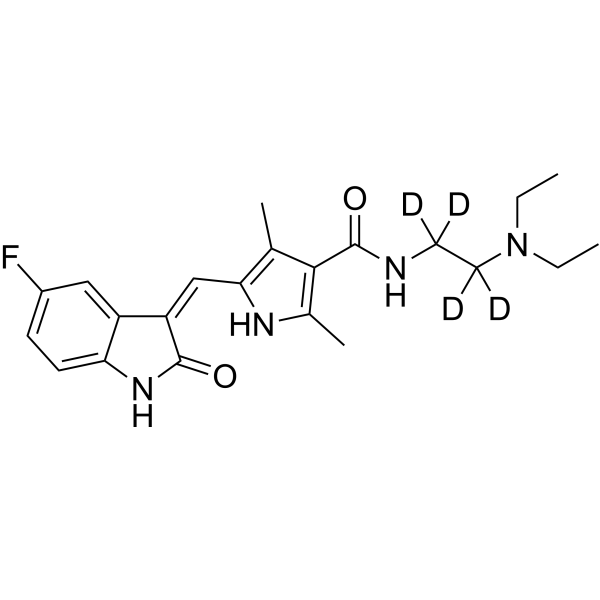 0 ImagesCat. No.: HY-10255AS1CAS No.: 1126721-79-6Sunitinib-d4 is the deuterium labeled Sunitinib. Sunitinib (SU 11248) is a multi-targeted receptor tyrosine kinase inhibitor with IC50s of 80 nM and 2 nM for VEGFR2 and PDGFRβ, respectively. Sunitinib, an ATP-competitive inhibitor, effectively inhibits autophosphorylation of Ire1α by inhibiting autophosphorylation and consequent RNase activation.
-
Mdivi-1 (Standard)
 0 ImagesCat. No.: HY-15886RCAS No.: 338967-87-6Synonyms: Mitochondrial division inhibitor 1 (Standard)Mdivi-1 (Standard) is the analytical standard of Mdivi-1. This product is intended for research and analytical applications. Mdivi-1 is a selective dynamin-related protein 1 (Drp1) inhibitor. Mdivi-1 is a mitochondrial division/mitophagy inhibitor.
-
U0126 (Standard)
 0 ImagesCat. No.: HY-12031ARCAS No.: 109511-58-2U0126 (Standard) is the analytical standard of U0126 (HY-12031A). This product is intended for research and analytical applications. U0126 is a potent, non-ATP competitive and selective MEK1 and MEK2 inhibitor, with IC50s of 72 nM and 58 nM, respectively. U0126 is an autophagy and mitophagy inhibitor.
-
URB-597 (Standard)
 0 ImagesSynonyms: KDS-4103 (Standard)URB-597 (Standard) is the analytical standard of URB-597. This product is intended for research and analytical applications. URB-597 (KDS-4103) is an orally bioavailable and selective FAAH inhibitor. URB-597 inhibits FAAH activity with an IC50s of approximately 5 nM in rat brain membranes, 0.5 nM in intact rat neurons, 3 nM in human liver microsomes. Antidepressant-like effects. Analgesic activity.



