



NOP Receptor/ORL1 Agonist
- 1
-
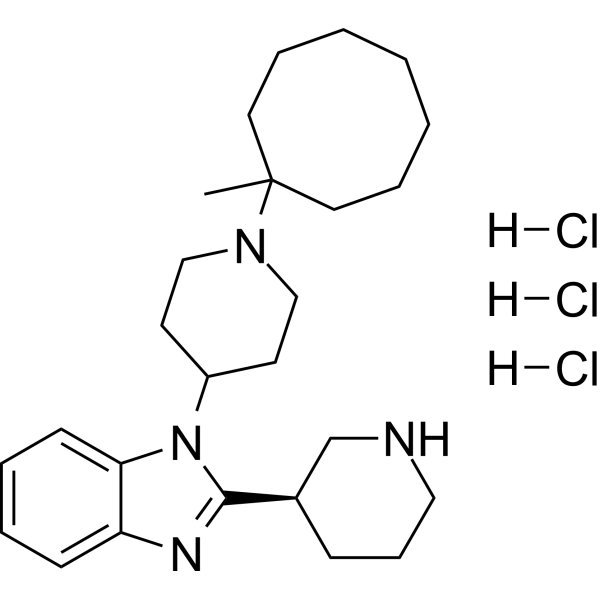
MCOPPB trihydrochloride
 0 Images
MCOPPB trihydrochloride is a NOP/ORL1 G protein-coupled receptor agonist and autophagy inhibitor that can cross the blood-brain barrier. MCOPPB trihydrochloride clears senescent cells, regulates locomotion, lipid storage and immune responses, and inhibits fibrosis and angiogenesis. MCOPPB trihydrochloride blocks autophagic flux, induces changes in locomotion and lipid storage, and activates the stress-responsive immune transcription network, thereby improving post-infarction cardiac function and exerting anxiolytic effects. MCOPPB trihydrochloride can be applied to research fields such as aging-related diseases and ischemic heart failure.
-
BPR1M492
 0 ImagesCat. No.: HY-184490CAS No.: 3118558-91-8
BPR1M492 is a brain-penetrant μ-opioid receptor (MOR) agonist an in vitro EC50 of 0.93 nM in the cAMP inhibition assay and 0.004 nM in the FLIPR Ca2+ assay without a clear signaling bias between cAMP and β-arrestin-2 pathway. BPR1M492 is a cAMP-biased nociceptin-orphanin FQ opioid peptide agonist. BPR1M492 is a weak cAMP-biased δ/κ-opioid receptor agonist. BPR1M492 demonstrates potent in vivo antinociception and can be used for pain research.
-
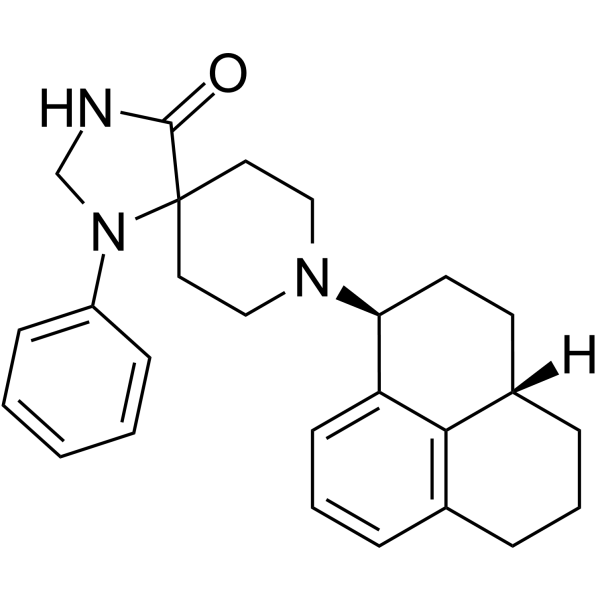
Ro 64-6198
 0 Images
Ro 64-6198 is a potent, selective, nonpeptide, high-affinity, high cellular permeability and brain penetration N/OFQ receptor (NOP) agonist with an EC50 value of 25.6 nM. Ro 64-6198 is at least 100 times more selective for the NOP receptor over the classic opioid receptors. Ro 64-6198 can be used for stress and anxiety, addiction, neuropathic pain, cough, and anorexia.
-
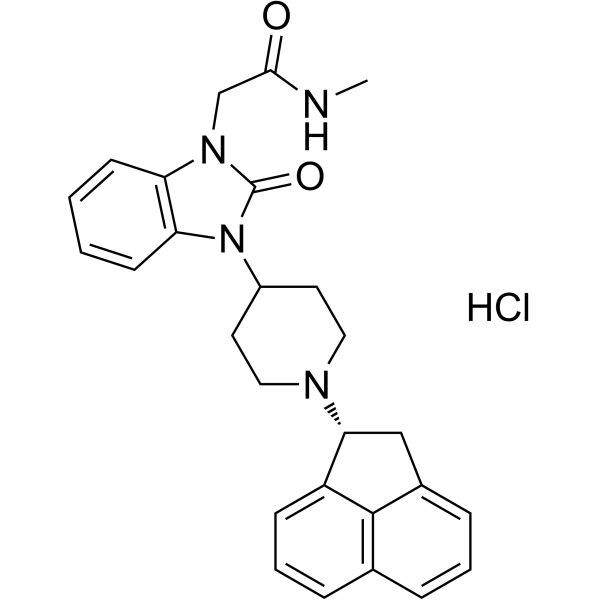
MT-7716 hydrochloride
 0 ImagesSynonyms: W-212393 hydrochloride
MT-7716 hydrochloride (W-212393 hydrochloride) is a selective non-peptide nociceptin receptor (NOP) agonist and promising potential treatment drug for alcohol abuse and relapse prevention.
-
Lexanopadol
 0 ImagesCat. No.: HY-120385CAS No.: 1357348-09-4Synonyms: GRT-6006
Lexanopadol (GRT-6006) is a μ-opioid receptor and nociceptor receptor (ORL-1 receptor) agonist. Lexanopadol can be used to study pain.
-
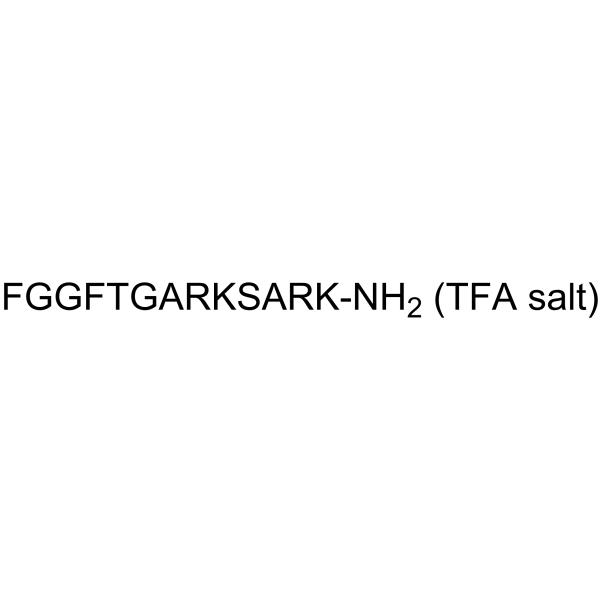
Nociceptin (1-13), amide
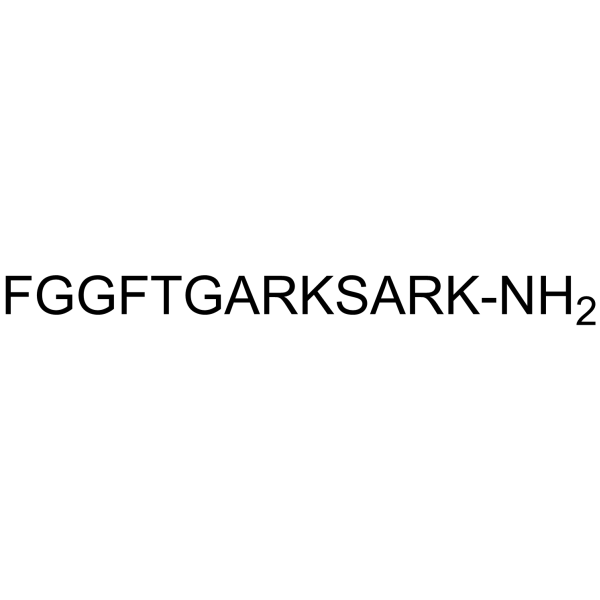 0 ImagesCat. No.: HY-P1317CAS No.: 178064-02-3
Nociceptin (1-13),amide is a potent ORL1 receptor (opioid receptor-like 1 receptor,OP4) agonist with a pEC50 of 7.9 for mouse vas deferens and a Ki of 0.75 nM for binding to rat forebrain membranes.
![[(pF)Phe4]Nociceptin(1-13)NH2 TFA](https://file.medchemexpress.com/product_pic/hy-p1300a.gif "Click to View [(pF)Phe4]Nociceptin(1-13)NH2 TFA Product Detail")
-
MT-7716 free base
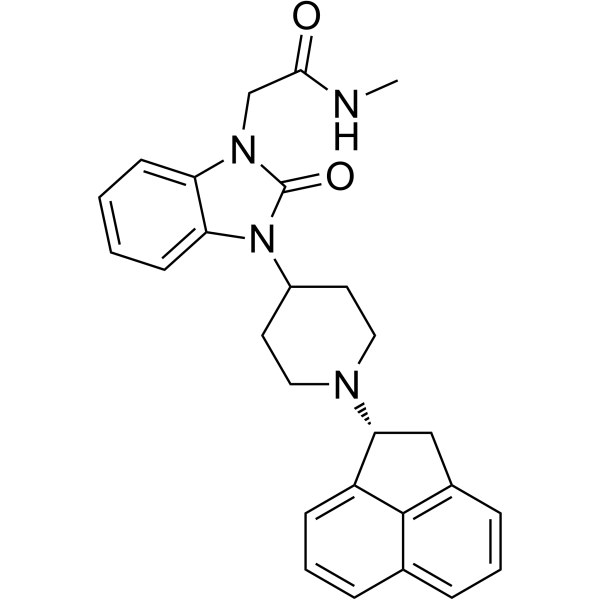 0 ImagesCat. No.: HY-107094ACAS No.: 610323-32-5Synonyms: W-212393
MT-7716 free base (W-212393) is a selective non-peptide nociceptin receptor (NOP) agonist and promising potential treatment drug for alcohol abuse and relapse prevention.
-
Nociceptin(1-7)
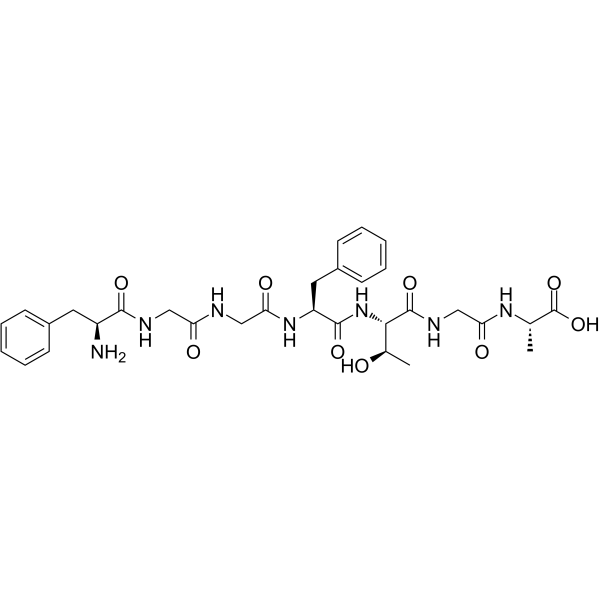 0 ImagesCat. No.: HY-P1319CAS No.: 178249-42-8
Nociceptin (1-7) is the N-terminal bioactive fragment of nociceptin (HY-P0183). Nociceptin (1-7) is a potent ORL1 (NOP) receptor agonist with antinociceptive activity. Nociceptin (1-7) combines with nociceptin reduces hyperalgesia in vivo.
-
ZP 120C
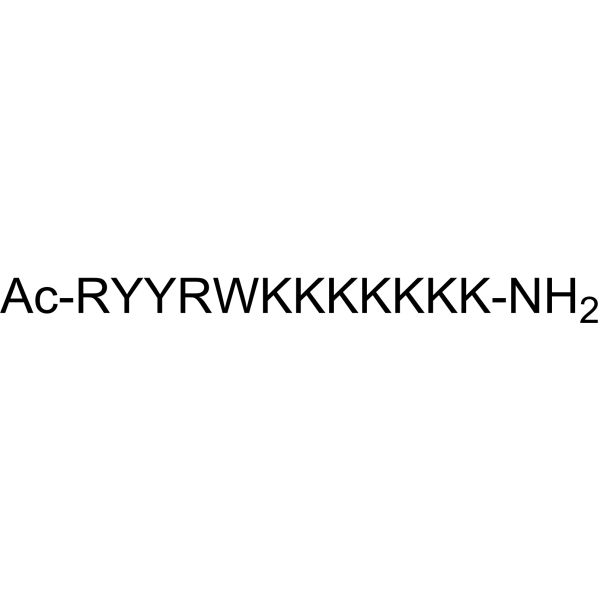 0 ImagesCat. No.: HY-106234CAS No.: 383123-18-0
ZP 120C is a potent and partial ORL1 receptor agonist. ZP 120C inhibits electrically induced contraction. ZP 120C can be used in the research of hyponatremia/hypokalemia.
-
Ac-RYYRWK-NH2 TFA
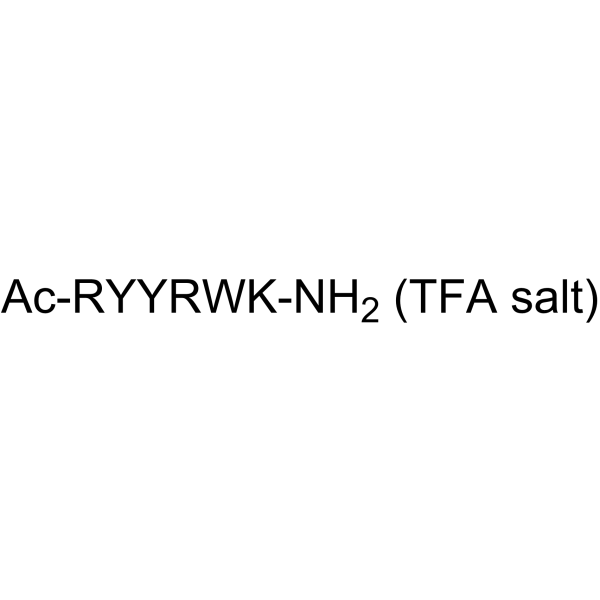 0 ImagesCat. No.: HY-P1316ACAS No.: 408305-09-9
Ac-RYYRWK-NH2 is a potent and selective partial agonist for the nociceptin receptor (NOP), [3H]Ac-RYYRWK-NH2 binds to rat cortical membranes ORL1 with a Kd of 0.071 nM, but has no affinity for μ-, κ- or δ-opioid receptors.
-
Nociceptin(1-7) TFA
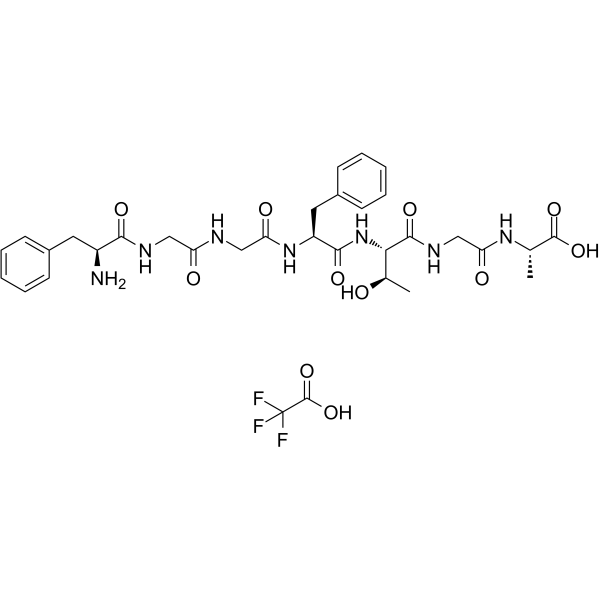 0 ImagesCat. No.: HY-P1319A
Nociceptin (1-7) TFA is the N-terminal bioactive fragment of nociceptin (HY-P0183). Nociceptin (1-7) TFA is a potent ORL1 (NOP) receptor agonist with antinociceptive activity. Nociceptin (1-7) TFA combines with nociceptin reduces hyperalgesia in vivo.
-
MOR agonist-5
 0 ImagesCat. No.: HY-179705CAS No.: 3085132-31-3
MOR agonist-5 is a selective and potent mu-opioid receptor (MOR) agonist with an EC50 of 0.25 nM. MOR agonist-5 shows an EC50 of 10 nM for DOR and >10000 nM for KOR and NOR. MOR agonist-5 exerts significant antinociceptive activity. MOR agonist-5 can be used for the research of pain.
- 1



