



P-glycoprotein
P-gp; Pgp; Multidrug resistance protein 1; MDR1; ATP-binding cassette sub-family B member 1; ABCB1; Cluster of differentiation 243; CD243
P-glycoprotein (P-gp) also known as multidrug resistance protein 1 (MDR1) is an important protein of the cell membrane that pumps many foreign substances out of cells. More formally, it is an ATP-dependent efflux pump with broad substrate specificity. P-gp is extensively distributed and expressed in the intestinal epithelium where it pumps xenobiotics (such as toxins or drugs) back into the intestinal lumen, in liver cells where it pumps them into bile ducts, in the cells of the proximal tubular of the kidney where it pumps them into urine-conducting ducts, and in the capillary endothelial cells comprising the blood–brain barrier and blood-testis barrier, where it pumps them back into the capillaries. Some cancer cells also express large amounts of P-gp, which renders these cancers multi-drug resistant. P-gp is an ATP-dependent drug efflux pump for xenobiotic compounds with broad substrate specificity. It is responsible for decreased drug accumulation in multidrug-resistant cells and often mediates the development of resistance to anticancer drugs. This protein also functions as a transporter in the blood–brain barrier.
All Product Categories
-
P-glycoprotein Inhibitors
(278)
View all products
-
P-glycoprotein Agonists
(2)
View all products
-
P-glycoprotein Antagonist
(1)
View all products
-
P-glycoprotein Activators
(4)
View all products
-
P-glycoprotein Modulators
(24)
View all products
-
P-glycoprotein Inducer
(1)
View all products
-
P-glycoprotein Controls
(3)
View all products
-
P-glycoprotein Substrates
(22)
View all products
-
P-glycoprotein Ligands
(2)
View all products
-
P-glycoprotein Related Products (378)
Related Products (378)

-
Antibodies (3)
-
Tariquidar (Standard)
 0 ImagesSynonyms: XR9576 (Standard)Tariquidar (Standard) is the analytical standard of Tariquidar. This product is intended for research and analytical applications. Tariquidar (XR9576) is a potent and specific inhibitor of P-glycoprotein (P-gp) with the high affinity (Kd=5.1 nM).
-
NSC73306
 0 ImagesNSC73306, a thiosemicarbazone, is a cell penetrant, cytotoxic agent that exhibits greater toxicity against cells expressing functional P-gp (P-glycoprotein) than against other cells.
-
α-Amylase/α-Glucosidase-IN-10
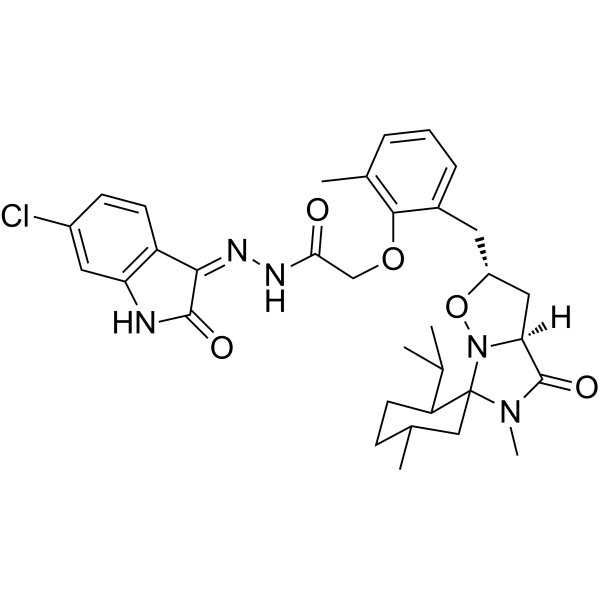 0 ImagesCat. No.: HY-162373α-Amylase/α-Glucosidase-IN-10 (compound 5d) is an α-amylase and α-glucosidase inhibitor (IC50: 30.39 μM and 65.1 μM) with potential diabetes inhibitory effects. α-Amylase/α-Glucosidase-IN-10 exhibits high gastrointestinal (GI) absorption in ADMET (Absorption, Distribution, Metabolism, Excretion and Toxicity) prediction. While α-Amylase/α-Glucosidase-IN-10 acts as a substrate for P-gp and does not cross the blood-brain barrier (BBB), there may be a risk of central nervous system side effects.
-
Risperidone-d6
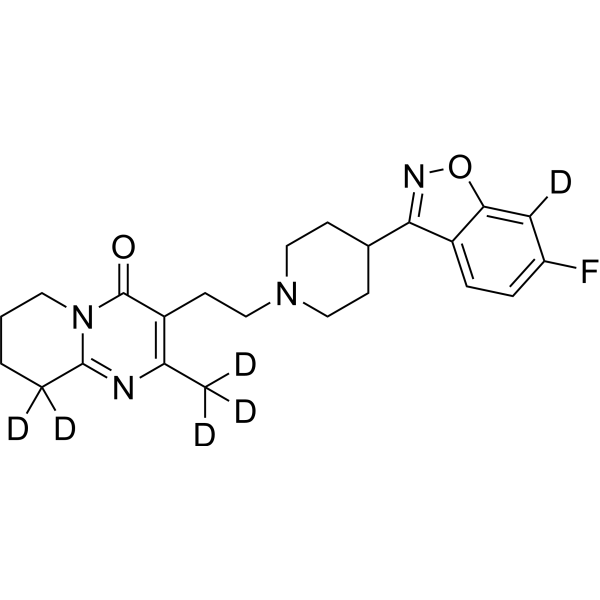 0 ImagesCat. No.: HY-11018S2CAS No.: 1225444-65-4Synonyms: R 64 766-d6Risperidone-d6 (R 64 766-d6) is the deuterium labeled Risperidone (HY-11018). Risperidone is a serotonin 5-HT2 receptor blocker, P-Glycoprotein inhibitor and potent dopamine D2 receptor antagonist, with Kis of 4.8, 5.9 nM for 5-HT2A and dopamine D2 receptor, respectively.
-
Tariquidar dihydrochloride
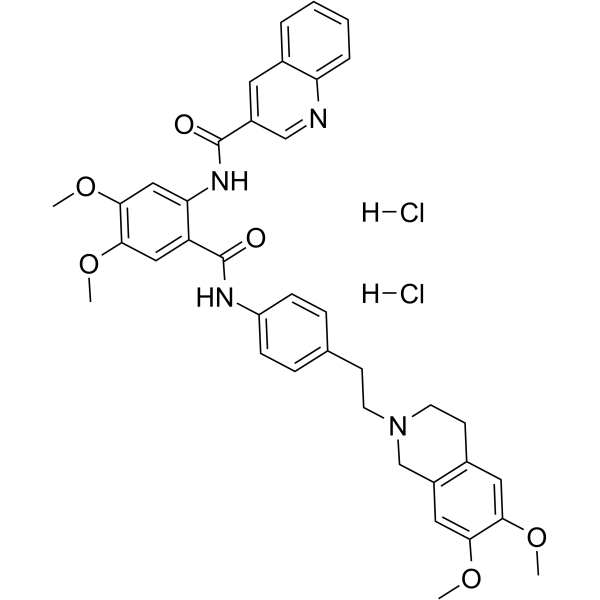 0 ImagesCat. No.: HY-110377CAS No.: 1992047-62-7Synonyms: XR9576 dihydrochlorideTariquidar dihydrochloride (XR9576 dihydrochloride) is a potent and specific inhibitor of P-glycoprotein (P-gp) with the high affinity (Kd=5.1 nM).
-
P-gp modulator 1
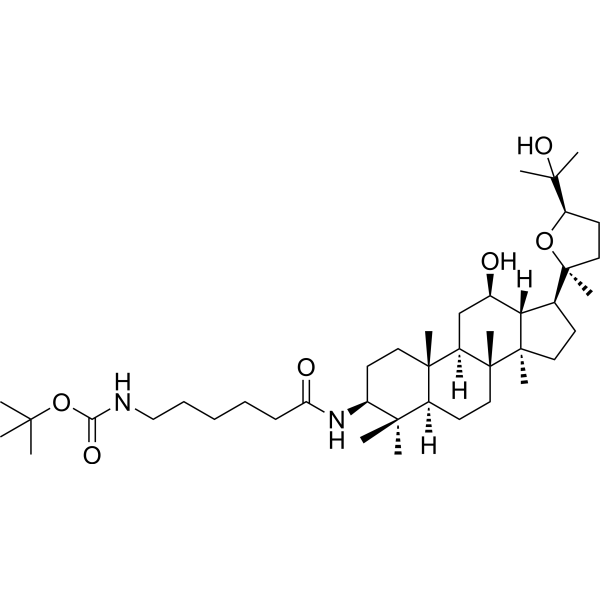 0 ImagesCat. No.: HY-112912CAS No.: 2249749-39-9P-gp modulator 1 is a high affinity, orally available modulator of P-glycoprotein (Pgp), can reverse the Pgp-mediated multidrug resistance ((MDR).
-
FD 12-9
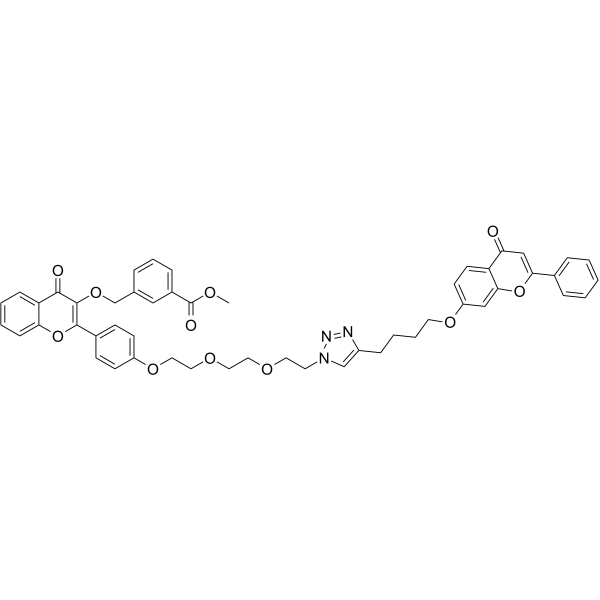 0 ImagesCat. No.: HY-128685CAS No.: 1451741-22-2Synonyms: Ac12Az9FD 12-9 is a flavonoid dimer, acts as a dual inhibitor of P-gp and BCRP, with EC50s of 285 nM and 0.9 nM, respectively. Anti-glioblastoma activity.
-
Befotertinib mesylate
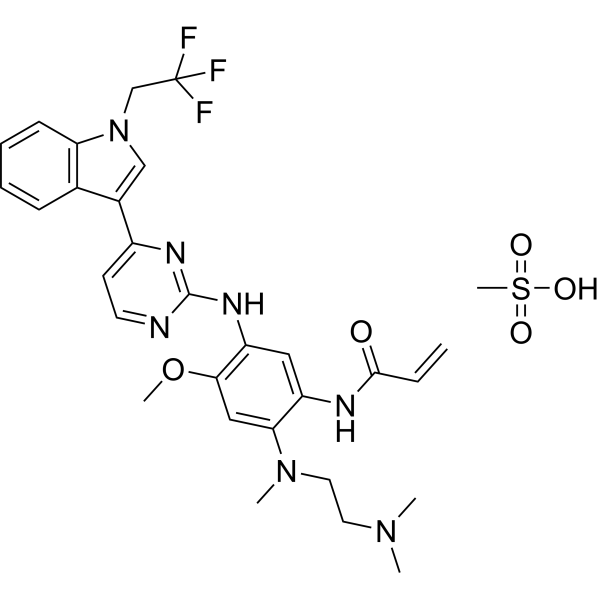 0 ImagesCat. No.: HY-137433ACAS No.: 2226167-02-6Synonyms: D-0316 mesylateBefotertinib (D-0316) mesylate is an orally active EGFR inhibitor and ABCB1 inhibitor. Befotertinib mesylate selectively targets EGFR mutations including EGFRT790M, EGFRL858R and delE746-A750, forms covalent bonds with EGFRC797, inhibits oncogenic signaling pathways, and exerts antiproliferative effects. Befotertinib mesylate inhibits ABCB1-mediated drug efflux, activates the ATPase activity of ABCB1, acts as a chemosensitizer and apoptosis enhancer, and restores the sensitivity of multidrug-resistant cancer cells. Befotertinib mesylate can be used in research related to multidrug-resistant cancers and non-small cell lung cancer.
-
OY-101
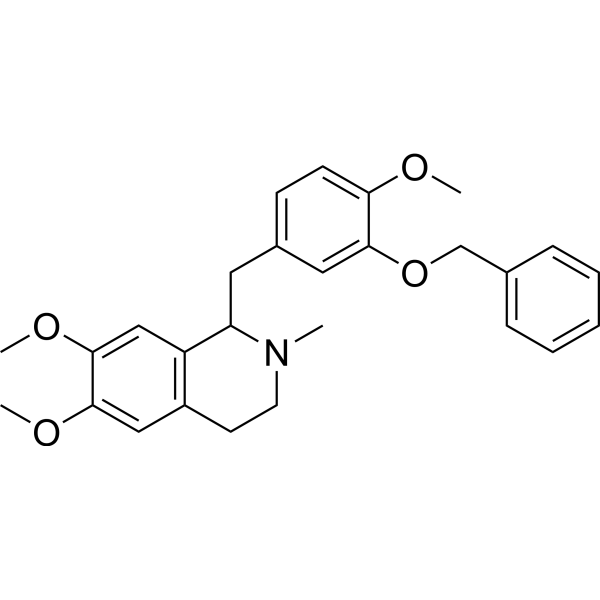 0 ImagesCat. No.: HY-149053CAS No.: 41183-02-2OY-101 is an orally active, potent and specific P-glycoprotein (P-gp) inhibitor. OY-101 can sensitize drug-resistant tumors and effectively reverse tumor multidrug resistance. OY-101 is improvements in water-solubility, cytotoxicity, and reversal activity compared to Tetrandrine (HY-13764).
-
RTY-406
 0 ImagesCat. No.: HY-189393CAS No.: 3089177-97-6RTY-406 is an orally active ABCB4/MDR3 and ABCB11/BSEP positive modulator. RTY-406 increases ABCB4/MDR3 and ABCB11/BSEP protein levels and functional output, elevates biliary phospholipid levels, enhances bile acid efflux, increases bile flow and micelle formation, reduces hepatic bile acids, and promotes cholesterol-to-bile-acid conversion. RTY-406 does not induce hepatocellular injury, maintains normal serum alanine transaminase and aspartate aminotransferase levels, and shows a favorable safety profile in cynomolgus monkeys. RTY-406 can be used for the research of primary sclerosing cholangitis and cholestasis.
-
Catechin-5-O-gallate
 0 ImagesCat. No.: HY-183746CAS No.: 128232-62-2Catechin-5-O-gallate is a bioactive substance. Catechin-5-O-gallate can be isolated from bioactive Himalayan plants. Catechin-5-O-gallate is predicted to be a P-glycoprotein inhibitor, and binds to SARS-CoV-2 3CLpro, PLpro and RdRp. Catechin-5-O-gallate can be used in studies related to COVID-19.
-
RMS3
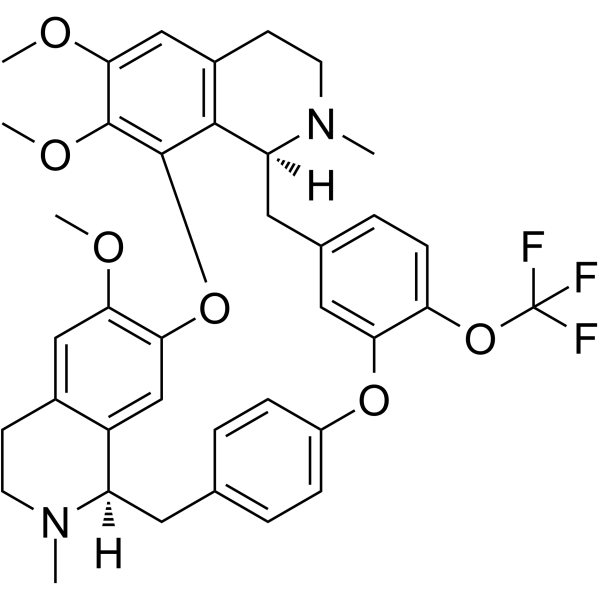 0 ImagesCat. No.: HY-146096CAS No.: 2497686-66-3RMS3, a tetrandrine analogue, is a potent P-glycoprotein (P-gp) inhibitor. RMS3 has markedly antiproliferative and cytotoxic effects on cancer cells. RMS3 causes PARP cleavage, a marker for cells undergoing apoptosis. RMS3 has strong anticancer property.
-
Cetagliptin
 0 ImagesCat. No.: HY-170569CAS No.: 2243737-33-7Cetagliptin is an orally active inhibitor for dipeptidyl peptidase 4 (DPP-4) and CYP2D6 (IC50 of 6 µM). Cetagliptin is a substrate for P-glycoprotein. Cetagliptin reduces the GLP-1 degradation, maintains the level of postprandial blood sugar, and can be used in type 2 diabetes mellitus research.
-
RMS5
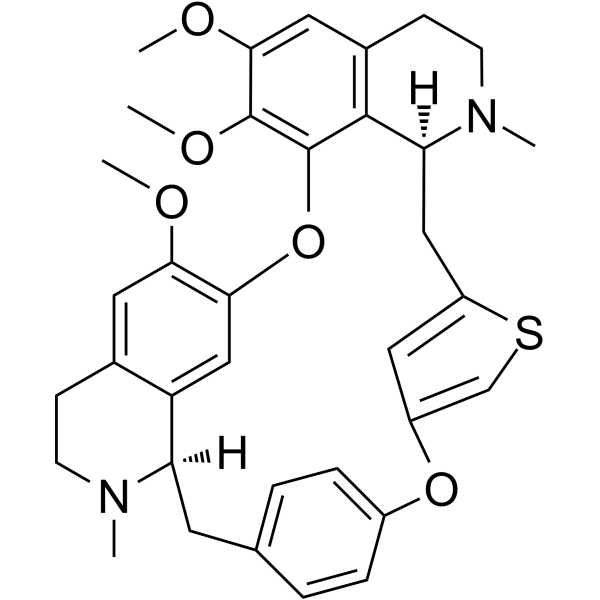 0 ImagesCat. No.: HY-146097CAS No.: 2497686-68-5RMS5, a tetrandrine analogue, is a potent P-glycoprotein (P-gp) inhibitor. RMS5 has markedly antiproliferative and cytotoxic effects on cancer cells. RMS5 slightly diminishes the expression of the anti-apoptotic Bcl-2 family proteins Bcl-XL and Mcl-1. RMS3 causes PARP cleavage, a marker for cells undergoing apoptosis. RMS5 has strong anticancer property.
-
Tariquidar dimesylate
 0 ImagesCat. No.: HY-10550BCAS No.: 625375-84-0Synonyms: XR9576 dimesylateTariquidar dimesylate (XR9576 dimesylate) is a P-glycoprotein (P-gp) inhibitor. Tariquidar dimesylate increases the concentration of the drug in the brain by binding to P-glycoprotein, preventing it from transporting the drug from inside to outside the brain. Tariquidar dimesylate can be used in the study of blood-brain barrier penetration and multidrug resistance.
-
Encequidar mesylate hydrochloride
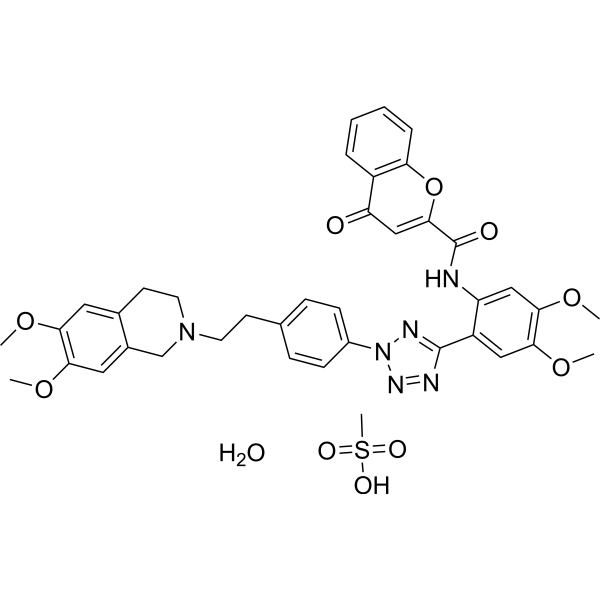 0 ImagesCat. No.: HY-13646CCAS No.: 2097125-58-9Synonyms: HM30181 mesylate hydrochloride; HM30181A mesylate hydrochlorideEncequidar (HM30181) mesylate hydrochloride is a potent and selective inhibitor of P-glycoprotein (MDR1). Encequidar mesylate hydrochloride improves anti-tumor efficacy of Paclitaxel (HY-B0015) in mouse tumor models.
-
Trifluoperazine dimaleate
 0 ImagesTrifluoperazine dimaleate, an antipsychotic agent, acts by blocking central dopamine receptors. Trifluoperazine dimaleate is a potent α1-adrenergic receptor antagonist. Trifluoperazine dimaleate is a potent NUPR1 inhibitor exerting anticancer activity. Trifluoperazine dimaleate is a calmodulin inhibitor, and also inhibits P-glycoprotein. Trifluoperazine dimaleate can be used for the research of schizophrenia. Trifluoperazine dimaleate acts as a reversible inhibitor of influenza virus morphogenesis.
-
Atazanavir-d5
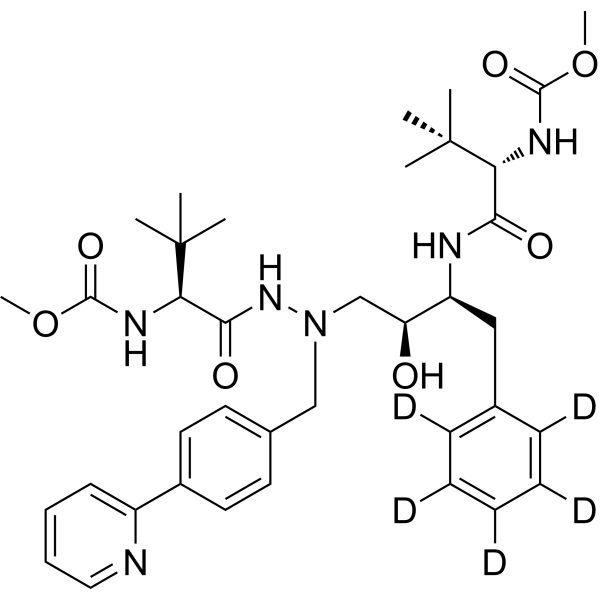 0 ImagesCat. No.: HY-17367S3CAS No.: 1132747-14-8Atazanavir-d5 is the deuterium labeled Atazanavir. Atazanavir (BMS-232632), a highly selective HIV-1 protease inhibitor, is the first protease inhibitor approved for once-daily administration. Atazanavir (BMS-232632) is a substrate and inhibitor of CYP3A4, and an inhibitor and inducer of P-glycoprotein (P-gp). Atazanavir is also a SARS-CoV 3CLpro inhibitor with an IC50 of 3.49 μM.
-
Atazanavir-d9
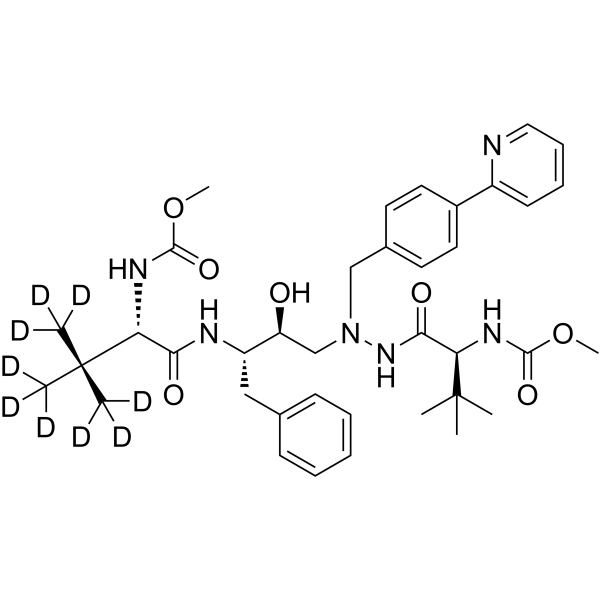 0 ImagesCat. No.: HY-17367S2CAS No.: 1092540-51-6Synonyms: BMS-232632-d9Atazanavir-d9 is the deuterium labeled Atazanavir. Atazanavir (BMS-232632), a highly selective HIV-1 protease inhibitor, is the first protease inhibitor approved for once-daily administration. Atazanavir (BMS-232632) is a substrate and inhibitor of CYP3A4, and an inhibitor and inducer of P-glycoprotein (P-gp). Atazanavir is also a SARS-CoV 3CLpro inhibitor with an IC50 of 3.49 μM.
-
Retrocyclin-1
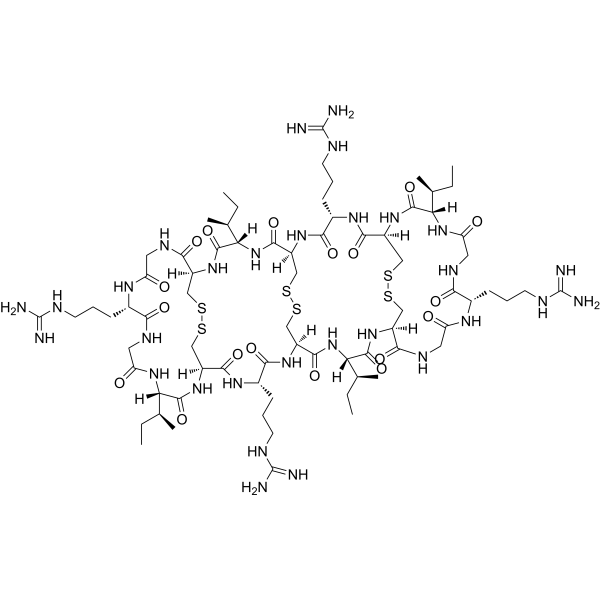 0 ImagesCat. No.: HY-P4902CAS No.: 724760-19-4




