



PARP
poly ADP ribose polymerase
PARP is a family of proteins involved in a number of cellular processes involving mainly DNA repair and programmed cell death. The PARP family comprises 17 members. They have all very different structures and functions in the cell. PARP1, PARP2, VPARP (PARP4), Tankyrase-1 and -2 (PARP-5a or TNKS, and PARP-5b or TNKS2) have a confirmed PARP activity. Others include PARP3, PARP6, TIPARP (or PARP7), PARP8, PARP9, PARP10, PARP11, PARP12, PARP14, PARP15, and PARP16. PARP is found in the cell’s nucleus. The main role is to detect and signal single-strand DNA breaks (SSB) to the enzymatic machinery involved in the SSB repair.
PARP Isoform Specific Products
-
PARP
(303)
View all products
-
PARP1
(204)
View all products
-
PARP2
(82)
View all products
-
PARP3
(22)
View all products
-
PARP4
(11)
View all products
-
TNKS1/PARP5A
(40)
View all products
-
TNKS2/PARP5B
(37)
View all products
-
PARP7
(24)
View all products
-
PARP10
(20)
View all products
-
PARP14
(17)
View all products
-
PARP15
(14)
View all products
-
PARP12
(4)
View all products
-
PARP16
(3)
View all products
All Product Categories
-
PARP Inhibitors
(456)
View all products
-
PARP Agonists
(4)
View all products
-
PARP Activators
(104)
View all products
-
PARP Modulators
(11)
View all products
-
PARP Inducers
(20)
View all products
-
PARP Degraders
(23)
View all products
-
PARP Substrate
(1)
View all products
-
PARP Ligands
(4)
View all products
-
PARP Related Products (680)
Related Products (680)

-
Antibodies (11)
-
PARP Isoform Comparison
-
TC-E 5001
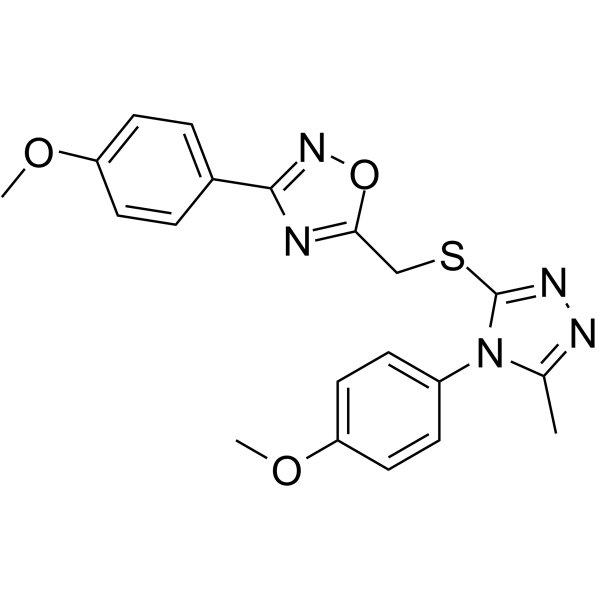 0 ImagesCat. No.: HY-108516CAS No.: 865565-29-3TC-E 5001 is an inhibitor of Wnt pathway that inhibits tankyrase 1/2 (TNKS1/2) via novel adenosine pocket binding, with Kds of 79 nM and 28 nM, respectively. TC-E 5001 also inhibits Axin2 and STF, with IC50s of 0.709 μM and 0.215 μM, respectively.
-
BYK 49187
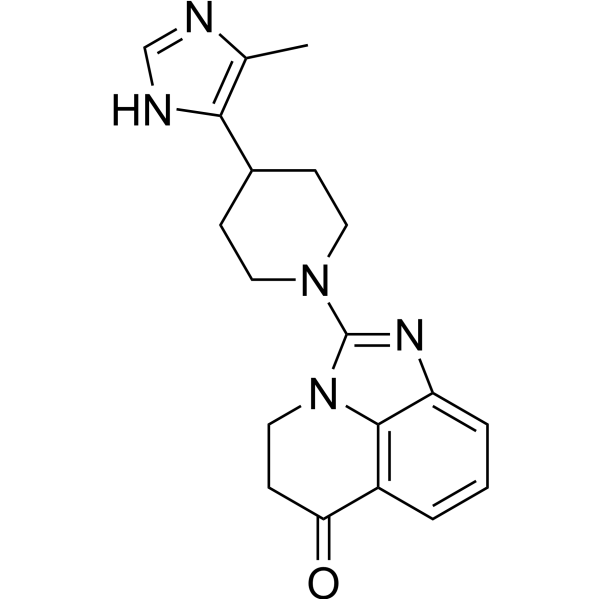 0 ImagesCat. No.: HY-108633CAS No.: 163120-31-8AR-C66096 (FPL 66096) tetrasodium is a selective platelet P2YT receptor antagonist. AR-C66096 tetrasodium effectively blocks ADP-induced platelet aggregation. AR-C66096 tetrasodium can be used in the research of thromboembolism.
-
CU-TZD-20
 0 ImagesCat. No.: HY-179091CU-TZD-20 is a PARP-1 inhibitor. CU-TZD-20 has a high affinity for binding to the PARP-1 catalytic domain and good structural stability. CU-TZD-20 competitively occupies NAD+ binding sites and forms stable interactions with key catalytic residues. CU-TZD-20 can be used for cancer research.
-
CHNQD-01426
 0 ImagesCat. No.: HY-177268CAS No.: 2673232-30-7CHNQD-01426 (Compound 4a) is an anticancer agent. CHNQD-01426 has cytotoxic activities against cancer cells. CHNQD-01426 significantly inhibits hepatocellular carcinoma cells proliferation via arresting S and G2/M phase cell cycle and induces apoptosis by inducing ROS production and elevating apoptosis-related proteins expression. CHNQD-01426 potently inhibits tumor growth in HepG2 xenograft mice model.
-
SKLB70326
 0 ImagesCat. No.: HY-116204CAS No.: 1257317-77-3SKLB70326 is a small molecule inhibitor of cell cycle progression that induces cell cycle arrest and apoptosis in human hepatocellular carcinoma cells. SKLB70326 is involved in downregulating cyclin-dependent kinase (CDK) 2, CDK4, and CDK6, while also activating PARP, caspase-3, caspase-9, and Bax, and downregulating Bcl-2.
-
Bcl-2/Mcl-1-IN-5
 0 ImagesCat. No.: HY-181746Bcl-2/Mcl-1-IN-5 (Compound S6) is a Bcl-2 and Mcl-1 inhibitor. Bcl-2/Mcl-1-IN-5 promotes Apoptosis, downregulates anti-apoptotic proteins Bcl-2 and Mcl-1, induces mitochondrial membrane potential depolarization, and activates the Caspase-dependent apoptotic cascade, as evidenced by Caspase-3 activation and PARP1 cleavage. Bcl-2/Mcl-1-IN-5 has anti-hepatocellular carcinoma activity.
-
Viriditoxin
 0 ImagesCat. No.: HY-126051CAS No.: 1381782-08-6Synonyms: (-)-ViriditoxinViriditoxin ((-)-Viriditoxin) is a mycotoxin. Viriditoxin promotes tubulin polymerization, and inhibits FtsZ polymerization and GTPase activity. Viriditoxin exhibits cytotoxicity against cancer cells, induces apoptosis, inhibits cell migration and colony formation, induces G2/M phase arrest, and triggers autophagic cell death. Viriditoxin activates caspase-3, cleaves PARP, promotes cytochrome c release, and induces ROS production. Viriditoxin possesses broad-spectrum antibacterial activity against Gram-positive pathogenic bacteria, fish pathogenic bacteria, and permeabilized Gram-negative bacteria. Viriditoxin can be used in research related to ovarian cancer, lung cancer, nasopharyngeal carcinoma, colon cancer, neuroblastoma, prostate cancer, leukemia, lymphoma, bacterial infections, and streptococcosis.

-
YCH3292
 0 ImagesCat. No.: HY-180809CAS No.: 3049753-10-5YCH3292, a derivative of YCH189 (HY-155993) is a potent, selective and orally active PARP1/2 inhibitor with IC50 both <0.001 nM. YCH3292 can increase the stability of PARP-DNA complexes. YCH3292 exhibits robust antiproliferative activity. YCH3292 can induce double-strand breaks in DNA, increase the protein levels of γH2AX, P-RPA32, and P-Chk1 and induce tumor cells S or G2/M phase arrest and apoptosis. YCH3292 can inhibit tumor growth in MC38 xenograft model.
-
PARP-1-IN-1
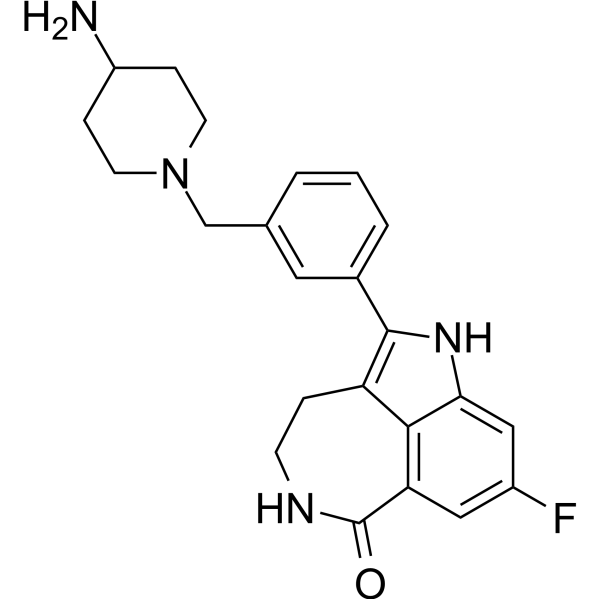 0 ImagesCat. No.: HY-144642CAS No.: 2763840-83-9PARP-1-IN-1 is a high selective and orally active PARP-1 inhibitor (IC50=0.96 nM). PARP-1-IN-1 has well tolerance and remarkable single dose activity in the MDA-MB-436 xenotransplantation model.

-
BTK-IN-47
 0 ImagesCat. No.: HY-181996BTK-IN-47 (Compound 9e) is a covalent, selective BTK inhibitor with an IC50 of 5.15 nM against BTK. BTK-IN-47 inhibits the BTK signaling pathway, induces cell cycle arrest, and activates the canonical Caspase-dependent Apoptotic pathway (promoting the cleavage of Caspase-3, Caspase-7 and PARP), without inducing necroptosis, pyroptosis or ferroptosis. BTK-IN-47 exerts dose-dependent antiproliferative activity against hematologic tumor cell lines. BTK-IN-47 exhibits dose-dependent in vivo antitumor activity in a Ramos cell xenograft model in BALB/c nude mice. BTK-IN-47 can be used for the research of hematologic malignancies.
-
CIB-Q22
 0 ImagesCat. No.: HY-184448CAS No.: 2963747-43-3CIB-Q22 is a potent pyruvate carboxylase (PC) inhibitor with an IC50 of 1.74 nM. CIB-Q22 suppresses hepatocellular carcinoma (HCC) cell proliferation, migration, and invasion. CIB-Q22 induces apoptosis and ferroptosis, promotes mitochondrial oxidative stress and dysfunction, inhibits glycolysis and anaplerotic flux, and reverses epithelial-mesenchymal transition (EMT). CIB-Q22 can be used for the study of hepatocellular carcinoma.
-
Quinidine-d3
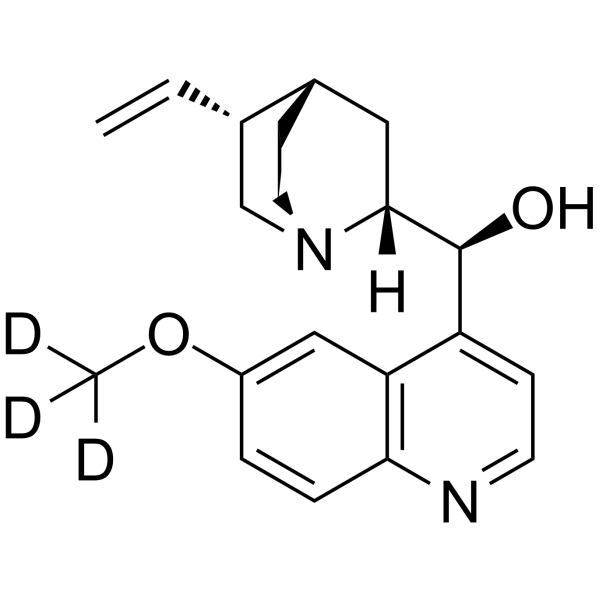 0 ImagesCat. No.: HY-B1751SCAS No.: 1267657-68-0Quinidine-d3 is the d3-labeled Quinidine (15% dihydroquinidine) (HY-B1751). Quinidine (15% dihydroquinidine) is an orally active antiarrhythmic agent. Quinidine (15% dihydroquinidine) reduces the expression level of P-gp, inhibits P-gp-mediated efflux, increases the intracellular accumulation of P-gp substrates, induces PARP cleavage and Caspase-3 activation, and elevates the proportion of Apoptotic cells at the sub-G1 phase. Quinidine (15% dihydroquinidine) exerts sustained block and open-channel block effects on IK(f). Quinidine (15% dihydroquinidine) alters the urinary metabolic ratio of Amphetamine, modulates the Pentylenetetrazol-induced seizure threshold, and regulates the anticonvulsant effect of Dextromethorphan. Quinidine (15% dihydroquinidine) can be used in studies related to uterine sarcoma and seizures.
-
Calactin
 0 ImagesCat. No.: HY-167237CAS No.: 20304-47-6Calactin is a glycoside that can be isolated from Asclepias curassavica L.. Calactin activates caspase-3, caspase-8, caspase-9, and phosphorylates ERK. Calactin induces DNA damage, apoptosis, PARP cleavage, G2/M phase cell cycle arrest, shifts Bax/Bcl-2 expression, and shows anti-proliferation effects in leukemia cells. Calactin can be used for the research of leukemia.
-
BCS12
 0 ImagesBCS12 is a CAIX inhibitor. BCS12 inhibits the viability of cancer cells under hypoxic conditions. BCS12 elevates ROS levels and suppresses the expression of HIF-1α and CA9. BCS12 downregulates Bcl-2, activates caspase-9, caspase-3, caspase-7 and Bax, and induces PARP cleavage and apoptosis. BCS12 reduces tumor burden, increases the number of apoptotic nuclei and restores tissue structure in rats bearing breast tumors. BCS12 can be used in research related to triple-negative breast cancer.
-
PARP1-IN-54
 0 ImagesCat. No.: HY-185143CAS No.: 2915309-47-4PARP1-IN-54 (example 5) is a PARP1 inhibitor with antitumor effects.
-
PARP1-IN-47
 0 ImagesCat. No.: HY-178468CAS No.: 3053592-61-0
-
Oxychlororaphine (Standard)
 0 ImagesCat. No.: HY-W042191RCAS No.: 550-89-0Oxychlororaphine (Standard) is the analytical standard of Oxychlororaphine. This product is intended for research and analytical applications. Oxychloroaphine could be isolated from the bacterium Pantoea agglomerans naturally present in soil. Oxychloroaphine has broad-spectrum antifungal activity. Oxychloroaphine has cytotoxicity in a dose-dependent manner and induces apoptosis. Oxychloroaphine can be used in research of cancer[1][2].




