



PARP
poly ADP ribose polymerase
PARP is a family of proteins involved in a number of cellular processes involving mainly DNA repair and programmed cell death. The PARP family comprises 17 members. They have all very different structures and functions in the cell. PARP1, PARP2, VPARP (PARP4), Tankyrase-1 and -2 (PARP-5a or TNKS, and PARP-5b or TNKS2) have a confirmed PARP activity. Others include PARP3, PARP6, TIPARP (or PARP7), PARP8, PARP9, PARP10, PARP11, PARP12, PARP14, PARP15, and PARP16. PARP is found in the cell’s nucleus. The main role is to detect and signal single-strand DNA breaks (SSB) to the enzymatic machinery involved in the SSB repair.
PARP Isoform Specific Products
-
PARP
(303)
View all products
-
PARP1
(204)
View all products
-
PARP2
(82)
View all products
-
PARP3
(22)
View all products
-
PARP4
(11)
View all products
-
TNKS1/PARP5A
(40)
View all products
-
TNKS2/PARP5B
(37)
View all products
-
PARP7
(24)
View all products
-
PARP10
(20)
View all products
-
PARP14
(17)
View all products
-
PARP15
(14)
View all products
-
PARP12
(4)
View all products
-
PARP16
(3)
View all products
All Product Categories
-
PARP Inhibitors
(456)
View all products
-
PARP Agonists
(4)
View all products
-
PARP Activators
(104)
View all products
-
PARP Modulators
(11)
View all products
-
PARP Inducers
(20)
View all products
-
PARP Degraders
(23)
View all products
-
PARP Substrate
(1)
View all products
-
PARP Ligands
(4)
View all products
-
PARP Related Products (680)
Related Products (680)

-
Antibodies (11)
-
PARP Isoform Comparison

-
TP-110
 0 ImagesCat. No.: HY-118522CAS No.: 688737-95-3TP-110 is a proteasome inhibitor. TP-110 specifically inhibits the protease-like activity of the 20S proteasome, but does not affect the trypsin-like or peptidyl-glutamyl peptide hydrolysis activity. TP-110 inhibits the NF-κB pathway, activates caspase-8, -9, and -3, and causes PARP cleavage, significantly reducing the levels of cIAP-1 and XIAP. TP-110 causes cell cycle arrest at the G2/M phase and promotes apoptosis of cancer cells. TP-110 can be used in cancer research of prostate cancer and multiple myeloma, etc.
-
PARP1-IN-14
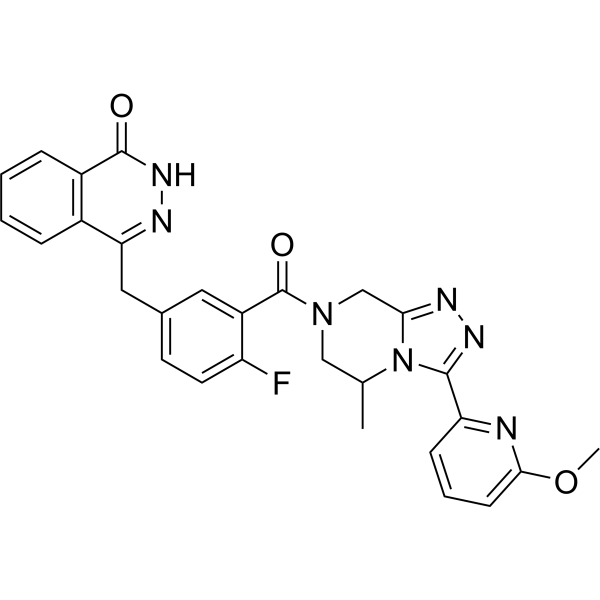 0 ImagesCat. No.: HY-155766CAS No.: 2098639-70-2PARP1-IN-14 (compound 19k) is a potent PARP1 inhibitor, with an IC50 of 0.6 ± 0.1 nM. PARP1-IN-14 exhibits antiproliferative effect against both MDA-MB-436 (BRCA1−/−) and Capan-1 (BRCA2−/−) cells with IC50 values below 0.3 nM.
-
Vrucaparib-TP4
 0 ImagesCat. No.: HY-130647CAS No.: 2410557-03-6
-
PARP1-IN-46
 0 ImagesCat. No.: HY-178178CAS No.: 2505146-00-7PARP1-IN-46 is a potent PARP-1 inhibitor with an IC50 of 2.4 nM. PARP1-IN-46 demonstrates remarkable anti-proliferative activity in both rat (C6) and human (U87MG) glioma cells. PARP1-IN-46 promotes PARP cleavage, triggers DNA damage, and increases ROS. PARP1-IN-46 effectively inhibits the migration, invasion and colony formation of glioma cells, and ultimately induces cell apoptosis. PARP1-IN-46 can be used to the study of glioma.
-
PARP7-IN-23
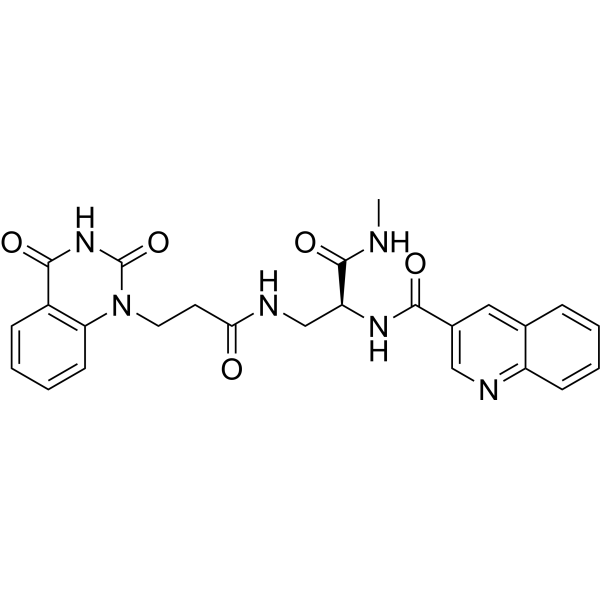
 0 ImagesCat. No.: HY-173259CAS No.: 3071875-24-3
-
PARP1-IN-21
 0 ImagesCat. No.: HY-158680CAS No.: 2855979-51-8PARP1-IN-21 (example 16) is a potent inhibitor of PARP1, with the IC50 of < 10 nM.
-
CW-2
 0 ImagesCat. No.: HY-173437CW-2 is a CRBN-recruited PARP1 PROTAC degrader. CW-2 triggers multiple downstream biological effects including DNA damage accumulation, impaired DNA repair, mitochondrial-mediated apoptosis, intracellular ROS buildup and G1/S cell cycle arrest, as well as the regulation of oxidative phosphorylation, p53, PI3K-Akt and MAPK alongside ubiquitin proteolysis pathways. CW-2 enhances cell membrane permeability and intracellular platinum enrichment, exhibits detectable pharmacokinetic profiles after intraperitoneal administration in rats and drives differential gene expression. CW-2 can be applied to research on triple-negative breast cancer, non-small cell lung cancer, cisplatin-resistant non-small cell lung cancer, colon cancer and pancreatic cancer.
-
PROTAC BCL6/GSPT1 Degrader-1
 0 ImagesCat. No.: HY-181084CAS No.: 3039500-55-2PROTAC BCL6/GSPT1 Degrader-1 is a dual-target PROTAC degrader that targets BCL6 and GSPT1. PROTAC BCL6/GSPT1 Degrader-1 inhibits cell proliferation, promotes DNA damage, and induces cell cycle arrest and apoptosis in diffuse large B-cell lymphoma. PROTAC BCL6/GSPT1 Degrader-1 can be used for research on tumors such as lymphoma.
-
TH-407a
 0 ImagesCat. No.: HY-184273CAS No.: 1903103-73-0TH-407a is an orally active and selective USP15 inhibitor with an IC50 of 0.76 μM. As an allosteric modulator, TH-407a binds to a non-catalytic site to block deubiquitinating activity. TH-407a inhibits cell growth, proliferation, clonogenicity and migration, regulates the p53 signaling pathway, and reduces the stability of PARP1. TH-407a exhibits anti-tumor activity in breast cancer xenograft mouse models. TH-407a can be used for the research of breast cancer.
-
MC2050
 0 ImagesCat. No.: HY-182246CAS No.: 1301757-19-6MC2050 is a selective PARP-1 inhibitor with an IC50 of 119 nM. MC2050 functionally inhibits PARP-1 activity, including hyperactivation induced by oxidative stress, and reduces the poly (ADP-ribosyl) ation level of histone H1. MC2050 protects neuroblastoma cells from oxidative stress-mediated cell death induced by hydrogen peroxide. MC2050 is applicable to research related to neuroblastoma and Burkitt lymphoma.
-
PROTAC EZH2 Degrader-44
 0 ImagesCat. No.: HY-181413CAS No.: 3093642-25-9PROTAC EZH2 Degrader-44 (compound 60) is a highly efficient PROTAC degrader targeting the EZH2-PRC2 complex. By recruiting the CRBN E3 ligase and relying on the proteasome system, PROTAC EZH2 Degrader-44 simultaneously induces the degradation of core components EZH2, SUZ12 and EED, thereby significantly reducing the levels of H3K27me3 and CARM1. PROTAC EZH2 Degrader-44 exerts antiproliferative effects through a dual mechanism: on the one hand, it triggers mitochondrial dysfunction leading to decreased membrane potential; on the other hand, it strongly promotes apoptosis by regulating Bcl-2 family proteins (upregulating Bax, Caspase-3 and PARP, and downregulating Bcl-2). PROTAC EZH2 Degrader-44 exhibits only extremely low cytotoxicity in human normal mammary epithelial, liver and kidney cells, showing a favorable safety window. PROTAC EZH2 Degrader-44 is an ideal tool molecule for exploring the mechanisms of targeted therapy for triple-negative breast cancer.

-
Desethylamiodarone-d4 hydrochloride
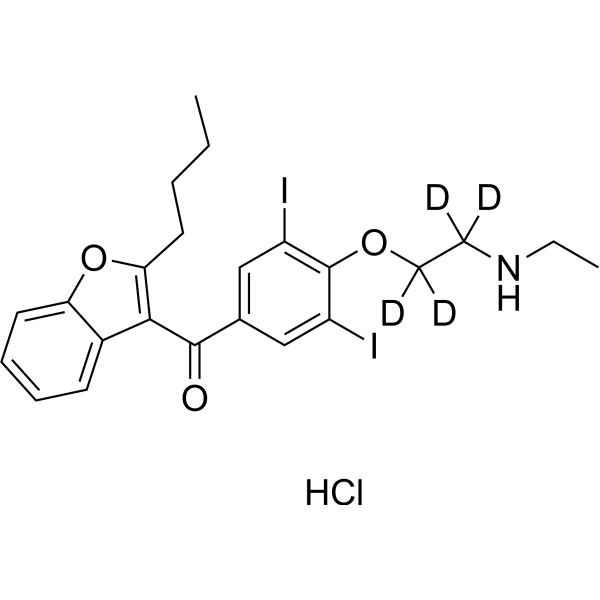 0 ImagesCat. No.: HY-130353SCAS No.: 1189960-80-2Synonyms: N-Desethylamiodarone-d4 hydrochloride; LB 33020-d4 hydrochlorideDesethylamiodarone-d4 hydrochloride (N-Desethylamiodarone-d4 hydrochloride; LB 33020-d4 hydrochloride) is the deuterated-labeled Desethylamiodarone hydrochloride (HY-130353). Desethylamiodarone hydrochloride (N-Desethylamiodarone hydrochloride; LB 33020 hydrochloride) is the major active metabolite of Amiodarone (HY-14187) generated via CYP3A4 metabolism. Desethylamiodarone hydrochloride downregulates p‑Akt, p‑Bad and Bcl‑2, upregulates Bax, promotes mitochondrial release of cytochrome c, activates caspase‑3 and cleaves PARP‑1, thereby inducing cell cycle arrest and apoptosis. Desethylamiodarone hydrochloride can be used in cervical cancer-related research.
-
PARP1-IN-43
 0 ImagesCat. No.: HY-175482CAS No.: 3066798-40-8PARP1-IN-43 (Compound 5350) is a blood-brain barrier (BBB) permeable PARP1 inhibitor, with an IC50 of 5 nM. PARP1-IN-43 can be used for the study of homologous recombination (HR)-deficient central nerve system (CNS) cancers.
-
Anticancer agent 64
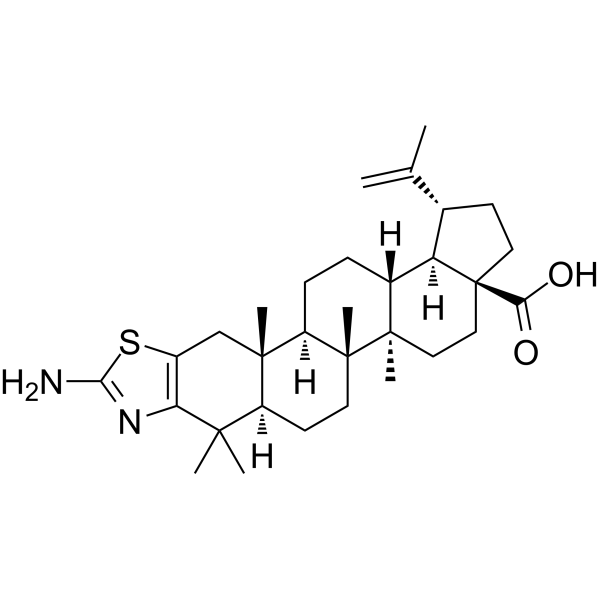 0 ImagesCat. No.: HY-147514CAS No.: 2387902-92-1Anticancer agent 64 (compound 5m) shows cytotoxic activity in CCRF-CEM cells, with IC50 of 2.4 μM. Anticancer agent 64 shows good anticancer activity through apoptosis induction. Anticancer agent 64 induces caspase 3 and 7 activation and PARP cleavage. Anticancer agent 64 induces significant effect of mitochondria depolarization.
-
4,4′-Secalonic acid D
 0 ImagesCat. No.: HY-N15380CAS No.: 2265910-52-74,4′-Secalonic acid D (Compound 12) is a PARP1 inhibitor. 4,4′-Secalonic acid D induces the accumulation of ROS and DNA damage, activates the caspase-3/GSDME pathway, and triggers apoptosis and pyroptosis of tumor cells by inhibiting PARP1. 4,4′-Secalonic acid D has anti-tumor activity.
-
Cimicifugic acid A
 0 ImagesCat. No.: HY-N17665CAS No.: 205114-65-4Cimicifugic acid A is a cytotoxic caffeic acid derivative that can be isolated from the rhizomes of Cimicifuga heracleifolia. Cimicifugic acid A shows cytotoxic activity against cancer cells, and increases expression of cleaved PARP, thereby exhibiting pro-apoptotic activity. Cimicifugic acid A can be used for colon cancer research.
-
PROTAC BET Degrader-15
 0 ImagesCat. No.: HY-181729PROTAC BET Degrader-15 is a BET PROTAC degrader with DC50 values of <0.10 nM, <0.01 nM, and <0.01 nM against BRD2, BRD3, and BRD4, respectively. PROTAC BET Degrader-15 induces significant G2/M phase cell cycle arrest and triggers apoptosis. PROTAC BET Degrader-15 causes marked downregulation of c-Myc, accompanied by upregulation of the cell cycle inhibitory protein p21, downregulation of CDK6, and an increase in the apoptosis marker cleaved PARP. PROTAC BET Degrader-15 is applicable to the research of hematologic malignancies and lung cancer.




