



TSH Receptor Agonist
-
Anti-TSHR Antibody (M22)
 0 ImagesCat. No.: HY-P991202Purity: 98.56%
Anti-TSHR Antibody (M22) is a selective agonist targeting TSHR (thyroid-stimulating hormone receptor), acting through competitive binding to the extracellular domain of TSHR. Anti-TSHR Antibody (M22) can mimic the biological effects of thyroid-stimulating hormone (TSH), activating downstream cAMP-PKA and other signaling pathways. Anti-TSHR Antibody (M22) can stimulate the proliferation of thyroid follicular epithelial cells and human umbilical vein endothelial cells (HUVECs), promote angiogenesis and tube formation, cell migration, and also upregulate the expression of angiogenesis-related proteins such as PROX1. Anti-TSHR Antibody (M22) can be used in research areas such as the mechanisms of goiter formation in Graves' disease (GD), angiogenesis regulation, and TSHR antagonist screening.
-
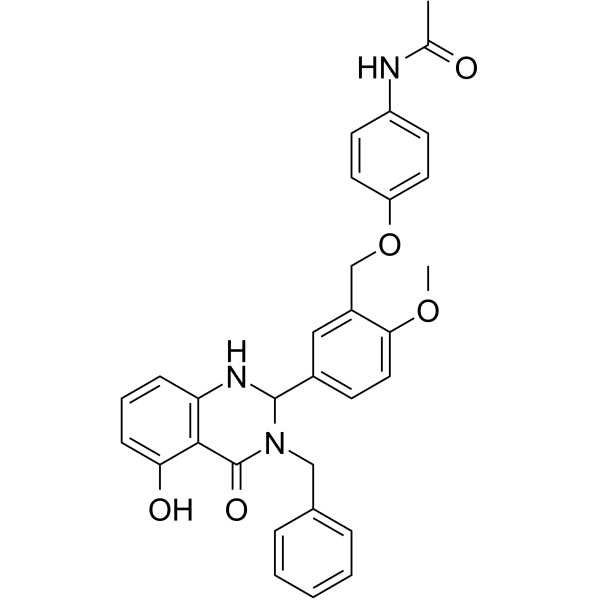
ML-109
 0 Images
ML-109 is a potent and full thyroid stimulating hormone receptor (TSHR) agonist, with an EC50 of 40 nM.
-
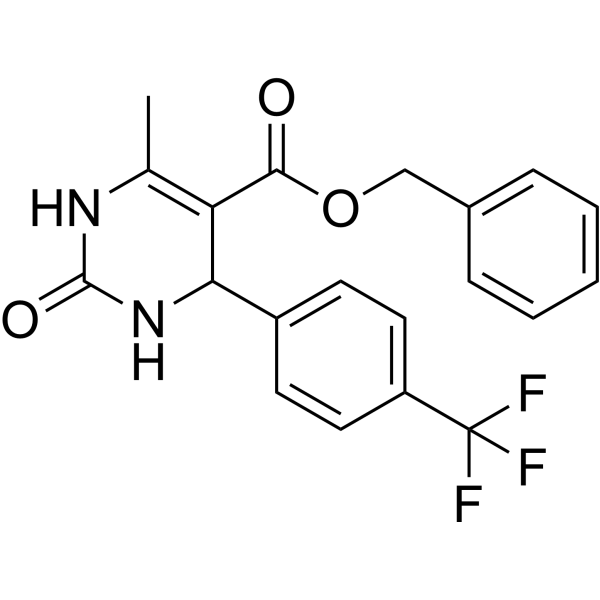
MS438
 0 Images
MS438 is a potent thyrotropin receptor (TSHR) agonist with an EC50 of 53 nM. MS438 binds to the serpentine portion of the TSHR. MS438 induces T4 secretion in mice.
-
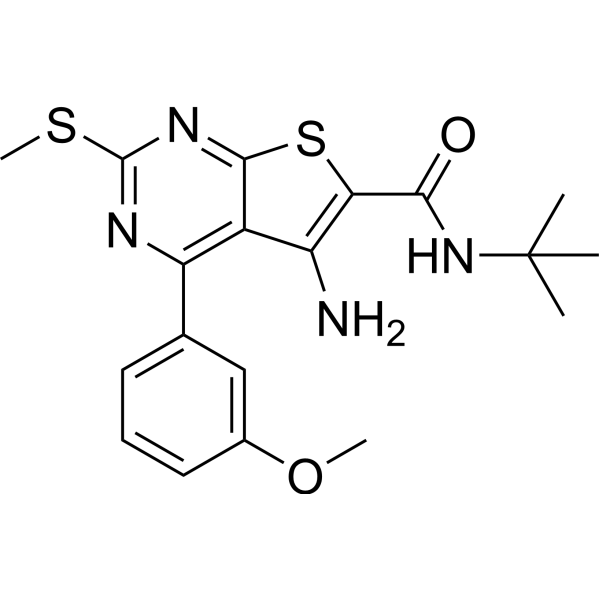
Org41841
 0 Images
Org41841 is a partial agonist of both luteinizing hormone/chorionic gonadotropin receptor (LHCGR) and thyroid-stimulating hormone receptor (TSHR) with EC50s of 0.2 and 7.7 μM, respectively.
-
Org41841 (Standard)
 0 ImagesCat. No.: HY-100271RCAS No.: 301847-37-0
Org41841 (Standard) is the analytical standard of Org41841 (HY-100271). This product is intended for research and analytical applications. Org41841 is a partial agonist of both luteinizing hormone/chorionic gonadotropin receptor (LHCGR) and thyroid-stimulating hormone receptor (TSHR) with EC50s of 0.2 and 7.7 μM, respectively.



