



c-Met/HGFR
c-Met (hepatocyte growth factor receptor, HGFR) is a protein possesses tyrosine kinase activity. The primary single chain precursor protein is post-translationally cleaved to produce the alpha and beta subunits, which are disulfide linked to form the mature receptor. c-Met is a membrane receptor that is essential for embryonic development and wound healing. Hepatocyte growth factor (HGF) is the only known ligand of the c-Met receptor. c-Met is normally expressed by cells of epithelial origin, while expression of HGF is restricted to cells of mesenchymalorigin. Upon HGF stimulation, c-Met induces several biological responses that collectively give rise to a program known as invasive growth.
All Product Categories
-
c-Met/HGFR Inhibitors
(237)
View all products
-
c-Met/HGFR Agonist
(1)
View all products
-
c-Met/HGFR Activators
(4)
View all products
-
c-Met/HGFR Modulators
(3)
View all products
-
c-Met/HGFR Degraders
(11)
View all products
-
c-Met/HGFR Ligands
(4)
View all products
-
c-Met/HGFR Proteins
(48)
View all products
-
c-Met/HGFR Related Products (283)
Related Products (283)

-
Recombinant Proteins (48)
-
Antibodies (7)

-
Anti-MSPR/RON/CD136 Antibody (H5B14)
 0 ImagesCat. No.: HY-P990472Synonyms: H5B14Anti-MSPR/RON/CD136 Antibody (H5B14) is a humanized antibody expressed in CHO cells, targeting MSPR/RON/CD136. Anti-MSPR/RON/CD136 Antibody (H5B14) has a huIgG1 heavy chain and a huκ light chain, with a predicted molecular weight (MW) of 156.7 kDa. The isotype control for Anti-MSPR/RON/CD136 Antibody (H5B14) can be referenced as Human IgG1 kappa, Isotype Control (HY-P99001).

-
(R)-Afatinib
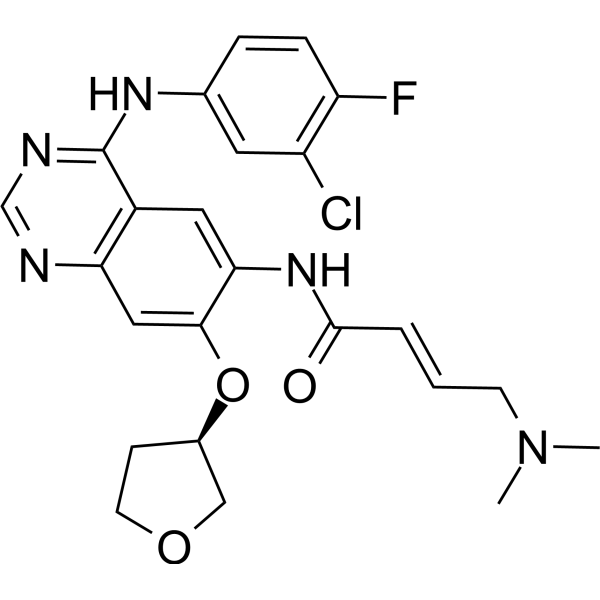 0 ImagesCat. No.: HY-10261ECAS No.: 439081-17-1Synonyms: (R)-BIBW 2992(R)-Afatinib ((R)-BIBW 2992) is the Afatinib isomer. Afatinib (HY-10261) is an orally active, potent and irreversible dual specificity inhibitor of?ErbB?family (EGFR?and?HER2), with?IC50?values of 0.5 nM, 0.4 nM, 10 nM and 14 nM for?EGFRwt, EGFRL858R,?EGFRL858R/T790M?and HER2, respectively. Afatinib can be used for the research of esophageal squamous cell carcinoma (ESCC), non-small cell lung?cancer?(NSCLC) and gastric?cancer.
-
MET L1195V Recombinant Human Active Protein Kinase
 0 ImagesCat. No.: HY-E70752Mesenchymal-to-epithelial transition (MET) is a receptor tyrosine kinase for hepatocyte growth factor (HGF). MET overactivation is strongly associated with angiogenesis, cellular motility, growth, and invasion. Aberrant MET signaling can drive tumorigenesis in several cancer types through various molecular mechanisms, including MET amplification, MET exon 14 skipping mutation, MET overexpression, and MET fusions. MET L1195V is a mutant of MET. MET L1195V Recombinant Human Active Protein Kinase is a recombinant MET L1195V protein that can be used to study MET L1195V-related functions.
-
NSC 850745
 0 ImagesCat. No.: HY-175848NSC 850745 is a selective and potent c-Met/STAT3 inhibitor with IC50 values of 210 and 670 nM. NSC 850745 can inhibit cell proliferation, induce G2/M phase arrest and induce apoptosis. NSC 850745 can downregulate AKT-1, VEGF and Bcl-2 expression and upregulate p53, Bax and caspase expression. NSC 850745 can be used for the research of cancer, such as leukemia and colon cancer.
-
Telisotuzumab (powder)
 0 ImagesCat. No.: HY-P99391ACAS No.: 1781223-80-0Synonyms: ABT-700 (powder)Telisotuzumab (ABT-700) (powder) is a bivalent humanized IgG1 anti-c-Met monoclonal antibody. Telisotuzumab (powder) binds cellular c-Met and disrupts its productive dimerization and activation induced by HGF or by the high density of c-Met on the cell surface independent of ligand. Telisotuzumab (powder) induces apoptosis. Telisotuzumab (powder) can be used for the study of cancers harboring amplified MET, such as gastric and lung cancers.
-
c-Met-IN-29
 0 ImagesCat. No.: HY-183749c-Met-IN-29 is an orally active c-Met inhibitor with an IC50 of 1.6 nM. c-Met-IN-29 binds to and functionally modulates c-Met protein, inhibiting tumor cell proliferation, migration and apoptosis. c-Met-IN-29 exhibits anti-tumor activity both in vitro and in vivo. c-Met-IN-29 can be used for the research of non-small cell lung cancer.
-
Antitumor agent-45
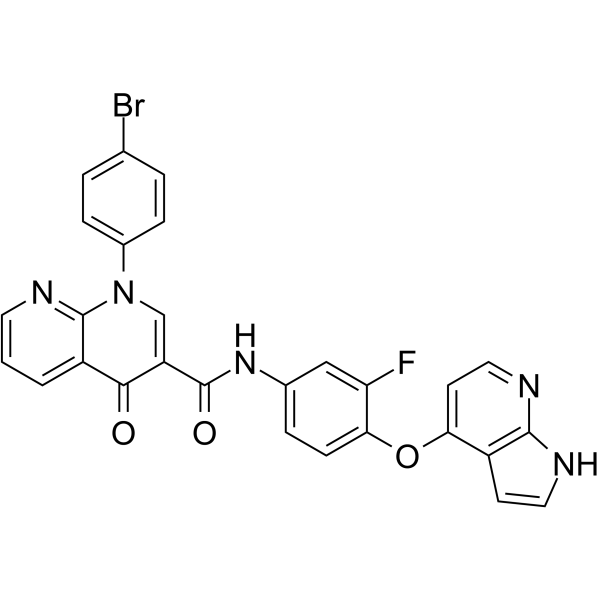 0 ImagesCat. No.: HY-144394CAS No.: 2581082-74-6Antitumor agent-45 (Compound 21) could induce and stimulate A549 cells apoptosis in G0/G1 and G2/M phase. Antitumor agent-45 (Compound 21) inhibits c-Met expression to regulate the growth of tumor cells.
-
c-Met/HDAC-IN-2
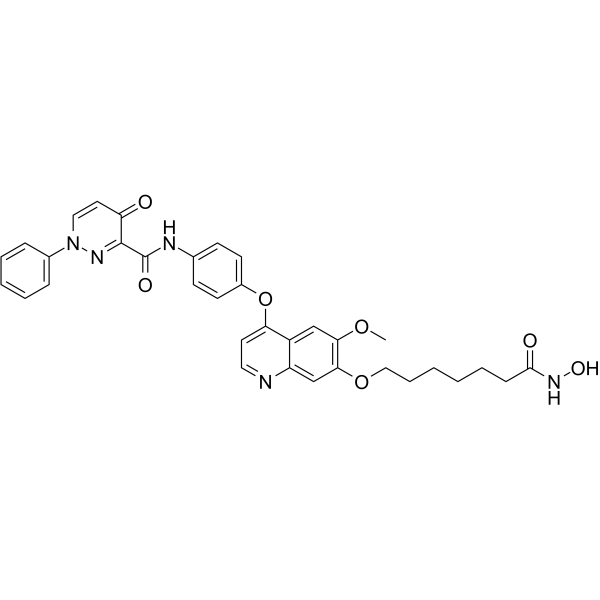 0 ImagesCat. No.: HY-143462CAS No.: 2740495-53-6c-Met/HDAC-IN-2 is a highly potent c-Met and HDAC dual inhibitor with IC50s of 18.49 nM and 5.40 nM for HDAC1 and c-Met, respectively. c-Met/HDAC-IN-2 has antiproliferative activities against certain cancer cell lines. c-Met/HDAC-IN-2 can cause G2/M-phase arrest and induce apoptosis in HCT-116. c-Met/HDAC-IN-2 can be used for researching anti-cancer resistance.
-
Multi-kinase-IN-5
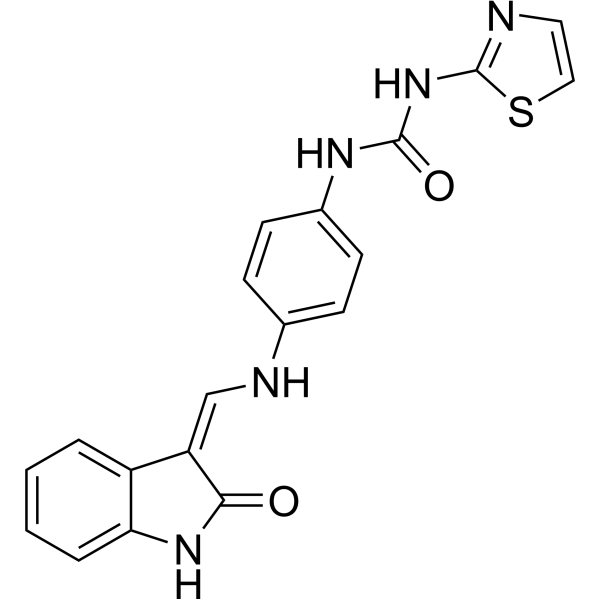 0 ImagesCat. No.: HY-149415Multi-kinase-IN-5 (compound 15c) is a promising multi-kinase inhibitory agent. Multi-kinase-IN-5 inhibits a panel of protein kinases (RET, KIT, cMet, VEGFR1,2, FGFR1, PDGFR and BRAF), showing % inhibition of 74%, 31%, 62%, 40%, 73%, 74%, 59%, and 69%, respectively, and IC50 of 1.287, 0.117 and 1.185 μM against FGFR1, VEGFR, and RET kinases, respectively.
-
PROTAC c-Met degrader-5
 0 ImagesCat. No.: HY-175320PROTAC c-Met degrader-5 is an orally active c-Met PROTAC degrader. PROTAC c-Met degrader-5 induces c-Met degradation via Cullin-CRBN, with a DC50 value of 0.32 nM, and inhibits the phosphorylation of c-Met and its downstream signaling molecule STAT3. PROTAC c-Met degrader-5 inhibits cancer cell proliferation, migration and invasion, induces apoptosis, alters cell cycle distribution, and suppresses the growth of EBC-1 xenograft tumors. PROTAC c-Met degrader-5 can be used to study MET-driven cancers as well as Tepotinib (HY-14721)-resistant cancers harboring c-MetD1228N and c-MetY1230H mutations.
-
MET Y1230H Recombinant Human Active Protein Kinase
 0 ImagesCat. No.: HY-E70757Mesenchymal-to-epithelial transition (MET) is a receptor tyrosine kinase for hepatocyte growth factor (HGF). MET overactivation is strongly associated with angiogenesis, cellular motility, growth, and invasion. Aberrant MET signaling can drive tumorigenesis in several cancer types through various molecular mechanisms, including MET amplification, MET exon 14 skipping mutation, MET overexpression, and MET fusions. MET Y1230H is a mutant of MET. MET Y1230H Recombinant Human Active Protein Kinase is a recombinant MET Y1230H protein that can be used to study MET Y1230H-related functions.
-
Zgwatinib
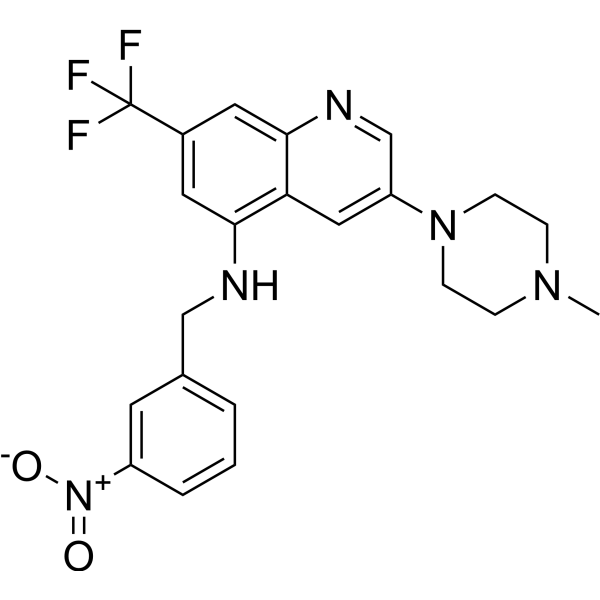 0 ImagesCat. No.: HY-124267CAS No.: 1268264-10-3Synonyms: SOMG-833Zgwatinib (SOMG-833) is a potent, selective, and ATP-competitive c-MET inhibitor, with an IC50 of 0.93 nM against c-MET, over 10,000-fold more potent compared with 19 tyrosine kinases (including c-MET family members and highly homologous kinases). Zgwatinib potently inhibits c-MET-driven cell proliferation. Zgwatinib as a potential candidate agent for c-MET-driven human cancers research.
-
BMS-748730
 0 ImagesCat. No.: HY-111158CAS No.: 910297-57-3BMS-748730 is an oral tyrosine kinase inhibitor. BMS-748730 inhibits tyrosine kinase activity by competing with the ATP binding site of the tyrosine kinase, which prevents the kinase from phosphorylating the substrate protein, thereby inhibiting signaling pathways associated with cell proliferation and tumor growth. BMS-748730 can be used in the study of certain types of cancer, including chronic myeloid leukemia (CML).
-
SAIT-301
 0 ImagesCat. No.: HY-P990661SAIT-301 is a Met-targeting monoclonal antibody. SAIT-301 inhibits Met activation, induces downregulated expression of phosphorylated Met(p-Met) and phosphorylated ERK(p-ERK), and reduces EGR-1 expression. SAIT-301 inhibits the migration and invasion of nasopharyngeal carcinoma cells. SAIT-301 is applicable to relevant research on nasopharyngeal carcinoma. For the isotype control of SAIT-301, refer to Human IgG1 kappa, Isotype Control (HY-P99001).
-
MET G1163R Recombinant Human Active Protein Kinase
 0 ImagesCat. No.: HY-E70751Mesenchymal-to-epithelial transition (MET) is a receptor tyrosine kinase for hepatocyte growth factor (HGF). MET overactivation is strongly associated with angiogenesis, cellular motility, growth, and invasion. Aberrant MET signaling can drive tumorigenesis in several cancer types through various molecular mechanisms, including MET amplification, MET exon 14 skipping mutation, MET overexpression, and MET fusions. MET G1163R is a mutant of MET. MET G1163R Recombinant Human Active Protein Kinase is a recombinant MET G1163R protein that can be used to study MET G1163R-related functions.
-
VEGFR-2-IN-89
 0 ImagesCat. No.: HY-184720VEGFR-2-IN-89 is a VEGFR-2 inhibitor with an IC50 of 77 nM. VEGFR-2-IN-89 potently inhibits c-Met kinase activity with an IC50 of 0.152 μM, and also exhibits good inhibitory activity against EGFR (IC50 = 0.269 μM) and PDGFR-β kinase (IC50 = 0.301 μM). VEGFR-2-IN-89 displays anticancer activity against liver cancer. VEGFR-2-IN-89 can be used in the research of hepatocellular carcinoma.
-
c-Met-IN-23
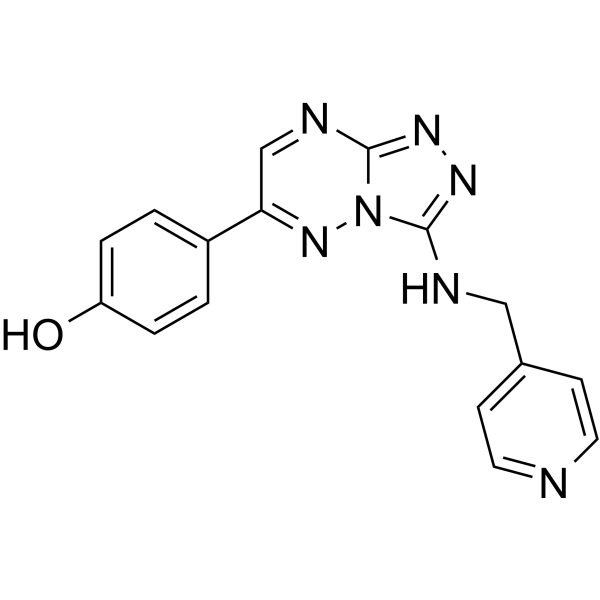 0 ImagesCat. No.: HY-161353CAS No.: 3032969-28-8c-Met-IN-23 (Compound 12g) is a c-Met inhibitor (IC50 = 0.052 μM for c-Met). c-Met-IN-23 also inhibits MDR1 and MRP1/2 pumps in the cancerous HepG2 and BxPC3 cells. c-Met-IN-23 is an anticancer agent.
-
SRI 31215
 0 ImagesCat. No.: HY-114363CAS No.: 1832686-43-7SRI 31215 is a Matriptase/Hepsin/hepatocyte growth factor activator (HGFA) triplex inhibitor and mimics the activity of HAI-1/2 (endogenous inhibitors of HGF activation). SRI 31215 has potent inhibitory activity against matriptase, hepsin and HGFA with IC50 values of 0.69 μM, 0.65 μM and 0.30 μM, respectively. SRI 31215 can be used for the research of cancer.




