



c-Met/HGFR
c-Met (hepatocyte growth factor receptor, HGFR) is a protein possesses tyrosine kinase activity. The primary single chain precursor protein is post-translationally cleaved to produce the alpha and beta subunits, which are disulfide linked to form the mature receptor. c-Met is a membrane receptor that is essential for embryonic development and wound healing. Hepatocyte growth factor (HGF) is the only known ligand of the c-Met receptor. c-Met is normally expressed by cells of epithelial origin, while expression of HGF is restricted to cells of mesenchymalorigin. Upon HGF stimulation, c-Met induces several biological responses that collectively give rise to a program known as invasive growth.
All Product Categories
-
c-Met/HGFR Inhibitors
(237)
View all products
-
c-Met/HGFR Agonist
(1)
View all products
-
c-Met/HGFR Activators
(4)
View all products
-
c-Met/HGFR Modulators
(3)
View all products
-
c-Met/HGFR Degraders
(11)
View all products
-
c-Met/HGFR Ligands
(4)
View all products
-
c-Met/HGFR Proteins
(48)
View all products
-
c-Met/HGFR Related Products (283)
Related Products (283)

-
Recombinant Proteins (48)
-
Antibodies (7)

-
MET Y1230A Recombinant Human Active Protein Kinase
 0 ImagesCat. No.: HY-E70754Mesenchymal-to-epithelial transition (MET) is a receptor tyrosine kinase for hepatocyte growth factor (HGF). MET overactivation is strongly associated with angiogenesis, cellular motility, growth, and invasion. Aberrant MET signaling can drive tumorigenesis in several cancer types through various molecular mechanisms, including MET amplification, MET exon 14 skipping mutation, MET overexpression, and MET fusions. MET Y1230A is a mutant of MET. MET Y1230A Recombinant Human Active Protein Kinase is a recombinant MET Y1230A protein that can be used to study MET Y1230A-related functions.
-
c-Met-IN-13
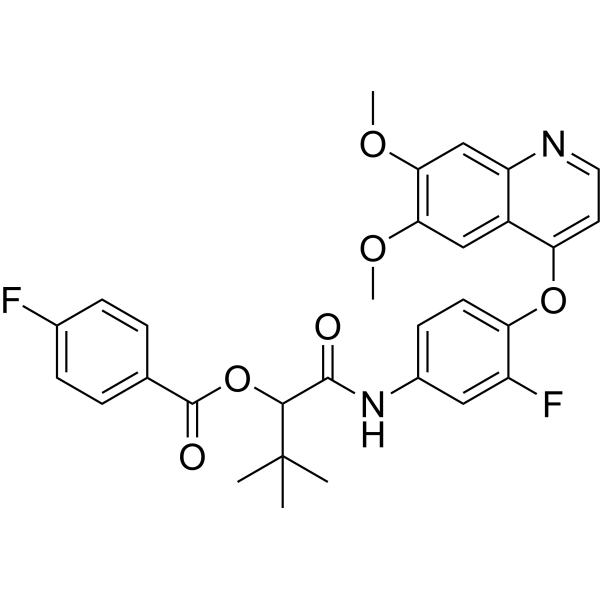 0 ImagesCat. No.: HY-150576CAS No.: 2377724-93-9
-
c-Met-IN-11
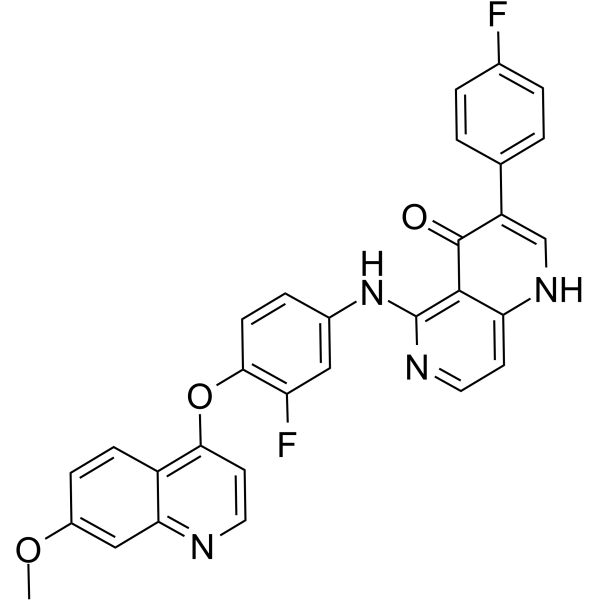 0 ImagesCat. No.: HY-147694CAS No.: 1446324-05-5c-Met-IN-11 (compound 3) is a potent c-MET and VEGFR-2 inhibitor, with IC50 values of 41.4 and 71.1 nM, respectively.
-
VEGFR-2-IN-88
 0 ImagesCat. No.: HY-184719VEGFR-2-IN-88 is a VEGFR-2 inhibitor with an IC50 of 0.202 μM. VEGFR-2-IN-88 potently inhibits EGFR (IC50 = 0.139 μM), and moderately inhibits PDGFR-β (IC50 of 0.236 μM) and c-Met (IC50 of 0.281 μM). VEGFR-2-IN-88 acts as a cell cycle inhibitor that arrests cells at the G0/G1 phase. VEGFR-2-IN-88 induces Apoptosis. VEGFR-2-IN-88 downregulates serum AST and ALT levels. VEGFR-2-IN-88 exerts selective anticancer effects. VEGFR-2-IN-88 reduces liver weight in in vivo models. VEGFR-2-IN-88 can be used in research related to hepatocellular carcinoma.
-
c-Met degrader-1
 0 ImagesCat. No.: HY-162679c-Met degrader-1 is an orally active c-Met HyT degrader with a DC50 of 226.12 nM. c-Met degrader-1 exhibits anticancer activity against hepatocellular carcinoma. c-Met degrader-1 can be used in the research of hepatocellular carcinoma (HCC) (c-Met ligand: Tepotinib (HY-14721), hydrophobic tag moiety: Adamantan-1-ylmethanamine (HY-W037848)).
-
c-Met-IN-30
 0 ImagesCat. No.: HY-184305c-Met-IN-30 is a c-MET inhibitor. c-Met-IN-30 inhibits the proliferation of non-small cell lung cancer, pancreatic ductal adenocarcinoma and triple-negative breast adenocarcinoma, and can be used in the research of the above-mentioned cancers.
-
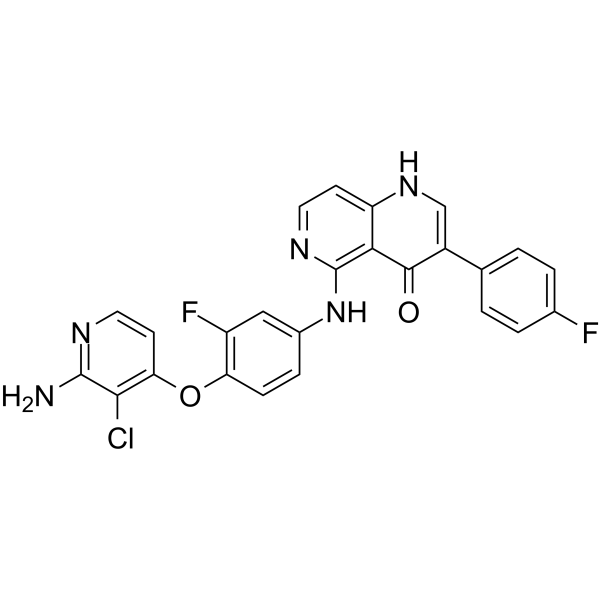
CAIX/XII-IN-16
 0 ImagesCat. No.: HY-179034CAIX/XII-IN-16 (Compound 5d) is a selective inhibitor of CA IX/XII and c-Met. CAIX/XII-IN-16‘s Ki values for hCA IX, hCA XII and CA I are 10.6, 31.8 and 2361 nM respectively, and its IC50 value for c-Met is 0.49 μM. CAIX/XII-IN-16 exhibits significantly enhanced cytotoxicity against colon cancer cells under hypoxic conditions. CAIX/XII-IN-16 causes cell cycle arrest and induces apoptosis (apoptosis). CAIX/XII-IN-16 significantly enhances the efficacy of Oxaliplatin (HY-17371) and 5-Fluorouracil (HY-90006). CAIX/XII-IN-16 can be used for studies on chemotherapy resistance related to hypoxia.
-
PARP1/c-Met-IN-1
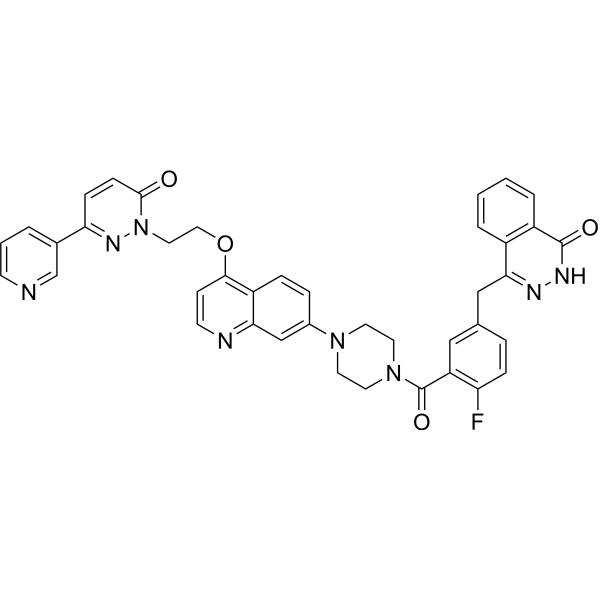 0 ImagesCat. No.: HY-161372CAS No.: 2944101-99-7
-
3-Fluoro-desmethyl-cabozantinib-C3-O-C3-PEG-acid
 0 ImagesCat. No.: HY-176385CAS No.: 2230826-10-33-Fluoro-desmethyl-cabozantinib-C3-O-C3-PEG-acid is a target protein ligand-linker conjugate that incorporates a ligand for c-Met (HY-451241) and a PROTAC linker (HY-W442078), which recruits E3 ligases. 3-Fluoro-desmethyl-cabozantinib-C3-O-C3-PEG-acid can be used in the synthesis of PROTACs, such as SJF-8240 (HY-123961).
-
Roquefortine C-13C22
 0 ImagesCat. No.: HY-N6748SRoquefortine C-13C22 is the 13C-labeled Roquefortine C (HY-N6748). Roquefortine C is a mycotoxin that can be isolated from Penicillium species. Roquefortine C is an agonist of P-gp and an inhibitor of P450 3A and P450 1A. Roquefortine C can inhibit Gram-positive bacteria and also has certain neurotoxicity. Additionally, Roquefortine C can exert antitumor activity.
-
SMIC-1014
 0 ImagesCat. No.: HY-P11863SMIC-1014 is a cellular mesenchymal-epithelial transition factor (c-Met) ligand. SMIC-1014 binds to the c-Met ectodomain without activating c-Met phosphorylation or inducing receptor internalization. SMIC-1014, when radiolabeled as [68Ga]Ga-SMIC-1014, acts as a positron emission tomography (PET) probe with defined pharmacokinetics, achieves specific tumor uptake in xenografts, and functions as a c-Met-targeted diagnostic probe. SMIC-1014 can be used for the research of colon cancer, hepatocellular carcinoma, prostate cancer.
-
Multi-target kinase-IN-8
 0 ImagesCat. No.: HY-179098Multi-target kinase-IN-8 (3d) is an anti-cancer agent. Multi-target kinase-IN-8 exhibits inhibitory activity against various protein kinases (B-Raf V600E (IC50 = 0.078 µg/mL), c-Met (IC50 = 0.405 µg/mL), Pim-1 (IC50 = 1.053 µg/mL), EGFR WT (IC50 = 0.177 µg/mL), VEGFR-2 (IC50 = 0.275 µg/mL)). Multi-target kinase-IN-8 can induce cell cycle arrest and promote early and late apoptosis. Multi-target kinase-IN-8 is commonly used in cancer research.
-
VEGFR-2/c-Met-IN-2
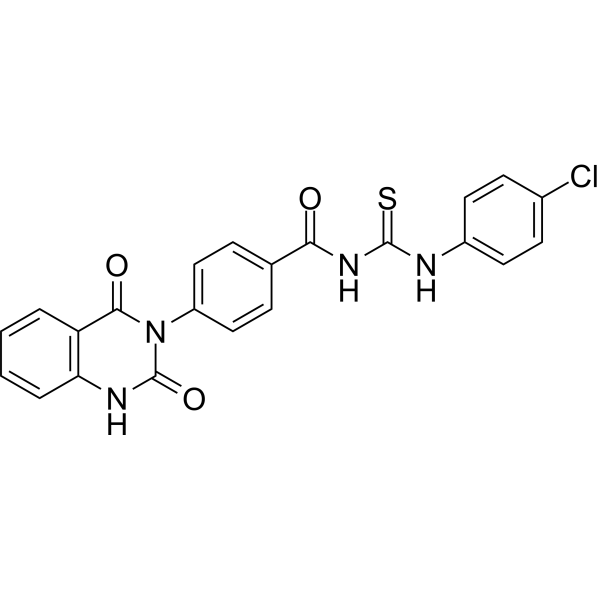 0 ImagesCat. No.: HY-149675CAS No.: 3017162-04-5VEGFR-2/c-Met-IN-2 (compound 3e) is a VEGFR-2/c-Met inhibitor, with IC50 values of 83 and 48 nM, respectively. VEGFR-2/c-Met-IN-2 exhibits cytotoxic activity against HCT-116 cell line (IC50: 3.403 µM).
-
c-Met-IN-18
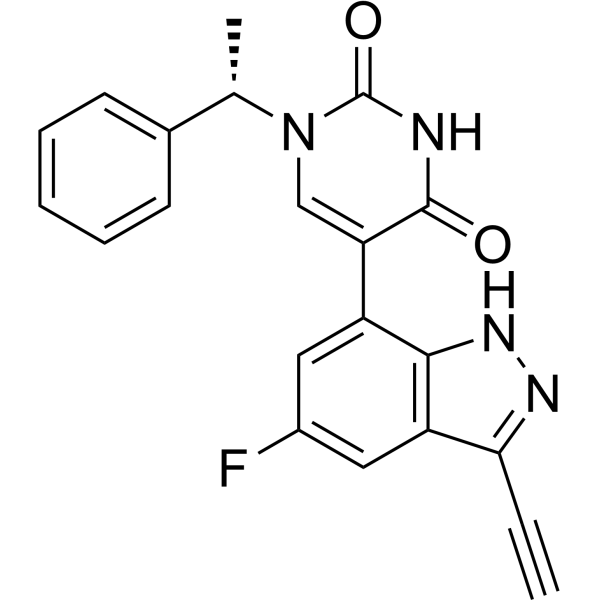 0 ImagesCat. No.: HY-149880CAS No.: 3034863-56-1c-Met-IN-18 is ATP competitive type-III c-MET inhibitor of WT and D1228V mutant c-MET. c-Met-IN-18 has inhibitory for WT/D1228V with an IC50 value of 0.013/0.20e.c-Met-IN-18 can be used for the research of c-MET driven cancers. c-Met-IN-18 is a click chemistry reagent, it contains an Alkyne group and can undergo copper-catalyzed azide-alkyne cycloaddition (CuAAc) with molecules containing Azide groups.
-
Axl-IN-8
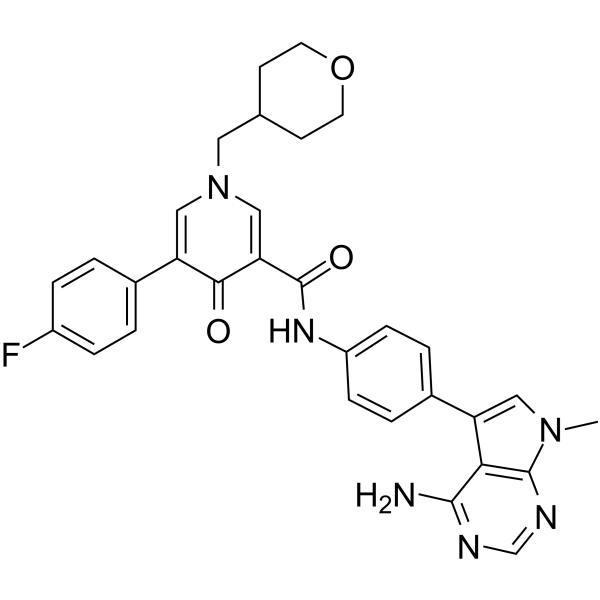 0 ImagesCat. No.: HY-147575CAS No.: 2231424-62-5Axl-IN-8 (NO.1) is a potent AXL inhibitor, with an IC50 of <1 nM. Axl-IN-8 also inhibits c-MET, with an IC50 of 1-10 nM. Axl-IN-8 shows anti-proliferative activity against BaF3/TEL-AXL, MKN45, and EBC-1 cells, with IC50 values of <10, 226.6 and 120.3 nM, respectively.
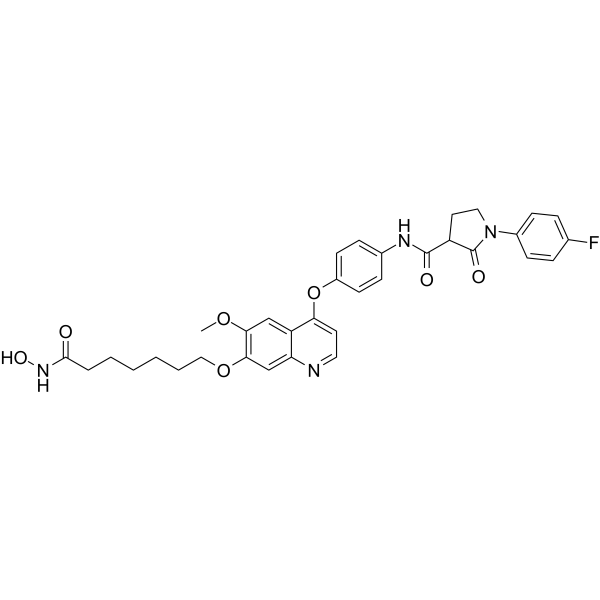
-
Afatinib dimaleate (Standard)
 0 ImagesSynonyms: BIBW 2992MA2 (Standard)Afatinib (dimaleate) (Standard) is the analytical standard of Afatinib (dimaleate). This product is intended for research and analytical applications. Afatinib (BIBW 2992) dimaleate is an orally active, potent and irreversible dual specificity inhibitor of ErbB family (EGFR and HER2), with IC50 values of 0.5 nM, 0.4 nM, 10 nM and 14 nM for EGFRwt, EGFRL858R, EGFRL858R/T790M and HER2, respectively. Afatinib dimaleate can be used for the research of esophageal squamous cell carcinoma (ESCC), non-small cell lung cancer (NSCLC) and gastric cancer.
-
PF 04254644
 0 ImagesCat. No.: HY-14510CAS No.: 959584-91-9PF 04254644 is an orally active c-Met inhibitor. PF 04254644 inhibits mesenchymal transfer factor/hepatocyte growth factor receptor. PF 04254644 induces myocardial degeneration in rats. PF 04254644 may be used in research on cardiovascular disease and cancer.




