



Dystrophin Modulator
-
Viltolarsen sodium
 0 ImagesCat. No.: HY-132586ASynonyms: NS-065/NCNP-01 sodium
Viltolarsen (NS-065/NCNP-01) sodium is a phosphorodiamidate morpholino antisense oligonucleotide. Viltolarsen sodium binds to exon 53 of the dystrophin mRNA precursor and restores the amino acid open-reading frame by skipping exon 53, resulting in the production of a shortened dystrophin protein that contains essential functional portions. Viltolarsen sodium has the potential for Duchenne muscular dystrophy (DMD) research.
-
Viltolarsen
 0 ImagesCat. No.: HY-132586CAS No.: 2055732-84-6Synonyms: NS-065/NCNP-01
Viltolarsen (NS-065/NCNP-01) is a phosphorodiamidate morpholino antisense oligonucleotide. Viltolarsen binds to exon 53 of the dystrophin mRNA precursor and restores the amino acid open-reading frame by skipping exon 53, resulting in the production of a shortened dystrophin protein that contains essential functional portions. Viltolarsen has the potential for Duchenne muscular dystrophy (DMD) research.
-
Golodirsen
 0 ImagesCat. No.: HY-132611CAS No.: 1422959-91-8Synonyms: SRP-4053
Golodirsen (SRP-4053) is an antisense oligonucleotide of the phophorodiamidate morpholino oligomer (PMO). Golodirsen restores the reading frame of the Duchenne muscular dystrophy (DMD) gene by modifying the splicing process of the pre-mRNA, skipping exon 53. Golodirsen can restore the expression of the anti-myostatin protein. Golodirsen can be used for the research of duchenne muscular dystrophy (DMD).
-
Golodirsen sodium
 0 ImagesCat. No.: HY-132611ASynonyms: SRP-4053 sodium
Golodirsen (SRP-4053) sodium is an antisense oligonucleotide of the phophorodiamidate morpholino oligomer (PMO). Golodirsen sodium restores the reading frame of the Duchenne muscular dystrophy (DMD) gene by modifying the splicing process of the pre-mRNA, skipping exon 53. Golodirsen sodium can restore the expression of the anti-myostatin protein. Golodirsen sodium can be used for the research of duchenne muscular dystrophy (DMD).
-
TG693
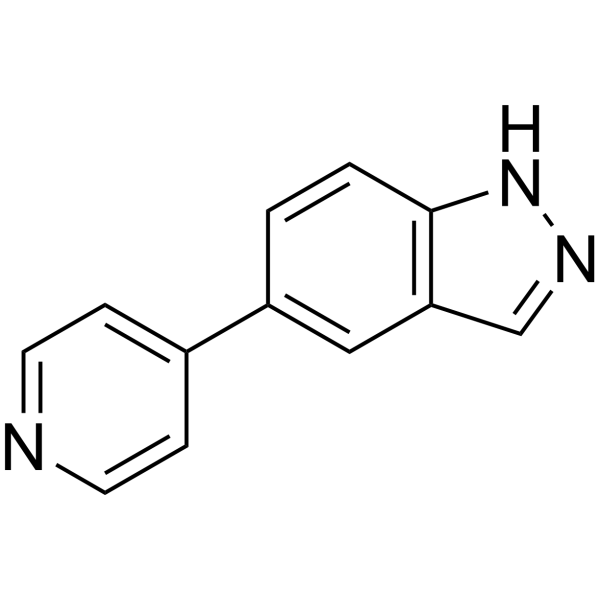 0 Images
TG693 is an orally active inhibitor of CLK1. TG693 regulates the mutated exon 31 of the dystrophin gene in vivo. TG693 is used in Duchenne muscular dystrophy (DMD) research.
-
Viltolarsen sodium scrambled negative control
 0 ImagesCat. No.: HY-132586C
Viltolarsen sodium scrambled negative control is the sequence scrambled negative control of Viltolarsen sodium.
-
Golodirsen sodium scrambled negative control
 0 ImagesCat. No.: HY-132611C
Golodirsen sodium scrambled negative control is the sequence scrambled negative control of Golodirsen sodium.
-
AHR antagonist 8
 0 ImagesCat. No.: HY-163665CAS No.: 3052113-26-2
AHR antagonist 8 (compound SG-02) is a regulator of utrophin, a homolog of dystrophin, and an AhR antagonist (Kd: 41.68 nM). Studies have shown that 800 nM of AHR antagonist 8 can upregulate utrophin by 2.7 times. AHR antagonist 8 also stimulates increased MyHC expression, suggesting that it has the potential to enhance myogenesis. After ADME evaluation, AHR antagonist 8 also has a certain oral bioavailability.
-
RTC14
 0 ImagesCat. No.: HY-123359CAS No.: 414909-09-4
RTC14 is a read-through compound (RTC) that can induce ribosomes to bypass nonsense mutations in mRNA and allow the production of full-length functional proteins. RTC14 has the potential to be used in the research of various genetic disorders, such as nonsense mutations in the ataxia-telangiectasia mutated (ATM) gene and the dystrophin gene.



