



Fluorescent Dye
Fluorescence is a phenomenon of photoluminescence in luminescence. When an atom is irradiated by light, some electrons around the nucleus jump from their original orbitals to higher energy orbitals under the influence of light energy, i.e., from the ground state to the first or second excited single-line state, etc. Due to the instability of the first or second excited singlet state, the electron returns from the excited singlet state to the ground state accompanied by released energy, resulting in fluorescence.
Fluorescent dyes can be covalently bound or physically adsorbed in the structure of the substance. The fluorescence properties allow for the characterization, localization and quantitative analysis of the labeled object. Fluorescent dyes have shown great potential for the detection of proteins, nucleic acids, cells, and immunoassays, attributed to the advantages in non-radioactive contamination, simple experimental operation and easy observation.
Fluorescent dyes have penetrated many fields such as pharmacology, physiology, environmental science, and information science, as well as functional studies of proteins and drug screening.
All Product Categories
-
Fluorescent Dye Related Products (4914)
Related Products (4914)

-
Antibodies (4)
-
Wheat germ agglutinin-AF405
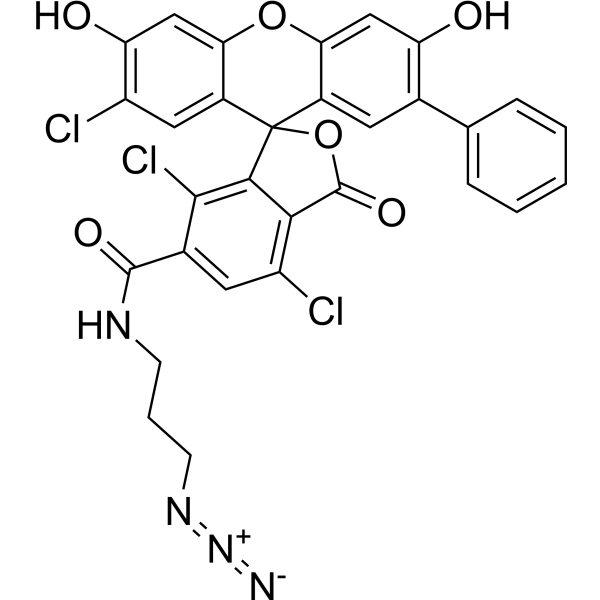
 0 ImagesCat. No.: HY-NP163JSynonyms: WGA-AF 405Wheat germ agglutinin-AF405 (WGA-AF 405) is a plant lectin that contains the fluorescent dye AF405, which can be used to identify carbohydrate chains. Wheat germ agglutinin-AF405 can be used to assess abnormal glycosylation levels in the body. The specific glycosylation detection sites of Wheat germ agglutinin is bis-GlcNAc, SA.

-
Boc-Glu(OBzl)-Gly-Arg-AMC
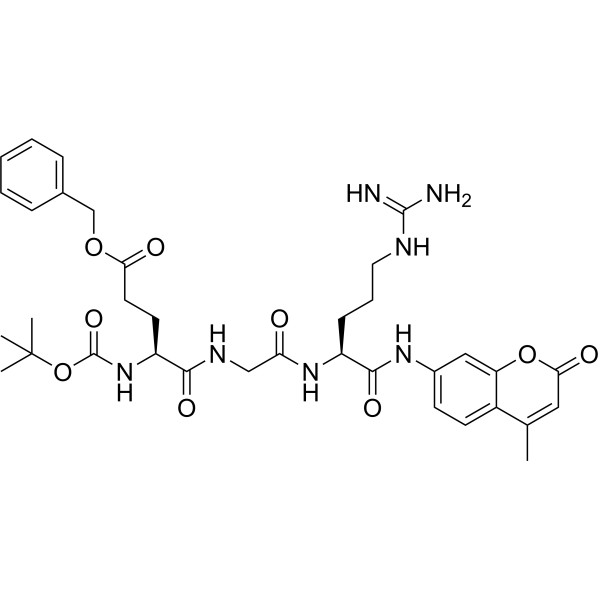 0 ImagesCat. No.: HY-P4333CAS No.: 73554-94-6Boc-Glu(OBzl)-Gly-Arg-AMC is a fluorogenic substrate for factors IXa and XIIa. The cleavage of the amide bond between arginine and the methylcoumarin amide group releases fluorescent 7-Amino-4-methylcoumarin (HY-D0027).
-
7-Diethylamino-3-N-(4-maleimidopropyl)carbamoylcoumarin
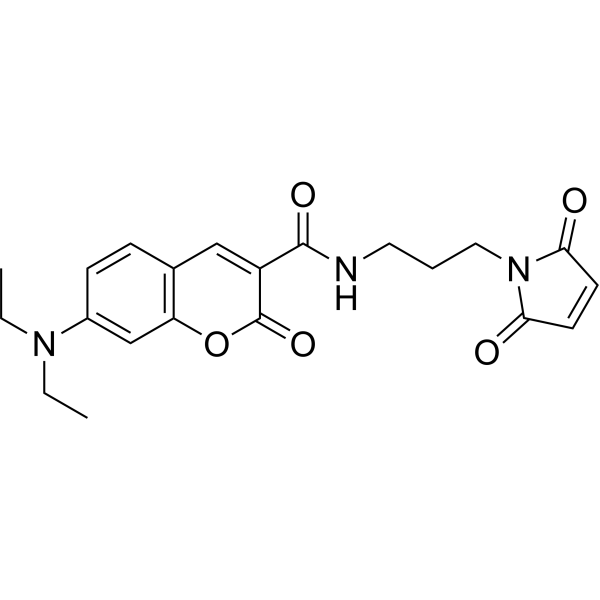 0 ImagesCat. No.: HY-D0088CAS No.: 160291-54-37-Diethylamino-3-N-(4-maleimidopropyl)carbamoylcoumarin is a multifunctional dye. Dyes are important tools in biological experiments. They can help researchers observe and analyze cell structures, track biomolecules, evaluate cell functions, distinguish cell types, detect biomolecules, study tissue pathology and monitor microorganisms. Their applications range from basic scientific research to clinical A wide range of diagnostics. Dyes are also widely used in traditional fields such as textile dyeing, as well as in emerging fields such as functional textile processing, food pigments and dye-sensitized solar cells.
-
Thiofluor 623
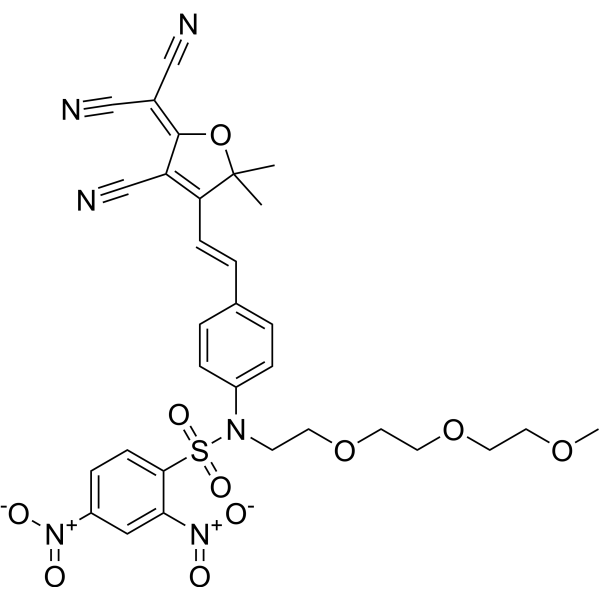 0 ImagesCat. No.: HY-112526CAS No.: 1004324-99-5Thiofluor 623 (Compound 3) is a fluorescent turn-on probe that can be used for the selective sensing and bioimaging of thiols. Thiofluor 623 displays excellent immunity to interference from nitrogen and oxygen nucleophiles. Thiofluor 623 is essentially nonfluorescent in the absence of thiols, which cleave the probe and release the red-emissive donor-acceptor fluorophore (Ex=563 nm, Em=623 nm).
-
FAM labled ISIS 329993 sodium
 0 ImagesCat. No.: HY-153489DFAM labled ISIS 329993 sodiumis a FAM labled ISIS 329993 sodium.
-
FAM hydrazide, 6-isomer
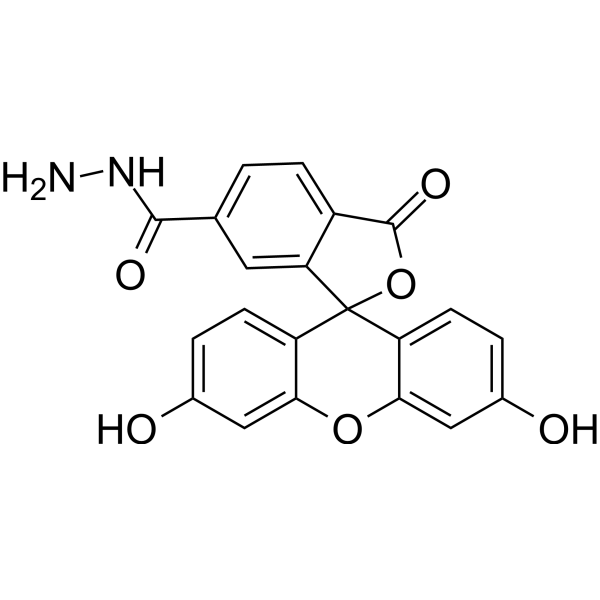 0 ImagesCat. No.: HY-151690CAS No.: 151890-73-2FAM hydrazide, 6-isomer is a hydrazide derivative of fluorescein (FAM). FAM is a xanthene dye, a parent of fluorescein dye series. FAM hydrazide, 6-isomer can be used for the labeling of carbonyl compounds, aldehydes, and ketones.

-
ATTO 700 maleimide
 0 ImagesCat. No.: HY-D2059ATTO 700 maleimide is a new fluorescent marker based on the Rhodamine structure. It has strong absorption, high fluorescence quantum yield, high thermal stability and photochemical stability, and is suitable for single molecule detection and high-resolution microscopy. ATTO 700 maleimide is a maleimide derivative of ATTO 700, which can be used to label proteins or antibodies.

-
7-(Dimethylamino)-4-methylcoumarin
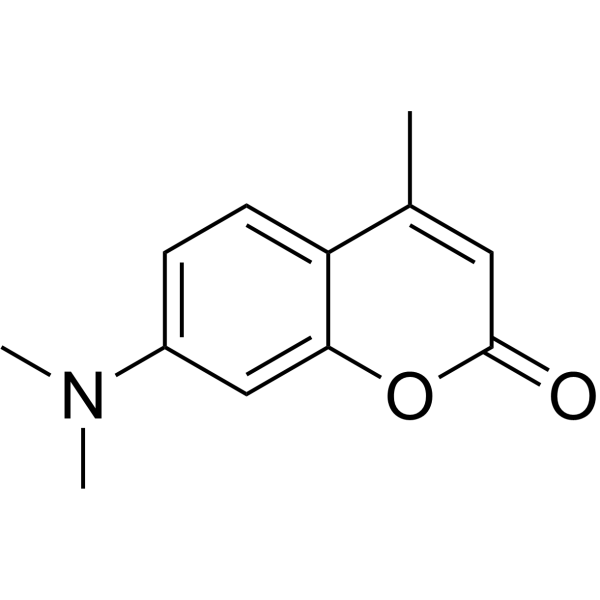 0 ImagesCat. No.: HY-W077359CAS No.: 87-01-47-(Dimethylamino)-4-methylcoumarin is a coumarin. 7-(Dimethylamino)-4-methylcoumarin can be used in study coumarin fluorescent brightener solution (Em/Ex= 366/447 nm).
-
C-6 NBD-dihydro-Ceramide
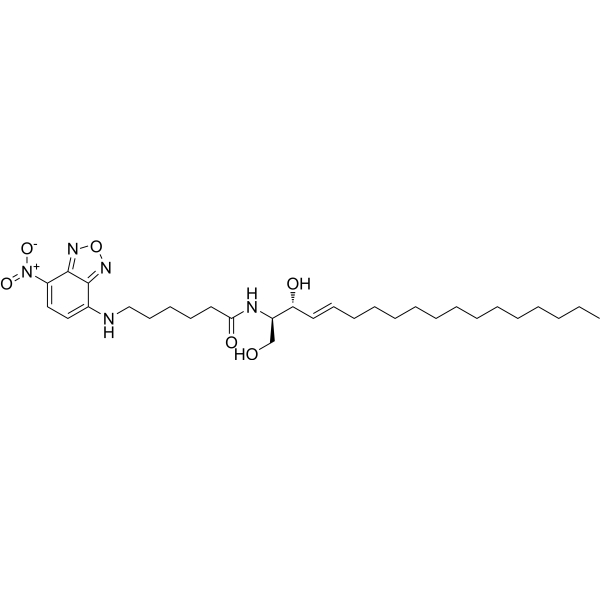 0 ImagesCat. No.: HY-147178CAS No.: 114301-95-0C-6 NBD-dihydro-Ceramide is a membrane-permeable ceramides. C-6 NBD-dihydro-Ceramide is a biologically active fluorescent analog of short chain.
-
AF430 PEG12 maleimide
 0 ImagesCat. No.: HY-D3565AF430 PEG12 maleimide is a derivative of Alexa Fluor 430 featuring a maleimide reactive group for conjugation with thiol groups. It incorporates a PEG12 linker to enhance hydrophilicity and provide spacer distance. AF430 PEG12 maleimide is primarily used for labeling thiol-containing proteins or peptides (Ex/Em = 434/539 nm).
-
N-[5-2-[Azo]phenyl]acetamide
![N-[5-2-[Azo]phenyl]acetamide](https://file.medchemexpress.com/product_pic/hy-d0532.gif "Click to View N-[5-2-[Azo]phenyl]acetamide Product Detail") 0 ImagesCat. No.: HY-D0532CAS No.: 24112-48-9N-[5-2-[Azo]phenyl]acetamide is a multifunctional dye. Dyes are important tools in biological experiments. They can help researchers observe and analyze cell structures, track biomolecules, evaluate cell functions, distinguish cell types, detect biomolecules, study tissue pathology and monitor microorganisms. Their applications range from basic scientific research to clinical A wide range of diagnostics. Dyes are also widely used in traditional fields such as textile dyeing, as well as in emerging fields such as functional textile processing, food pigments and dye-sensitized solar cells.
0 ImagesCat. No.: HY-D0532CAS No.: 24112-48-9N-[5-2-[Azo]phenyl]acetamide is a multifunctional dye. Dyes are important tools in biological experiments. They can help researchers observe and analyze cell structures, track biomolecules, evaluate cell functions, distinguish cell types, detect biomolecules, study tissue pathology and monitor microorganisms. Their applications range from basic scientific research to clinical A wide range of diagnostics. Dyes are also widely used in traditional fields such as textile dyeing, as well as in emerging fields such as functional textile processing, food pigments and dye-sensitized solar cells.
-
Z-D-Arg-Gly-Arg-pNA dihydrochloride
 0 ImagesSynonyms: Benzyl-D-Arg-Gly-Arg-pNA dihydrochlorideZ-D-Arg-Gly-Arg-pNA dihydrochloride is a hydrolytic chromogenic plasmin substrate.
-
HMRef-βGal
 0 ImagesCat. No.: HY-D3186CAS No.: 2163840-29-5HMRef-βGal is a fluorescent probe and a substrate responsive to β-galactosidase (β-galactosidase) (Ex/Em=498 nm/505-600 nm). After being cleaved by β-galactosidase, HMRef-βGal triggers significant fluorescence enhancement via intramolecular spirocyclic function regulation. HMRef-βGal generates bright fluorescence in cancer cells with elevated β-galactosidase activity, enabling visualization of tiny peritoneal metastases in mouse models. HMRef-βGal exhibits low in vitro cytotoxicity and low acute in vivo toxicity in mice. HMRef-βGal can be used for preclinical fluorescence-guided diagnosis and cytoreductive surgery of peritoneal metastases, including compatibility with real-time naked-eye detection and endoscopic imaging, as well as for studies related to peritoneal metastases of ovarian cancer.
-
Cy3 labled Cevolisiran sodium
 0 ImagesCat. No.: HY-177621DCy3 labled Cevolisiran sodium is a Cy3 labled Cevolisiran sodium.

-
2-Aza-ε-adenosine
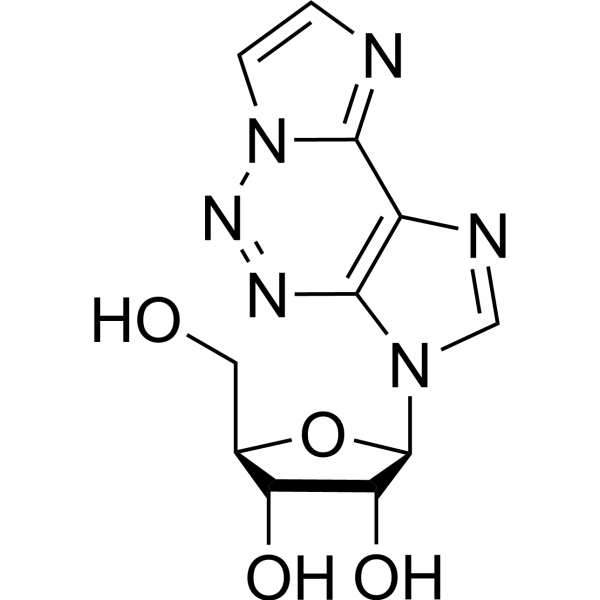 0 ImagesCat. No.: HY-D1186CAS No.: 50663-82-6Synonyms: 2-Aza-1,N6-ethenoadenosine2-Aza-ε-adenosine (2-Aza-1,N6-ethenoadenosine) is a multifunctional dye. Dyes are important tools in biological experiments. They can help researchers observe and analyze cell structures, track biomolecules, evaluate cell functions, distinguish cell types, detect biomolecules, study tissue pathology and monitor microorganisms. Their applications range from basic scientific research to clinical A wide range of diagnostics. Dyes are also widely used in traditional fields such as textile dyeing, as well as in emerging fields such as functional textile processing, food pigments and dye-sensitized solar cells.




