



Isotope-Labeled Compounds
Isotope-labeled compounds are chemical substances in which some atoms in their molecules are replaced by isotope atoms. The range of stable isotope products can cover from gases to complex molecules. Isotope-labeled compounds could provide a site-specific investigation of structures, making molecules easily detectable by mass spectrometry and NMR, and maintaining the physico-chemical properties of the target molecule at the same time.
MCE isotope-labeled compounds are all stable isotope-labeled compounds and are non-radioactive labeled substances. MCE isotope-labeled compounds are unique tools for identifying and understanding biological and chemical processes. Stable isotope-labeled products are now getting more and more popular among scientists. The scope of application is gradually penetrating into various scientific fields, such as life sciences, food and medicine, agriculture, environment, geology, etc. Stable isotope-labeled compounds have a wide range of applications in the Life Science areas, such as Metabolomics, Proteomics, Clinical studies, Deuterium drugs, etc.
All Product Categories
-
Isotope-Labeled Compounds Related Products (11091)
Related Products (11091)

-
ADP-β-D-ribofuranose-13C10
 0 ImagesCat. No.: HY-157906S1ADP-β-D-ribofuranose-13C10 is the 13C-labeled ADP-β-D-ribofuranose (HY-157906). ADP-β-D-ribofuranose is a nucleotide derivative composed of ADP and a ribose unit. ADP-β-D-ribofuranose can be produced by NAD+ catalysis.
-
Uridine 5'-diphosphate-15N2 dilithium
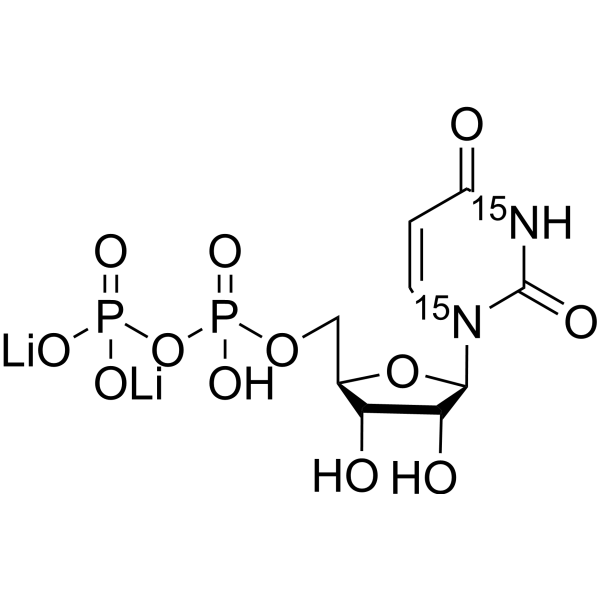 0 ImagesCat. No.: HY-113359AS3Synonyms: UDP-15N2 dilithiumUridine 5'-diphosphate-15N2 (UDP-15N2) dilithium is the 15N2-labeled Uridine 5'-diphosphate (HY-113359). Uridine-5'-diphosphate is an important nucleotide made of uracil, ribose, and a pyrophosphate group. Uridine-5'-diphosphate is a potent, selective human P2Y6 receptor native agonist (EC50 = 300 nM; pEC50 = 6.52). Uridine-5'-diphosphate disodium salt, an endogenous metabolite, catalyzes the glucuronidation of a wide array of substrates and is used in nucleic acid (RNA) biosynthesis.
-
1-Ethyl-2-methylbenzene-d5
 0 ImagesCat. No.: HY-W724366Synonyms: 2-Methylethylbenzene-d51-Ethyl-2-methylbenzene-d5 (2-Methylethylbenzene-d5) is the deuterium labeled 1-Ethyl-2-methylbenzene.
-
Bisoprolol-d7
 0 ImagesCat. No.: HY-W707407CAS No.: 1310012-16-8Bisoprolol-d7 is deuterium labeled Bisoprolol. Bisoprolol is a potent, selective and orally active β1-adrenergic receptor blocker with little activity on β2-receptor. Bisoprolol has the potential for hypertension, coronary artery disease and stable ventricular dysfunction research.
-
Cortisone-d9
 0 ImagesCat. No.: HY-17461S4Synonyms: 17-Hydroxy-11-dehydrocorticosterone-d9; Kendall's compound E-d9Cortisone-d9 (17-Hydroxy-11-dehydrocorticosterone-d9) is the deuterium labeled Cortisone (HY-17461). Cortisone (17-Hydroxy-11-dehydrocorticosterone), an oxidized metabolite of Cortisol (a Glucocorticoid). Cortisone acts as an immunosuppressant and anti-inflammatory agent. Cortisone can partially intervene in binding of Glucocorticoid to Glucocorticoid-receptor at high concentrations.
-
Di-n-dodecyl Phthalate-3,4,5,6-d4
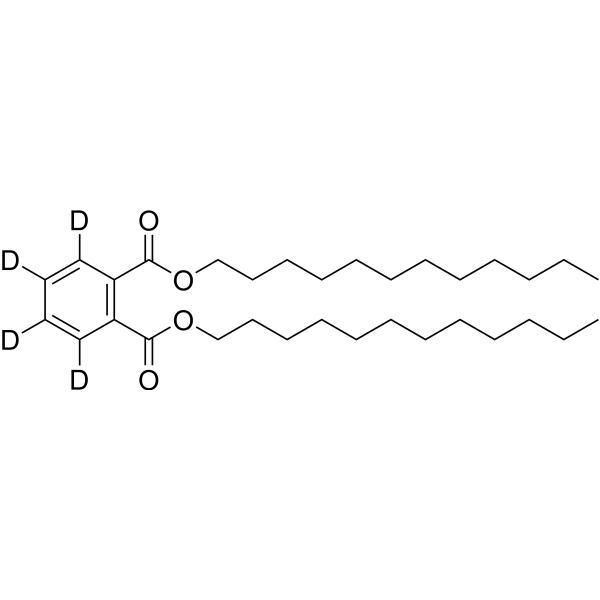 0 ImagesDi-n-dodecyl Phthalate-3,4,5,6-d4 is the deuterium labeled Di-n-dodecyl Phthalate.
-
Bis(7-methyl-1-octyl) Phthalate-3,4,5,6-d4
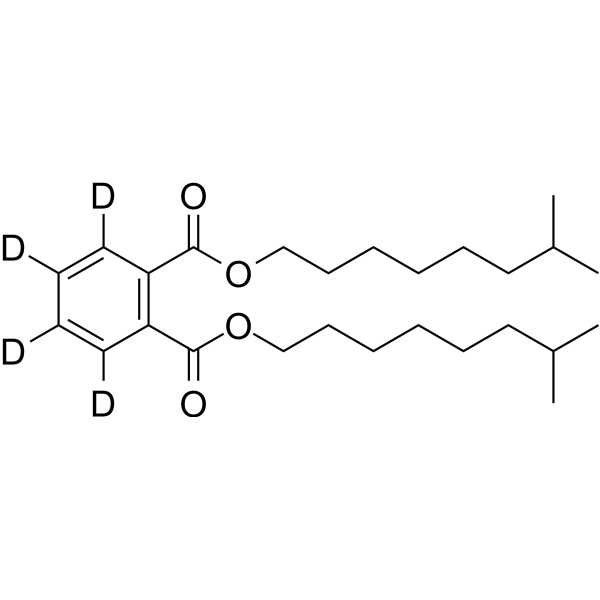 0 ImagesCat. No.: HY-150855SCAS No.: 1332965-90-8Bis(7-methyl-1-octyl) Phthalate-3,4,5,6-d4 is the deuterium labeled Bis(7-methyl-1-octyl) Phthalate.
-
4'-Hydroxytamoxifen-d6 (contains up to 10% E isomer)
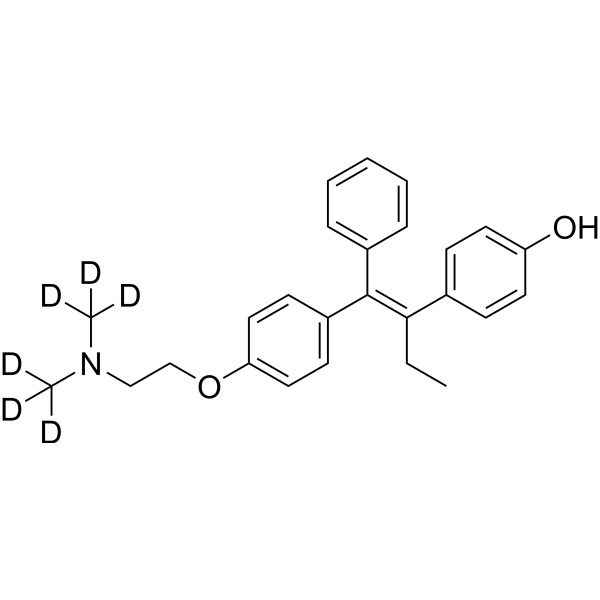 0 ImagesCat. No.: HY-124414SCAS No.: 1346606-80-14'-Hydroxytamoxifen-d6 (contains up to 10% E isomer) is deuterium labeled 4'-Hydroxy Tamoxifen. 4'-Hydroxytamoxifen is a metabolite of Tamoxifen.
-
1-Bromotridecane-d4
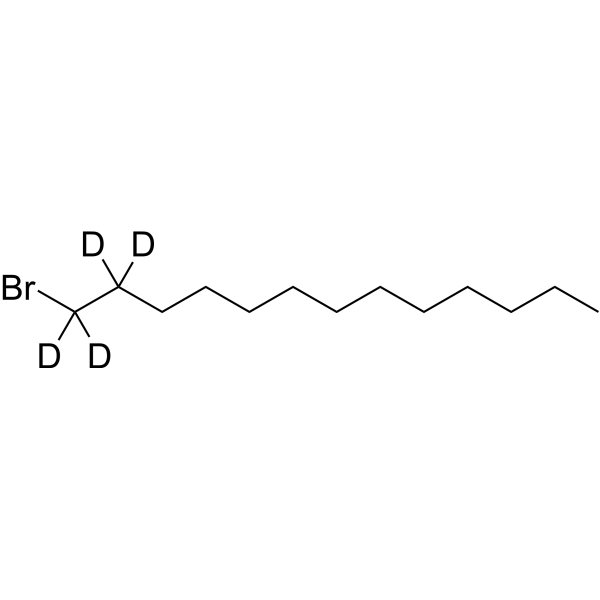 0 ImagesSynonyms: Tridecyl bromide-d41-Bromotridecane-d4 is the deuterium labeled 1-Bromotridecane.
-
1-(9-Carboxynonyl) 1,2-benzenedicarboxylate-d4
 0 ImagesCat. No.: HY-W7111081-(9-Carboxynonyl) 1,2-benzenedicarboxylate-d4 is the deuterium labeled 1-(9-Carboxynonyl) 1,2-benzenedicarboxylate (HY-W588300).
-
Heptyl nonyl phthalate-d4
 0 ImagesCat. No.: HY-W705563CAS No.: 2733389-45-0Heptyl nonyl phthalate-d4 is the deuterium labeled Heptyl nonyl phthalate (HY-W705562).
-
4-Bromo-2,6-dimethylphenol-d8
 0 ImagesCat. No.: HY-W742432CAS No.: 1142096-13-64-Bromo-2,6-dimethylphenol-d8 is the deuterium labeled 4-Bromo-2,6-dimethylphenol (HY-109610).
-
Carbamazepine 10,11-epoxide-13C-1
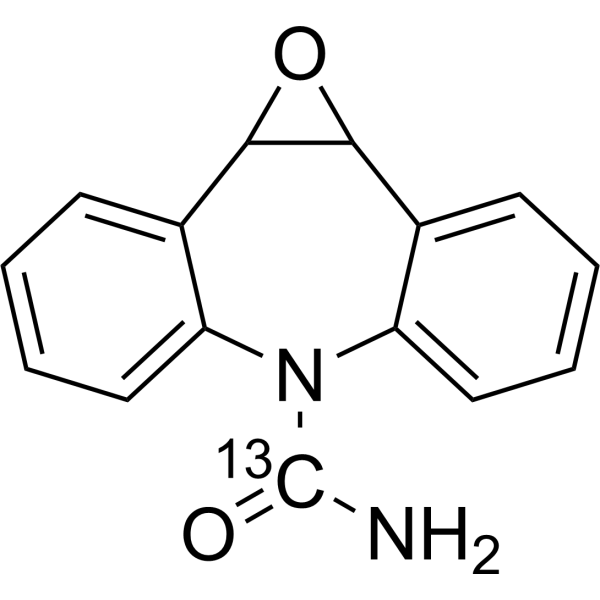 0 ImagesCat. No.: HY-W013378S5CAS No.: 1374855-73-8
-
Thyroxine hydrochloride-13C6
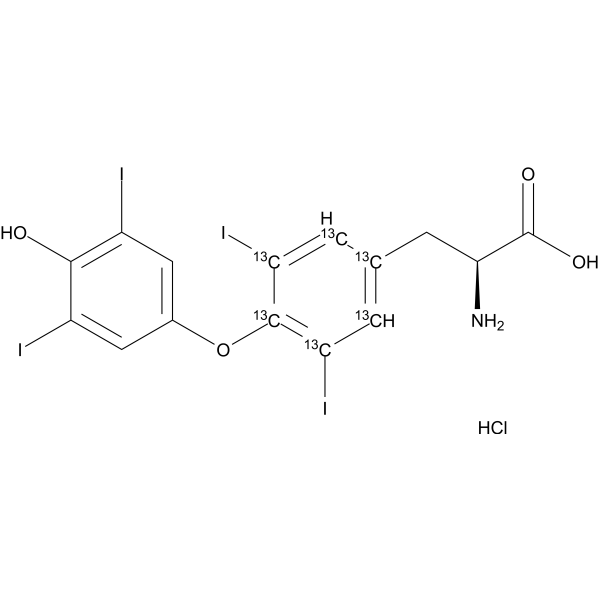 0 ImagesCat. No.: HY-18341S1CAS No.: 1421769-38-1Synonyms: Levothyroxine-13C6; T4-13C6Thyroxine hydrochloride-13C6 is the 13C-labeled L-Thyroxine. L-Thyroxine (Levothyroxine; T4) is a synthetic hormone for the research of hypothyroidism. DIO enzymes convert biologically active thyroid hormone (Triiodothyronine,T3) from L-Thyroxine (T4).
-
Bromoxynil-heptanoate-d13
 0 ImagesCat. No.: HY-W724353Bromoxynil-heptanoate-d13 is the deuterium labeled Bromoxynil-heptanoate.
-
Fmoc-L-Val-OH-1-13C
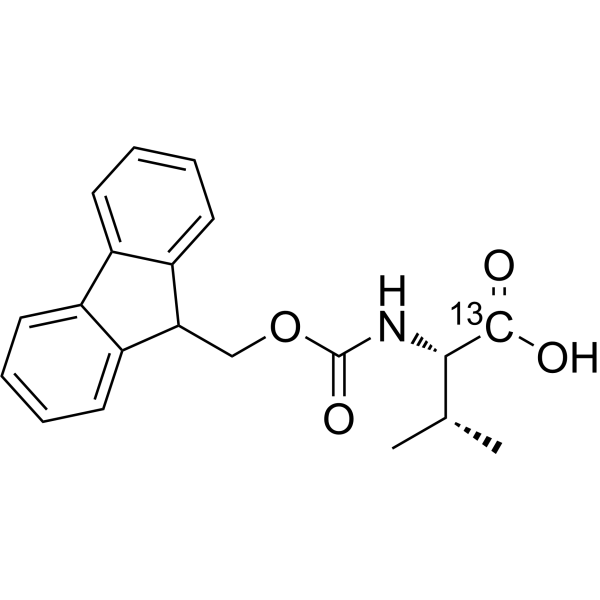 0 ImagesCat. No.: HY-I1111S1CAS No.: 286460-74-0Synonyms: FMOC-L-valine-13C; Fmoc-valine-13CFmoc-L-Val-OH-1-13C is a 13C-labeled Fmoc-L-Val-OH (HY-I1111). Fmoc-L-Val-OH is a valine derivative.
-
25-Desacetyl rifampicin-d4
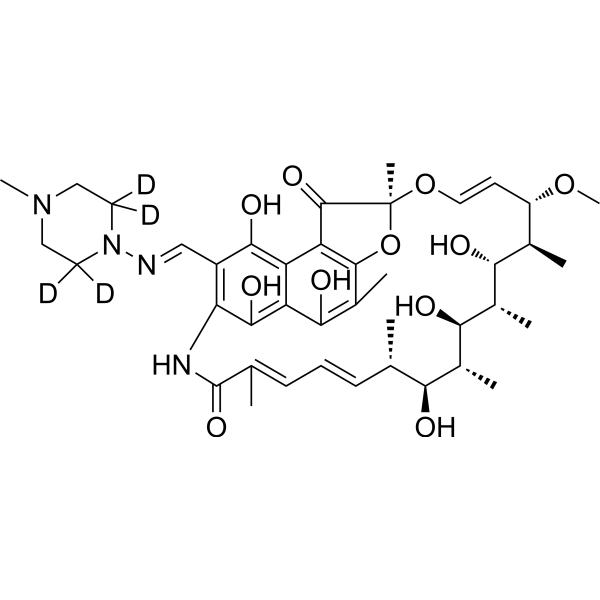 0 ImagesCat. No.: HY-125587S1CAS No.: 2747918-77-8Synonyms: Desacetylrifampicin-d425-Desacetyl rifampicin-d4 (Desacetylrifampicin-d4) is deuterated-labeled 25-Desacetyl rifampicin.
-
2,6-Diaminoheptanedioic acid-13C7
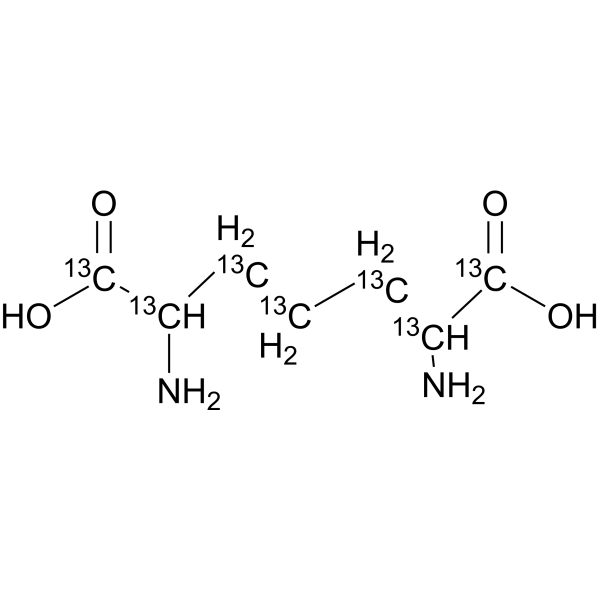 0 ImagesCat. No.: HY-W753671CAS No.: 1485529-87-02,6-Diaminoheptanedioic Acid-13C7 is a 13C7 labeled version of 2,6-Diaminoheptanedioic acid (HY-128746). 2,6-Diaminoheptanedioic acid is an endogenous metabolite.
-
Varenicline-d4 hydrochloride
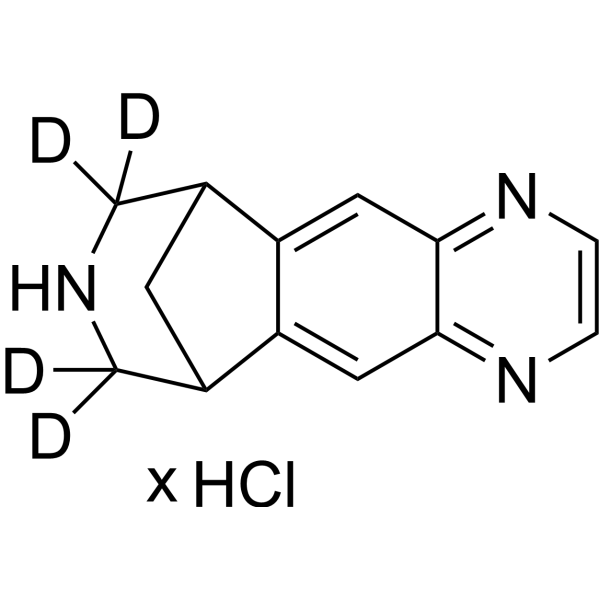 0 ImagesCat. No.: HY-10019AS1Varenicline-d4 hydrochloride is a deuterium labeled Varenicline (dihydrochloride) (HY-10019A). Varenicline (CP 526555) dihydrochloride is a potent partial agonist for α4β2 nicotinic acetylcholine receptor (nAChR) with an EC50 value of 2.3 μM. Varenicline dihydrochloride is a full agonist for α3β4 and α7 nAChRs with EC50 values of 55 μM and 18 μM, respectively. Varenicline dihydrochloride is a nicotinic ligand based on the structure of cytosine, and has the potential for smoking cessation treatment.
-
Salmeterol-d5
 0 ImagesCat. No.: HY-14302S1CAS No.: 1093433-84-1Synonyms: GR33343X-d5Salmeterol-d5 is a deuterated labeled Salmeterol. Salmeterol (GR33343X) is a potent and selective human β2 adrenoceptor agonist. Salmeterol shows potent stimulation of cAMP accumulation in CHO cells expressing human β2, β1 and β3 adrenoceptors with pEC50s of 9.6, 6.1, and 5.9, respectively.



