



Isotope-Labeled Compounds
Isotope-labeled compounds are chemical substances in which some atoms in their molecules are replaced by isotope atoms. The range of stable isotope products can cover from gases to complex molecules. Isotope-labeled compounds could provide a site-specific investigation of structures, making molecules easily detectable by mass spectrometry and NMR, and maintaining the physico-chemical properties of the target molecule at the same time.
MCE isotope-labeled compounds are all stable isotope-labeled compounds and are non-radioactive labeled substances. MCE isotope-labeled compounds are unique tools for identifying and understanding biological and chemical processes. Stable isotope-labeled products are now getting more and more popular among scientists. The scope of application is gradually penetrating into various scientific fields, such as life sciences, food and medicine, agriculture, environment, geology, etc. Stable isotope-labeled compounds have a wide range of applications in the Life Science areas, such as Metabolomics, Proteomics, Clinical studies, Deuterium drugs, etc.
All Product Categories
-
Isotope-Labeled Compounds Related Products (11091)
Related Products (11091)

-
Bis(2-butoxyethyl) 2-hydroxyethyl phosphate-d4
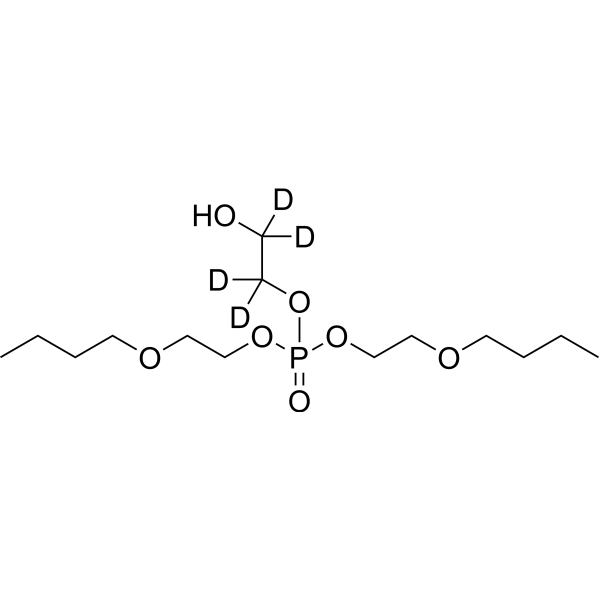 0 ImagesCat. No.: HY-W585980SCAS No.: 2469195-92-2Bis(2-butoxyethyl) 2-hydroxyethyl phosphate-d4 (Bis(2-butoxyethyl) 2-hydroxyethyl phosphate-d4) is a deuterium labeled compound.
-
Valproic acid β-D-glucuronide-d15
 0 ImagesCat. No.: HY-W769286Valproic acid β-D-glucuronide-d15 is the deuterium labeled Valproic acid β-D-glucuronide (HY-W400496). Valproic acid β-D-glucuronide is the major urinary metabolite of Valproic acid (HY-10585).
-
Isophorone-d5
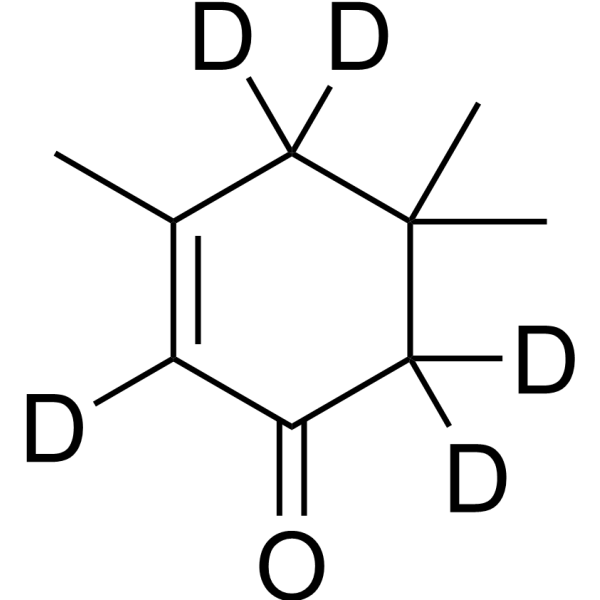 0 ImagesCat. No.: HY-Y0932SCAS No.: 1262769-87-8Isophorone-d5 is the deuterium labeled Isophorone. Isophorone, an α,β-unsaturated cyclic ketone, is used as a precursor to polymers.
-
Dihydrouracil-13C,15N2
 0 ImagesCat. No.: HY-W779020CAS No.: 181516-96-1Synonyms: 5,6-Dihydrouracil-13C,15N2Dihydrouracil-13C,15N2 (5,6-Dihydrouracil-13C,15N2) is the 13C- and 15N-labeled Dihydrouracil (HY-W012926). Dihydrouracil (5,6-Dihydrouracil), a metabolite of Uracil, can be used as a marker for identification of dihydropyrimidine dehydrogenase (DPD)-deficient.
-
Ambrisentan acyl-β-D-glucuronide-d10
 0 ImagesCat. No.: HY-W701833SAmbrisentan acyl-β-D-glucuronide-d10 is the deuterium labeled Ambrisentan acyl-β-D-glucuronide.
-
Thymidine-d14
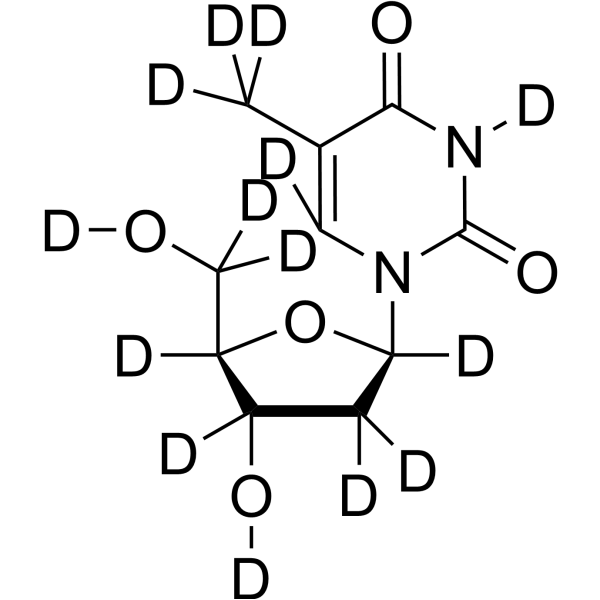 0 ImagesCat. No.: HY-N1150S10CAS No.: 1134181-96-6Synonyms: DThyd-d14; NSC 21548-d14
-
1-(2-Bromoethoxy)-4-nitrobenzene-d4
 0 ImagesCat. No.: HY-W700095CAS No.: 1190017-10-71-(2-Bromoethoxy)-4-nitrobenzene-d4 is the deuterium labeled 1-(2-Bromoethoxy)-4-nitrobenzene (HY-W011986).
-
Pyrrolidin-3-ol-d5
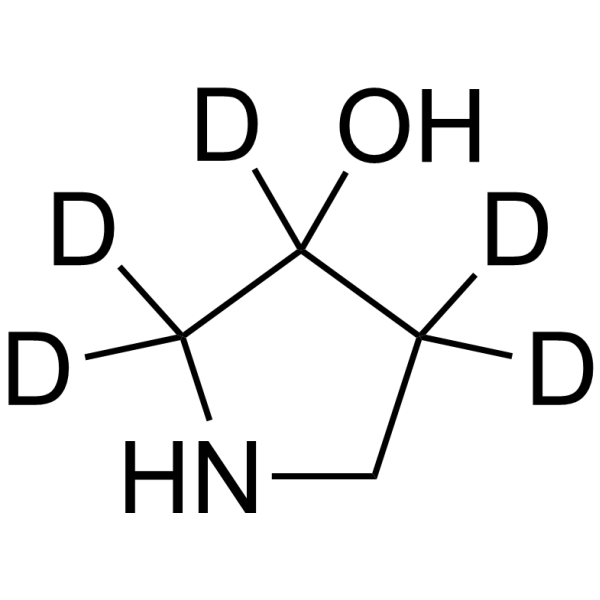 0 ImagesPyrrolidin-3-ol-d5 is the deuterium labeled Pyrrolidin-3-ol.
-
1,2-Ethanedithiol-d4
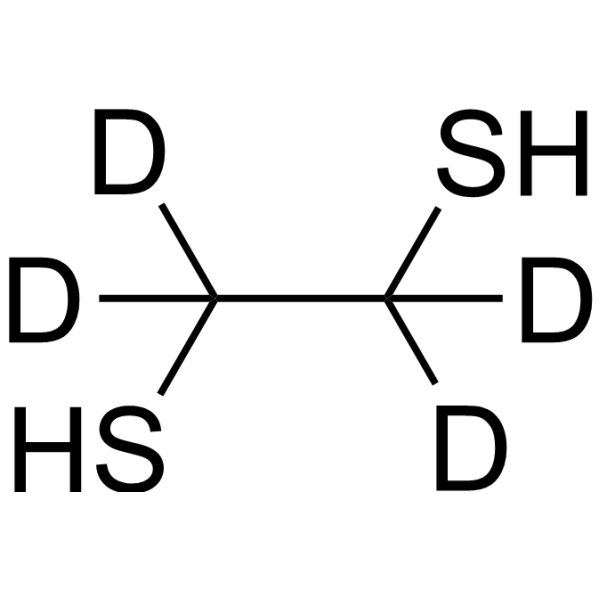 0 ImagesCat. No.: HY-Y1641SCAS No.: 100189-81-9Synonyms: Ethylene dithioglycol-d4; Ethylene glycol-d4, dithio-; Ethylenedithiol-d41,2-Ethanedithiol-d4 is the deuterium labeled 1,2-Ethanedithiol.
-
(±)-Asenapine-13C,d3 hydrochloride
 0 ImagesCat. No.: HY-165653SCAS No.: 1261392-55-5(±)-Asenapine-13C,d3 (hydrochloride) is 13C and deuterium labeled (±)-Asenapine (hydrochloride).
-
2-(4-Bromophenoxy)-N,N-dimethylethanamine-d6
 0 ImagesCat. No.: HY-W703872CAS No.: 1794787-00-0Synonyms: 2-(N,N-Dimethylamino)ethyl 4-bromophenyl ether-d62-(4-Bromophenoxy)-N,N-dimethylethanamine-d6 (2-(N,N-Dimethylamino)ethyl 4-bromophenyl ether-d6) is the deuterium labeled 2-(4-Bromophenoxy)-N,N-dimethylethanamine (HY-W013927).
-
1-Heptanol-d1
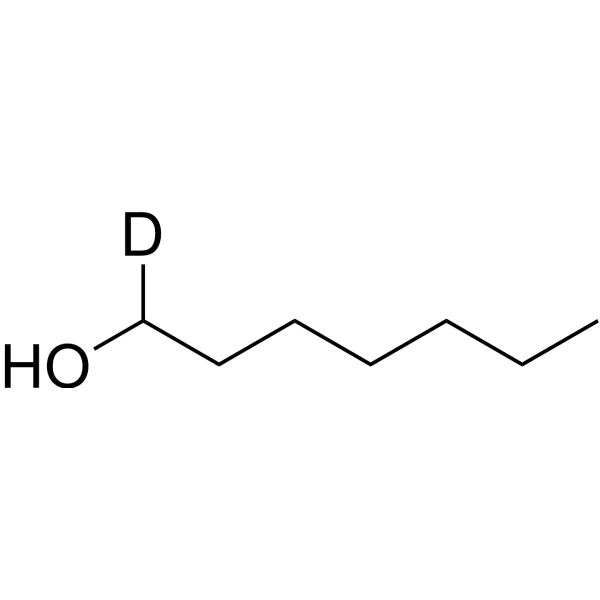 0 ImagesCat. No.: HY-W099504S2CAS No.: 38007-42-0Synonyms: n-Heptyl alcohol-d11-Heptanol-d1 is the deuterium labeled 1-Heptanol. 1-Heptanol (n-Heptyl alcohol) is a linear primary fatty alcohol. 1-Heptanol selectively inhibits the activating phosphorylation of SAPK/JNK and reduces the phosphorylation level of IκB-α. 1-Heptanol increases plasma membrane fluidity, decreases membrane thermal stability, alters the coupling kinetics of STIM1-ORAI1, inhibits the production of ROS and LTC4, and induces the expression of HSP70. 1-Heptanol is used in the fragrance industry due to its pleasant odor.
-
Brimonidine-d4 L-Tartrate
 0 ImagesCat. No.: HY-W741004Brimonidine-d4 L-Tartrate is the deuterium labeled (R)-tert-Butyl 3-(4-amino-3-(4-phenoxyphenyl)-1H-pyrazolo[3,4-d]pyrimidin-1-yl)piperidine-1-carboxylate (HY-78859).
-
Acetaminophen glutathione-d3 disodium
 0 ImagesCat. No.: HY-W742557Acetaminophen glutathione-d3 disodium is the deuterium labeled Acetaminophen glutathione disodium.
-
5-(4-Hydroxyphenyl)-5-phenyl-d5-hydantoin-2,4,5-13C3
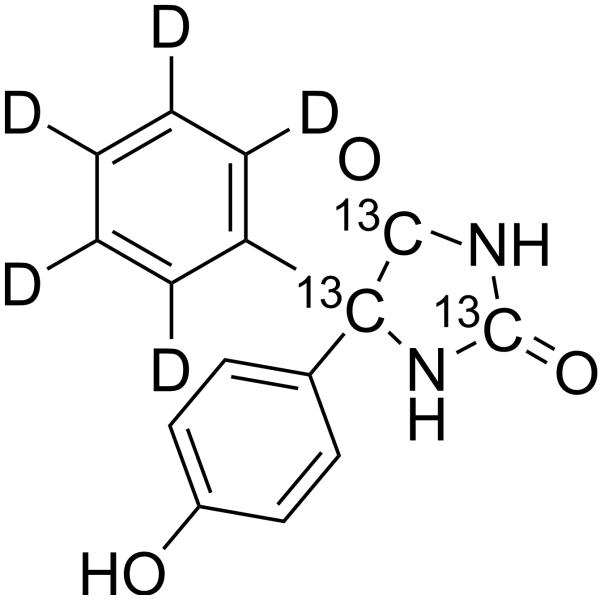 0 ImagesCat. No.: HY-141857SCAS No.: 369656-73-55-(4-Hydroxyphenyl)-5-phenyl-d5-hydantoin-2,4,5-13C3 is the deuterium and 13C labeled 5-(4-Hydroxyphenyl)-5-phenyl-hydantoin.
-
Ac-rG Phosporamidite-15N5
 0 ImagesCat. No.: HY-W783407S5Synonyms: 5'-DMT-2'-TBDMS-rG(N-Ac) Phosphoramidite-15N5Ac-rG Phosporamidite-15N5 (5'-DMT-2'-TBDMS-rG(N-Ac) Phosphoramidite-15N5) is the 15N-labeled Ac-rG Phosporamidite (HY-W783407). Ac-rG (5'-DMT-2'-TBDMS-rG(N-Ac)) Phosporamidite is an acetylated guanosine ribonucleotide.
-
4-Nitrobenzoic acid-d4
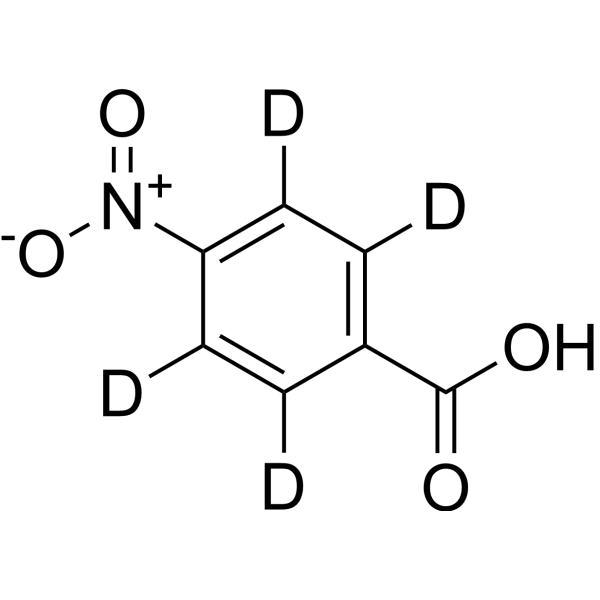 0 ImagesCat. No.: HY-Y0607SCAS No.: 171777-66-54-Nitrobenzoic acid-d4 is the deuterium labeled 4-Nitrobenzoic acid (HY-Y0607). 4-Nitrobenzoic acid is an oxidoreduction mediator and an electron transfer promoter. 4-Nitrobenzoic acid accepts electrons from the reduced glucose oxidase and transfers them to the electrode to promote the glucose oxidation reaction, while minimizing the formation of protonated amine groups.
-
Oleic acid-13C-1
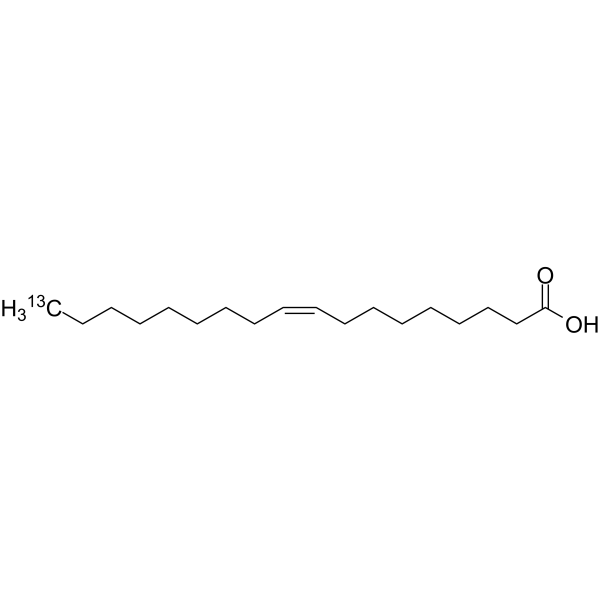 0 ImagesSynonyms: 9-cis-Octadecenoic acid-13C-1; 9Z-Octadecenoic acid-13C-1Oleic acid-13C-1 is the 13C labeled Oleic acid (HY-N1446). Oleic acid (9-cis-Octadecenoic acid) is an abundant monounsaturated fatty acid. Oleic acid is a Na+/K+ ATPase activator.
-
Phenazopyridine-d5
 0 ImagesCat. No.: HY-B0985ASCAS No.: 1287380-98-6Phenazopyridine-d5 is the deuterated-labeled Phenazopyridine (HY-B0985A). Phenazopyridine is a competitive SARM1 inhibitor, with IC50 145 μM. Phenazopyridine is a TRPM8 antagonist. Phenazopyridine has a local anesthetic/analgesic effect. Phenazopyridine is used to relieve painful symptoms of conditions such as cystitis and urethritis. Phenazopyridine can promote neuronal differentiation and can also be used in the study of traumatic brain injury, peripheral neuropathy and neurodegenerative diseases.
-
2'-Deoxycytidine-5'-monophosphate-13C9 dilithium
 0 ImagesCat. No.: HY-W009216S4Purity: 99.5%Synonyms: 5'-dCMP-13C9 dilithium; Deoxy-CMP-13C9 dilithium; 2'-Deoxycytidine-5'-monophosphoric acid-13C9 dilithium2'-Deoxycytidine-5'-monophosphoric acid-13C9 dilithium is the 13C-labeled 2'-Deoxycytidine-5'-monophosphoric acid (HY-W009216). 2'-Deoxycytidine-5'-monophosphoric acid is an endogenous metabolite.



