



Acetic acid (potassium 99%)
Based on 1 publication(s) in Google Scholar
Acetic acid potassium 99% (Potassium acetate) is a potassium salt employed to replenish electrolytes, for restoration of water-electrolyte balance. Acetic acid potassium 99% can employ in DNA and protein purification. Acetic acid potassium 99% has been used to prepare neutralizing solution for alkaline lysis of bacteria and activated carbon.
For research use only. We do not sell to patients.
- Assay : 99.43%
- CAS No.: 127-08-2
- Formula: CH3COOK
- Molecular Weight:98.14
-
Storage:
Store at room temperature, keep dry and cool.
In solvent -80°C, 1 year , -20°C, 6 months


To place orders, for customer services and technical support, please contact: MedChemExpress USA
Tel: 609-228-6898 E-mail: [email protected] [email protected]


-
 Biological Activity
-
Chemical Information
-
Solvent & Solubility
- Protocols
- Purity & Documentation
- References
-
 Help & FAQs


-
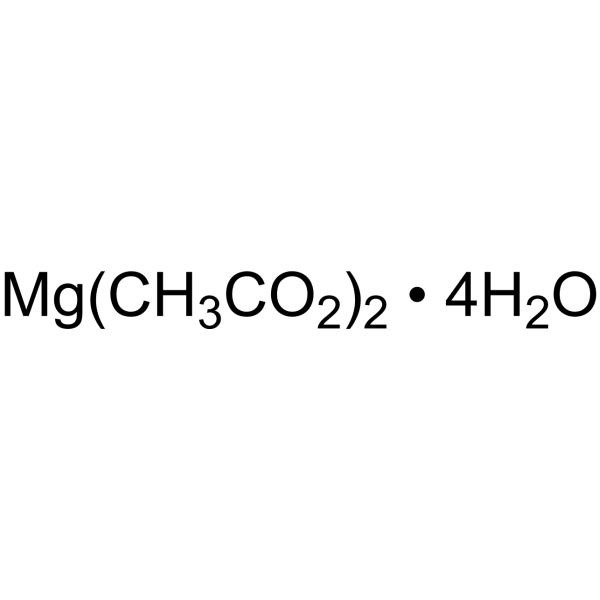
HY-Y0319G
Magnesium acetate tetrahydrateShort-chain Fatty Acid -

HY-Y0319B1
Potassium acetate, for molecular biologyAcetate Salt -
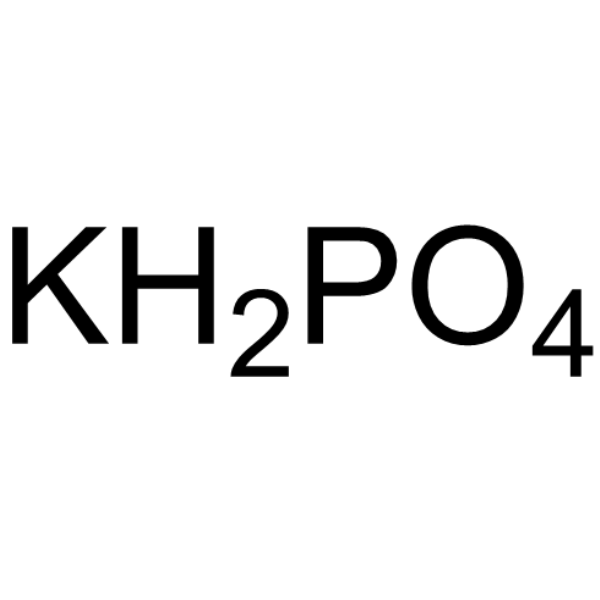
HY-Y0332K
Potassium dihydrogen phosphate, for cell cultureCell Culture Reagent -
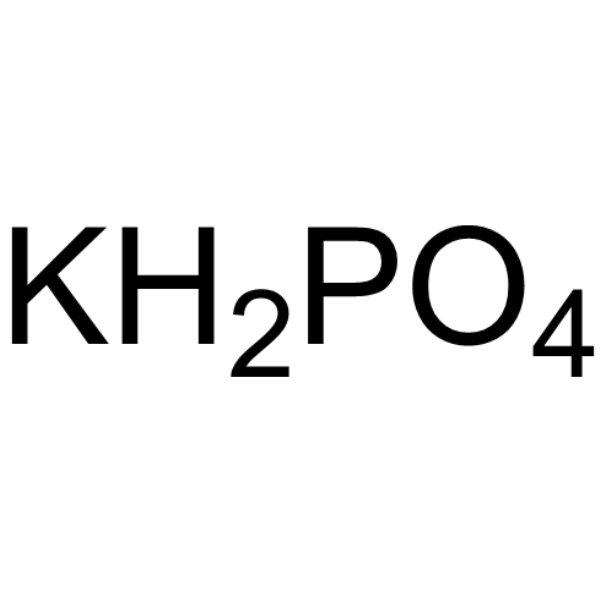
HY-Y0332B
Potassium dihydrogen phosphate, AR,99.5%Cell Culture Reagent -

HY-108536D
Calcium chloride dihydrate, for cell culture, 99%Biochemical Reagent -
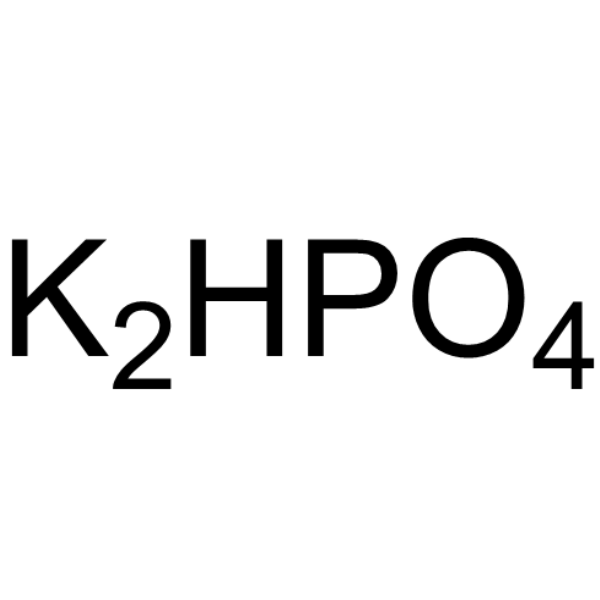
HY-W019883
Dipotassium hydrogen phosphatePharmaceutical Excipient -

HY-W019894
Manganese chlorideContrast Agent -

HY-Y0344D
Sodium chloride, for cell cultureBiochemical Assay Reagent -

HY-Y0319B2
Potassium acetate, meets USP testing specificationsInorganic salt -

HY-Y0319B3
Potassium acetate, meets analytical specification of Ph. Eur. BP E261Biochemical Assay Reagent -

HY-Y0849C
Ammonium acetate, for molecular biology, 98%Biochemical Reagent
Publications Citing Use of MedChemExpress (MCE) Acetic acid (potassium 99%)
More

Biological Activity
Description
In Vitro
Potassium acetate, by neutralizing the alkaline environment and selectively precipitating chromosomal DNA and protein impurities under high-salt conditions, is a crucial step for achieving efficient purification of plasmid DNA[1][3].
Acetic acid potassium, when co-pyrolyzed with waste tea leaves at a mass ratio of 2:1 under high-temperature conditions, can be used to prepare high-performance activated carbon[2].
MedChemExpress (MCE) has not independently confirmed the accuracy of these methods. They are for reference only. Further protocols information, click here.


Chemical Information
-
CAS No. 127-08-2
-
Appearance Solid
-
Molecular Weight 98.14
-
Formula CH3COOK
-
Color White to off-white
-
SMILES
CC(O[K])=O
-
Synonyms
Potassium acetate
-
Shipping
Room temperature in continental US; may vary elsewhere.
-
Storage
Store at room temperature, keep dry and cool
In solvent -80°C 1 year -20°C 6 months


Publications (1)
-
Journal Impact Factor
-
Most Recent
-
Biochem Pharmacol
Asiatic acid inhibits endothelial-to-mesenchymal transition in diabetic kidney disease by reducing acetyl-CoA production via targeting ACSS2. [Abstract]2025 Sep 6;242(Pt 2):117311. PMID: 40921220


Solvent & Solubility
In Vitro:
H2O : 100 mg/mL (1018.95 mM; Need ultrasonic)
DMSO : < 1 mg/mL (insoluble or slightly soluble)
Please refer to the solubility information to select the appropriate solvent. Once prepared, please aliquot and store the solution to prevent product inactivation from repeated freeze-thaw cycles.
Storage method and period of stock solution: -80°C, 1 year; -20°C, 6 months. When stored at -80°C, please use it within 1 year. When stored at -20°C, please use it within 6 months.
* Note: If you choose water as the stock solution, please dilute it to the working solution, then filter and sterilize it with a 0.22 μm filter before use.
Please refer to the solubility information to select the appropriate solvent. Once prepared, please aliquot and store the solution to prevent product inactivation from repeated freeze-thaw cycles.
Storage method and period of stock solution: -80°C, 1 year; -20°C, 6 months. When stored at -80°C, please use it within 1 year. When stored at -20°C, please use it within 6 months.
* Note: If you choose water as the stock solution, please dilute it to the working solution, then filter and sterilize it with a 0.22 μm filter before use.
Concentration (start) × Volume (start) = Concentration (final) × Volume (final)

Protocols
-
Baculovirus-insect cell protein expression and purification
Baculovirus-insect cell expression uses recombinant baculovirus to deliver a target gene into insect cells, where late or very-late viral transcription drives recombinant protein production; the method was classically demonstrated by expression of human β-interferon in baculovirus-infected insect cells. The readout is target protein accumulation, assessed by activity, fluorescence if a fluorescent reporter is used, SDS-PAGE, Western blot, or purified protein yield. The system can express soluble, secreted, membrane-associated, and multiprotein targets, but expression outcome depends on the construct, baculovirus vector, insect cell line, multiplicity of infection, infection cell density, harvest time, and target-specific stability.
-
Inclusion-body expression, solubilization, refolding and purification
Inclusion-body recovery uses insoluble recombinant protein aggregates from E. coli as a starting material; the workflow is cell disruption, inclusion-body isolation/washing, denaturant or mild solubilization, refolding into soluble protein, and final chromatographic purification. The readouts are soluble protein recovery, purity by SDS-PAGE/chromatography, structural recovery by methods such as circular dichroism when used, and biological activity when an assay is available.
-
Protocol For Protein Expression And Purification
Recombinant protein expression in Escherichia coli followed by purification of a His-tagged soluble protein by immobilized metal affinity chromatography (IMAC), with optional MBP fusion and TEV tag removal when the construct includes these elements. The biological readout is production of the encoded target protein, detected as an inducible band at the expected molecular mass by SDS-PAGE and quantified by total protein assay or chromatographic absorbance; the purification readout is enrichment of the target protein in elution fractions after selective binding of polyhistidine residues to immobilized Ni2+/metal-chelate resin and elution by imidazole-containing buffer. Expression is driven by an inducible bacterial expression system, commonly T7/lac-based, in which IPTG or lactose/auto-induction activates transcription and translation of the cloned gene; lower induction temperature, lower inducer concentration, induction timing, and solubility-enhancing fusion tags can influence the frac
-
Mammalian transient protein expression and purification
Mammalian transient protein expression introduces plasmid DNA into HEK293 or CHO cells for short-term recombinant protein production, allowing secreted, glycosylated, Fc-tagged, His-tagged, or membrane proteins to be produced without stable clone generation.


Purity & Documentation
-
Data Sheet (281 KB)
-
SDS (396 KB)
- English - EN (396 KB)
- Français - FR (396 KB)
- Deutsch - DE (396 KB)
- Norwegian - NO (396 KB)
- Español - ES (396 KB)
- Swedish - SV (396 KB)
- Italian - IT (396 KB)
- Korean - KR (396 KB)
- Portuguese - PT (396 KB)
-
Handling Instructions (2659 KB)
References


Complete Stock Solution Preparation Table
Please refer to the solubility information to select the appropriate solvent. Once prepared, please aliquot and store the solution to prevent product inactivation from repeated freeze-thaw cycles.
Storage method and period of stock solution: -80°C, 1 year; -20°C, 6 months. When stored at -80°C, please use it within 1 year. When stored at -20°C, please use it within 6 months.
| Optional Solvent | Concentration Solvent Mass | 1 mg | 5 mg | 10 mg | 25 mg |
|---|---|---|---|---|---|
| H2O | 1 mM | 10.1895 mL | 50.9476 mL | 101.8953 mL | 254.7381 mL |
| 5 mM | 2.0379 mL | 10.1895 mL | 20.3791 mL | 50.9476 mL | |
| 10 mM | 1.0190 mL | 5.0948 mL | 10.1895 mL | 25.4738 mL | |
| 15 mM | 0.6793 mL | 3.3965 mL | 6.7930 mL | 16.9825 mL | |
| 20 mM | 0.5095 mL | 2.5474 mL | 5.0948 mL | 12.7369 mL | |
| 25 mM | 0.4076 mL | 2.0379 mL | 4.0758 mL | 10.1895 mL | |
| 30 mM | 0.3397 mL | 1.6983 mL | 3.3965 mL | 8.4913 mL | |
| 40 mM | 0.2547 mL | 1.2737 mL | 2.5474 mL | 6.3685 mL | |
| 50 mM | 0.2038 mL | 1.0190 mL | 2.0379 mL | 5.0948 mL | |
| 60 mM | 0.1698 mL | 0.8491 mL | 1.6983 mL | 4.2456 mL | |
| 80 mM | 0.1274 mL | 0.6368 mL | 1.2737 mL | 3.1842 mL | |
| 100 mM | 0.1019 mL | 0.5095 mL | 1.0190 mL | 2.5474 mL |
* Note: If you choose water as the stock solution, please dilute it to the working solution, then filter and sterilize it with a 0.22 μm filter before use.


Acetic acid (potassium 99%) Related Classifications
HY-Y0319B Related Classifications
 Powered by Bioz