



Actinonin
Based on 7 publication(s) in Google Scholar
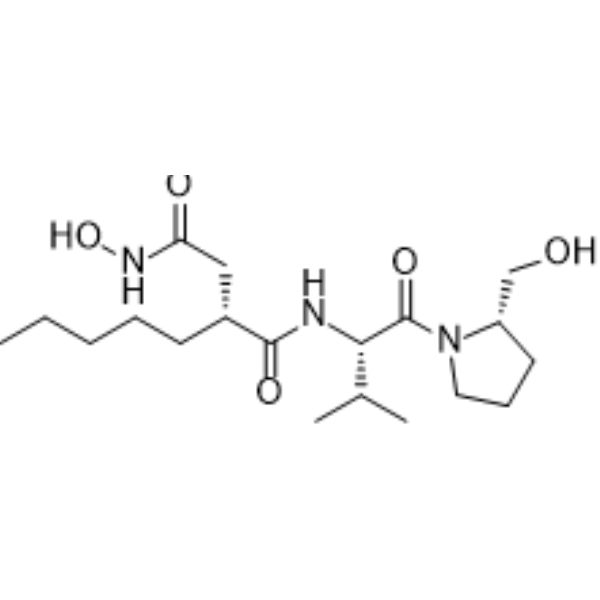
Actinonin ((-)-Actinonin) is a naturally occurring antibacterial agent produced by Actinomyces. Actinonin inhibits aminopeptidase M, aminopeptidase N and leucine aminopeptidase. Actinonin is a potent reversible peptide deformylase (PDF) inhibitor with a Ki of 0.28 nM. Actinonin also inhibits MMP-1, MMP-3, MMP-8, MMP-9, and hmeprin α with Ki values of 300 nM, 1,700 nM, 190 nM, 330 nM, and 20 nM, respectively. Actinonin is an apoptosis inducer. Actinonin has antiproliferative and antitumor activities.
商品は「研究用試薬」です。人や動物の医療用・臨床診断用・食品用の製品ではありません。
研究用途以外に使用した場合、当社は一切の責任を負いかねます。
- 純度 : 98.37%
- CAS 番号: 13434-13-4
- 分子式: C19H35N3O5
- 分子量:385.50
-
保管条件:Powder -20°C, 3 years ; In solvent -80°C, 6 months , -20°C, 1 month

To place orders, for customer services and technical support, please contact: MedChemExpress USA
Tel: 609-228-6898 E-mail: [email protected] [email protected]


-
 生物活性
生物活性
-
化学情報
-
溶剤 & 溶解度
- プロトコル
- 純度とドキュメンテーション
- 参考文献
-
 Help & FAQs


-
HY-10227
BortezomibProteasome Inhibitor -
HY-A0122
PlicamycinSp1 Inhibitor -
HY-115194
Amastatin hydrochlorideAminopeptidase Inhibitor -
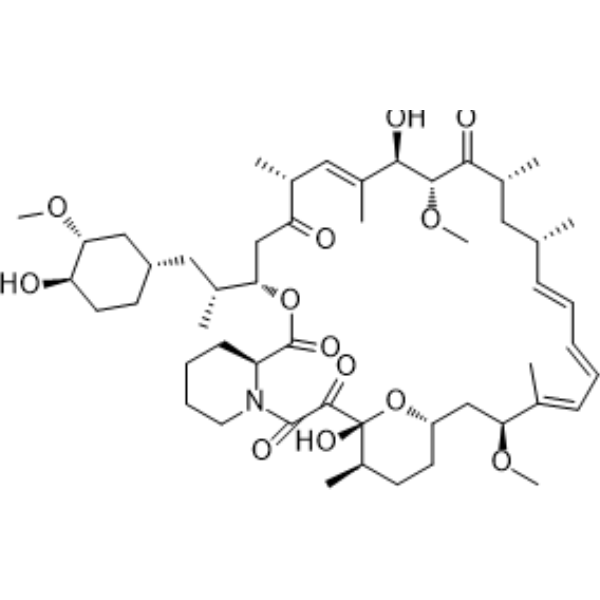
HY-10219
RapamycinmTOR Inhibitor -
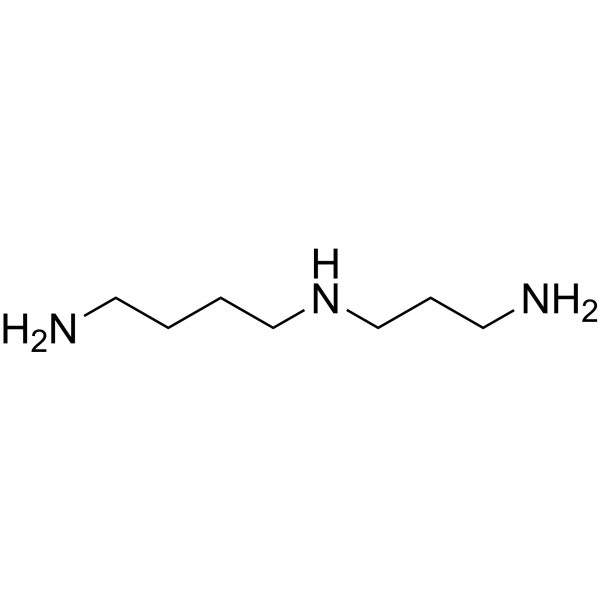
HY-B1776
SpermidinePolyamine Compound -
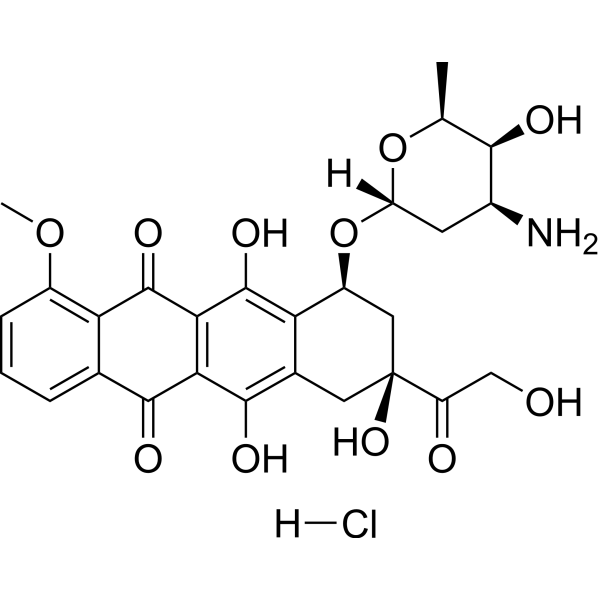
HY-15142
Doxorubicin hydrochlorideTopoisomerase Inhibitor -
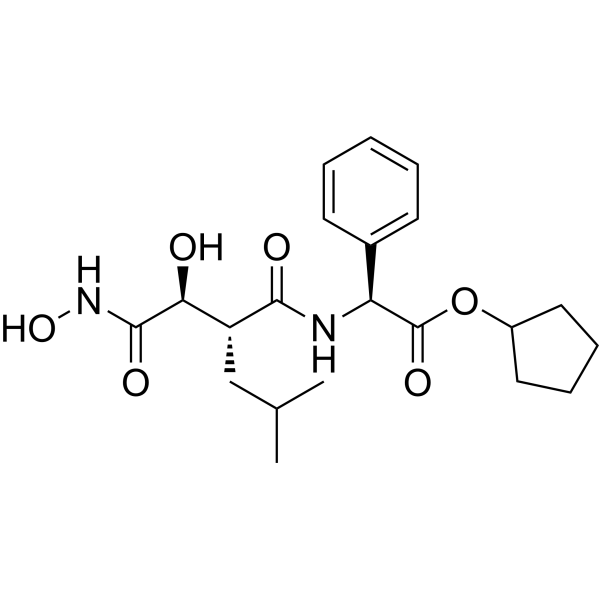
HY-14807
TosedostatAminopeptidase Inhibitor -
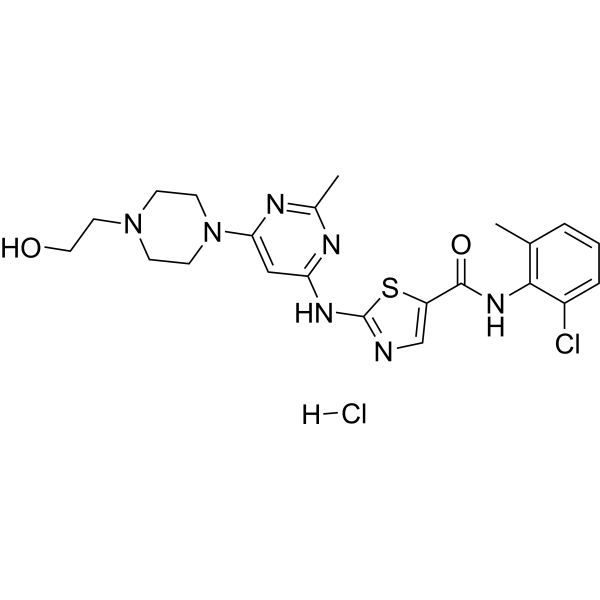
HY-10181A
Dasatinib hydrochlorideSrc/Bcr-Abl Inhibitor -

HY-113952R
Actinonin (Standard)Antibiotic and APN Inhibitor -
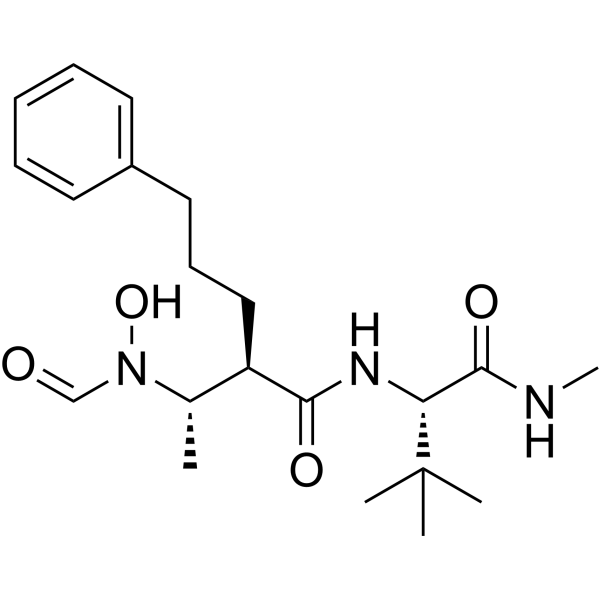
HY-19956
GI254023XADAM10/MMP9 Inhibitor -
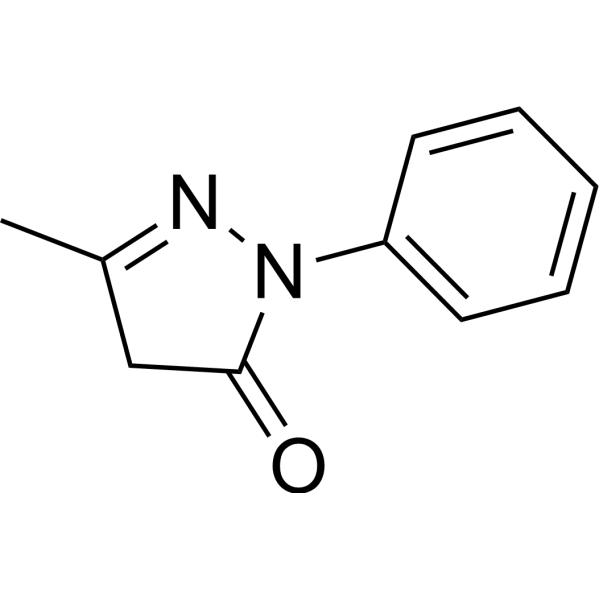
HY-B0099
EdaravoneApoptosis Inducer -
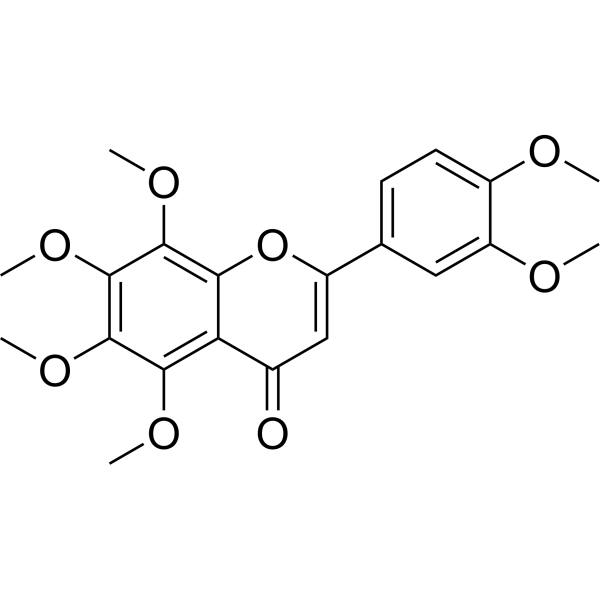
HY-N0155
NobiletinROR Agonist
MedChemExpress(MCE)の使用を引用している文献 Actinonin
More Customer Validation & Images

-
Cell Proliferation/Viability Assay
-
WB
Antibiotic アイソフォーム固有の製品をすべて表示
More

生物活性
製品説明
IC50 & Target
Ki: 0.28 nM (Peptide deformylase (PDF))[2], 300 nM (MMP-1), 1,700 nM (MMP-3), 190 nM (MMP-8), 330 nM (MMP-9)[3], and 20 nM (hmeprin α)[5]
Apoptosis[1]
Aminopeptidase M, Aminopeptidase N and Leucine aminopeptidase[1]
Cellular Effect
|
Cell Line

|
Type | Value | Description | References |
|---|---|---|---|---|
| BMDM | CC50 |
>193 μg/mL
Compound: Actinonin
|
Cytotoxicity against mouse BMDM cells
Cytotoxicity against mouse BMDM cells
|
[PMID: 35307568] |
| BMDM | CC50 |
>500 μM
Compound: Actinonin
|
Cytotoxicity against mouse BMDM cells
Cytotoxicity against mouse BMDM cells
|
[PMID: 35307568] |
| HCT-116 | IC50 |
22.6 μM
Compound: Actinonin
|
Antiproliferative activity against human HCT116 cells assessed as reduction in cell growth measured after 48 hrs by CCK8 assay
Antiproliferative activity against human HCT116 cells assessed as reduction in cell growth measured after 48 hrs by CCK8 assay
|
[PMID: 32551649] |
| HEK293 | IC50 |
15 μM
Compound: 1
|
Cytotoxicity against human HEK293 cells
Cytotoxicity against human HEK293 cells
|
[PMID: 21719286] |
| HL-60 | IC50 |
100 μM
Compound: 1
|
Cytotoxicity against human vincristine-resistant HL60 cells
Cytotoxicity against human vincristine-resistant HL60 cells
|
[PMID: 21719286] |
| HL-60 | IC50 |
16 μM
Compound: 1
|
Cytotoxicity against human HL60 cells
Cytotoxicity against human HL60 cells
|
[PMID: 21719286] |
| Jurkat | IC50 |
40 μM
Compound: 1
|
Cytotoxicity against human Jurkat cells
Cytotoxicity against human Jurkat cells
|
[PMID: 21719286] |
| MOLT-3 | IC50 |
45 μM
Compound: 1
|
Cytotoxicity against human MOLT3 cells
Cytotoxicity against human MOLT3 cells
|
[PMID: 21719286] |
体外実験
Actinonin inhibits cell growth in various human tumor cell lines. The IC50 of 4, 6.9, 12.8, 16.6, 27.4, 15.7 and 49.3 μM for Raji cells, MDA-MB-468 cells,PC3 cells, SK-LC-19 cells, Hela cells, HT-1080 cells and AL67 cells, respectively[1].
HsPDF is a critical target of actinonin and that the inhibition of this protein in the mitochondria leads to cell death in tumor cells. Actinonin treatment of cells led to a tumor-specific mitochondrial membrane depolarization and ATP depletion in a time- and dose-dependent manner[1].
Actinonin is a potent inhibitor of all three forms (Zn-, Ni-, and Fe-) of peptide deformylases from both S. aureus and E. coli bacteria. Under the assay conditions, the IC50 values for Actinonin are 90, 3, 0.8, and 11 nM for Zn-PDF (E. coli), Ni-PDF (E. coli), Fe-PDF (E. coli), and Ni-PDF (S. aureus), respectively[2].
Actinonin is active against Gram-positive bacteria, including S. aureus (MIC value of 8-16 μg/mL), Streptococcus pyogenes (MIC value of 8 μg/mL) and Streptococcus epidermidis (MIC value of 2-4 μg/mL). Actinonin is also active against fastidious Gramne-gative bacteria, such as H. influenzae (MIC value of 1-2 μg/mL), Moraxella catarrhalis (MIC value of 0.5 μg/mL), and Neisseria gonorrheae (MIC value of 1-4 μg/mL). Actinonin is very active against the H. influenzae acr (MIC value of 0.13 μg/mL) and E. coli acr (MIC value of 0.25 μg/mL) efflux pump mutants[2].
MedChemExpress (MCE) has not independently confirmed the accuracy of these methods. They are for reference only. Further protocols information, click here.
体内実験
MedChemExpress (MCE) has not independently confirmed the accuracy of these methods. They are for reference only.


化学情報
-
CAS 番号 13434-13-4
-
性状 Solid
-
分子量 385.50
-
分子式 C19H35N3O5
-
Color White to off-white
-
SMILES
O=C(N[C@H](C(N1[C@H](CO)CCC1)=O)C(C)C)[C@H](CCCCC)CC(NO)=O
-
別名
(-)-Actinonin; (-)-アクチノニン
-
Structure Classification
-
Initial Source
-
輸送条件
Room temperature in continental US; may vary elsewhere.
-
保管条件
Powder -20°C 3 years In solvent -80°C 6 months -20°C 1 month


Publications (7)
-
Journal Impact Factor
-
Most Recent
-
mBio
The major role of Listeria monocytogenes folic acid metabolism during infection is the generation of N-formylmethionine. [Abstract]2023 Oct 31;14(5):e0107423. PMID: 37695058 -
Sci Rep
Cytosolic N-terminal formyl-methionine deformylation derives cancer stem cell features and tumor progression. [Abstract]2024 Jun 28;14(1):14900. PMID: 38942903
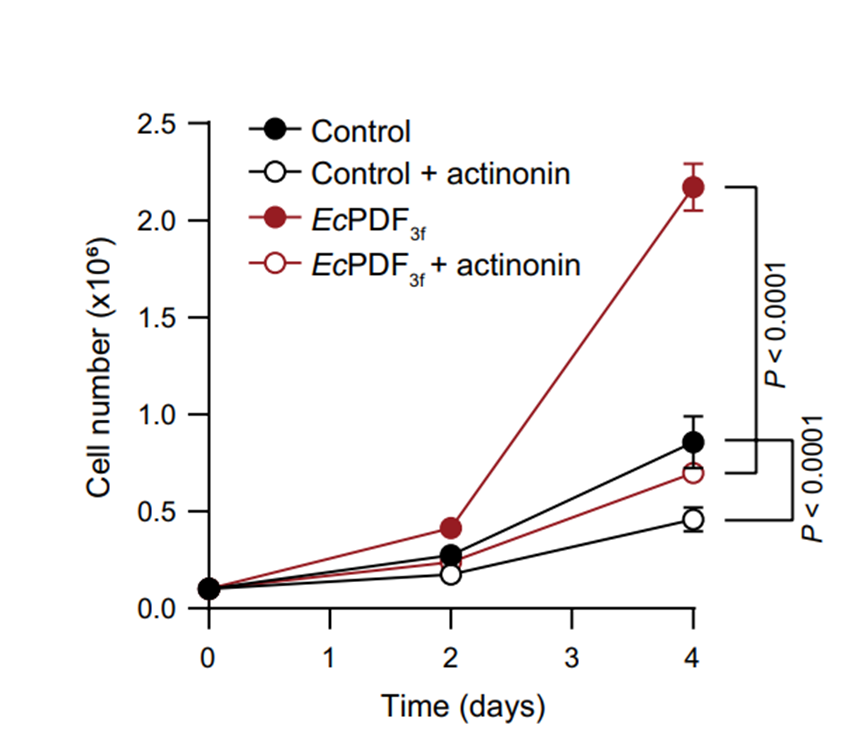
Actinonin purchased from MedChemExpress. Usage Cited in: Sci Rep. 2024 Jun 28;14(1):14900. [Abstract]
The growth of vector alone and EcPDF3f SW480 cells in the absence or presence of Actinonin (5 µg/ml final concentration).
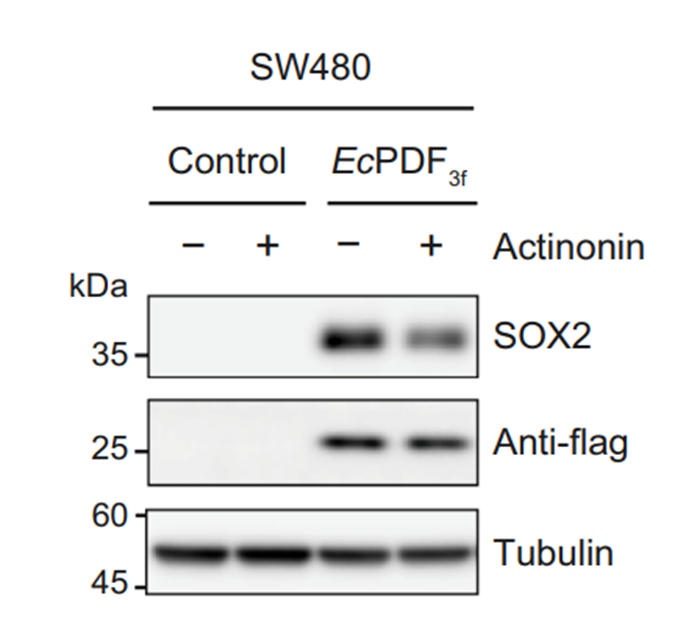
Actinonin purchased from MedChemExpress. Usage Cited in: Sci Rep. 2024 Jun 28;14(1):14900. [Abstract]
Immunoblotting of SOX2 in control and EcPDF3f SW480 cells with or without Actinonin (2 µg/ml) treatment for 2 days.
-
J Mol Biol
TRIM52 Ubiquitin Ligase Acts as a Key Recognition Component of the Mammalian fMet/N-degron Pathway. [Abstract]2025 Sep 19:169453. PMID: 40976346 -
Exp Cell Res
Inhibition of human peptide deformylase by actinonin sensitizes glioblastoma cells to temozolomide chemotherapy. [Abstract]2022 Nov 15;420(2):113358. PMID: 36116558 -
-
-


溶剤 & 溶解度
体外:
DMSO : 50 mg/mL (129.70 mM; Need ultrasonic; Hygroscopic DMSO has a significant impact on the solubility of product, please use newly opened DMSO)
Please refer to the solubility information to select the appropriate solvent. Once prepared, please aliquot and store the solution to prevent product inactivation from repeated freeze-thaw cycles.
Storage method and period of stock solution: -80°C, 6 months; -20°C, 1 month. When stored at -80°C, please use it within 6 months. When stored at -20°C, please use it within 1 month.
Please refer to the solubility information to select the appropriate solvent. Once prepared, please aliquot and store the solution to prevent product inactivation from repeated freeze-thaw cycles.
Storage method and period of stock solution: -80°C, 6 months; -20°C, 1 month. When stored at -80°C, please use it within 6 months. When stored at -20°C, please use it within 1 month.
濃度 (開始) × 体積 (開始) = 濃度 (終了) × 体積 (終了)
体内:
Select the appropriate dissolution method based on your experimental animal and administration route.
- For the following dissolution methods, please ensure to first prepare a clear stock solution using an In Vitro approach and then sequentially add co-solvents:
- To ensure reliable experimental results, the clarified stock solution can be appropriately stored based on storage conditions. As for the working solution for In Vivo experiments, it is recommended to prepare freshly and use it on the same day.
- The percentages shown for the solvents indicate their volumetric ratio in the final prepared solution. If precipitation or phase separation occurs during preparation, heat and/or sonication can be used to aid dissolution.
Add each solvent one by one: 10% DMSO 40% PEG300 5% Tween-80 45% Saline
Solubility: ≥ 5 mg/mL (12.97 mM); Clear solution
This protocol yields a clear solution of ≥ 5 mg/mL (saturation unknown).
Taking 1 mL working solution as an example, add 100 μL DMSO stock solution (50.0 mg/mL) to 400 μL PEG300, and mix evenly; then add 50 μL Tween-80 and mix evenly; then add 450 μL Saline to adjust the volume to 1 mL.
Preparation of Saline: Dissolve 0.9 g sodium chloride in ddH₂O and dilute to 100 mL to obtain a clear Saline solution.
Add each solvent one by one: 10% DMSO 90% (20% SBE-β-CD in Saline)
Solubility: 5 mg/mL (12.97 mM); Suspended solution; Need ultrasonic
This protocol yields a suspended solution of 5 mg/mL. Suspended solution can be used for oral and intraperitoneal injection.
Taking 1 mL working solution as an example, add 100 μL DMSO stock solution (50.0 mg/mL) to 900 μL 20% SBE-β-CD in Saline, and mix evenly.
Preparation of 20% SBE-β-CD in Saline (4°C, storage for one week): 2 g SBE-β-CD powder is dissolved in 10 mL Saline, completely dissolve until clear.
In Vivo Dissolution Calculator
Please enter the basic information of animal experiments:
-
-
-
-
Recommended: Prepare an additional quantity of animals to account for potential losses during experiments.
Please enter your animal formula composition:
-
%DMSO +
Recommended: Keep the proportion of DMSO in working solution below 2% if your animal is weak.
-
%+
-
+%Tween-80 + +
-
%Saline +
The co-solvents required include: DMSO, . All of co-solvents are available by MedChemExpress (MCE). , Tween 80. All of co-solvents are available by MedChemExpress (MCE).
Working solution concentration: 0.22 mg/mL
Method for preparing stock solution: mg drug dissolved in μL DMSO. Stock solution concentration: mg/mL.
1. Take μL DMSO stock solution;
2. Add μL .
μL , mix evenly;
3. Then add μL Tween 80, mix evenly;
4. Then add μL
Please ensure that the stock solution in the first step is dissolved to a clear state, and add co-solvents in sequence. You can use ultrasonic heating (ultrasonic cleaner, recommended frequency 20-40 kHz), vortexing, etc. to assist dissolution.

プロトコル
-
Research Protocol for Infectious Diseases
Infectious-disease experiments test how pathogens interact with host barriers, innate immune receptors, inflammatory signaling, pathogen replication, and tissue injury; pattern-recognition receptors such as TLRs, RIG-I-like receptors, NOD-like receptors, and inflammasomes detect microbial molecules and activate NF-κB, interferon, and cytokine responses. The central hypothesis is that infection severity reflects the balance between pathogen burden and host response: protective inflammation restricts pathogen growth, whereas excessive or mislocalized inflammation contributes to tissue damage and disease phenotype. Unresolved questions include which host pathways are protective versus pathogenic, why some infection models fail to translate to human disease, and which combined readouts best predict clinically relevant infection outcomes.
-
Mitochondrial membrane-potential fluorescent assay
Mitochondrial membrane potential fluorescent assays estimate ΔΨm in living cells using lipophilic cationic dyes such as TMRM, TMRE, rhodamine 123, and JC-1, which accumulate in mitochondria according to membrane polarization; loss of signal after FCCP or CCCP treatment is interpreted as mitochondrial depolarization. TMRM/TMRE and rhodamine 123 are commonly used for semi-quantitative live-cell microscopy or flow cytometry, while JC-1 can report a shift from red aggregate fluorescence to green monomer fluorescence during depolarization; interpretation requires controls because dye concentration, quenching mode, cell type, dye efflux, and mitochondrial mass can affect fluorescence independently of ΔΨm.
-
Detection of Apoptosis
Apoptosis, also called programmed cell death, is generally characterized by distinct morphological characteristics.
-
TUNEL staining for apoptotic DNA fragmentation
TUNEL staining detects DNA strand breaks by using terminal deoxynucleotidyl transferase to add labeled nucleotides to exposed 3′-OH DNA termini, generating either microscopic staining in fixed cells or tissue sections, or fluorescence/cytometric signal in cell suspensions. TUNEL positivity reflects DNA fragmentation but should not be interpreted alone as definitive apoptosis, because TUNEL can also label necrotic, autolytic, mechanically damaged, or DNA-repair-associated DNA breaks.
-
Annexin V plus membrane-impermeant dye apoptosis staining
Annexin V-based apoptosis assays rely on the detection of phosphatidylserine (PS) externalization from the inner leaflet of the plasma membrane to the outer leaflet, an early biochemical hallmark of apoptosis. Fluorescently labeled Annexin V binds PS in a calcium-dependent manner, enabling identification of early apoptotic cells by flow cytometry or fluorescence microscopy. When combined with a membrane-impermeant DNA-binding dye (e. g. , propidium iodide), this approach allows discrimination between viable (Annexin V−/dye−), early apoptotic (Annexin V+/dye−), and late apoptotic or necrotic (Annexin V+/dye+) cell populations by assessing membrane integrity and PS exposure.
-
Mitochondrial membrane-potential and mitochondrial mass staining
Mitochondrial membrane potential staining measures the electrochemical polarization across the mitochondrial inner membrane in live cells using lipophilic cationic fluorescent probes; early rhodamine-based work showed that selective mitochondrial dye accumulation is lost when the mitochondrial transmembrane potential is dissipated. JC-1 reports mitochondrial polarization by shifting from green monomer fluorescence to red J-aggregate fluorescence as dye concentration increases within energized mitochondria; therefore, the red/green fluorescence ratio is used as a relative readout of mitochondrial membrane potential. TMRE or TMRM staining provides a single-channel relative readout because these cationic rhodamine esters accumulate in polarized mitochondria, and lower fluorescence indicates reduced mitochondrial polarization when acquisition and dye-loading conditions are controlled. Mitochondrial mass staining is commonly performed with MitoTracker Green FM or related MitoTracker dyes as
-
Apoptosis Solutions
Apoptosis is a regulated, generally non-lytic cell-death pathway that removes unwanted, damaged, infected, or abnormal cells through coordinated morphological changes, caspase activation, DNA fragmentation, and membrane remodeling. The intrinsic apoptosis pathway is controlled mainly by mitochondrial outer membrane permeabilization, BCL-2 family proteins, cytochrome c release, apoptosome formation, caspase-9 activation, and downstream executioner caspase-3/7 activation. The extrinsic apoptosis pathway is initiated by death receptors such as Fas, TNFR, and TRAIL receptors, which recruit adaptor proteins and activate caspase-8 before engaging executioner caspases or mitochondrial amplification through BID cleavage. Apoptosis is linked to many phenotypes, including cancer cell killing, tissue homeostasis, immune regulation, neurodegeneration, infection response, and treatment-induced cytotoxicity; unresolved questions include how apoptosis interacts with necroptosis, pyroptosis, ferroptos
-
Cell Viability Determination by MTT Colorimetric Assay
The following protocol uses the MTT colorimetric assay as a classic literature-established method for assessing cell viability/metabolic activity in cultured mammalian cells. MTT[3-(4,5-dimethylthiazol-2-yl)-2,5-diphenyltetrazolium bromide] is reduced by metabolically active cells to a colored formazan product; the amount of formazan is quantified spectrophotometrically and provides an indirect measure of metabolically active viable cells. Importantly, MTT reduction reflects cellular oxidoreductase/metabolic activity rather than an absolute direct count of living cells, so changes in cellular metabolism can alter the signal independently of cell number.


純度とドキュメンテーション
-
データシート (278 KB)
-
SDS (393 KB)
- English - EN (393 KB)
- Français - FR (393 KB)
- Deutsch - DE (393 KB)
- Norwegian - NO (393 KB)
- Español - ES (393 KB)
- Swedish - SV (393 KB)
- Italian - IT (393 KB)
- Korean - KR (393 KB)
- Portuguese - PT (393 KB)
-
取扱説明書 (2659 KB)
参考文献
[1]. Lee MD, et al. Human mitochondrial peptide deformylase, a new anticancer target of actinonin-based antibiotics. J Clin Invest. 2004 Oct;114(8):1107-16. [Content Brief]
[2]. Chen DZ, et al. Actinonin, a naturally occurring antibacterial agent, is a potent deformylase inhibitor. Biochemistry. 2000 Feb 15;39(6):1256-62. [Content Brief]
[4]. Duke SO, et al. Modes of action of microbially-produced phytotoxins. Toxins (Basel). 2011 Aug;3(8):1038-64. [Content Brief]
[5]. Kruse MN, et al. Human meprin alpha and beta homo-oligomers: cleavage of basement membrane proteins and sensitivity to metalloprotease inhibitors. Biochem J. 2004 Mar 1;378(Pt 2):383-9. [Content Brief]


Complete Stock Solution Preparation Table
Please refer to the solubility information to select the appropriate solvent. Once prepared, please aliquot and store the solution to prevent product inactivation from repeated freeze-thaw cycles.
Storage method and period of stock solution: -80°C, 6 months; -20°C, 1 month. When stored at -80°C, please use it within 6 months. When stored at -20°C, please use it within 1 month.
| Optional Solvent | Concentration Solvent Mass | 1 mg | 5 mg | 10 mg | 25 mg |
|---|---|---|---|---|---|
| DMSO | 1 mM | 2.5940 mL | 12.9702 mL | 25.9403 mL | 64.8508 mL |
| 5 mM | 0.5188 mL | 2.5940 mL | 5.1881 mL | 12.9702 mL | |
| 10 mM | 0.2594 mL | 1.2970 mL | 2.5940 mL | 6.4851 mL | |
| 15 mM | 0.1729 mL | 0.8647 mL | 1.7294 mL | 4.3234 mL | |
| 20 mM | 0.1297 mL | 0.6485 mL | 1.2970 mL | 3.2425 mL | |
| 25 mM | 0.1038 mL | 0.5188 mL | 1.0376 mL | 2.5940 mL | |
| 30 mM | 0.0865 mL | 0.4323 mL | 0.8647 mL | 2.1617 mL | |
| 40 mM | 0.0649 mL | 0.3243 mL | 0.6485 mL | 1.6213 mL | |
| 50 mM | 0.0519 mL | 0.2594 mL | 0.5188 mL | 1.2970 mL | |
| 60 mM | 0.0432 mL | 0.2162 mL | 0.4323 mL | 1.0808 mL | |
| 80 mM | 0.0324 mL | 0.1621 mL | 0.3243 mL | 0.8106 mL | |
| 100 mM | 0.0259 mL | 0.1297 mL | 0.2594 mL | 0.6485 mL |


Actinonin 関連分類
HY-113952 関連分類
 Powered by Bioz