



Anrukinzumab

Based on 1 Customer Validation
Anrukinzumab (IMA-638) is a humanized anti-IL-13 monoclonal antibody. Anrukinzumab effectively reduces lung inflammation in a cynomolgus monkey model. Anrukinzumab can be used in studies of ulcerative colitis (UC) as well as asthma.
For research use only. We do not sell to patients.
- Purity : 98.64%
- CAS No.: 910649-32-0
- Molecular Weight:145.38 kDa
-
Storage:
Please store the product under the recommended conditions in the Certificate of Analysis.


To place orders, for customer services and technical support, please contact: MedChemExpress USA
Tel: 609-228-6898 E-mail: [email protected] [email protected]


-
 Biological Activity
-
Chemical Information
- Protocols
- Purity & Documentation
- References
-
 Help & FAQs


-

HY-P99018
EtokimabIL-33 mAb -

HY-P99025
LebrikizumabIL-13 Inhibitor -

HY-P99053
TralokinumabIL-13 Inhibitor -
HY-P9917
TocilizumabIL-6R Neutralizing Antibody -

HY-P99412
LusvertikimabAnti-IL7R Antibody -
HY-P99162
NemolizumabIL-31 Inhibitor -
HY-P9923A
Benralizumab (anti-IL5RA)IL-5Rα Monoclonal Antibody -

HY-P9923
Benralizumabanti-IL-5Rα mAb -
HY-P9916
Sarilumabmonoclonal antibody


Biological Activity
Description
Isotype
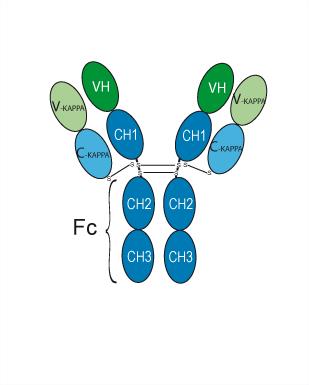
Human IgG1 kappa
Recommend Isotype Controls
Species Reactivity
Human
IC50 & Target
IL-13
In Vivo
MedChemExpress (MCE) has not independently confirmed the accuracy of these methods. They are for reference only.
-
Animal Model:Adult male cynomolgus monkeys (6 to 10 kg; cynomolgus monkey model of lung inflammation)[1].
-
Dosage:10 mg/kg
-
Administration:Intravenous infusion; single
-
Result:Reduced total BAL cell count, eosinophil number, and neutrophil number.
Reduced the levels of eotaxin and RANTES in BAL fluid.
Clinical Trial
| NCT Number | Sponsor | Condition | Start Date |
Phase

|
|---|---|---|---|---|
| NCT01329991 | Plexxikon| | 2011-05 | PHASE1 |
Gene ID
Accession
Conjugated
Unconjugated
Reconsititution
The product can be reconstituted/diluted with sterile PBS or saline.
Format
-
Human IgG1 kappa
Application
ELISA, FACS, Functional assay


Chemical Information
-
CAS No. 910649-32-0
-
Appearance Liquid
-
Molecular Weight 145.38 kDa
-
Color Colorless to light yellow
-
SMILES
[Anrukinzumab]
-
Synonyms
IMA-638
-
Shipping
Shipping with dry ice.
-
Formulation
Please refer to the lot-specific COA for specific buffer information.
-
Storage
Please store the product under the recommended conditions in the Certificate of Analysis.

Protocols
-
DSS-Induced Colitis
Dextran sulfate sodium (DSS)-induced colitis is generated by administering DSS in mouse drinking water, producing epithelial injury, barrier disruption, weight loss, diarrhea, fecal blood, colon shortening, histologic mucosal damage, and inflammatory mediator changes; the model is mainly used to study acute or chronic intestinal inflammation resembling selected features of ulcerative colitis. DSS injury is interpreted through clinical and tissue readouts rather than a single molecular endpoint: daily body weight, stool consistency, and bleeding are combined into a disease activity index, while colon length, histology, cytokines, myeloperoxidase activity, intestinal permeability, and tight-junction markers provide complementary measures of inflammation and barrier damage.
-
TNBS-Induced Colitis
TNBS-induced colitis is produced by intrarectal delivery of 2,4,6-trinitrobenzene sulfonic acid in ethanol, where ethanol disrupts the mucosal barrier and TNBS haptenates colonic proteins, generating immune-mediated colonic inflammation with weight loss, diarrhea, ulceration, transmural injury, inflammatory-cell infiltration, and cytokine responses. The model is used as an experimental intestinal inflammation model with Crohn’s disease–like features, especially when Th1-type responses, IL-12–dependent inflammation, chronic relapsing inflammation, or fibrosis-related endpoints are studied.
-
Research Protocol for Inflammation-related Diseases
The NLRP3 inflammasome is a cytosolic innate immune signaling platform that integrates priming signals and danger-signal activation to promote caspase-1 activation, maturation of IL-1β and IL-18, and gasdermin D-mediated pyroptotic cell death. The core experimental logic is to determine whether inflammatory disease phenotypes are driven by increased NLRP3 expression, ASC-containing inflammasome assembly, caspase-1 cleavage, GSDMD cleavage, and extracellular release of IL-1β/IL-18 rather than by nonspecific cell injury alone. The pathway is strongly linked to inflammation-related disease phenotypes because monosodium urate crystals activate NALP3/NLRP3 inflammasome signaling in gout-like crystal inflammation, cholesterol crystals activate NLRP3 inflammasomes in atherogenesis models, and DSS-induced intestinal inflammation has been reported to involve NLRP3 inflammasome activity. However, experimental colitis studies also show context-dependent protective effects of NLRP3 inflammasome co


Purity & Documentation
-
Data Sheet (259 KB)
-
SDS (251 KB)
- English - EN (251 KB)
- Français - FR (251 KB)
- Deutsch - DE (251 KB)
- Norwegian - NO (251 KB)
- Español - ES (251 KB)
- Swedish - SV (251 KB)
- Italian - IT (251 KB)
- Korean - KR (251 KB)
- Portuguese - PT (251 KB)
-
Inhibitory Antibodies User Guide (603 KB)
References
[1]. Bree A, et al. IL-13 blockade reduces lung inflammation after Ascaris suum challenge in cynomolgus monkeys. J Allergy Clin Immunol. 2007 May;119(5):1251-7. [Content Brief]
[2]. Reinisch W, et al. Anrukinzumab, an anti-interleukin 13 monoclonal antibody, in active UC: efficacy and safety from a phase IIa randomised multicentre study. Gut. 2015 Jun;64(6):894-900. [Content Brief]
[3]. Elias JA, et al. IL-13 in asthma. The successful integration of lessons from mice and humans. Am J Respir Crit Care Med. 2011 Apr 15;183(8):957-8. [Content Brief]

Calculators
Concentration (start) × Volume (start) = Concentration (final) × Volume (final)


Anrukinzumab Related Classifications
HY-P99439 Related Classifications
 Powered by Bioz