



eIF4E Antibody (YA463)
(Synonyms: EIF4EL1, EIF4F, EIF4E, Eukaryotic translation initiation factor 4E, eIF-4E, eIF4E, eIF-4F 25 kDa subunit, mRNA cap-binding protein)
Based on 1 Customer Validation
eIF4E Antibody (YA463) is a Rabbit-derived and non-conjugated IgG monoclonal antibody, targeting to eIF4E.
-
Host:
Rabbit
-
Isotype:
IgG
-
Application:
WB, IHC-P, ICC/IF, FC
-
Reactivity :
Human, Mouse
-
Formulation:
Supplied in 1*TBS (pH7.4), 0.05% BSA and 40% Glycerol. Preservative: 0.05% Sodium Azide.
-
Conjugation:
Non-conjugated


To place orders, for customer services and technical support, please contact: MedChemExpress USA
Tel: 609-228-6898 E-mail: [email protected] [email protected]





Applications
| Application |
WB

WB: Western Blot
|
IHC-P
IHC-P: Immunohistochemistry-Paraffin
|
ICC/IF
ICC/IF: Immunocytochemistry/
Immunofluorescence |
FC
FC: Flow Cytometry
|
|---|---|---|---|---|
| Dilution Ratio | 1:500 | 1:200 | 1:50 | 1:500-1:1000 |


Product Details
eIF4E Antibody (YA463) is a Rabbit-derived and non-conjugated IgG monoclonal antibody, targeting to eIF4E.
-
Host Rabbit

-
Clonality Recombinant,Monoclonal

-
Species ReactivityHuman, Mouse
-
Observed Molecular WeightObserved band size: 25 kDa
Note: Due to possible protein modifications or aggregation, the molecular weight should be confirmed by actual measurement, and the predicted value is for reference only.

-
Calculated Molecular Weight Predicted band size: 25 kDa

Recombinant protein within Human eIF4E aa 118-217/217.
Endogenous
Protein A affinity purified.
Non-conjugated
Unmodified
IgG


Product Properties
-
Appearance
Solution
-
Formulation
Supplied in 1*TBS (pH7.4), 0.05% BSA and 40% Glycerol. Preservative: 0.05% Sodium Azide.
-
Concentration
Batch-dependent, Please check the COA for the concentration of each lot. Check Lot Concentration
-
Storage & Stability
Stored at -20°C for 1 year. Avoid repeated freeze / thaw cycles.
-
Shipping
Shipping with blue ice.


Verification Images
-
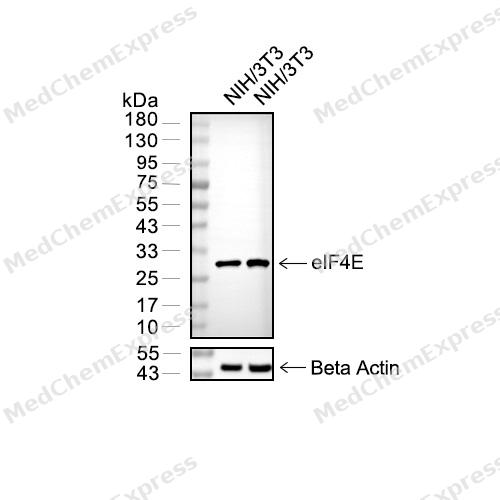 Western blot analysis of extracts from NIH/3T3 (lane 2(20μg) , NIH/3T3 (lane 3(40μg),using eIF4E Antibody (HY-P80118). Proteins were transferred to a PVDF membrane and blocked with 5% BSA in TBST for 2 hour at room temperature. The primary antibody and Loading control antibody (Beta Actin, HY-P80438, 1/3000) was used in 5% BSA in TBST at 4°C overnight. Goat Anti-Mouse/Rabbit IgG-HRP Secondary Antibody (HY-P8004/HY-P8001, 1/10,000) was used for 1 hour at room temperature.
 -
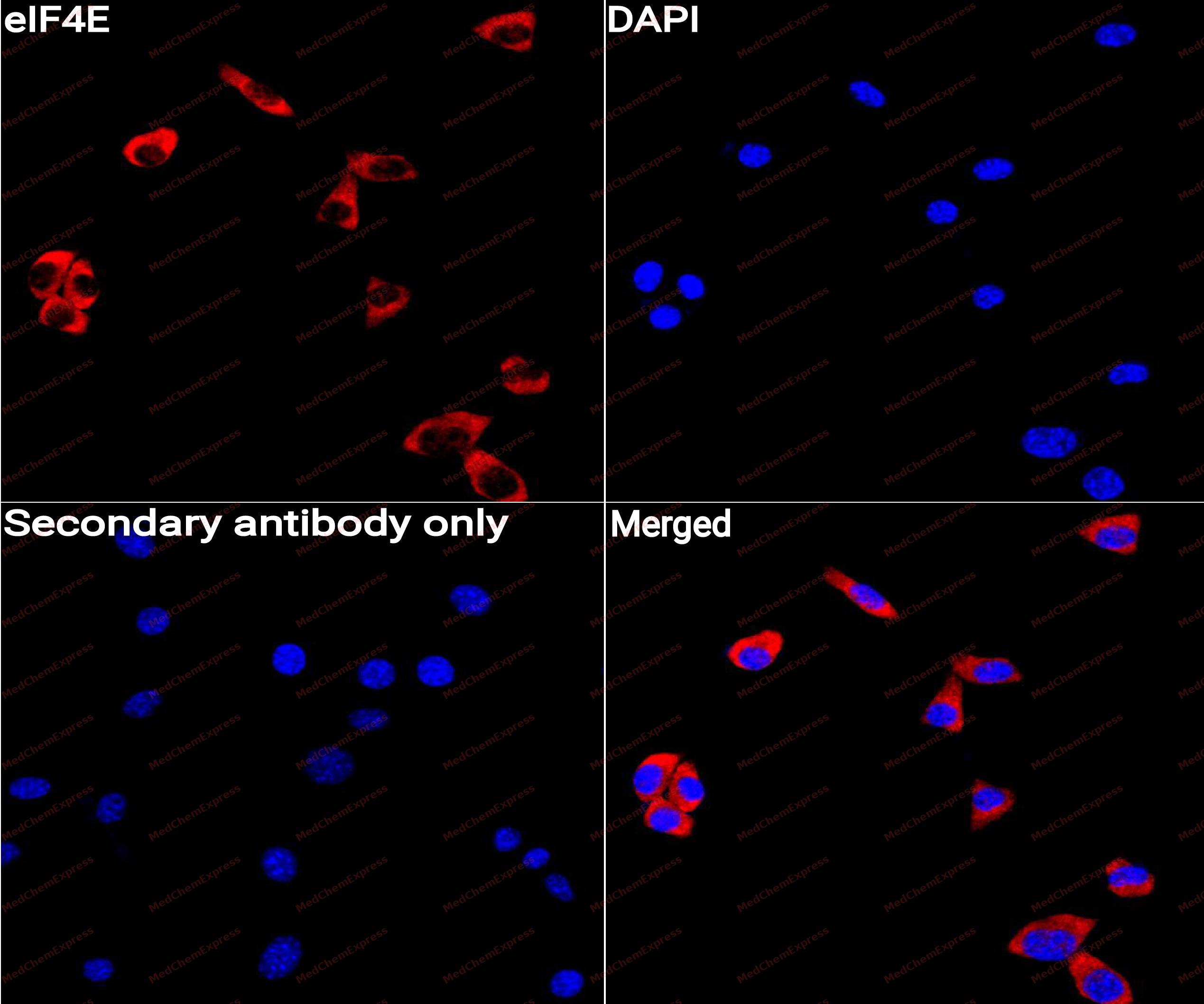 Immunocytochemistry analysis of NIH3T3 cells labeling eIF4E with eIF4E Antibody (HY-P80118) at 1/50 dilution. Cells were fixed in 4% paraformaldehyde for 15 minutes at room temperature, permeabilized with 0.1% Triton X-100 for 10 minutes at room temperature, then blocked with QuickBlock™ Blocking Buffer for Immunol Staining for 10 min at room temperature. Cells were then incubated with eIF4E Antibody (HY-P80118) at 1/50 dilution in QuickBlock™ Blocking Buffer for Immunol Staining at 4 ℃. Alexa Fluor® 594-conjugated AffiniPure Goat Anti-Rabbit IgG H&L(HY-P8003, Green) was used as the secondary antibody at 1/1,000 dilution. PBS instead of the primary antibody was used as the secondary antibody only control. The Nuclear counterstain was DAPI (Blue).
 -
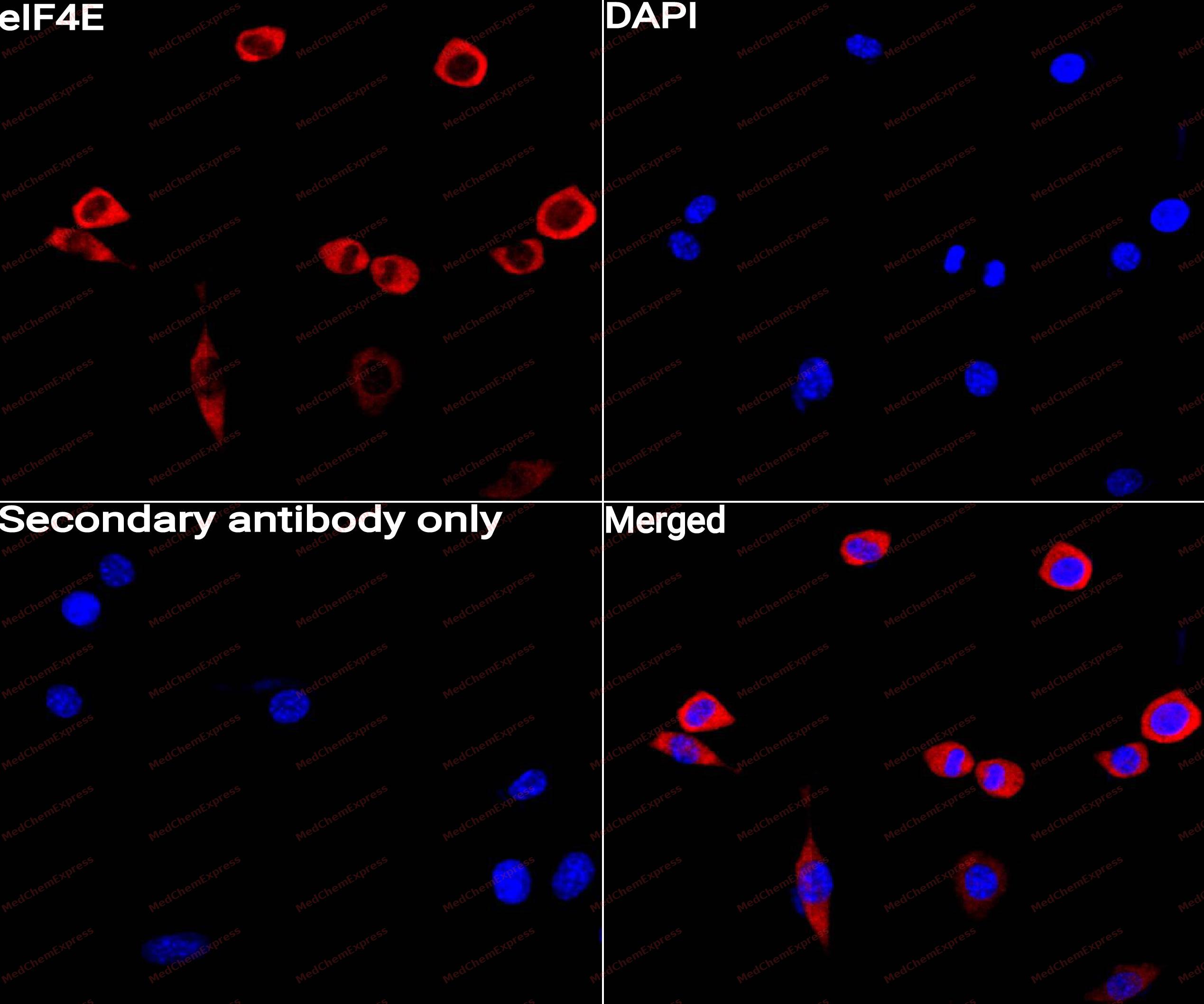 Immunocytochemistry analysis of NIH3T3 cells labeling eIF4E with eIF4E Antibody (HY-P80118) at 1/100 dilution. Cells were fixed in 4% paraformaldehyde for 15 minutes at room temperature, permeabilized with 0.1% Triton X-100 for 10 minutes at room temperature, then blocked with QuickBlock™ Blocking Buffer for Immunol Staining for 10 min at room temperature. Cells were then incubated with eIF4E Antibody (HY-P80118)at 1/100 dilution in QuickBlock™ Blocking Buffer for Immunol Staining at 4 ℃. Alexa Fluor® 594-conjugated AffiniPure Goat Anti-Rabbit IgG H&L(HY-P8003,Green) was used as the secondary antibody at 1/1,000 dilution. PBS instead of the primary antibody was used as the secondary antibody only control. The Nuclear counterstain was DAPI (Blue).
 -
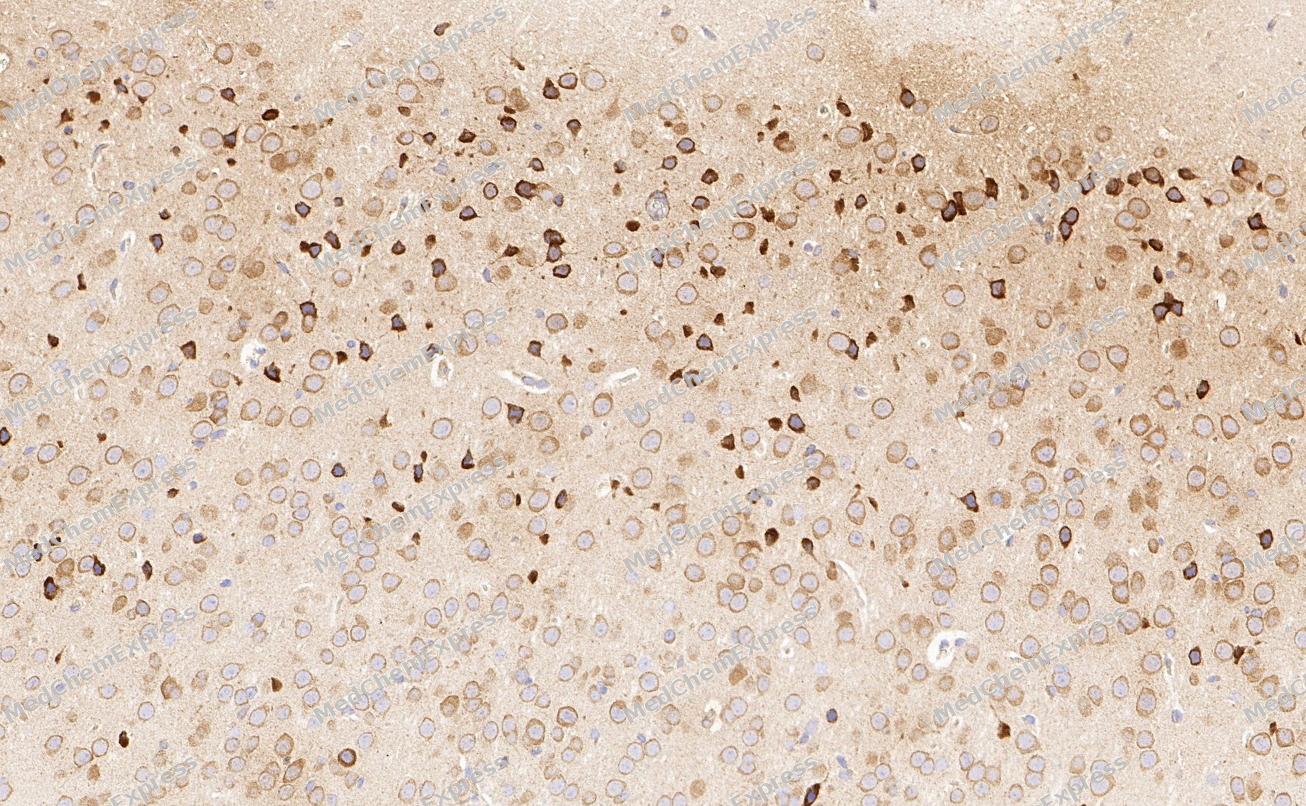 Immunohistochemical analysis of paraffin-embedded Mouse brain tissue using eIF4E Antibody. The section was pre-treated using heat mediated antigen retrieval with Tris-EDTA buffer (pH 9.0) for 8 minutes. The tissues were blocked in QuickBlock for 20 minutes at room temperature, washed with ddH2O and PBS, and then probed with the primary antibody (HY-P80118, 1/200) in 4℃ overnight. The detection was performed using an HRP conjugated compact polymer system. DAB was used as the chromogen. Tissues were counterstained with hematoxylin and mounted with DPX.
 -
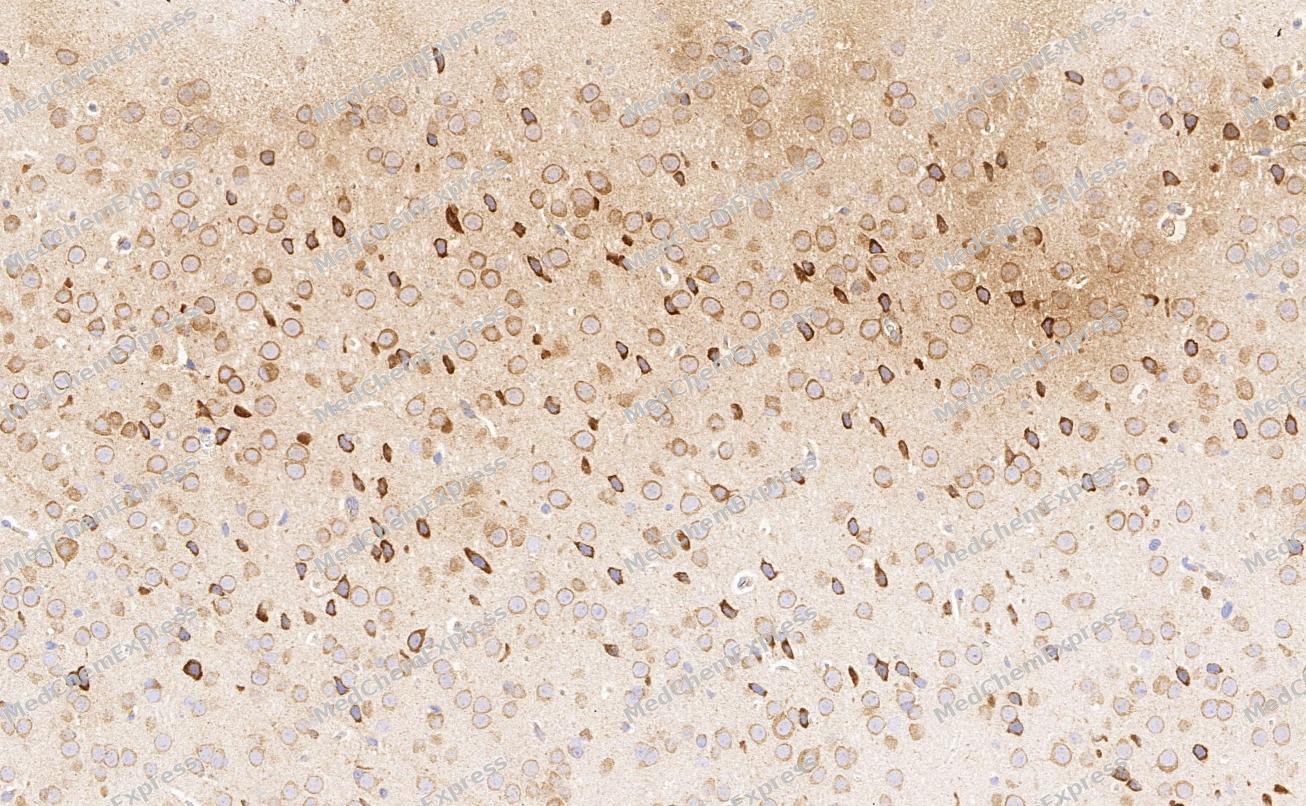 Immunohistochemical analysis of paraffin-embedded Mouse brain tissue using eIF4E Antibody. The section was pre-treated using heat mediated antigen retrieval with Tris-EDTA buffer (pH 9.0) for 8 minutes. The tissues were blocked in QuickBlock for 20 minutes at room temperature, washed with ddH2O and PBS, and then probed with the primary antibody (HY-P80118, 1/200) in 4℃ overnight. The detection was performed using an HRP conjugated compact polymer system. DAB was used as the chromogen. Tissues were counterstained with hematoxylin and mounted with DPX.
 -
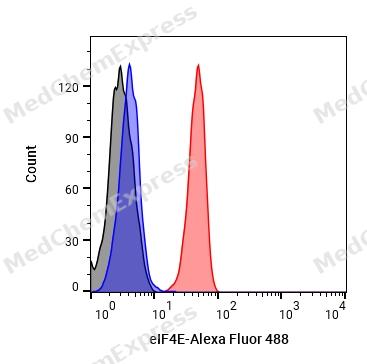 Flow cytometric analysis of 1X10^6 HEK293 cells labeling eIF4E Antibody (HY-P80118, red). Cells were fixed with 4% paraformaldehyde and permeabilised with 90% methanol. Then stained with the primary antibody at 1/50 dilution for an hour at 4℃. Alexa Fluor® 488-conjugated AffiniPure Goat Anti-Rabbit IgG H&L (HY-P8002) was used as the secondary antibody at 1/1,000 dilution for 30 minutes at 4℃. Rabbit IgG Isotype Control (HY-P80879, blue) was used as the isotype control, cells without incubation with primary antibody were used as the unlabeled control (black).


Background
-
Function
eIF4E acts in the cytoplasm to initiate and regulate protein synthesis and is required in the nucleus for export of a subset of mRNAs from the nucleus to the cytoplasm which promotes processes such as RNA capping, processing and splicing. Component of the protein complex eIF4F, which is involved in the recognition of the mRNA cap, ATP-dependent unwinding of 5'-terminal secondary structure and recruitment of mRNA to the ribosome. This protein recognizes and binds the 7-methylguanosine (m7G)-containing mRNA cap during an early step in the initiation of protein synthesis and facilitates ribosome binding by inducing the unwinding of the mRNAs secondary structures. Together with EIF4G1, antagonizes the scanning promoted by EIF1-EIF4G1 and is required for TISU translation, a process where the TISU element recognition makes scanning unnecessary. In addition to its role in translation initiation, also acts as a regulator of translation and stability in the cytoplasm. Component of the CYFIP1-EIF4E-FMR1 complex which binds to the mRNA cap and mediates translational repression: in the complex, EIF4E mediates the binding to the mRNA cap. Component of a multiprotein complex that sequesters and represses translation of proneurogenic factors during neurogenesis. In P-bodies, component of a complex that mediates the storage of translationally inactive mRNAs in the cytoplasm and prevents their degradation. May play an important role in spermatogenesis through translational regulation of stage-specific mRNAs during germ cell development. As well as its roles in translation, also involved in mRNA nucleocytoplasmic transport. Its role in mRNA export from the nucleus to the cytoplasm relies on its ability to bind the m7G cap of RNAs and on the presence of the 50-nucleotide EIF4E sensitivity element (4ESE) in the 3'UTR of sensitive transcripts. Interaction with the 4ESE is mediated by LRPPRC which binds simultaneously to both EIF4E and the 4ESE, thereby acting as a platform for assembly for the RNA export complex. EIF4E-dependent mRNA export is independent of ongoing protein or RNA synthesis and is also NFX1-independent but is XPO1-dependent with LRPPRC interacting with XPO1 to form an EIF4E-dependent mRNA export complex. Alters the composition of the cytoplasmic face of the nuclear pore to promote RNA export by reducing RANBP2 expression, relocalizing nucleoporin NUP214 and increasing expression of RANBP1 and RNA export factors DDX19 and GLE1. Promotes the nuclear export of cyclin CCND1 mRNA. Promotes the nuclear export of NOS2/iNOS mRNA. Promotes the nuclear export of MDM2 mRNA. Promotes the export of additional mRNAs, including others involved in the cell cycle. In the nucleus, binds to capped splice factor-encoding mRNAs and stimulates their nuclear export to enhance splice factor production by increasing their cytoplasmic availability to the translation machinery. May also regulate splicing through interaction with the spliceosome in an RNA and m7G cap-dependent manner. Also binds to some pre-mRNAs and may play a role in their recruitment to the spliceosome. Promotes steady-state capping of a subset of coding and non-coding RNAs by mediating nuclear export of capping machinery mRNAs including RNMT, RNGTT and RAMAC to enhance their translation. Stimulates mRNA 3'-end processing by promoting the expression of several core cleavage complex factors required for mRNA cleavage and polyadenylation, and may also have a direct effect through its interaction with the CPSF3 cleavage enzyme. Rescues cells from apoptosis by promoting activation of serine/threonine-protein kinase AKT1 through mRNA export of NBS1 which potentiates AKT1 phosphorylation and also through mRNA export of AKT1 effectors, allowing for increased production of these proteins[1][2][3][4][5][6][7].
-
Subcellular Localization
Cytoplasm, P-body; Cytoplasm; Cytoplasm, Stress granule; Nucleus; Nucleus speckle; Nucleus, nuclear body
-
Subunit
eIF4F is a multi-subunit complex, the composition of which varies with external and internal environmental conditions (PubMed:11408474, PubMed:11879179, PubMed:16271312, PubMed:17631896). It is composed of at least EIF4A, EIF4E and EIF4G1/EIF4G3 (PubMed:11408474, PubMed:11879179, PubMed:12975586, PubMed:29987188, PubMed:8521827). EIF4E is also known to interact with other partners (PubMed:11408474, PubMed:11879179, PubMed:12975586, PubMed:8521827). Interacts with EIF4ENIF1/4E-T; promotes recruitment to P-bodies and import into the nucleus (PubMed:10856257, PubMed:16157702, PubMed:23991149, PubMed:24335285, PubMed:28487484). Hypophosphorylated EIF4EBP1, EIF4EBP2 and EIF4EBP3 compete with EIF4G1/EIF4G3 to interact with EIF4E; insulin stimulated MAP-kinase (MAPK1 and MAPK3) phosphorylation of EIF4EBP1 causes dissociation of the complex allowing EIF4G1/EIF4G3 to bind and consequent initiation of translation (PubMed:16271312, PubMed:21661078, PubMed:24207126, PubMed:25533957, PubMed:25702871, PubMed:8521827). Interacts mutually exclusive with EIF4A1 or EIF4A2 (PubMed:11408474). Interacts with NGDN and PIWIL2 (By similarity). Component of the CYFIP1-EIF4E-FMR1 complex composed of CYFIP, EIF4E and FMR1 (By similarity). Interacts directly with CYFIP1 (By similarity). Interacts with CLOCK (By similarity). Binds to MKNK2 in nucleus (PubMed:12897141). Interacts with LIMD1, WTIP and AJUBA (PubMed:20616046). Interacts with APOBEC3G in an RNA-dependent manner (PubMed:16699599). Interacts with LARP1 (PubMed:20430826). Interacts with METTL3 (PubMed:27117702). Interacts with RBM24; this interaction prevents EIF4E from binding to p53/TP53 mRNA and inhibits the assembly of translation initiation complex (PubMed:29358667). Interacts with DDX3X; interaction is direct and in an RNA-independent manner; this interaction enhances EIF4E cap-binding ability and is required for the repression of cap-dependent translation and the increase of IRES-mediated translation (PubMed:17667941, PubMed:21883093, PubMed:28733330). DDX3X competes with EIF4G1 for interaction with EIF4E (PubMed:17667941, PubMed:21883093). Interacts with EIF4G1; which in a mutual exclusive interaction associates either with EIF1 or with EIF4E on a common binding site (PubMed:29987188). Interacts with BTG4 and CNOT7 (By similarity). Interacts with LRPPRC (via N-terminus); the interaction promotes association of EIF4E with 4ESE-containing mRNAs (PubMed:19262567, PubMed:28325843). Interacts with mRNA cleavage enzyme CPSF3 and its cofactor CPSF1 (PubMed:31042468). Interacts (via RING-type zinc finger) with PML; the interaction results in conformational changes of both interacting proteins and reduces EIF4E affinity for the 5' m7G cap of mRNA, thus reducing EIF4E-mediated mRNA nuclear export (PubMed:11500381, PubMed:11575918). Interacts with homeobox protein HHEX/PRH; the interaction inhibits EIF4E-mediated mRNA nuclear export (PubMed:12554669). Interacts with homeobox protein HOXA9; the interaction positively regulates EIF4E-mediated mRNA nuclear export (By similarity). Interacts with homeobox protein EMX2 (By similarity)
-
SwissProt ID
-
Synonyms
EIF4EL1, EIF4F, EIF4E, Eukaryotic translation initiation factor 4E, eIF-4E, eIF4E, eIF-4F 25 kDa subunit, mRNA cap-binding protein
-
Research Field
Epigenetics and Nuclear Signaling


Documentation
-
Data Sheet (263 KB)
-
SDS (251 KB)
- English - EN (251 KB)
- Français - FR (251 KB)
- Deutsch - DE (251 KB)
- Norwegian - NO (251 KB)
- Español - ES (251 KB)
- Swedish - SV (251 KB)
- Italian - IT (251 KB)
- Korean - KR (251 KB)
- Portuguese - PT (251 KB)
-
User Guide for Antibodies (1077 KB)
References
[1]. McKendrick L, et al. Phosphorylation of eukaryotic initiation factor 4E (eIF4E) at Ser209 is not required for protein synthesis in vitro and in vivo. Eur J Biochem. 2001 Oct;268(20):5375-85. [Content Brief]
[2]. Yanagiya A, et al. Translational homeostasis via the mRNA cap-binding protein, eIF4E. Mol Cell. 2012 Jun 29;46(6):847-58. [Content Brief]
[3]. Chen CC, et al. 4E-BP3 regulates eIF4E-mediated nuclear mRNA export and interacts with replication protein A2. FEBS Lett. 2012 Jul 30;586(16):2260-6. [Content Brief]
[4]. Kamenska A, et al. Human 4E-T represses translation of bound mRNAs and enhances microRNA-mediated silencing. Nucleic Acids Res. 2014 Mar;42(5):3298-313. [Content Brief]
[5]. Haimov O, et al. Dynamic Interaction of Eukaryotic Initiation Factor 4G1 (eIF4G1) with eIF4E and eIF1 Underlies Scanning-Dependent and -Independent Translation. Mol Cell Biol. 2018 Sep 15;38(18):. [Content Brief]
[6]. Tomoo K, et al. Structural basis for mRNA Cap-Binding regulation of eukaryotic initiation factor 4E by 4E-binding protein, studied by spectroscopic, X-ray crystal structural, and molecular dynamics simulation methods. Biochim Biophys Acta. 2005 Dec 1;1753(2):191-208. [Content Brief]
[7]. Bollmann F, et al. Human inducible nitric oxide synthase (iNOS) expression depends on chromosome region maintenance 1 (CRM1)- and eukaryotic translation initiation factor 4E (elF4E)-mediated nucleocytoplasmic mRNA transport. Nitric Oxide. 2013 Apr 1;30:49-59. [Content Brief]

 Powered by Bioz
