



Arachidonoyl ethanolamide phosphate
Arachidonoyl ethanolamide phosphate, an endocannabinoid, is an endogenous ligand for cannabinoid receptors in the central nervous system (CB1 subtype) and peripheral immune cells (CB2 subtype).
Nos produits utilisent uniquement pour la recherche. Nous ne vendons pas aux patients.
- CAS No.: 183323-26-4
- Formule: C22H38NO5P
- Masse moléculaire:427.51
-
Stockage:
Solution, -20°C, 2 years


To place orders, for customer services and technical support, please contact: MedChemExpress USA
Tel: 609-228-6898 E-mail: [email protected] [email protected]


-
 Activité biologique
-
Chemical Information
- Pureté et documentation
- Références
-
 Help & FAQs


-
HY-130311
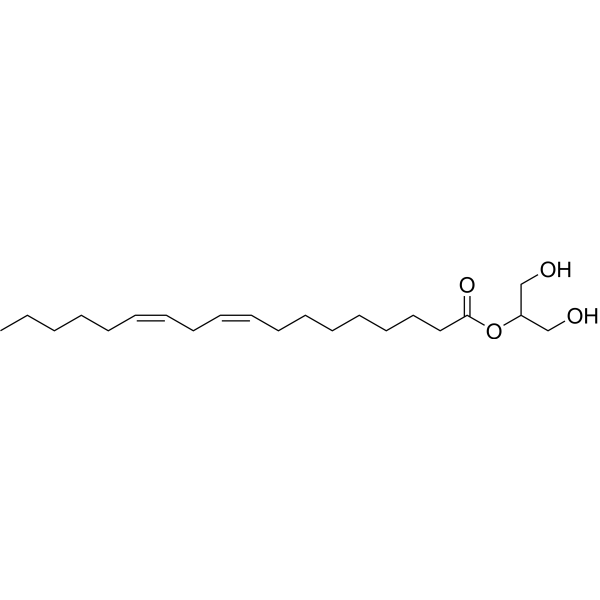
2-Linoleoyl glycerolCB1 Receptor Agonist -

HY-110003
ArachidonylcyclopropylamideCB1 Receptors Agonist -
HY-W009123
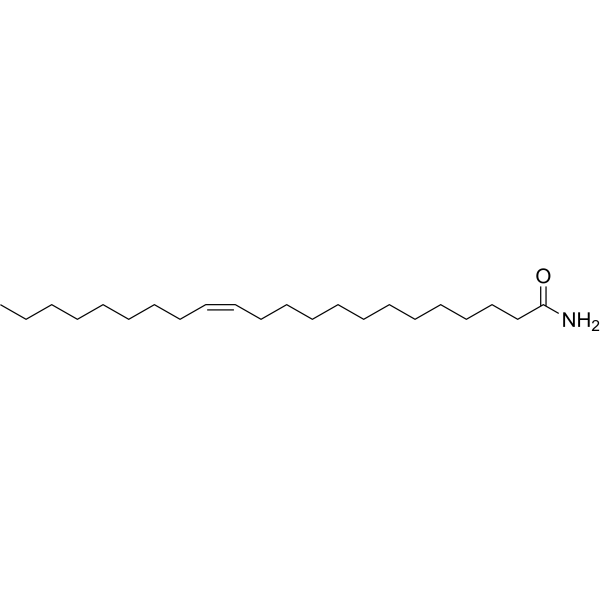
ErucamideTMEM19 Ligand, T3SS Inhibitor -

HY-120963
N-Oleoyl Taurine -
HY-128127
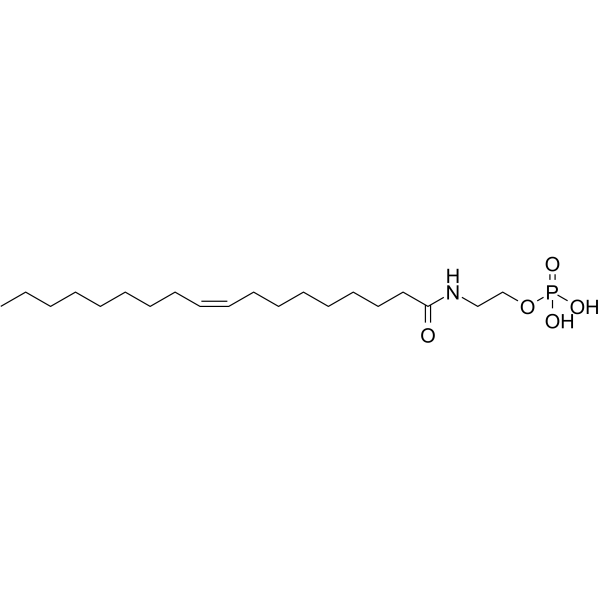
NAEPALPA Receptor Agonist -

HY-120965
N-Palmitoyl Taurine -

HY-113421
Linoleoyl ethanolamideFatty Acid Ethanolamide -

HY-120968
Arachidoyl ethanolamideEster Product -
HY-121558
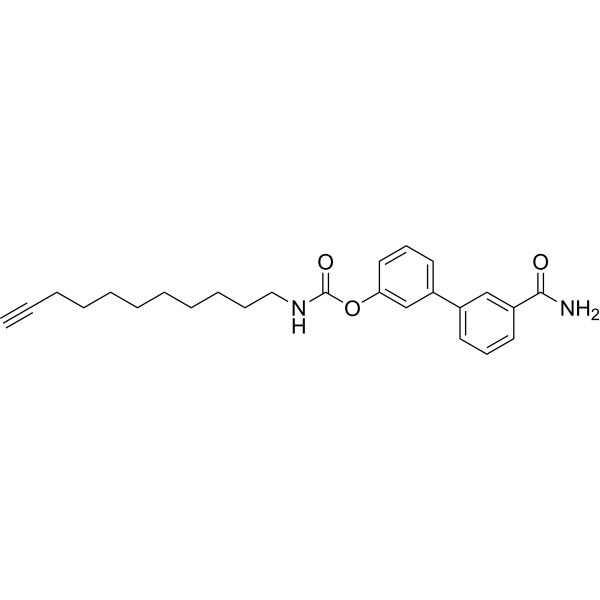
JP104FAAH Inhibitor -

HY-120964
N-Stearoyl Taurine -
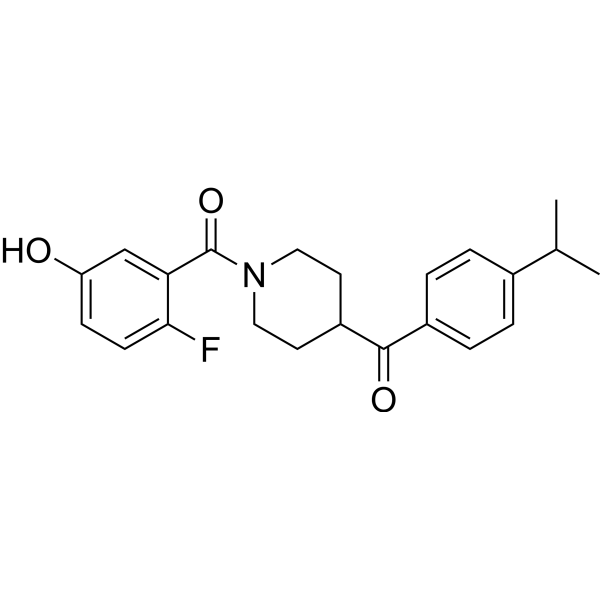
HY-111538
MAGL-IN-1MAGL Inhibitor -
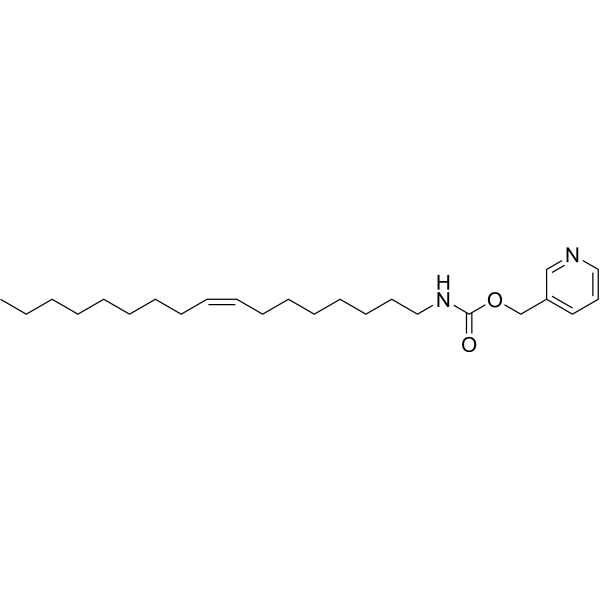
HY-139384
FAAH inhibitor 2Fatty Acid Amide Hydrolase Inhibitor


Activité biologique
Description
In Vitro
Arachidonoyl ethanolamide phosphate (AEA; 1 μM) is shown to induce apoptotic bodies formation and DNA fragmentation, hallmarks of programmed cell death, in human neuroblastoma CHP100 and lymphoma U937 cells[1].
An anti-proliferative action of Arachidonoyl ethanolamide phosphate in human breast carcinoma cells, due to a CB1-like receptor-mediated inhibition of the action of endogenous prolactin at its receptor. Arachidonoyl ethanolamide phosphate has an activation of cell proliferation in hematopoietic cell lines. Arachidonoyl ethanolamide phosphate is a neuromodulator that mediate a retrograde signaling pathway to modulate neurotransmitter release at the presynaptic terminal[1].
Arachidonoyl ethanolamide phosphate (0.1-10 μM; for 5 days) time- and concentration-dependently inhibits rat C6 glioma cell proliferation[2].
MedChemExpress (MCE) has not independently confirmed the accuracy of these methods. They are for reference only. .


Chemical Information
-
CAS No. 183323-26-4
-
Appearance Liquid
-
Masse moléculaire 427.51
-
Formule C22H38NO5P
-
Color Colorless to light yellow
-
SMILES
CCCCC/C=C\C/C=C\C/C=C\C/C=C\CCCC(NCCOP(O)(O)=O)=O
-
Livraison
Room temperature in continental US; may vary elsewhere.
-
Stockage
Solution, -20°C, 2 years


Pureté et documentation
-
Fiche technique (261 KB)
-
SDS (393 KB)
- English - EN (393 KB)
- Français - FR (393 KB)
- Deutsch - DE (393 KB)
- Norwegian - NO (393 KB)
- Español - ES (393 KB)
- Swedish - SV (393 KB)
- Italian - IT (393 KB)
- Korean - KR (393 KB)
- Portuguese - PT (393 KB)
-
Instruction de manipulation (2659 KB)
Références
[1]. M Maccarrone, et al. Anandamide induces apoptosis in human cells via vanilloid receptors. Evidence for a protective role of cannabinoid receptors. J Biol Chem. 2000 Oct 13;275(41):31938-45. [Content Brief]
[2]. S O Jacobsson, et al. Inhibition of rat C6 glioma cell proliferation by endogenous and synthetic cannabinoids. Relative involvement of cannabinoid and vanilloid receptors. J Pharmacol Exp Ther. 2001 Dec;299(3):951-9. [Content Brief]

Calculators
Concentration (start) × Volume (start) = Concentration (final) × Volume (final)


Arachidonoyl ethanolamide phosphate Related Classifications
HY-134173 Related Classifications
 Powered by Bioz