



Cuprizone (Standard)
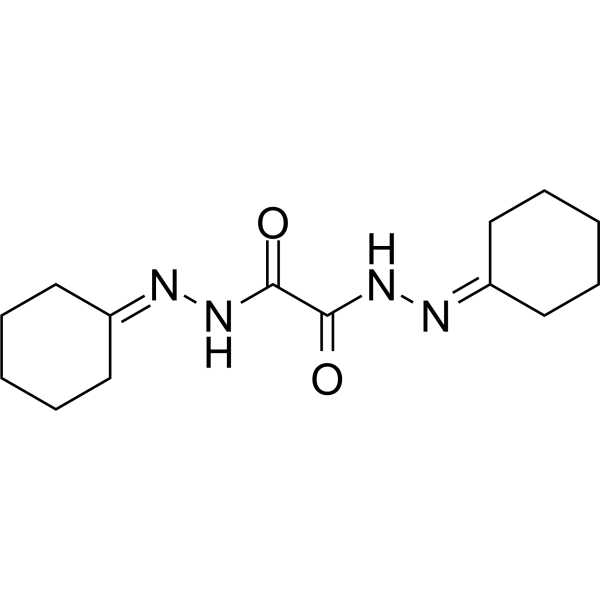
Cuprizone is a copper chelating agent that forms a deep blue copper ketone complex with copper (II). The copper ketone reaction can be used in colorimetric tests for the presence of trace copper. Cuprizone can be used to induce some schizophrenia-like behavior in mice. Cuprizone acts on copper enzymes, including SOD1, cytochrome oxidase, and DβH, thereby causing oxidative stress and increasing DA levels in certain brain regions such as the medial prefrontal cortex (PFC).
Nur für Forschungszwecke. Wir verkaufen nicht an Patienten.
- Reinheit : 98%
- CAS. Nr.: 370-81-0
- Formel: C14H22N4O2
- Molecular Weight:278.36
-
Speicherung:
Please store the product under the recommended conditions in the Certificate of Analysis.


To place orders, for customer services and technical support, please contact: MedChemExpress USA
Tel: 609-228-6898 E-mail: [email protected] [email protected]


-
 Product Information
-
Chemical Information
- Reinheit & Dokumentation
-
 Help & FAQs


-
HY-W115718
CuprizoneCopper Chelator -
HY-B1368
FenclonineTrp Hydroxylase Inhibitor -
HY-13289A
Nepicastat hydrochlorideDopamine β-Hydroxylase Inhibitor -
HY-W040144
Bromocresol greenpH Indicator -

HY-D0221
2,4,6-Tri-2-pyridinyl-1,3,5-triazineIron Colorimetric Reagent -
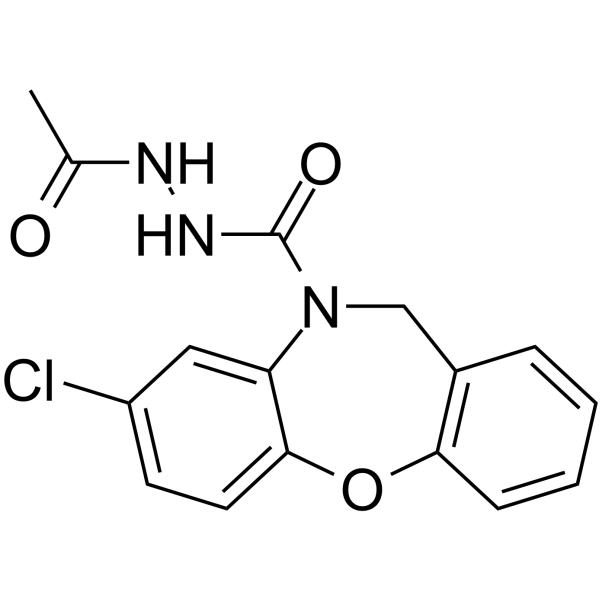
HY-102065
SC-19220EP1 Antagonist -
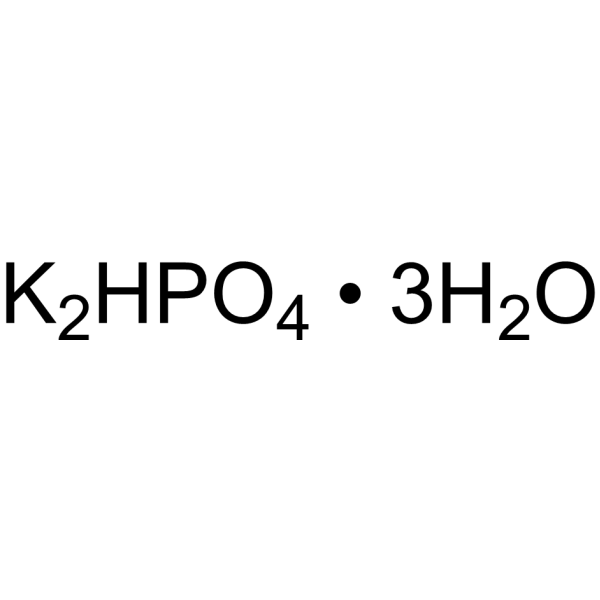
HY-W088069
Dipotassium hydrogen phosphate trihydratePharmaceutical Excipient -
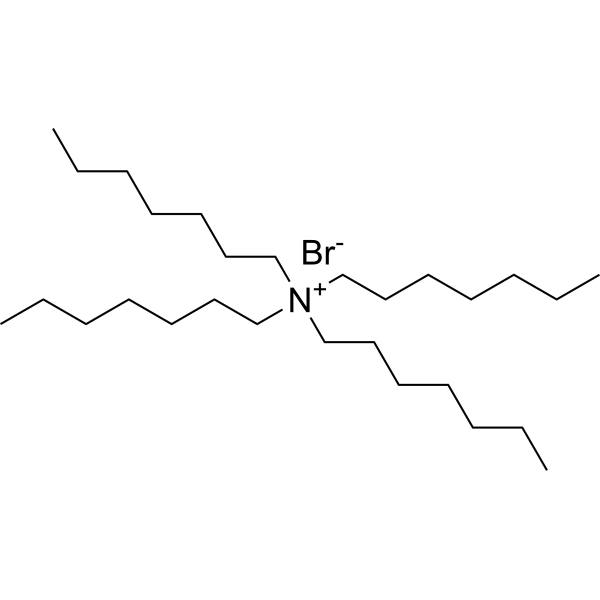
HY-W010795
Tetraheptylammonium bromide (>98%,BC)Biochemical Assay Reagent -

HY-W011757
Neocuproine hydrochloride monohydrate, 99%Metal Chelator


Product Information
Information
Anwendung
The compound is the grade of analytical standard, which is the reference standard supplied assay. It is commonly used in qualitative, quantitative and methodological research experiments in HPLC, GC and MS.


Chemical Information
-
CAS. Nr. 370-81-0
-
Molecular Weight 278.36
-
Formel C14H22N4O2
-
SMILES
O=C(C(N/N=C1CCCCC\1)=O)N/N=C2CCCCC/2
-
Versand
Room temperature in continental US; may vary elsewhere.
-
Speicherung
Please store the product under the recommended conditions in the Certificate of Analysis.


Reinheit & Dokumentation
Verweise
[1]. Suzuki K, et al. Status spongiosus of CNS and hepatic changes induced by cuprizone (biscyclohexanone oxalyldihydrazone). Am J Pathol. 1969 Feb;54(2):307-25. [Content Brief]
[2]. Sanadgol N, et al. Alpha-lipoic acid mitigates toxic-induced demyelination in the corpus callosum by lessening of oxidative stress and stimulation of polydendrocytes proliferation. Metab Brain Dis. 2018 Feb;33(1):27-37. [Content Brief]
[3]. M Jake Pushie, et al. Synthesis and structural characterization of copper-cuprizone complexes. Dalton Trans. 2022 Jun 29. [Content Brief]
[4]. Haiyun Xu, et al. Behavioral and neurobiological changes in C57BL/6 mouse exposed to cuprizone: effects of antipsychotics. Front Behav Neurosci. 2010 Mar 18;4:8. [Content Brief]

Calculators
Konzentration (Stammlösung) × Volumen (Stammlösung) = Konzentration (Ziellösung) × Volumen (Ziellösung)


Cuprizone (Standard) Related Classifications
HY-W115718R Related Classifications
 Powered by Bioz