



E6446
Based on 9 publication(s) in Google Scholar
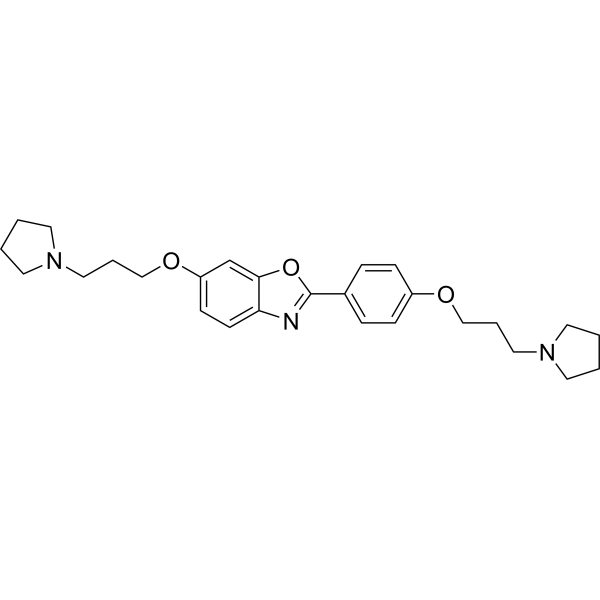
E6446 is a potent and orally acitve TLR7 and TLR9 antagonist, used in the research of deleterious inflammatory responses. E6446 is also a potent SCD1 inhibitor (KD: 4.61 μM), significantly inhibiting adipogenic differentiation and hepatic lipogenesis through SCD1-ATF3 signaling. E6446 also improves liver pathology in high-fat diet (HFD)-fed mice and may be useful in the study of non-alcoholic fatty liver disease (NAFLD).
For research use only. We do not sell to patients.
- Purity : 98.78%
- CAS No.: 1219925-73-1
- Formula: C27H35N3O3
- Molecular Weight:449.59
-
Storage:Powder -20°C, 3 years , 4°C, 2 years ; In solvent -80°C, 6 months , -20°C, 1 month

To place orders, for customer services and technical support, please contact: MedChemExpress USA
Tel: 609-228-6898 E-mail: [email protected] [email protected]


-
 Biological Activity
-
Chemical Information
-
Solvent & Solubility
- Protocols
- Purity & Documentation
- References
-
 Help & FAQs


-
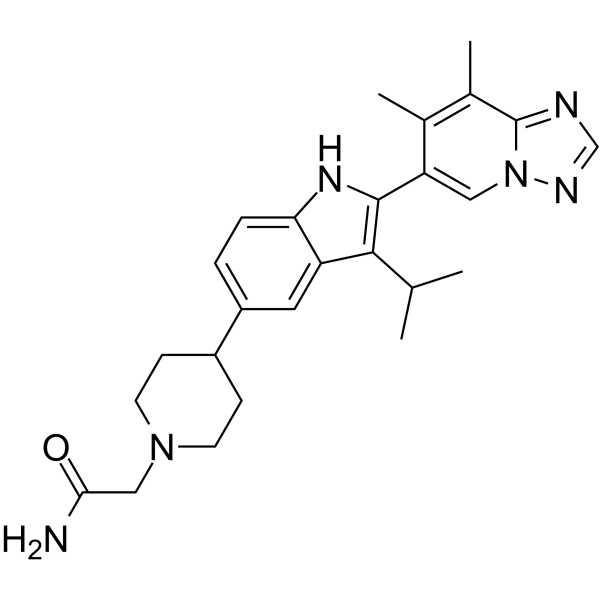
HY-139567
AfimetoranTLR7/8 Antagonist -
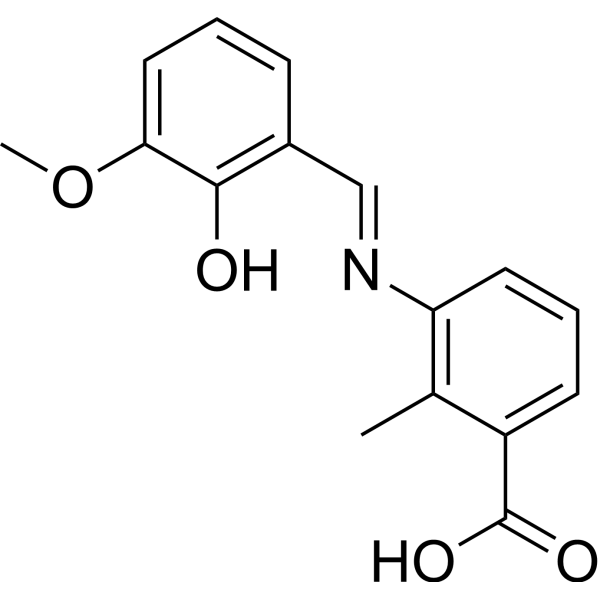
HY-100461
C29TLR2 Inhibitor -
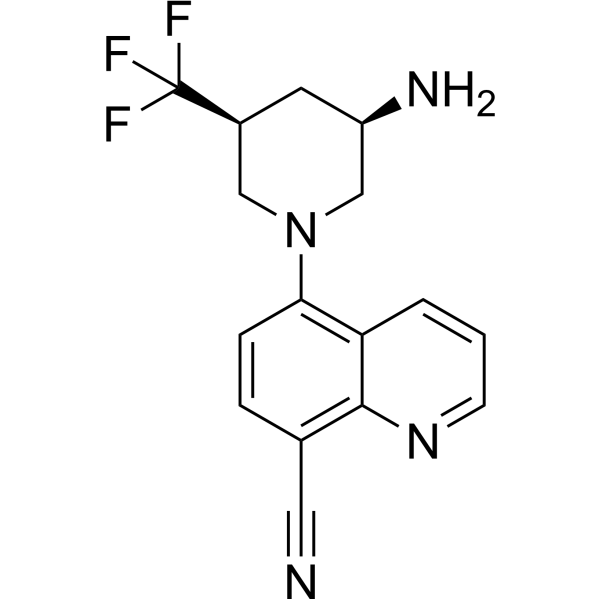
HY-134581
EnpatoranTLR7/8 Antagonist -
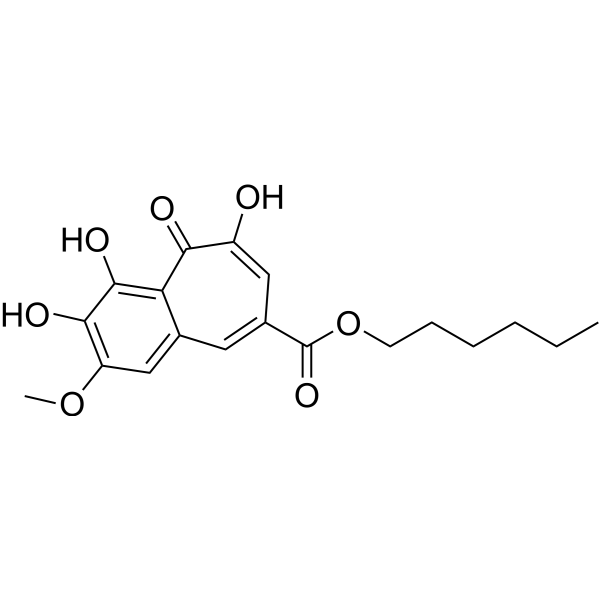
HY-108471
CU-CPT22TLR1/TLR2 Antagonist -
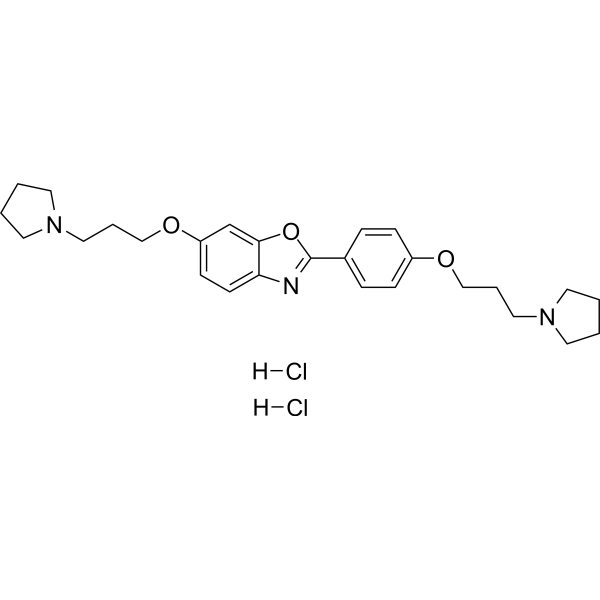
HY-12756A
E6446 dihydrochlorideTLR/SCD1 Inhibitor -
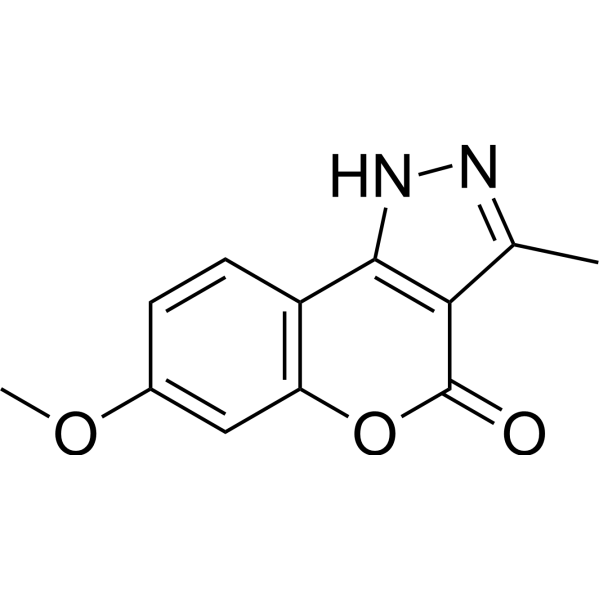
HY-151923
ATF3 inducer 1ATF3 Inducer -
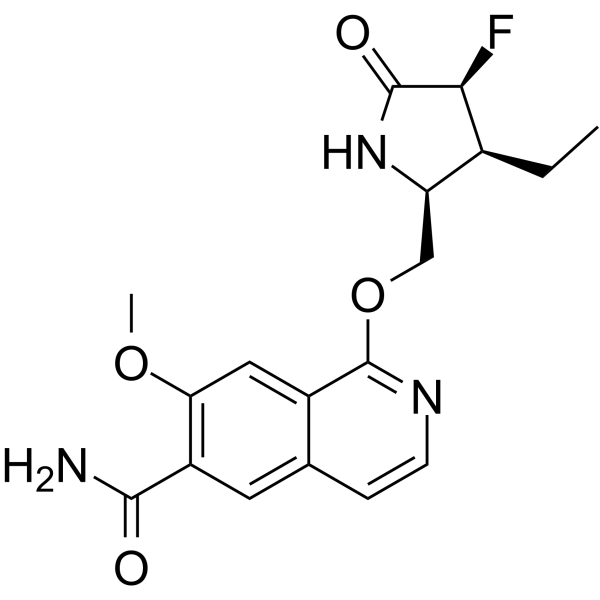
HY-19836
ZimlovisertibIRAK4 Inhibitor -
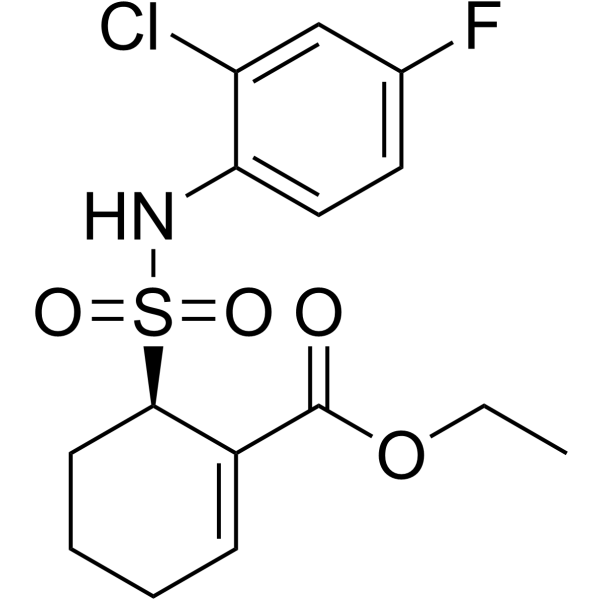
HY-11109
ResatorvidTLR4 Inhibitor -
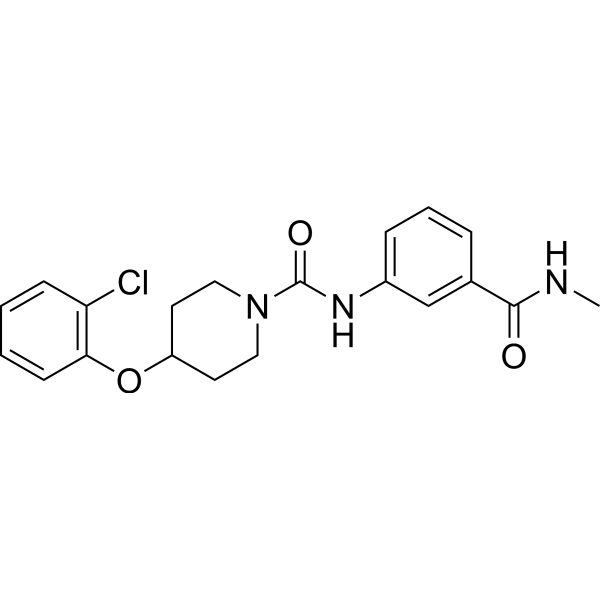
HY-50709
A939572SCD1 Inhibitor -
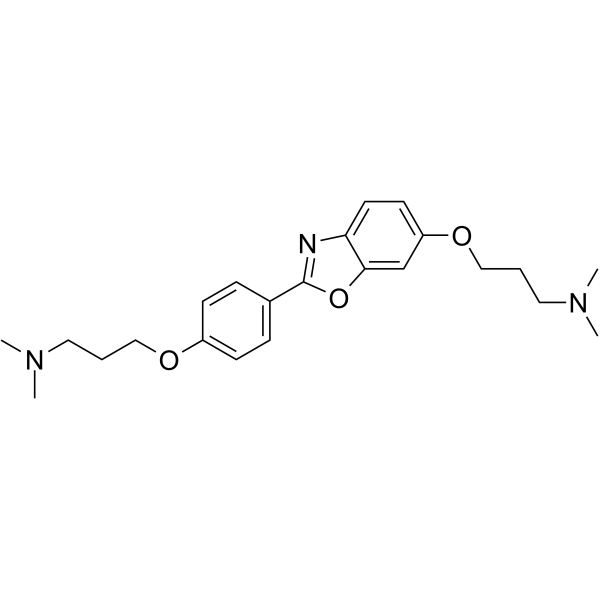
HY-124603
AT791TLR7/TLR9 Inhibitor -
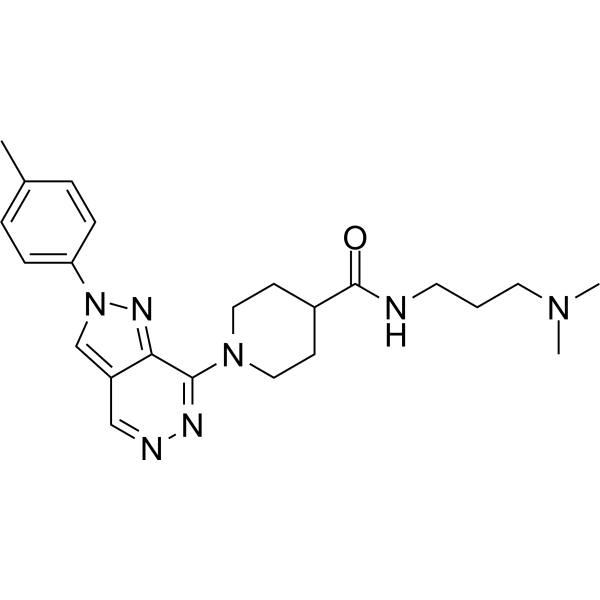
HY-148045
TLR9-IN-1TLR9 Inhibitor -
HY-15823
CAY10566SCD1 Inhibitor
Publications Citing Use of MedChemExpress (MCE) E6446
More- Cell Commun Signal. 2023 Sep 30;21(1):268. [Abstract]
- Cell Rep. 2025 Jun 13;44(6):115851. [Abstract]
- J Virol. 2025 Jul 22;99(7):e0069025. [Abstract]
- Infect Immun. 2019 Dec 17;88(1):e00697-19. [Abstract]
- Vet Microbiol. 2017 Aug:207:56-62. [Abstract]
- SSRN. 2025 Sep 10.
- Patent. US20210388060A1.
- Research Square Preprint. 2021 Mar.
- Oxid Med Cell Longev. 2019 Apr 28:2019:6527638. [Abstract]


Biological Activity
Description
IC50 & Target
|
TLR7 |
TLR9 |
Cellular Effect
|
Cell Line

|
Type | Value | Description | References |
|---|---|---|---|---|
| HEK293 | IC50 |
0.015 μM
Compound: 19
|
Antagonist activity at human TLR9 expressed in HEK293 cells assessed as inhibition of CpGB-induced NF-kappaB activation after 24 hrs by spectrophotometry based SEAP reporter gene assay
Antagonist activity at human TLR9 expressed in HEK293 cells assessed as inhibition of CpGB-induced NF-kappaB activation after 24 hrs by spectrophotometry based SEAP reporter gene assay
|
[PMID: 28437629] |
| HEK293 | IC50 |
1.99 μM
Compound: 19
|
Antagonist activity at human TLR7 expressed in HEK293 cells assessed as inhibition of CL264-induced NF-kappaB activation after 24 hrs by spectrophotometry based SEAP reporter gene assay
Antagonist activity at human TLR7 expressed in HEK293 cells assessed as inhibition of CL264-induced NF-kappaB activation after 24 hrs by spectrophotometry based SEAP reporter gene assay
|
[PMID: 28437629] |
In Vitro
E6446 is a potent and orally acitve TLR7 and TLR9 inhibitor. E6446 potently suppresses DNA stimulation of HEK:TLR9 cells, with an IC50 value of 10 nM, but is significantly less effective at suppressing LPS endotoxin stimulation of HEK:TLR4 cells or R848 stimulation of HEK:TLR7 cells. E6446 potently inhibits IL-6 production induced by CpG2216 but is ineffective against induction by the TLR3 ligand poly inosine-cytosine. The ability of E6446 to inhibit TLR7 is ligand dependent, E6446 is a potent inhibitor of IL-6 induction by RNA but a relatively poor inhibitor of IL-6 induction by the small molecule imidazoquinoline ligand R-848. E6446 suppress TLR9-DNA interaction in vitro, with an IC50 in the 1 to 10 µM range[1]. E6446 (0.01-0.03 μM) specifically inhibits TLR9 activation with CpG ODN 2006, and blocks TLR7/8 activated by the imidazoquinoline compound R848 at 2-8 μM. E6446 reduces 50% of TLR4 activation at 30 μM, and shows IC50s of 0.01 μM and 0.23 μM in HEK-TLR9 cells stimulated with oligo 2006 and in human PBMCs stimulated with oligo 2216, respectively[2].
MedChemExpress (MCE) has not independently confirmed the accuracy of these methods. They are for reference only.
In Vivo
MedChemExpress (MCE) has not independently confirmed the accuracy of these methods. They are for reference only.


Chemical Information
-
CAS No. 1219925-73-1
-
Appearance Solid
-
Molecular Weight 449.59
-
Formula C27H35N3O3
-
Color White to light yellow
-
SMILES
C1(C2=CC=C(OCCCN3CCCC3)C=C2)=NC4=CC=C(OCCCN5CCCC5)C=C4O1
-
Shipping
Room temperature in continental US; may vary elsewhere.
-
Storage
Powder -20°C 3 years 4°C 2 years In solvent -80°C 6 months -20°C 1 month


Publications (9)
-
Journal Impact Factor
-
Most Recent
-
Cell Commun Signal
Identification of novel SCD1 inhibitor alleviates nonalcoholic fatty liver disease: critical role of liver-adipose axis. [Abstract]2023 Sep 30;21(1):268. PMID: 37777801 -
Cell Rep
ENPP1 governs the metabolic regulation of effector T cells in autoimmunity by detecting cytosolic mitochondrial DNA. [Abstract]2025 Jun 13;44(6):115851. PMID: 40516055 -
J Virol
African swine fever virus infection enhances CD14-dependent phagocytosis of porcine alveolar macrophages to promote bacterial uptake and apoptotic body-mediated viral transmission. [Abstract]2025 Jul 22;99(7):e0069025. PMID: 40503879 -
Infect Immun
Toll-Like Receptor 2 (TLR2) and TLR4 Mediate the IgA Immune Response Induced by Mycoplasma hyopneumoniae. [Abstract]2019 Dec 17;88(1):e00697-19. PMID: 31611272 -
Vet Microbiol
Porcine parvovirus infection activates inflammatory cytokine production through Toll-like receptor 9 and NF-κB signaling pathways in porcine kidney cells. [Abstract]2017 Aug:207:56-62. PMID: 28757040 -
-
-
-
Oxid Med Cell Longev
Triptolide Inhibits Preformed Fibril-Induced Microglial Activation by Targeting the MicroRNA155-5p/SHIP1 Pathway. [Abstract]2019 Apr 28:2019:6527638. PMID: 31182996


Solvent & Solubility
In Vitro:
DMSO : 8.33 mg/mL (18.53 mM; ultrasonic and warming and heat to 60°C; Hygroscopic DMSO has a significant impact on the solubility of product, please use newly opened DMSO)
Please refer to the solubility information to select the appropriate solvent. Once prepared, please aliquot and store the solution to prevent product inactivation from repeated freeze-thaw cycles.
Storage method and period of stock solution: -80°C, 6 months; -20°C, 1 month. When stored at -80°C, please use it within 6 months. When stored at -20°C, please use it within 1 month.
Please refer to the solubility information to select the appropriate solvent. Once prepared, please aliquot and store the solution to prevent product inactivation from repeated freeze-thaw cycles.
Storage method and period of stock solution: -80°C, 6 months; -20°C, 1 month. When stored at -80°C, please use it within 6 months. When stored at -20°C, please use it within 1 month.
Concentration (start) × Volume (start) = Concentration (final) × Volume (final)
In Vivo:
Select the appropriate dissolution method based on your experimental animal and administration route.
- For the following dissolution methods, please ensure to first prepare a clear stock solution using an In Vitro approach and then sequentially add co-solvents:
- To ensure reliable experimental results, the clarified stock solution can be appropriately stored based on storage conditions. As for the working solution for In Vivo experiments, it is recommended to prepare freshly and use it on the same day.
- The percentages shown for the solvents indicate their volumetric ratio in the final prepared solution. If precipitation or phase separation occurs during preparation, heat and/or sonication can be used to aid dissolution.
Add each solvent one by one: 10% DMSO 90% (20% SBE-β-CD in Saline)
Solubility: ≥ 1 mg/mL (2.22 mM); Clear solution
This protocol yields a clear solution of ≥ 1 mg/mL (saturation unknown).
Taking 1 mL working solution as an example, add 100 μL DMSO stock solution (10.0 mg/mL) to 900 μL 20% SBE-β-CD in Saline, and mix evenly.
Preparation of 20% SBE-β-CD in Saline (4°C, storage for one week): 2 g SBE-β-CD powder is dissolved in 10 mL Saline, completely dissolve until clear.
Add each solvent one by one: 10% DMSO 40% PEG300 5% Tween-80 45% Saline
Solubility: ≥ 0.83 mg/mL (1.85 mM); Clear solution
This protocol yields a clear solution of ≥ 0.83 mg/mL (saturation unknown).
Taking 1 mL working solution as an example, add 100 μL DMSO stock solution (8.3 mg/mL) to 400 μL PEG300, and mix evenly; then add 50 μL Tween-80 and mix evenly; then add 450 μL Saline to adjust the volume to 1 mL.
Preparation of Saline: Dissolve 0.9 g sodium chloride in ddH₂O and dilute to 100 mL to obtain a clear Saline solution.
In Vivo Dissolution Calculator
Please enter the basic information of animal experiments:
-
-
-
-
Recommended: Prepare an additional quantity of animals to account for potential losses during experiments.
Please enter your animal formula composition:
-
%DMSO +
Recommended: Keep the proportion of DMSO in working solution below 2% if your animal is weak.
-
%+
-
+%Tween-80 + +
-
%Saline +
The co-solvents required include: DMSO, . All of co-solvents are available by MedChemExpress (MCE). , Tween 80. All of co-solvents are available by MedChemExpress (MCE).
Working solution concentration: 0.22 mg/mL
Method for preparing stock solution: mg drug dissolved in μL DMSO. Stock solution concentration: mg/mL.
1. Take μL DMSO stock solution;
2. Add μL .
μL , mix evenly;
3. Then add μL Tween 80, mix evenly;
4. Then add μL
Please ensure that the stock solution in the first step is dissolved to a clear state, and add co-solvents in sequence. You can use ultrasonic heating (ultrasonic cleaner, recommended frequency 20-40 kHz), vortexing, etc. to assist dissolution.


Purity & Documentation
-
Data Sheet (276 KB)
-
SDS (393 KB)
- English - EN (393 KB)
- Français - FR (393 KB)
- Deutsch - DE (393 KB)
- Norwegian - NO (393 KB)
- Español - ES (393 KB)
- Swedish - SV (393 KB)
- Italian - IT (393 KB)
- Korean - KR (393 KB)
- Portuguese - PT (393 KB)
-
Handling Instructions (2659 KB)
References
[1]. Lamphier M, et al. Novel small molecule inhibitors of TLR7 and TLR9: mechanism of action and efficacy in vivo. Mol Pharmacol. 2014 Mar;85(3):429-40. [Content Brief]
[2]. Franklin BS, et al. Therapeutical targeting of nucleic acid-sensing Toll-like receptors prevents experimental cerebral malaria. Proc Natl Acad Sci U S A. 2011 Mar 1;108(9):3689-94. [Content Brief]
[3]. Wang W, et al. Identification of novel SCD1 inhibitor alleviates nonalcoholic fatty liver disease: critical role of liver-adipose axis. Cell Commun Signal. 2023 Sep 30;21(1):268. [Content Brief]


Complete Stock Solution Preparation Table
Please refer to the solubility information to select the appropriate solvent. Once prepared, please aliquot and store the solution to prevent product inactivation from repeated freeze-thaw cycles.
Storage method and period of stock solution: -80°C, 6 months; -20°C, 1 month. When stored at -80°C, please use it within 6 months. When stored at -20°C, please use it within 1 month.
| Optional Solvent | Concentration Solvent Mass | 1 mg | 5 mg | 10 mg | 25 mg |
|---|---|---|---|---|---|
| DMSO | 1 mM | 2.2242 mL | 11.1212 mL | 22.2425 mL | 55.6062 mL |
| 5 mM | 0.4448 mL | 2.2242 mL | 4.4485 mL | 11.1212 mL | |
| 10 mM | 0.2224 mL | 1.1121 mL | 2.2242 mL | 5.5606 mL | |
| 15 mM | 0.1483 mL | 0.7414 mL | 1.4828 mL | 3.7071 mL |


E6446 Related Classifications
HY-12756 Related Classifications
 Powered by Bioz