



Thickeners
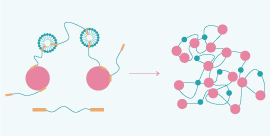
Thickeners, also known as gelling agents, are substances that increase the viscosity of emulsions and liquid. When used in food, they are referred to as thickeners or pastes.
These agents can elevate the viscosity of a system, maintaining a uniform and stable suspension or emulsion; most thickening agents also have emulsifying properties. They can be divided into natural 、synthetic and inorganic categories and are widely used in industries such as pharmaceuticals, food, cosmetics.

Chitosan hydrochloride 80%-90% deacetylated (Chitosan HCl 80%-90% deacetylated) is the deacetylated, hydrocholoride form of chitosan. Chitosan hydrochloride 80%-90% deacetylated is a polysaccharide obtained by deacetylating chitin, and exhibits antimicrobial activity against various bacteria and fungi. Chitosan hydrochloride 80%-90% deacetylated is utilized in agriculture, water treatment and pharmaceutical aspects.
- Formula: (C6H10O5)n
- Molecular Weight: 3200-4800
Dextran 4,000 is a mucus rheology modifier. The dextran molecules in Dextran 4,000 can reduce the cross-link density of mucus through osmotic effects and hydrogen bond substitution, and reduce viscoelasticity and improve the mucociliary/cough clearance index by destroying the DNA-mucin network structure in mucus. Dextran 4,000 has the ability to improve the rheological properties and clearance ability of cystic fibrosis (CF) sputum, and can be used in the study of inhalation therapy or aerosol delivery of mucostatic respiratory diseases. The Dextran series of compounds are also natural polysaccharide drug carriers that can be connected to drugs through covalent bonding methods such as ester bonds, amide bonds or click chemistry, or self-assembled to form carriers such as nanoparticles and hydrogels. Dextran is biodegradable and biocompatible, and can achieve targeted delivery and controlled release of drugs. Dextran derivatives can prolong the half-life of drugs, increase local concentrations, and reduce the activity of immune clearance.
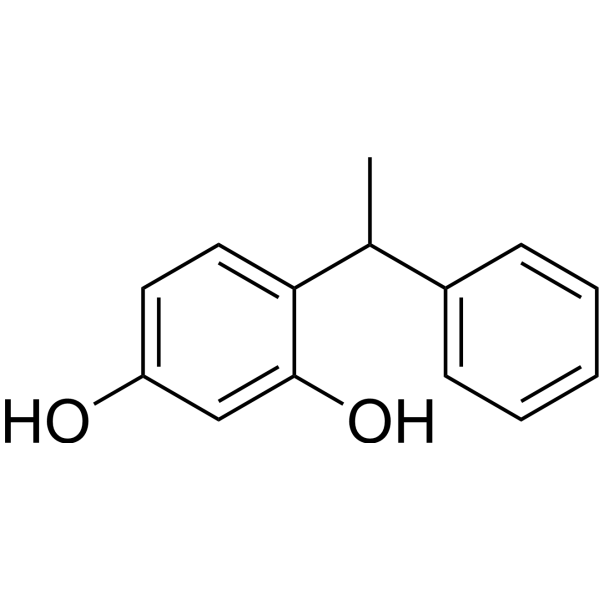
- Formula: C14H14O2
- Molecular Weight: 214.26
4-(1-Phenylethyl)resorcinol is a skin lightening agent used in cosmetics. It works by inhibiting the production of melanin, the pigment that gives skin its color. This helps reduce the appearance of dark spots, hyperpigmentation and uneven skin tone. 4-(1-Phenylethyl)resorcinol is considered safe for cosmetic use and is approved for use in several countries.

- Formula: (C6H10O5)n
- Molecular Weight: 2400-3600
Dextran T3 (Dextran 3; Dextran T3(MW 2400-3600)) is a neural tracer and intestinal permeability probe that can move anterogradely and retrogradely in neuronal axons by passive diffusion. Dextran T3 (MW 3,000) is able to permeate across the intestinal epithelial cell membrane in the presence of cholera toxin-induced cytoskeletal disturbance. Dextran T3 (MW 3,000) is used as a fluorescent marker to rapidly label developing neurons (such as Xenopus retinal ganglion cells) and to assess intestinal barrier function. It can be used to study axonal transport in neuroanatomy and permeability changes in intestinal pathophysiology. The Dextran series of compounds are also natural polysaccharide drug carriers that can be connected to drugs through covalent bonding methods such as ester bonds, amide bonds or click chemistry, or self-assembled to form carriers such as nanoparticles and hydrogels. Dextran is biodegradable and biocompatible, and can achieve targeted delivery and controlled release of drugs. Dextran derivatives can prolong the half-life of drugs, increase local concentrations, and reduce the activity of immune clearance.
- Molecular Weight: 40000.00
Dextran (MW 40000) is a complex carbohydrate polymer consisting of glucose molecules linked by glycosidic bonds. Dextran has excellent solubility in water, making it useful as a viscosity modifier or stabilizer in foods, paints and adhesives. In the biomedical field, dextran is often used as a plasma expander because of its ability to increase blood volume when administered intravenously. It can also be modified to create dextran-based drug delivery systems, such as targeted nanoparticles.

- Formula: (C6H10O5)n
- Molecular Weight: 54000-66000
Dextran T60 MW 60,000 (Dextran 60; Dextran D60; Dextran T60 MW 54000-66000) is a polymer of anhydroglucose with the average molecular weight of 60,000. Dextran T60 MW 60,000 exhibits good biodegradability and good biocompatibility, that is utilized in food, pharmaceutics, cosmetics, and research area.

- Formula: (C6H10O5)n
- Molecular Weight: 1600-2400
Dextran T2 (Dextran 2; Dextran T2(MW 1600-2400)) is a natural high molecular weight polysaccharide, the glycosidic bonds in its structure can be recognized by endo-dextranase and exo-dextranase. Dextran T2 (MW 2,000) breaks the glycosidic bonds in the enzymatic hydrolysis mechanism, releasing products such as D-glucose, Isomaltose (IM2), and Isomaltotriose (IM3). Dextran T2 (MW 2,000) can be used as a model substrate to characterize the catalytic properties of dextranase (such as optimal pH, temperature and product specificity), and to study enzymatic mechanism research and polysaccharide degradation pathways in glycobiology. The Dextran series of compounds are also a natural polysaccharide drug carrier, which can be connected to drugs through covalent bonding methods such as ester bonds, amide bonds or click chemistry, or self-assembled to form carriers such as nanoparticles and hydrogels. Dextran is biodegradable and biocompatible, and can achieve targeted delivery and controlled release of drugs. Dextran derivatives can prolong drug half-life, increase local concentration and reduce immune clearance activity.
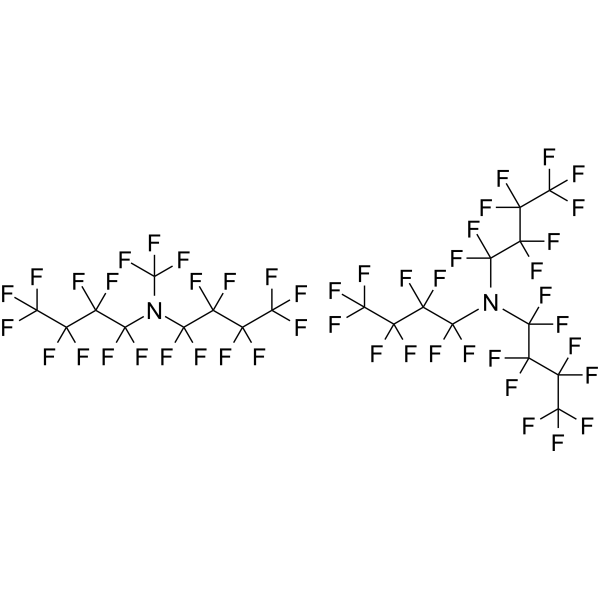
- Formula: C21F48N2
- Molecular Weight: 1192.16
Fluorinert FC-40 is a non-conductive liquid containing a mixture of fluorinated compounds. It is commonly used as a cooling and heat transfer fluid in electronics, especially in high-performance computer systems and electronic components that generate a lot of heat. Fluorinert FC-40 has various properties that make it ideal for these applications, including its low viscosity, high thermal stability and excellent dielectric strength. In addition, it can be used as an inert solvent in chemical reactions and a lubricant in mechanical systems.

- Formula: (C6H10O5)n
- Molecular Weight: 16000-24000
Dextran T20 (Dextran 20; Dextran D20) (MW 20,000) is a dehydrated glucose polymer with an average molecular weight of 20,000. Dextran T20 (MW 20,000) has excellent biodegradability and good biocompatibility, and can be used as a gene delivery vector, an immune adjuvant carrier, and a hemoglobin stabilizer.
Konjac glucomannan (Viscosity≥15000mPa.s) is an orally active acetylated (1-4)-β-D-glucomannan with multiple biological activities including anti-diabetic, anti-obesity, anti-inflammatory effects, as well as film-forming and gelling properties. Konjac glucomannan (Viscosity≥15000mPa.s) forms a defensive coating on the intestinal surface, reducing levels of blood glucose, cholesterol, triglycerides and blood pressure; it is specifically degraded by colonic β-mannanase produced by human colonic bacteria. Konjac glucomannan (Viscosity≥15000mPa.s) can be used as a food additive, dietary supplement and excipient for oral colon-targeted drug delivery systems. Konjac glucomannan (Viscosity≥15000mPa.s) is applicable to research related to various diseases such as type 2 diabetes, obesity, atopic dermatitis and metabolic syndrome, as well as research in fields including biotechnology, pharmaceuticals and tissue engineering.
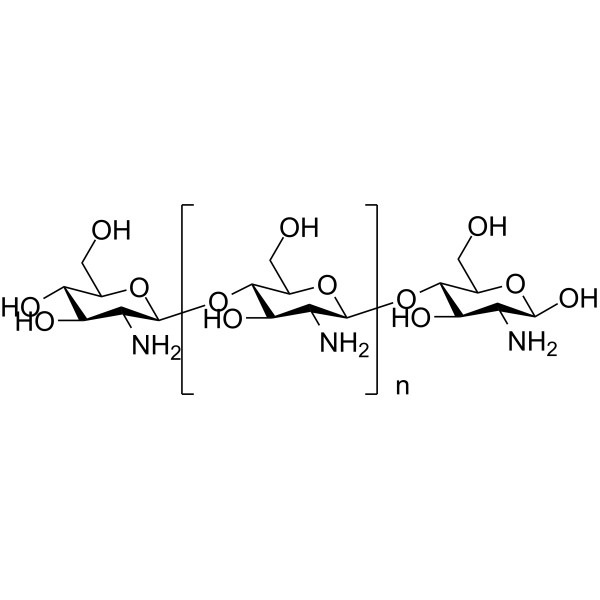
Chitosan (Deacetylated chitin; Poly(D-glucosamine)) (≥80% deacetylated, Medium viscosity,200-400mPa.s) is a polysaccharide obtained by deacetylating chitin, and exhibits antimicrobial activity against various bacteria and fungi.
Methyl cellulose (MC) (Viscosity:1500mPa.s) is a non-ionic cellulose ether with surface activity and thermogelation properties. Methyl cellulose (Viscosity:1500mPa.s) is widely used as drug delivery agents, thickeners, stabilizers, emulsifiers, etc., in industries such as pharmaceuticals, food, cosmetics, and construction.

Gellan gum is a linear microbial exopolysaccharide that can be used as a cell scaffold for both soft tissue and load bearing applications. Gellan gum has many advantages such as biocompatibility, biodegradability, nontoxic in nature, and physical stability in the presence of cations.

- Formula: (C6H10O5)n
- Molecular Weight: 180000-220000
Dextran T200 (Dextran 200; Dextran D200) (MW 200,000) is a dehydrated glucose polymer with an average molecular weight of 200,000. Dextran T200 (MW 200,000) has excellent biodegradability and good biocompatibility, and can be used as a high-molecular-weight tracer and optical clearing agent.

- Molecular Weight: 15000 (Average)
Chitosan (Deacetylated chitin) (≥85% deacetylated, viscosity>90 mPa.s, MW 15000) is a polysaccharide obtained by deacetylating chitin, and exhibits antimicrobial activity against various bacteria and fungi.

- Formula: (C6H9NO)n
- Molecular Weight: 10000 (average)
Polyvinylpyrrolidone, average Mw~10000 is a multifunctional synthetic polymer with an average molecular weight of 10000 Da. Polyvinylpyrrolidone, average Mw~10000 is widely used to synthesize nanoparticlesPolyvinylpyrrolidone, average Mw~10000 is a versatile excipient for both conventional formulations and novel controlled or targeted delivery systems, serving as a binder, coating agent, suspending agent, pore-former, solubilizer, stabilizer, etc.
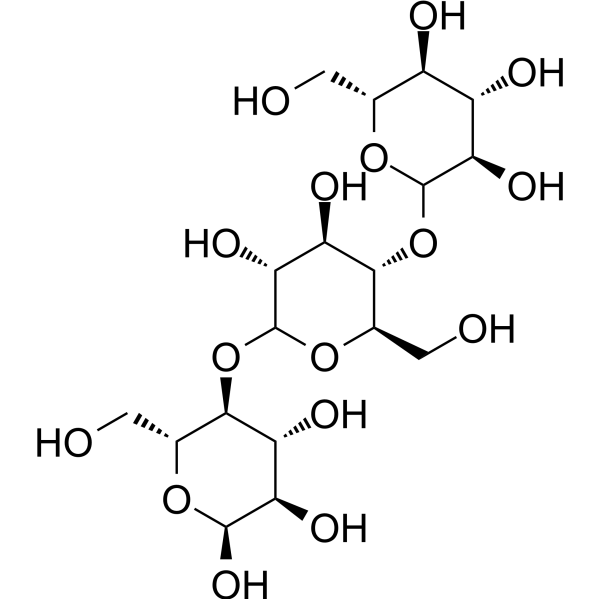
- Formula: (C6H10O5)5
Dextrins are a group of low molecular weight carbohydrates produced by the hydrolysis of starch. Dextrin is commonly used as a thickener, stabilizer or binder in a variety of foods including baked goods, beverages and confectionary. In addition, it is used in the production of adhesives, paper and textiles. Its unique chemical properties make it an important ingredient in a variety of industrial processes, especially in construction and packaging.

- Formula: C21H42O4
- Molecular Weight: 358.56
Stearic acid 1-monoglyceride is an ester composed of stearic acid and glycerin, commonly known as glyceryl monostearate. 1-Monoglyceride stearate has unique chemical properties that make it an important ingredient in a variety of industrial processes, including food production, cosmetics, and pharmaceuticals. It acts as an emulsifier, stabilizer and thickener in these products, enhancing their texture and shelf life.

- Formula: (C6H9NO)n
Polyvinylpyrrolidone K90 can be used to prepare drug delivery systems, such as electrospun nanofibrous membranes. Polyvinylpyrrolidone K90 is widely used in human and veterinary medicine as an effective wound healing promoter and disinfectant when combined with iodine and other compounds. In addition, Polyvinylpyrrolidone K90 is also used to stabilize nanosuspensions, interact with the surface of drug crystals, and remain bound to the surface after drying.

- Formula: C3H5NO)x
Polyacrylamide,Anion,Mw 18 million (PAM,Anion,Mw 18 million) is a multifunctional high molecular weight anionic polyacrylamide copolymer. The anionic properties of Polyacrylamide,Anion,Mw 18 million enable it to be used as a flocculant to achieve charge neutralization and aggregation, while its high molecular weight properties provide viscoelastic properties for fluid applications. Polyacrylamide series materials can maintain enzyme activity in enzyme immobilization, act as drug carriers to achieve controlled release, serve as smart materials responding to temperature/pH stimuli, and be used for in vitro toxin adsorption and soft tissue filling through mechanisms such as physical entrapment, covalent binding or chemical crosslinking. Polyacrylamide finds applications in biomedical engineering, environmental management and industrial applications.



