



BMS-309403 (Standard)
BMS-309403 (Standard) is the analytical standard of BMS-309403. This product is intended for research and analytical applications. BMS-309403 is a potent, orally active and selective adipocyte fatty acid binding protein (also known as FABP4, aP2) inhibitor with Kis of <2, 250, and 350 nM for FABP4, FABP3, and FABP5, respectively. BMS-309403 interacts with the fatty-acid-binding pocket within the interior of the protein and competitively inhibits the binding of endogenous fatty acids. BMS-309403 improves endothelial function in apolipoprotein E-deficient mice and in cultured human endothelial cells.
For research use only. We do not sell to patients.
- Purity : 98%
- CAS No.: 300657-03-8
- Formula: C31H26N2O3
- Molecular Weight:474.55
-
Storage:
Please store the product under the recommended conditions in the Certificate of Analysis.


To place orders, for customer services and technical support, please contact: MedChemExpress USA
Tel: 609-228-6898 E-mail: [email protected] [email protected]


-
 Product Information
-
Chemical Information
- Purity & Documentation
-
 Help & FAQs


-
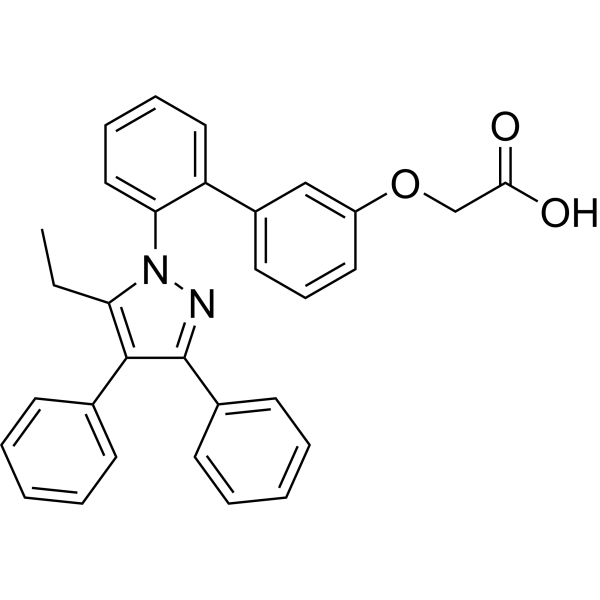
HY-101903
BMS-309403FABP4 Inhibitor -
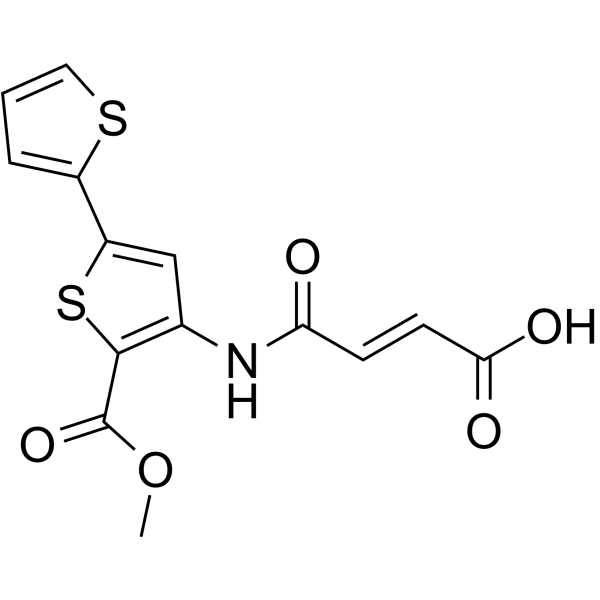
HY-101503
HTS01037AFABP Antagonist -
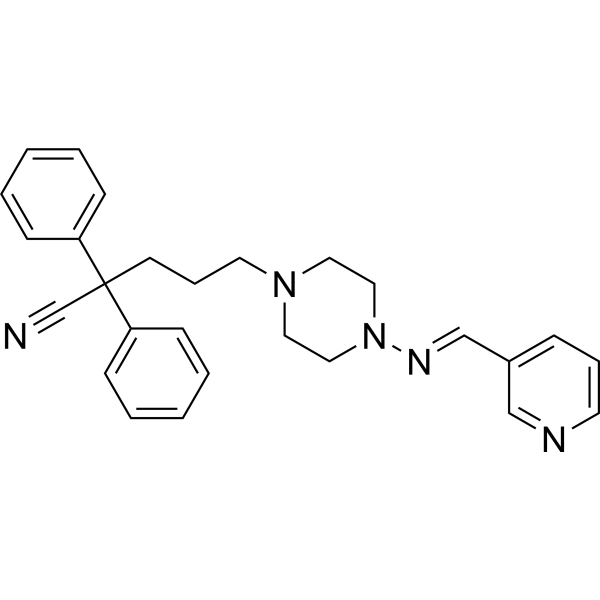
HY-107410
SC-26196Delta6 Desaturase Inhibitor -
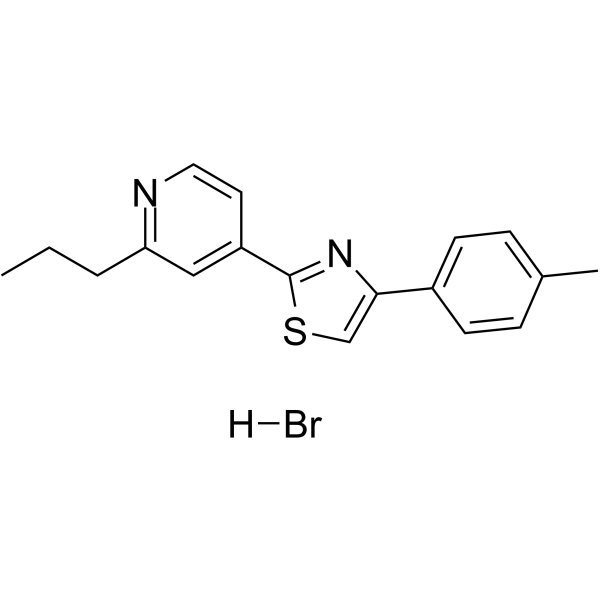
HY-14452A
Fatostatin hydrobromideSREBP Activation Inhibitor -
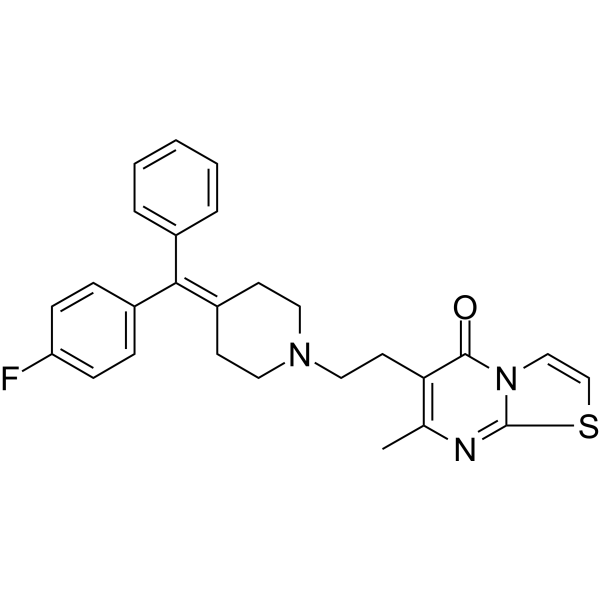
HY-107613
R 59-022DGK Inhibitor -
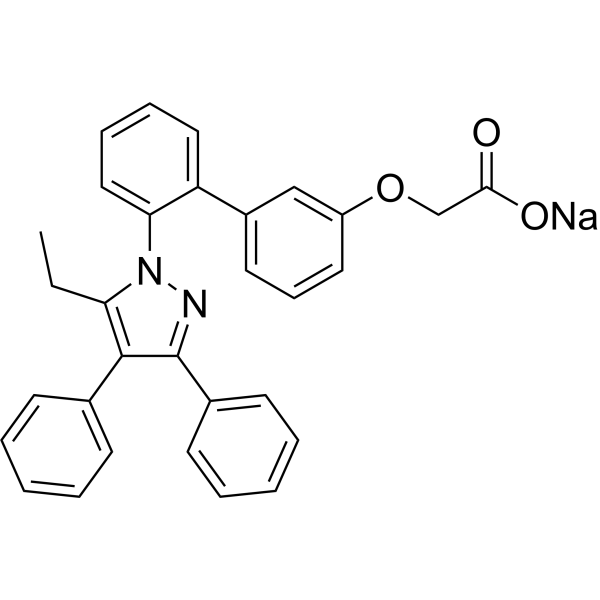
HY-101903A
BMS-309403 sodiumFABP4 Inhibitor -
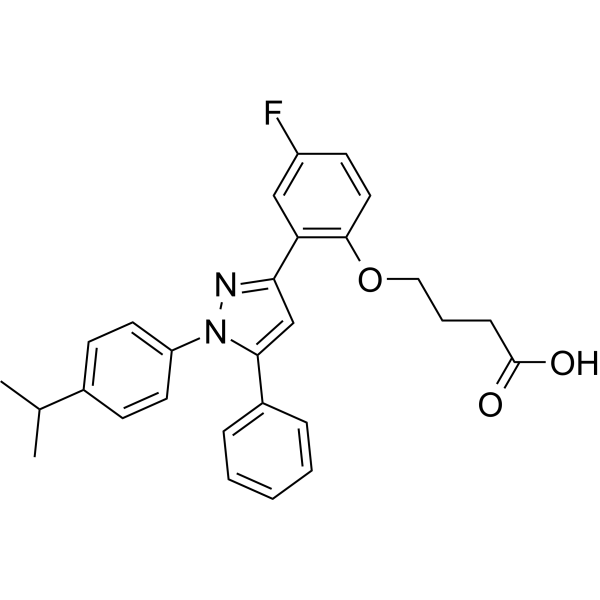
HY-145990
FABPs ligand 6FABP5/FABP7 Inhibitor -
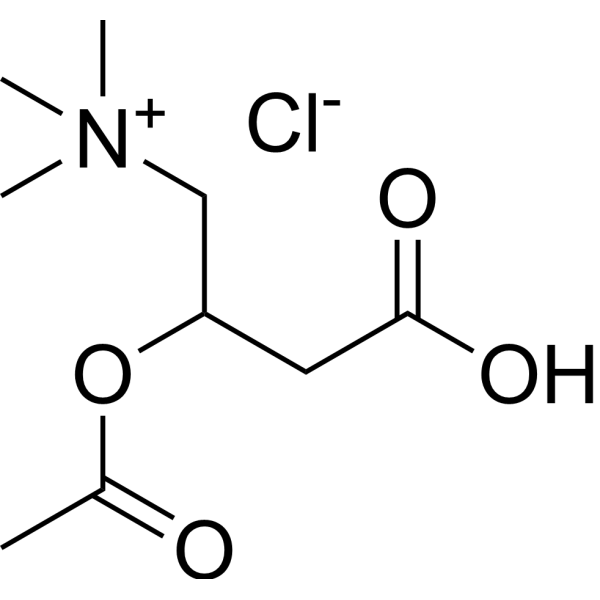
HY-100907
(±)-Acetylcarnitine chlorideLipid Metabolism Intermediate -
HY-101018
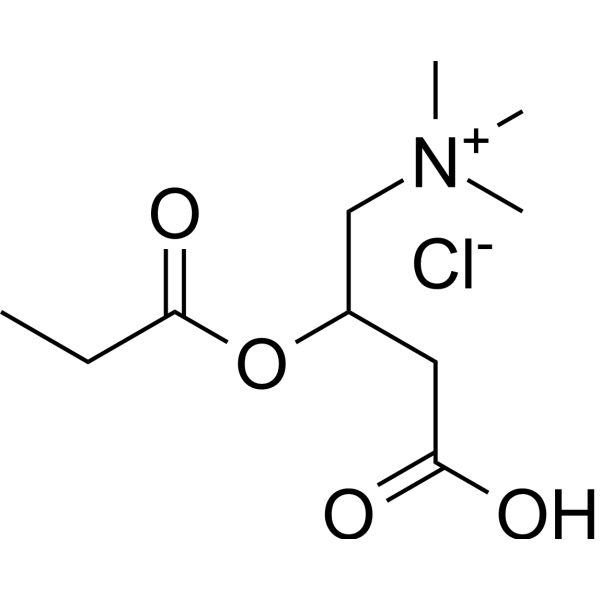
Propionyl-DL-carnitine chlorideCarnitine Derivative -

HY-101503R
HTS01037 (Standard)AFABP Antagonist -

HY-107613R
R 59-022 (Standard)DGK Inhibitor -

HY-107410R
SC-26196 (Standard)Reference Standard


Product Information
Information
Application
The compound is the grade of analytical standard, which is the reference standard supplied assay. It is commonly used in qualitative, quantitative and methodological research experiments in HPLC, GC and MS.


Chemical Information
-
CAS No. 300657-03-8
-
Molecular Weight 474.55
-
Formula C31H26N2O3
-
SMILES
O=C(O)COC1=CC(C2=CC=CC=C2N3N=C(C4=CC=CC=C4)C(C5=CC=CC=C5)=C3CC)=CC=C1
-
Shipping
Room temperature in continental US; may vary elsewhere.
-
Storage
Please store the product under the recommended conditions in the Certificate of Analysis.


Purity & Documentation
References
[1]. Sulsky R, et al. Potent and selective biphenyl azole inhibitors of adipocyte fatty acid binding protein (aFABP). Bioorg Med Chem Lett. 2007 Jun 15;17(12):3511-5. [Content Brief]
[2]. Lin W, et al. BMS309403 stimulates glucose uptake in myotubes through activation of AMP-activated protein kinase. PLoS One. 2012;7(8):e44570. [Content Brief]
[3]. Lee MY, et al. Chronic administration of BMS309403 improves endothelial function in apolipoprotein E-deficient mice and in cultured human endothelial cells. Br J Pharmacol. 2011 Apr;162(7):1564-76. [Content Brief]

Calculators
Concentration (start) × Volume (start) = Concentration (final) × Volume (final)


BMS-309403 (Standard) Related Classifications
HY-101903R Related Classifications
 Powered by Bioz