



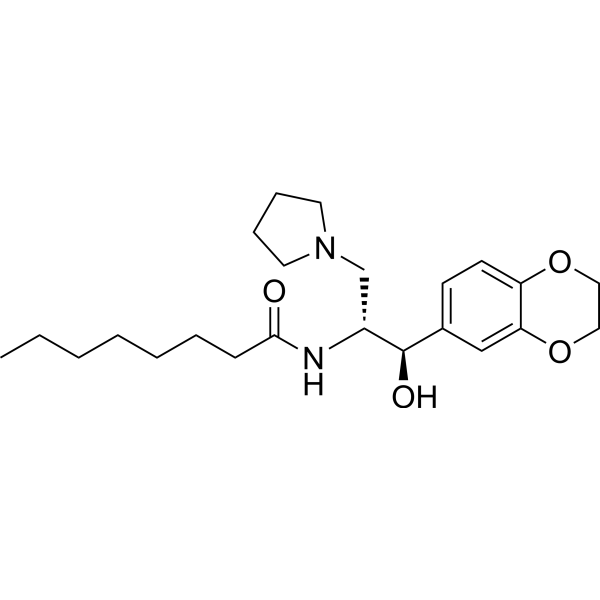
Eliglustat
Based on 15 publication(s) in Google Scholar
Eliglustat is an specific, potent and orally active glucocerebroside synthase inhibitor with an IC50 of 24 nM.
Nos produits utilisent uniquement pour la recherche. Nous ne vendons pas aux patients.
- Pureté : 99.74%
- CAS No.: 491833-29-5
- Formule: C23H36N2O4
- Masse moléculaire:404.54
-
Stockage:Powder -20°C, 3 years , 4°C, 2 years ; In solvent -80°C, 6 months , -20°C, 1 month

To place orders, for customer services and technical support, please contact: MedChemExpress USA
Tel: 609-228-6898 E-mail: [email protected] [email protected]


-
 Activité biologique
-
Chemical Information
-
Solvant et solubilité
- Pureté et documentation
- Références
-
 Help & FAQs


-
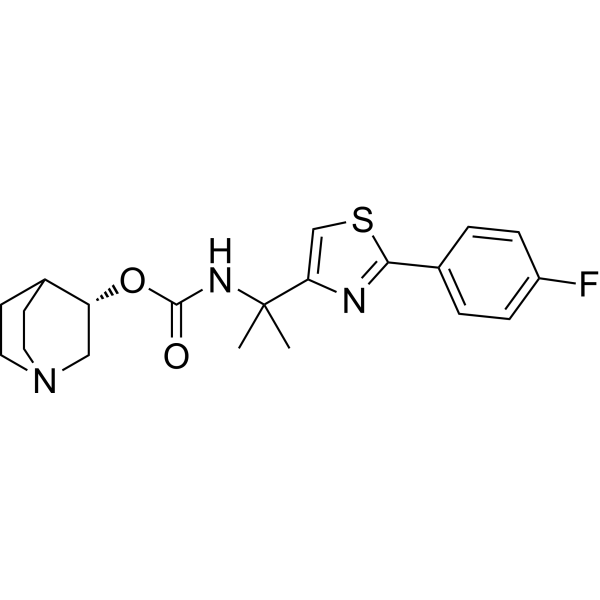
HY-16743
IbiglustatGlucosylceramide Synthase Inhibitor -
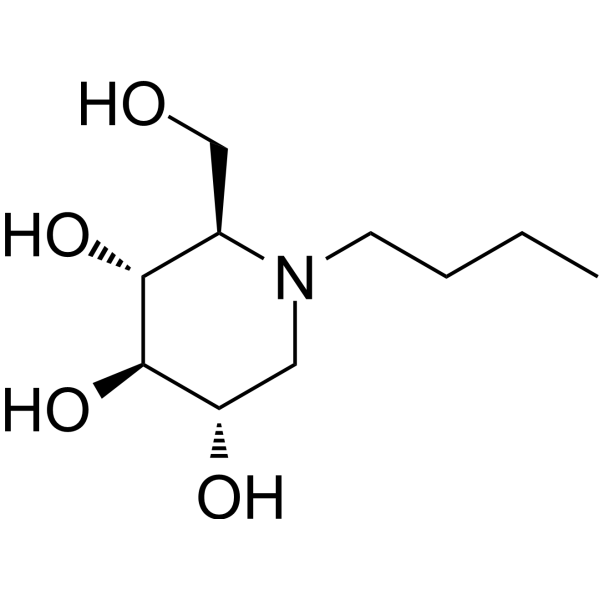
HY-17020
MiglustatCeramide Glucosyltransferase Inhibitor -
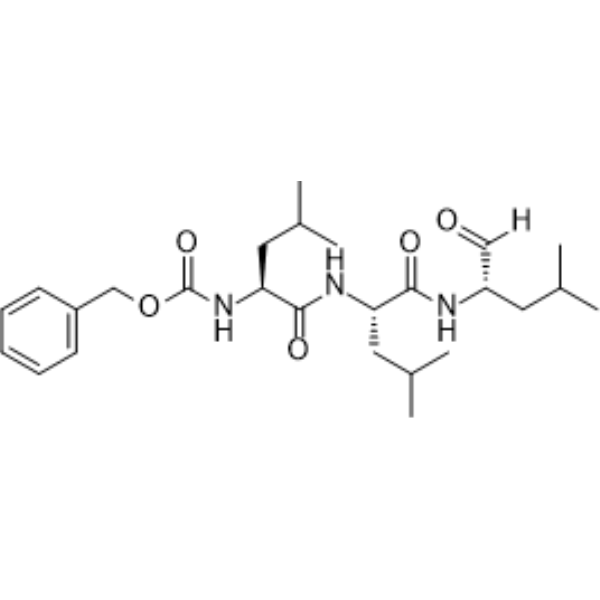
HY-13259
MG-132Proteasome Inhibitor -
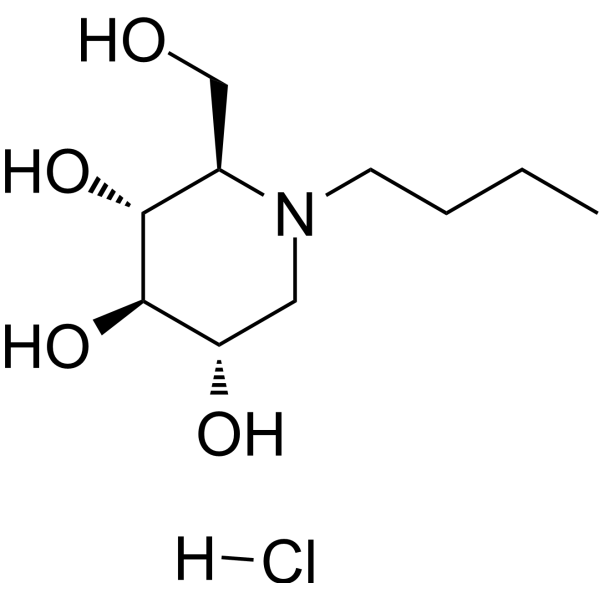
HY-17020A
Miglustat hydrochlorideGlucosylceramide Synthase Inhibitor -
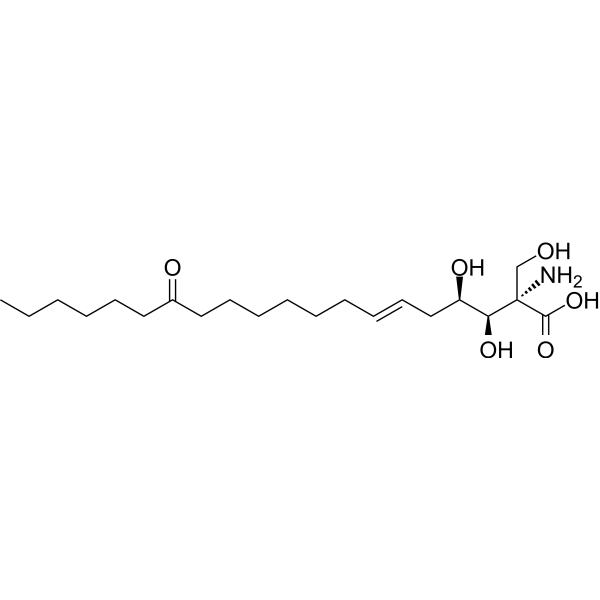
HY-N6798
MyriocinSPT Inhibitor -
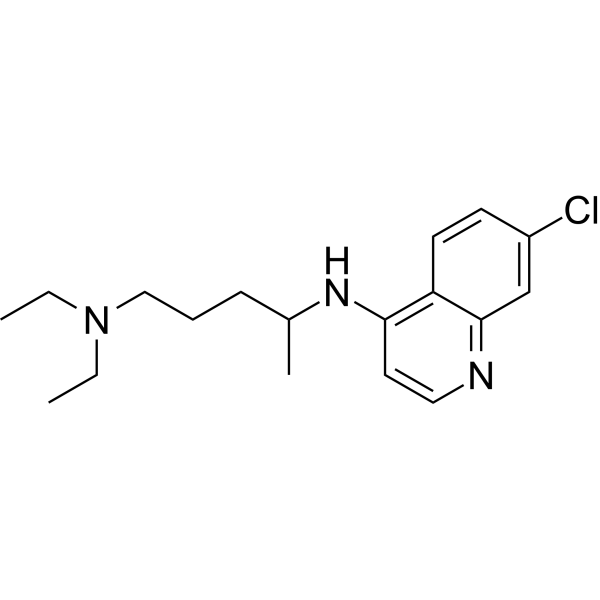
HY-17589A
ChloroquineAntimalarial Agent -
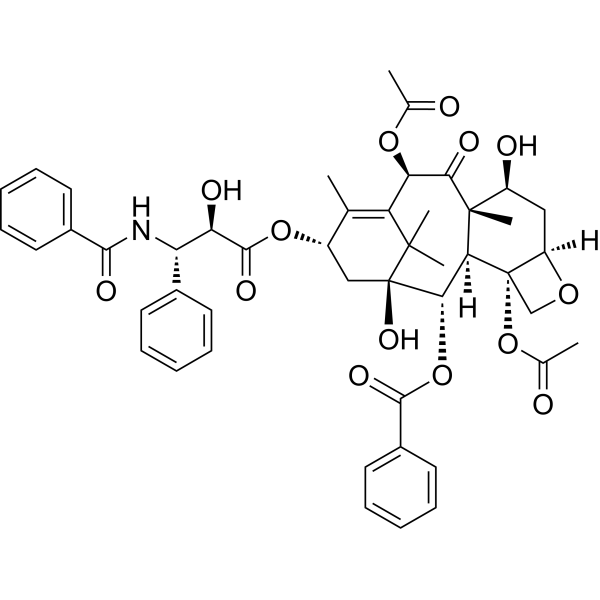
HY-B0015
PaclitaxelAntitumor Agent -
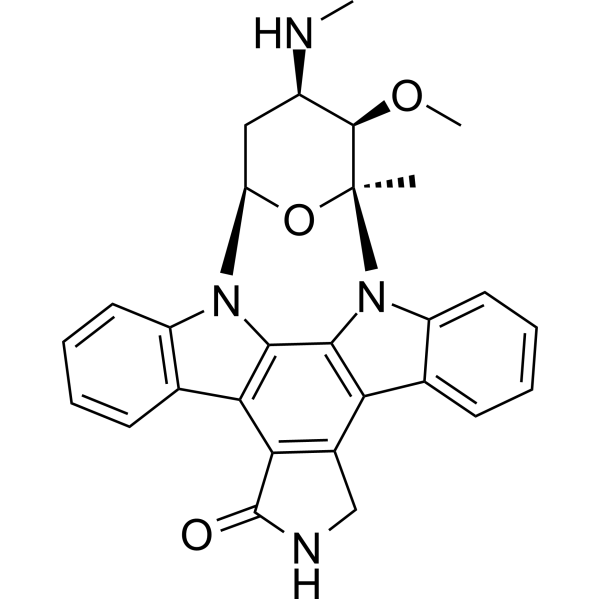
HY-15141
StaurosporinePKC/PKA Inhibitor -
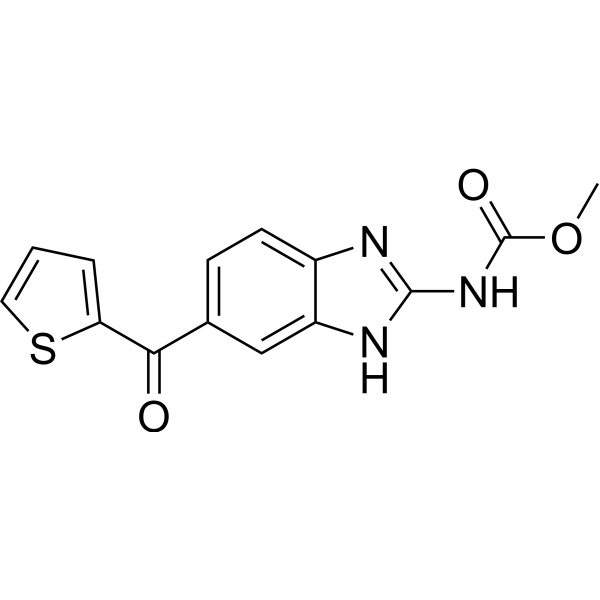
HY-13520
NocodazoleMicrotubule Inhibitor -
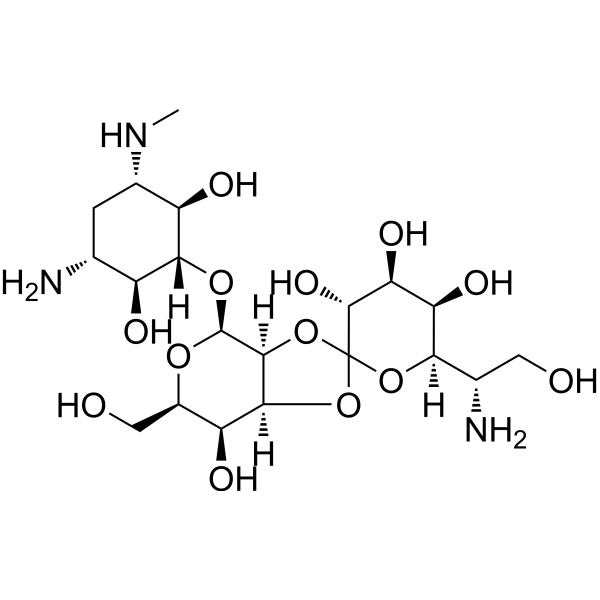
HY-B0490
Hygromycin BAntibiotic -
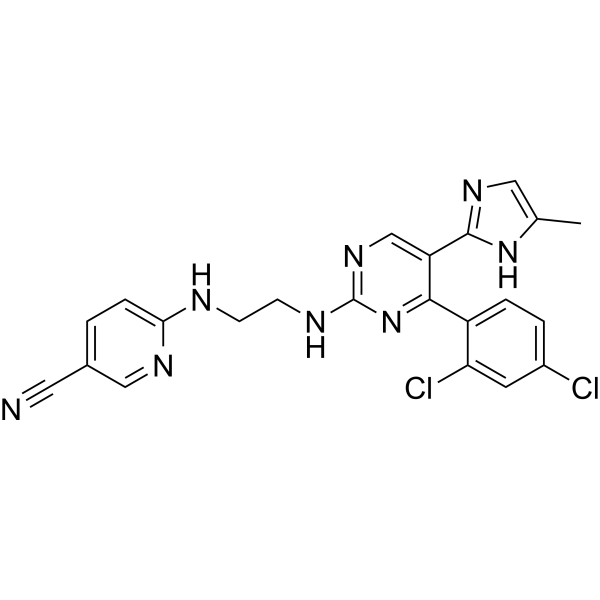
HY-10182
LaduviglusibGSK-3 Inhibitor -
HY-10431
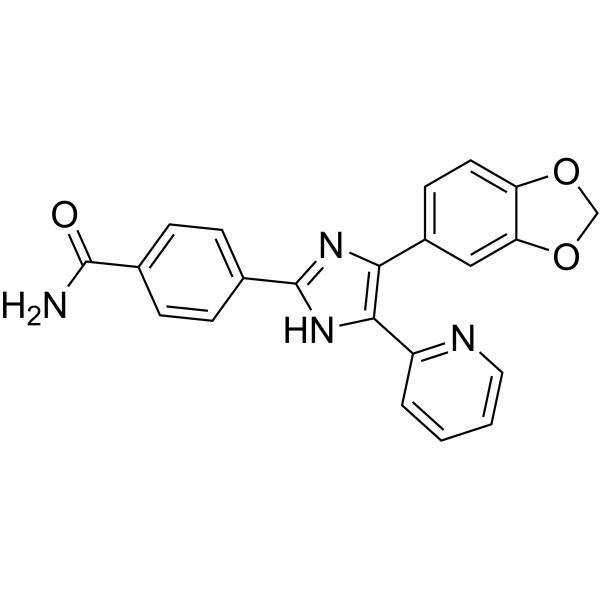
SB-431542TGF-β Receptor Kinase Inhibitor
Publications Citing Use of MedChemExpress (MCE) Eliglustat
More- Nature. 2026 Sep;657(8131):549-558.
- Immunity. 2021 Jan 12;54(1):132-150.e9. [Abstract]
- Cancer Discov. 2023 Feb 6;13(2):454-473. [Abstract]
- Nat Commun. 2024 Aug 14;15(1):6970. [Abstract]
- Nat Commun. 2020 Aug 27;11(1):4279. [Abstract]
- Sci Adv. 2025 Oct 31;11(44):eaea1212. [Abstract]
- Cell Death Dis. 2021 Oct 6;12(10):911. [Abstract]
- Cell Death Discov. 2026 Aug 22.
- Int J Biol Macromol. 2025 Jan:285:138303. [Abstract]
- EMBO J. 2023 Jan 16;42(2):e110553. [Abstract]
- PLoS Biol. 2025 Sep 11;23(9):e3003362. [Abstract]
- Stem Cells Transl Med. 2021 Jul;10(7):1081-1094. [Abstract]
- PLoS One. 2021 Oct 25;16(10):e0247211. [Abstract]
- Leiden University. 2022 Jun 15.
- bioRxiv. 2021 Feb 2.
 Customer Validation & Images

-
Bio/Physico-chemical Assay

-
WB
-
Cell Proliferation/Viability Assay
-
Cell Imaging/Staining
-
WB


Activité biologique
Description
IC50 & Target
IC50: 24 nM (glucocerebroside synthase)[1]
In Vitro
Eliglustat tartrate shows good potency with an IC50 of 24 nM and specificity against the target enzyme[1].Incubating K562 or B16/F10 cells for 72 h with increasing amounts of Genz-112638 (0.6-1000 nM) results in a dose-dependent reduction of cell surface levels of both GM1 and GM3. The mean IC50 value for inhibiting the cell surface presentation of GM1 in K562 cells was 24 nM (range 14-34 nM) and that for GM3 in B16/F10 cells was 29 nM (range 12-48 nM)[1].
MedChemExpress (MCE) has not independently confirmed the accuracy of these methods. They are for reference only.
In Vivo
MedChemExpress (MCE) has not independently confirmed the accuracy of these methods. They are for reference only.


Chemical Information
-
CAS No. 491833-29-5
-
Appearance Solid
-
Masse moléculaire 404.54
-
Formule C23H36N2O4
-
Color White to off-white
-
SMILES
CCCCCCCC(N[C@H](CN1CCCC1)[C@@H](C2=CC=C(OCCO3)C3=C2)O)=O
-
Synonyms
Genz 99067
-
Livraison
Room temperature in continental US; may vary elsewhere.
-
Stockage
Powder -20°C 3 years 4°C 2 years In solvent -80°C 6 months -20°C 1 month


Publications (15)
-
Journal Impact Factor
-
Most Recent
-
Eliglustat purchased from MedChemExpress. Usage Cited in: Nature. 2026 Sep;657(8131):549-558.
Dose–response curve for Eliglustat inhibition of UGCG activity.
-
Immunity
The SPPL3-Defined Glycosphingolipid Repertoire Orchestrates HLA Class I-Mediated Immune Responses. [Abstract]2021 Jan 12;54(1):132-150.e9. PMID: 33271119 -
Cancer Discov
2023 Feb 6;13(2):454-473. PMID: 36331284 -
Nat Commun
Inhibition of glycosphingolipid synthesis with eliglustat in combination with immune checkpoint inhibitors in advanced cancers: preclinical evidence and phase I clinical trial. [Abstract]2024 Aug 14;15(1):6970. PMID: 39138212 -
Nat Commun
Caveolin-1-mediated sphingolipid oncometabolism underlies a metabolic vulnerability of prostate cancer. [Abstract]2020 Aug 27;11(1):4279. PMID: 32855410
Eliglustat purchased from MedChemExpress. Usage Cited in: Nat Commun. 2020 Aug 27;11(1):4279. [Abstract]
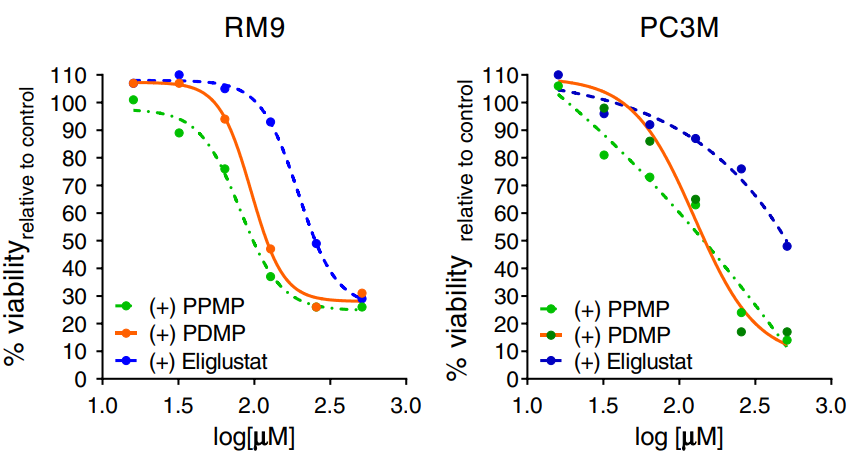
Viability curves for RM-9 and PC-3M cells following 48 h treatment with vehicle (ethanol), Eliglustat (128 μM), PDMP or PPMP.
Eliglustat purchased from MedChemExpress. Usage Cited in: Nat Commun. 2020 Aug 27;11(1):4279. [Abstract]
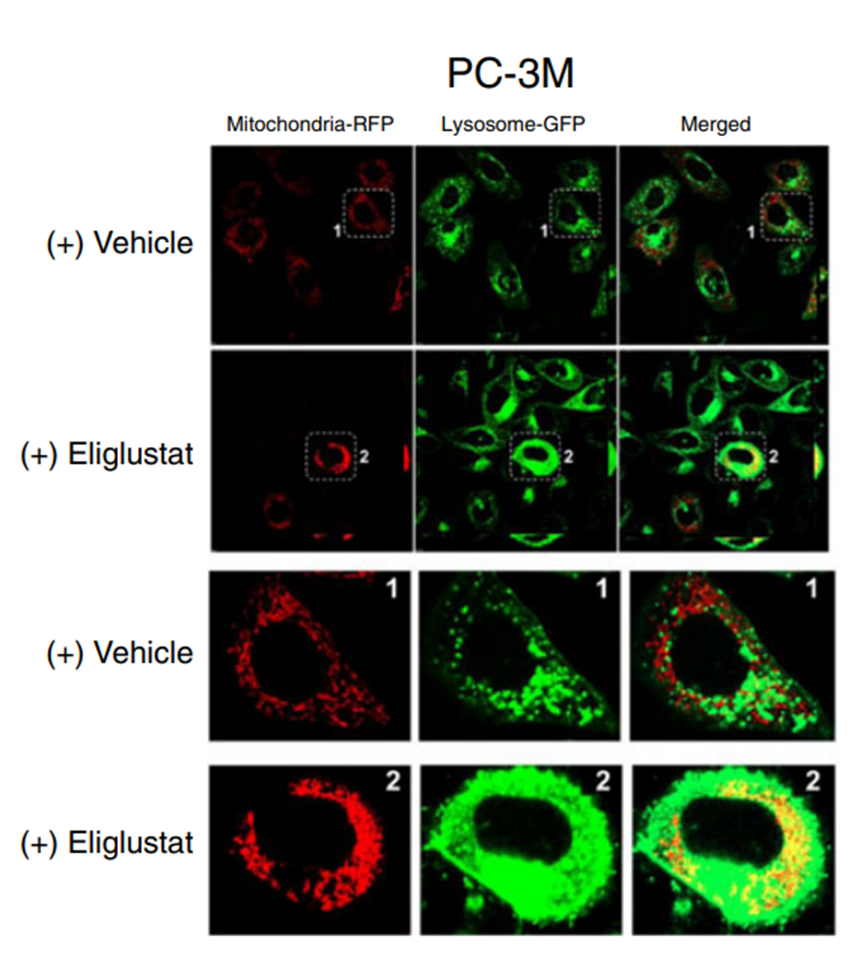
Treatment with Eliglustat (128 μM) indicated loss of the branched, fused-like-mitochondrial architecture, and accumulation of punctate mitochondria co-localized with the lysosome.
Eliglustat purchased from MedChemExpress. Usage Cited in: Nat Commun. 2020 Aug 27;11(1):4279. [Abstract]
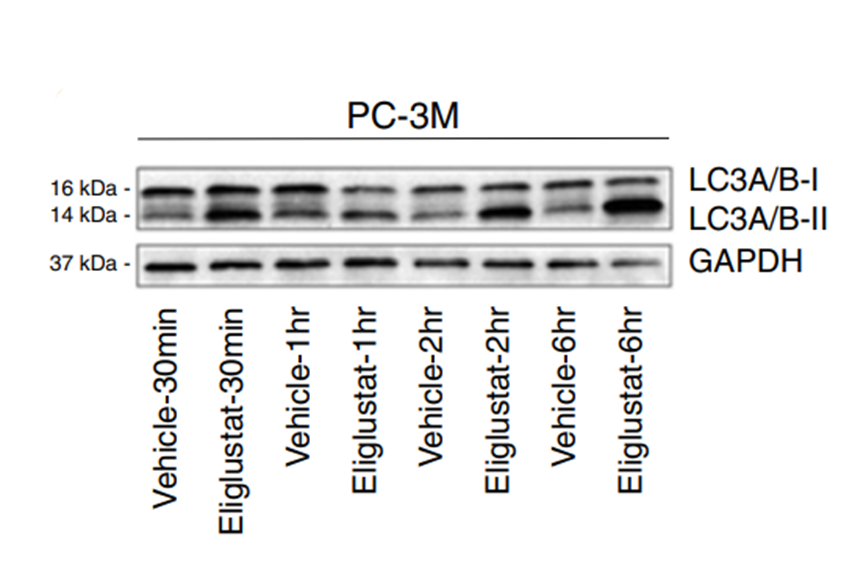
Treatment of PC-3M cells with Eliglustat (128 μM) increased protein expression of the mitophagy-associated markers LC3B-II.
Eliglustat purchased from MedChemExpress. Usage Cited in: Nat Commun. 2020 Aug 27;11(1):4279. [Abstract]
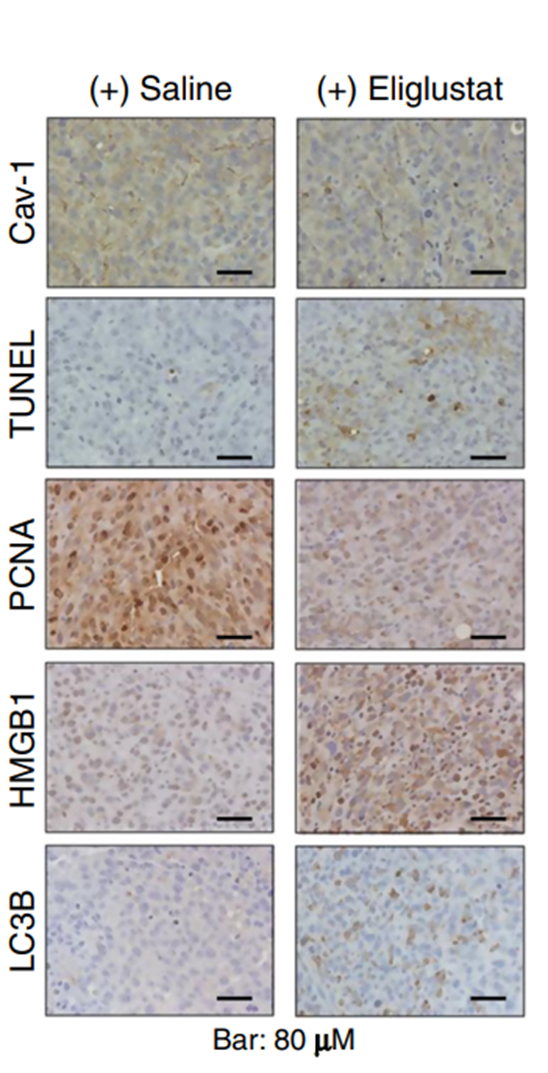
Representative immunohistochemistry staining for Cav-1, BrdU-TUNEL, PCNA, HMGB1, and LC3B in RM-9 tumors following treatment with either saline or Eliglustat (60 mg/kg, i.p.).
Eliglustat purchased from MedChemExpress. Usage Cited in: Nat Commun. 2020 Aug 27;11(1):4279. [Abstract]
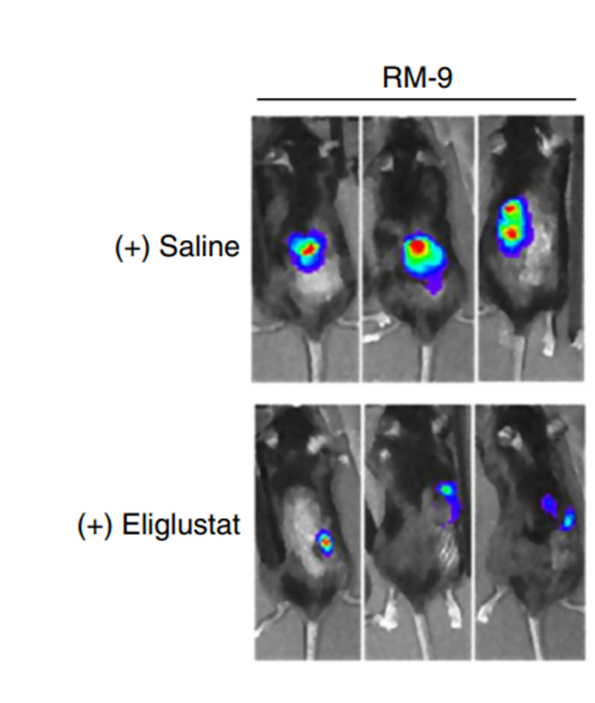
Representative IVIS images following treatment with saline or Eliglustat (60 mg/kg, i.p.).
-
Sci Adv
Tumor-derived RAC1A159V mutation promotes an immunosuppressive microenvironment that represses response to immune checkpoint inhibitor. [Abstract]2025 Oct 31;11(44):eaea1212. PMID: 41160695 -
Cell Death Dis
ECHS1, an interacting protein of LASP1, induces sphingolipid-metabolism imbalance to promote colorectal cancer progression by regulating ceramide glycosylation. [Abstract]2021 Oct 6;12(10):911. PMID: 34615856 -
-
Int J Biol Macromol
2025 Jan:285:138303. PMID: 39631580 -
EMBO J
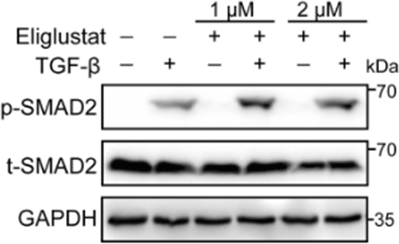
ST3GAL5-catalyzed gangliosides inhibit TGF-β-induced epithelial-mesenchymal transition via TβRI degradation. [Abstract]2023 Jan 16;42(2):e110553. PMID: 36504224
Eliglustat purchased from MedChemExpress. Usage Cited in: EMBO J. 2023 Jan 16;42(2):e110553. [Abstract]
Eliglustat (1, 2 μM; 6 days) strongly promotes TGF-β-induced SMAD2 phosphorylation in A549-VIM-RFP cells. Eliglustat incubate for 4 days and then treat with TGF-β or vehicle control for another 2 days.
-
PLoS Biol
The mTORC2 subunit RICTOR drives breast cancer progression by promoting ganglioside biosynthesis through transcriptional and epigenetic mechanisms. [Abstract]2025 Sep 11;23(9):e3003362. PMID: 40934285 -
Stem Cells Transl Med
Elevated glucosylsphingosine in Gaucher disease induced pluripotent stem cell neurons deregulates lysosomal compartment through mammalian target of rapamycin complex 1. [Abstract]2021 Jul;10(7):1081-1094. PMID: 33656802 -
PLoS One
Cellular and biochemical response to chaperone versus substrate reduction therapies in neuropathic Gaucher disease. [Abstract]2021 Oct 25;16(10):e0247211. PMID: 34695170 -
-


Solvant et solubilité
In Vitro:
DMSO : 100 mg/mL (247.19 mM; Need ultrasonic; Hygroscopic DMSO has a significant impact on the solubility of product, please use newly opened DMSO)
Please refer to the solubility information to select the appropriate solvent. Once prepared, please aliquot and store the solution to prevent product inactivation from repeated freeze-thaw cycles.
Storage method and period of stock solution: -80°C, 6 months; -20°C, 1 month. When stored at -80°C, please use it within 6 months. When stored at -20°C, please use it within 1 month.
Please refer to the solubility information to select the appropriate solvent. Once prepared, please aliquot and store the solution to prevent product inactivation from repeated freeze-thaw cycles.
Storage method and period of stock solution: -80°C, 6 months; -20°C, 1 month. When stored at -80°C, please use it within 6 months. When stored at -20°C, please use it within 1 month.
Concentration (start) × Volume (start) = Concentration (final) × Volume (final)
In Vivo:
Select the appropriate dissolution method based on your experimental animal and administration route.
- For the following dissolution methods, please ensure to first prepare a clear stock solution using an In Vitro approach and then sequentially add co-solvents:
- To ensure reliable experimental results, the clarified stock solution can be appropriately stored based on storage conditions. As for the working solution for In Vivo experiments, it is recommended to prepare freshly and use it on the same day.
- The percentages shown for the solvents indicate their volumetric ratio in the final prepared solution. If precipitation or phase separation occurs during preparation, heat and/or sonication can be used to aid dissolution.
Add each solvent one by one: 10% DMSO 40% PEG300 5% Tween-80 45% Saline
Solubility: 2.5 mg/mL (6.18 mM); Suspended solution; Need ultrasonic
This protocol yields a suspended solution of 2.5 mg/mL. Suspended solution can be used for oral and intraperitoneal injection.
Taking 1 mL working solution as an example, add 100 μL DMSO stock solution (25.0 mg/mL) to 400 μL PEG300, and mix evenly; then add 50 μL Tween-80 and mix evenly; then add 450 μL Saline to adjust the volume to 1 mL.
Preparation of Saline: Dissolve 0.9 g sodium chloride in ddH₂O and dilute to 100 mL to obtain a clear Saline solution.
Add each solvent one by one: 10% DMSO 90% (20% SBE-β-CD in Saline)
Solubility: ≥ 2.5 mg/mL (6.18 mM); Clear solution
This protocol yields a clear solution of ≥ 2.5 mg/mL (saturation unknown).
Taking 1 mL working solution as an example, add 100 μL DMSO stock solution (25.0 mg/mL) to 900 μL 20% SBE-β-CD in Saline, and mix evenly.
Preparation of 20% SBE-β-CD in Saline (4°C, storage for one week): 2 g SBE-β-CD powder is dissolved in 10 mL Saline, completely dissolve until clear.
In Vivo Dissolution Calculator
Please enter the basic information of animal experiments:
-
-
-
-
Recommended: Prepare an additional quantity of animals to account for potential losses during experiments.
Please enter your animal formula composition:
-
%DMSO +
Recommended: Keep the proportion of DMSO in working solution below 2% if your animal is weak.
-
%+
-
+%Tween-80 + +
-
%Saline +
The co-solvents required include: DMSO, . All of co-solvents are available by MedChemExpress (MCE). , Tween 80. All of co-solvents are available by MedChemExpress (MCE).
Working solution concentration: 0.22 mg/mL
Method for preparing stock solution: mg drug dissolved in μL DMSO. Stock solution concentration: mg/mL.
1. Take μL DMSO stock solution;
2. Add μL .
μL , mix evenly;
3. Then add μL Tween 80, mix evenly;
4. Then add μL
Please ensure that the stock solution in the first step is dissolved to a clear state, and add co-solvents in sequence. You can use ultrasonic heating (ultrasonic cleaner, recommended frequency 20-40 kHz), vortexing, etc. to assist dissolution.


Pureté et documentation
-
Fiche technique (274 KB)
-
SDS (393 KB)
- English - EN (393 KB)
- Français - FR (393 KB)
- Deutsch - DE (393 KB)
- Norwegian - NO (393 KB)
- Español - ES (393 KB)
- Swedish - SV (393 KB)
- Italian - IT (393 KB)
- Korean - KR (393 KB)
- Portuguese - PT (393 KB)
-
Instruction de manipulation (2659 KB)
Références


Complete Stock Solution Preparation Table
Please refer to the solubility information to select the appropriate solvent. Once prepared, please aliquot and store the solution to prevent product inactivation from repeated freeze-thaw cycles.
Storage method and period of stock solution: -80°C, 6 months; -20°C, 1 month. When stored at -80°C, please use it within 6 months. When stored at -20°C, please use it within 1 month.
| Optional Solvent | Concentration Solvent Mass | 1 mg | 5 mg | 10 mg | 25 mg |
|---|---|---|---|---|---|
| DMSO | 1 mM | 2.4719 mL | 12.3597 mL | 24.7194 mL | 61.7986 mL |
| 5 mM | 0.4944 mL | 2.4719 mL | 4.9439 mL | 12.3597 mL | |
| 10 mM | 0.2472 mL | 1.2360 mL | 2.4719 mL | 6.1799 mL | |
| 15 mM | 0.1648 mL | 0.8240 mL | 1.6480 mL | 4.1199 mL | |
| 20 mM | 0.1236 mL | 0.6180 mL | 1.2360 mL | 3.0899 mL | |
| 25 mM | 0.0989 mL | 0.4944 mL | 0.9888 mL | 2.4719 mL | |
| 30 mM | 0.0824 mL | 0.4120 mL | 0.8240 mL | 2.0600 mL | |
| 40 mM | 0.0618 mL | 0.3090 mL | 0.6180 mL | 1.5450 mL | |
| 50 mM | 0.0494 mL | 0.2472 mL | 0.4944 mL | 1.2360 mL | |
| 60 mM | 0.0412 mL | 0.2060 mL | 0.4120 mL | 1.0300 mL | |
| 80 mM | 0.0309 mL | 0.1545 mL | 0.3090 mL | 0.7725 mL | |
| 100 mM | 0.0247 mL | 0.1236 mL | 0.2472 mL | 0.6180 mL |


Eliglustat Related Classifications
HY-14885 Related Classifications
 Powered by Bioz