



169505-93-5
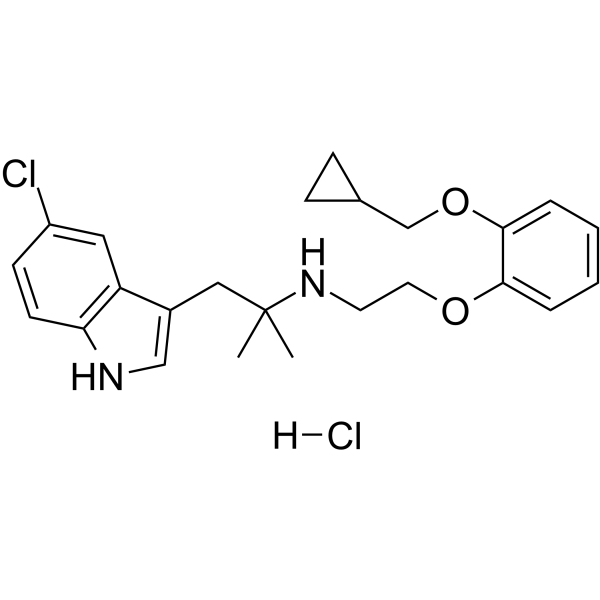
Chemical Structure
RS 17053 hydrochloride
- CAS No.: 169505-93-5
- Formula:C24H30Cl2N2O2
- Molecular Weight:449.41
IUPAC Name: 1-(5-chloro-1H-indol-3-yl)-N-(2-(2-(cyclopropylmethoxy)phenoxy)ethyl)-2-methylpropan-2-amine hydrochloride
InChIKey: QFOPFGRPNPCPBX-UHFFFAOYSA-N
SMILES: ClC1=CC2=C(NC=C2CC(C)(C)NCCOC3=CC=CC=C3OCC4CC4)C=C1.Cl
Biological Activity: RS 17053 hydrochloride is a selective α1A-adrenoceptor antagonist. RS 17053 hydrochloride binds to MrcA/MecA A-class penicillin-binding proteins, inhibits peptidoglycan biosynthesis, and binds to α1A and α1B/α1D-adrenoceptors. RS 17053 hydrochloride disrupts bacterial membranes, causing depolarization, ATP depletion, protein leakage, ROS accumulation, and upregulation of stress response genes. RS 17053 hydrochloride exerts bactericidal activity against Gram-positive/Gram-negative pathogens. RS 17053 hydrochloride can be used for research on bacterial infections and benign prostatic hyperplasia[1][2][3][4][5][6][7].
| Cat. No. | Product Name | Purity | Description | Pricing | |||||||||||||||||||
|---|---|---|---|---|---|---|---|---|---|---|---|---|---|---|---|---|---|---|---|---|---|---|---|
|
|
RS 17053 hydrochloride | 99.29% | RS 17053 hydrochloride is a selective α1A-adrenoceptor antagonist. RS 17053 hydrochloride binds to MrcA/MecA A-class penicillin-binding proteins, inhibits peptidoglycan biosynthesis, and binds to α1A and α1B/α1D-adrenoceptors. RS 17053 hydrochloride disrupts bacterial membranes, causing depolarization, ATP depletion, protein leakage, ROS accumulation, and upregulation of stress response genes. RS 17053 hydrochloride exerts bactericidal activity against Gram-positive/Gram-negative pathogens. RS 17053 hydrochloride can be used for research on bacterial infections and benign prostatic hyperplasia. | ||||||||||||||||||||
|
loading...
/
|
|||||||||||||||||||||||
|
|
RS 17053 hydrochloride (Standard) | ≥98% | RS 17053 hydrochloride (Standard) is the analytical standard of RS 17053 hydrochloride (HY-101336). This product is intended for research and analytical applications. RS 17053 hydrochloride is a selective α1A-adrenoceptor antagonist. RS 17053 hydrochloride binds to MrcA/MecA A-class penicillin-binding proteins, inhibits peptidoglycan biosynthesis, and binds to α1A and α1B/α1D-adrenoceptors. RS 17053 hydrochloride disrupts bacterial membranes, causing depolarization, ATP depletion, protein leakage, ROS accumulation, and upregulation of stress response genes. RS 17053 hydrochloride exerts bactericidal activity against Gram-positive/Gram-negative pathogens. RS 17053 hydrochloride can be used for research on bacterial infections and benign prostatic hyperplasia. | ||||||||||||||||||||
|
loading...
/
|
|||||||||||||||||||||||
-
Similarity Score 0.59
 HY-103214ABucindolol hydrochloride
-
Similarity Score 0.58
 HY-103214RBucindolol (Standard)
-
Similarity Score 0.58
 HY-129436(S)-Bucindolol
-
Similarity Score 0.52
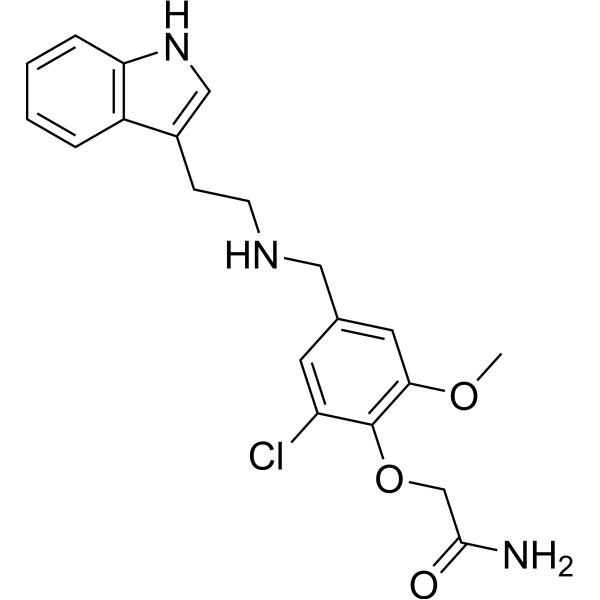 HY-122097M7594_0037
-
Similarity Score 0.51
 HY-Z7728Carvedilol impurity 2
-
Similarity Score 0.51
 HY-W347470ANb-Feruloyltryptamine
-
Similarity Score 0.51
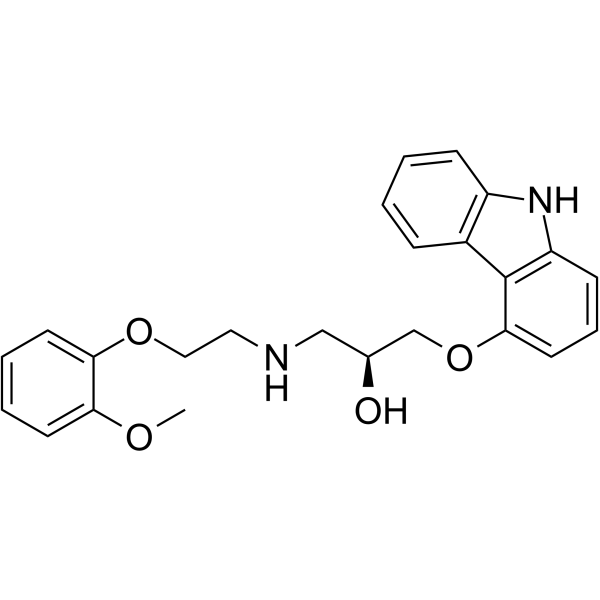 HY-B0006B(S)-Carvedilol
-
Similarity Score 0.51
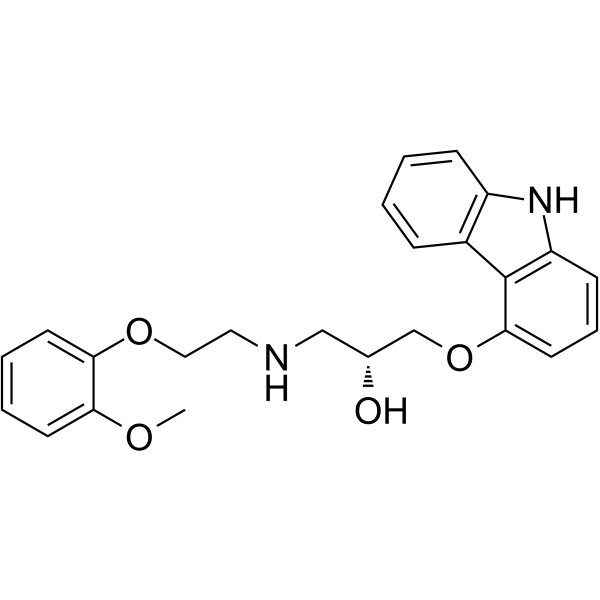 HY-B0006C(R)-Carvedilol
-
Similarity Score 0.51
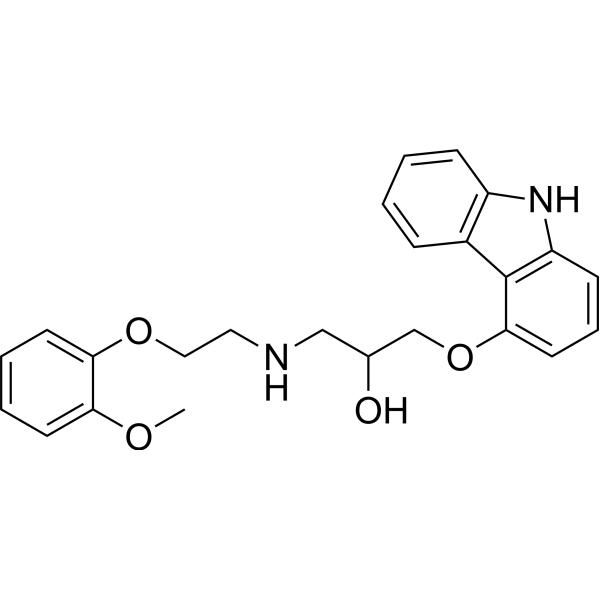 HY-B0006RCarvedilol (Standard)
-

Explore the MedChemAI to find more analogs


References
- [1]. Guo KX, et al. A novel penicillin-binding protein inhibitor with unprecedented intracellular activity eradicates multiple pathogenic bacteria. PLoS pathogens. 2026 Jul 16;22(7):e1014242.
- [2]. Muramatsu I, et al. Identification of α1L‐adrenoceptor in mice and its abolition by α1A‐adrenoceptor gene knockout. British journal of pharmacology. 2008 Dec;155(8):1224-34.
- [3]. Martin DJ. Preclinical pharmacology of α1-adrenoceptor antagonists. European urology. 1999 Jun 1;36(Suppl. 1):35-41.
- [4]. Baek S, et al. Repurposed membrane-targeting RS17053 eradicates MRSA persisters and enhances aminoglycoside killing. Biomedicine & pharmacotherapy = Biomedecine & pharmacotherapie. 2025 Dec;193:118763.
- [5]. Su TH, et al. Native profiles of α1A‐adrenoceptor phenotypes in rabbit prostate. British journal of pharmacology. 2008 Nov;155(6):906-12.
- [6]. Morishima S, et al. Identification of the alpha1L-adrenoceptor in rat cerebral cortex and possible relationship between alpha1L- and alpha1A-adrenoceptors. British journal of pharmacology. 2008 Apr;153(7):1485-94.
- [7]. Cleary L, et al. Sympathectomy reveals alpha 1A- and alpha 1D-adrenoceptor components to contractions to noradrenaline in rat vas deferens. British journal of pharmacology. 2004 Nov;143(6):745-52.



