



63335-25-1
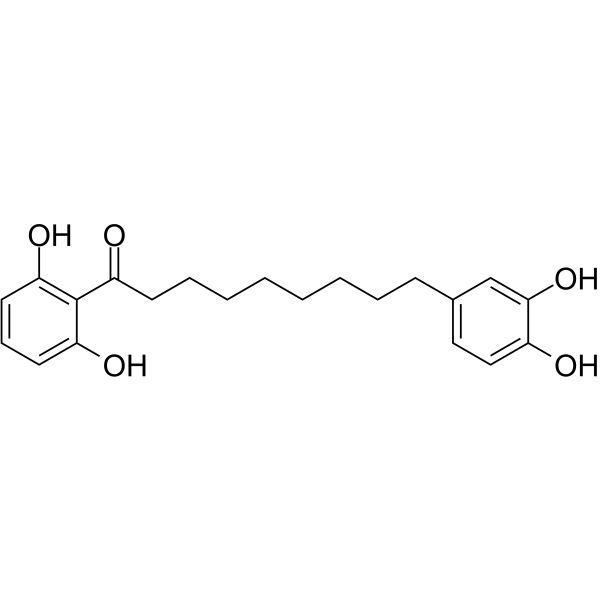
Chemical Structure
Malabaricone C
- CAS No.: 63335-25-1
- Formula:C21H26O5
- Molecular Weight:358.43
IUPAC Name: 1-(2,6-dihydroxyphenyl)-9-(3,4-dihydroxyphenyl)nonan-1-one
InChIKey: HCOZRFYGIFMIEX-UHFFFAOYSA-N
SMILES: O=C(C1=C(O)C=CC=C1O)CCCCCCCCC2=CC=C(O)C(O)=C2
Biological Activity: Malabaricone C is an orally active and noncompetitive sphingomyelin synthase (SMS) inhibitor with IC50 values of 3 μM and 1.5 μM for SMS 1 and SMS 2, respectively. Malabaricone C reduces body weight gain, improves glucose tolerance, and decreases lipid accumulation in the liver, showing significant prevention of high fat diet-induced fatty liver in mice. Malabaricone C has anti-inflammatory effects, which is found in the fruits of Myristica cinnamomea King. Malabaricone C is promising for research of obesity and immunological disorders caused due to hyper-activation of T-cells[1][2][3].
| Cat. No. | Product Name | Purity | Description | Pricing | |||||||||||||||||||
|---|---|---|---|---|---|---|---|---|---|---|---|---|---|---|---|---|---|---|---|---|---|---|---|
|
|
Malabaricone C | 99.46% | Malabaricone C is an orally active and noncompetitive sphingomyelin synthase (SMS) inhibitor with IC50 values of 3 μM and 1.5 μM for SMS 1 and SMS 2, respectively. Malabaricone C reduces body weight gain, improves glucose tolerance, and decreases lipid accumulation in the liver, showing significant prevention of high fat diet-induced fatty liver in mice. Malabaricone C has anti-inflammatory effects, which is found in the fruits of Myristica cinnamomea King. Malabaricone C is promising for research of obesity and immunological disorders caused due to hyper-activation of T-cells. | ||||||||||||||||||||
|
loading...
/
|
|||||||||||||||||||||||
|
|
Malabaricone C (Standard) | ≥98% | Malabaricone C is an orally active and noncompetitive sphingomyelin synthase (SMS) inhibitor with IC50 values of 3 μM and 1.5 μM for SMS 1 and SMS 2, respectively. Malabaricone C reduces body weight gain, improves glucose tolerance, and decreases lipid accumulation in the liver, showing significant prevention of high fat diet-induced fatty liver in mice. Malabaricone C has anti-inflammatory effects, which is found in the fruits of Myristica cinnamomea King. Malabaricone C is promising for research of obesity and immunological disorders caused due to hyper-activation of T-cells. | ||||||||||||||||||||
|
loading...
/
|
|||||||||||||||||||||||
-
Similarity Score 0.84
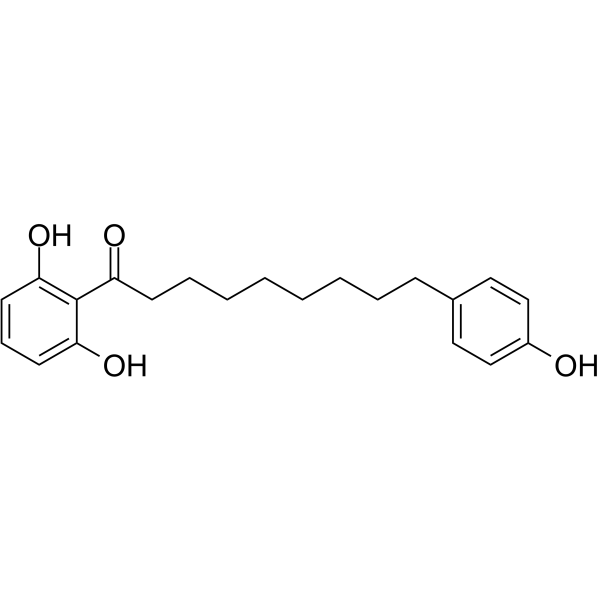 HY-N8517Malabaricone B
-
Similarity Score 0.80
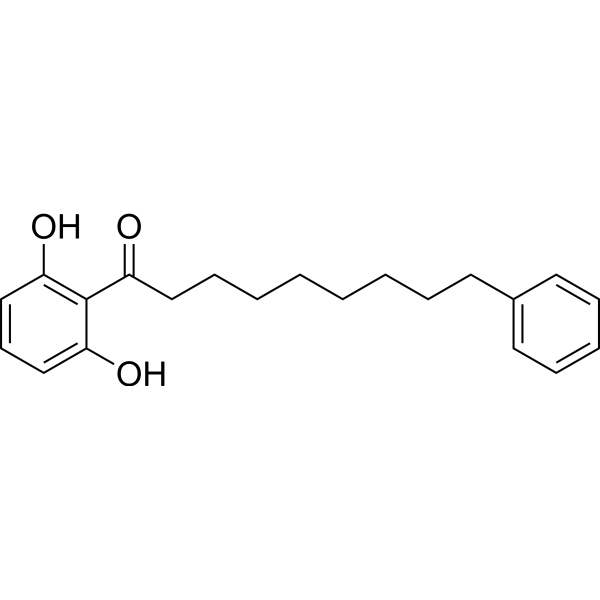 HY-N9973Malabaricone A
-
Similarity Score 0.70
 HY-N13582Muricarpone B
-
Similarity Score 0.65
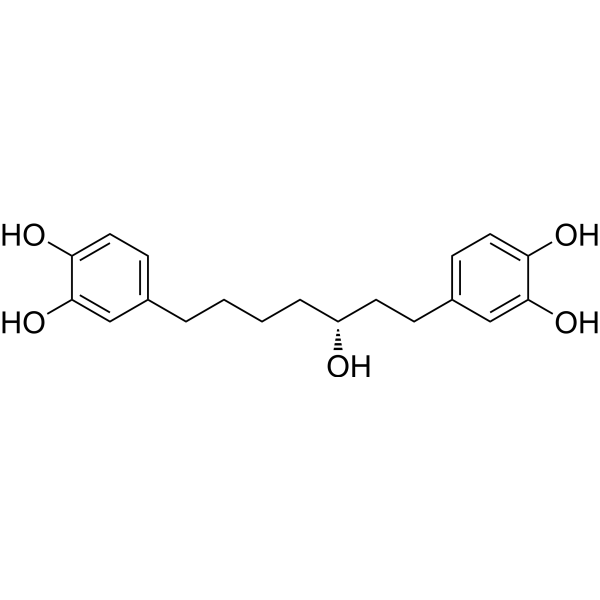 HY-N1330Rubranol
-
Similarity Score 0.63
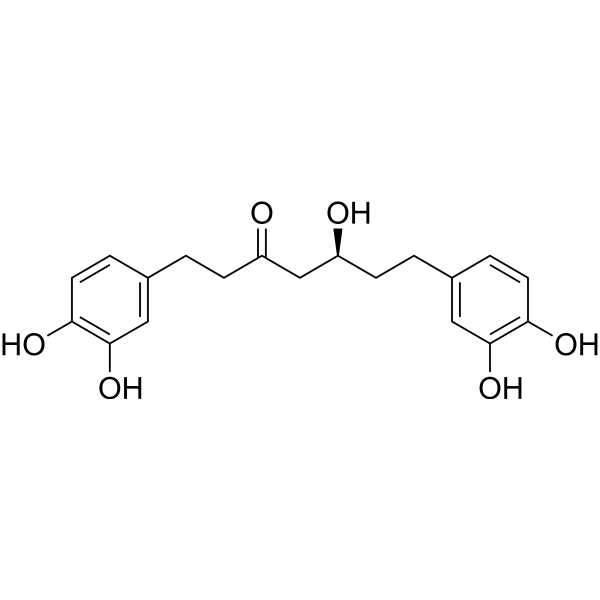 HY-N4044Hirsutanonol
-
Similarity Score 0.63
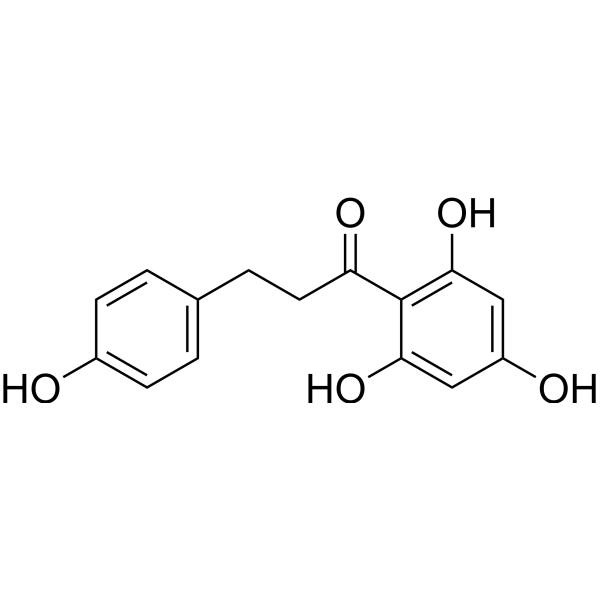 HY-N0142Phloretin
-
Similarity Score 0.63
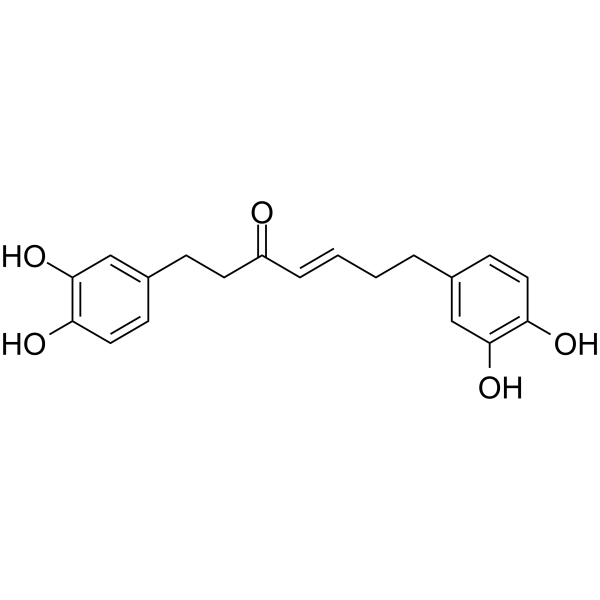 HY-N4042Hirsutenone
-
Similarity Score 0.62
 HY-1871441-(2,4,6-Trihydroxyphenyl)-1-octanone
-
Similarity Score 0.61
 HY-W510941Hesperetin dihydrochalcone
-

Explore the MedChemAI to find more analogs


References
- [1]. Othman MA, et al. Malabaricone C as Natural Sphingomyelin Synthase Inhibitor against Diet-Induced Obesity and Its Lipid Metabolism in Mice. ACS Med Chem Lett. 2019;10(8):1154-1158. Published 2019 Jul 3. [Content Brief]
- [2]. Patwardhan RS, et al. Malabaricone C, a constituent of spice Myristica malabarica, exhibits anti-inflammatory effects via modulation of cellular redox. J Biosci. 2023;48(2):9. [Content Brief]
- [3]. Tyagi M, et al. Mechanism of the malabaricone C-induced toxicity to the MCF-7 cell line. Free Radic Res. 2014 Apr;48(4):466-77. [Content Brief]



