



CAY10669

Based on 1 Customer Validation
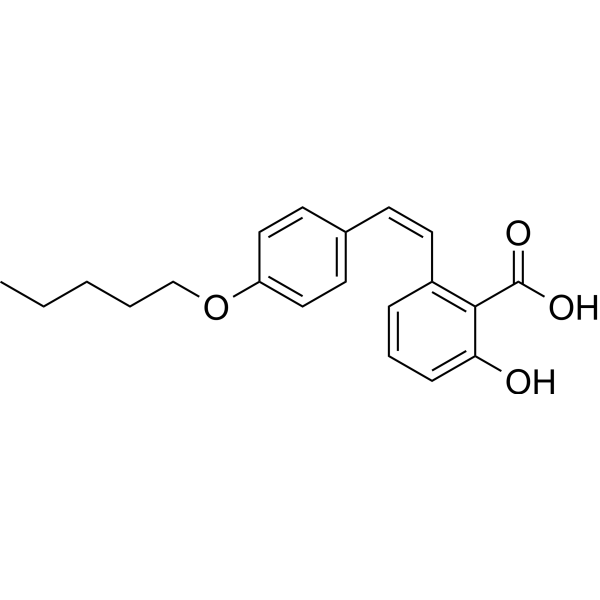
CAY10669 (compound 6d) is an anacardic acid (HY-N2020) derivative that inhibits histone acetyltransferase PCAF with an IC50 of 662 μM. CAY10669 enhances the SAHA-induced acetylation in HEPG2 cells, exhibits cytotoxicity in zebrafish embryo, promotes transgene expression in CHO-K1 cells.
For research use only. We do not sell to patients.
- Purity : 99.9%
- CAS No.: 1243583-88-1
- Formula: C20H22O4
- Molecular Weight:326.39
-
Storage:Powder -20°C, 3 years ; In solvent -80°C, 6 months , -20°C, 1 month

To place orders, for customer services and technical support, please contact: MedChemExpress USA
Tel: 609-228-6898 E-mail: [email protected] [email protected]


-
 Biological Activity
-
Chemical Information
- Protocols
- Purity & Documentation
- References
-
 Help & FAQs


-
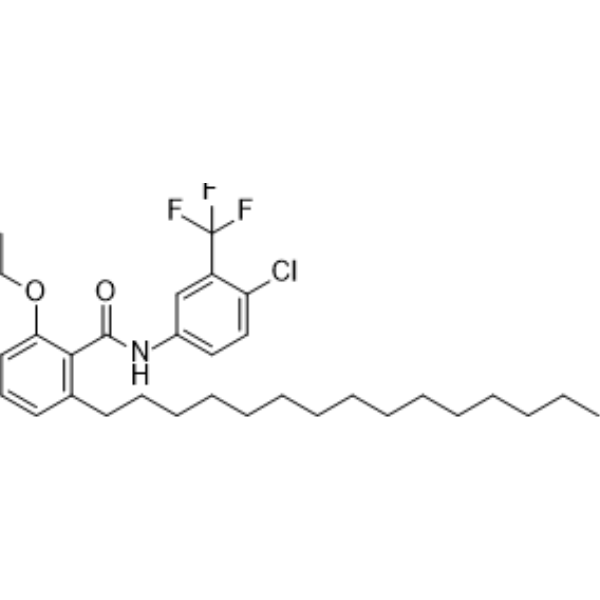
HY-124960
CTPBHistone Acetyltransferase Activator -
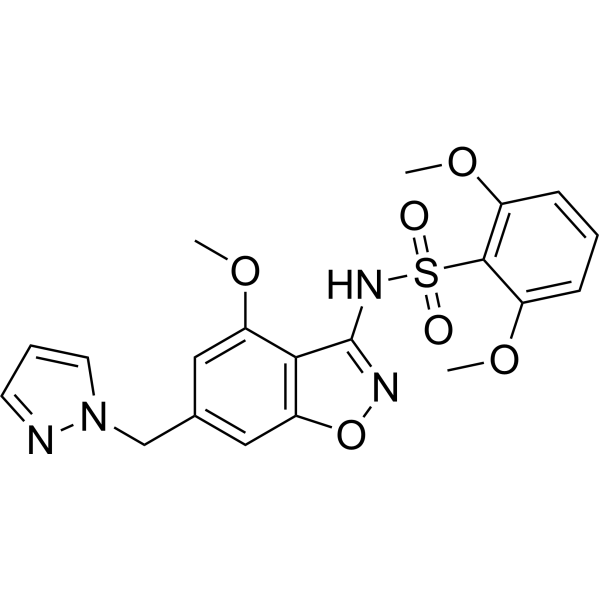
HY-132283
PF-9363KAT6A/KAT6B Inhibitor -
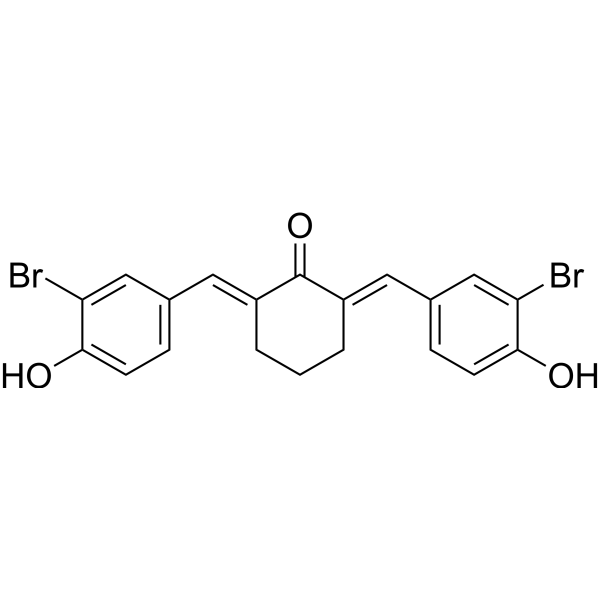
HY-100734
Histone Acetyltransferase Inhibitor IIp300 Histone Acetyltransferase Inhibitor -
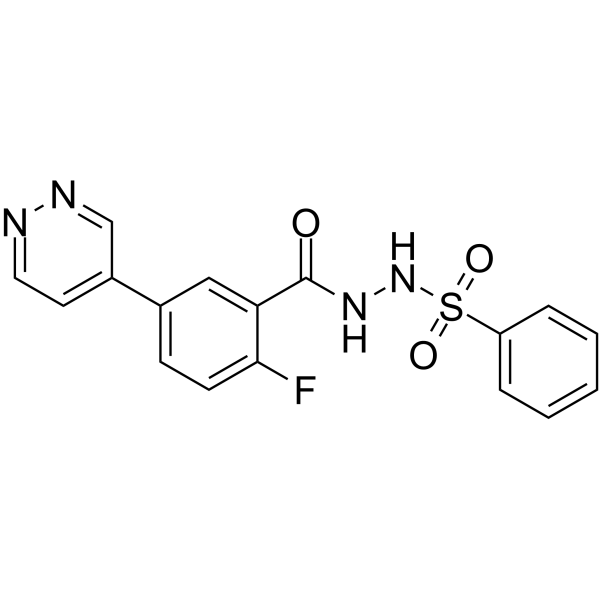
HY-102059
MOZ-IN-2MOZ Inhibitor -
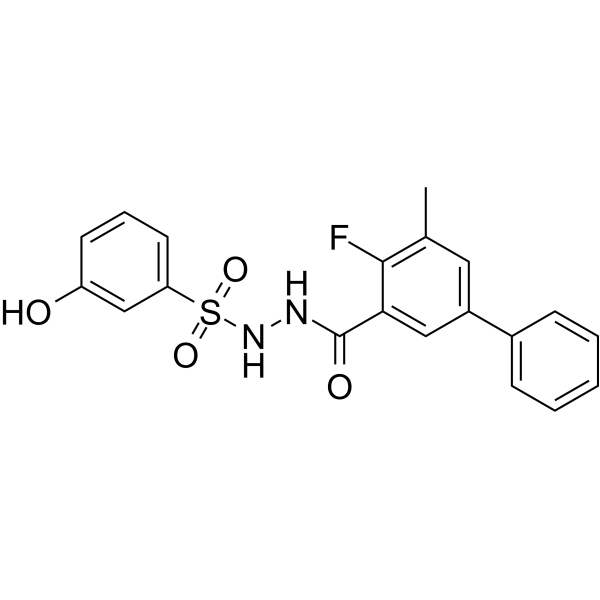
HY-134901
WM-3835HBO1 Inhibitor -
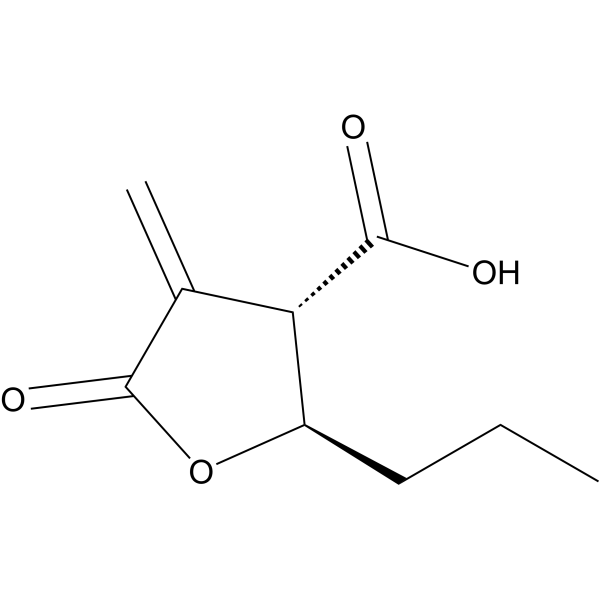
HY-129039
Butyrolactone 3Gcn5 Inhibitor -
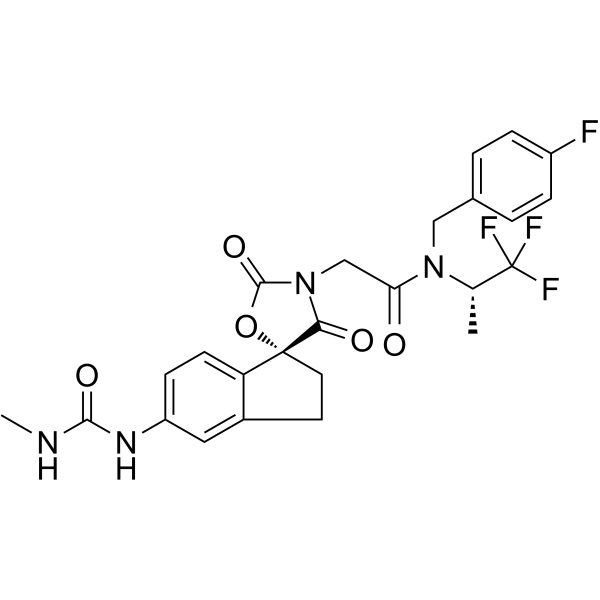
HY-107455
A-485p300/CBP Inhibitor -
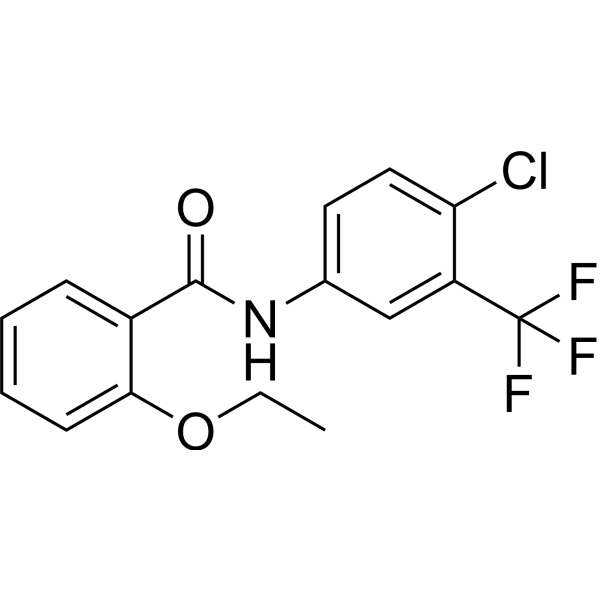
HY-134964
CTBp300 Activator -
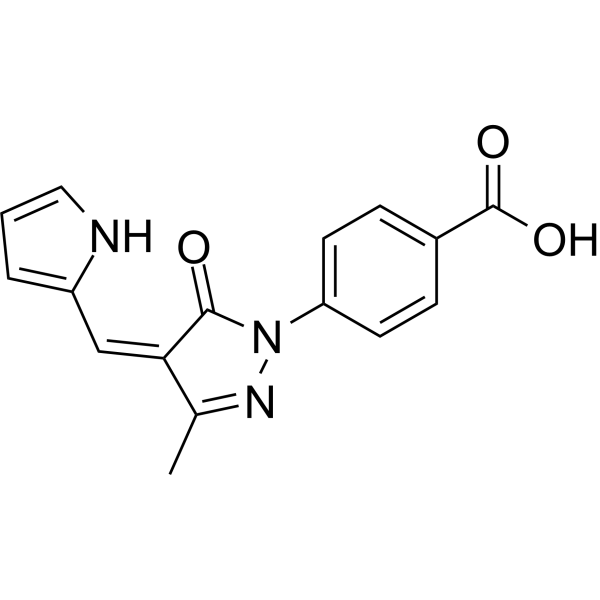
HY-149302
MC4033KAT8 Inhibitor -
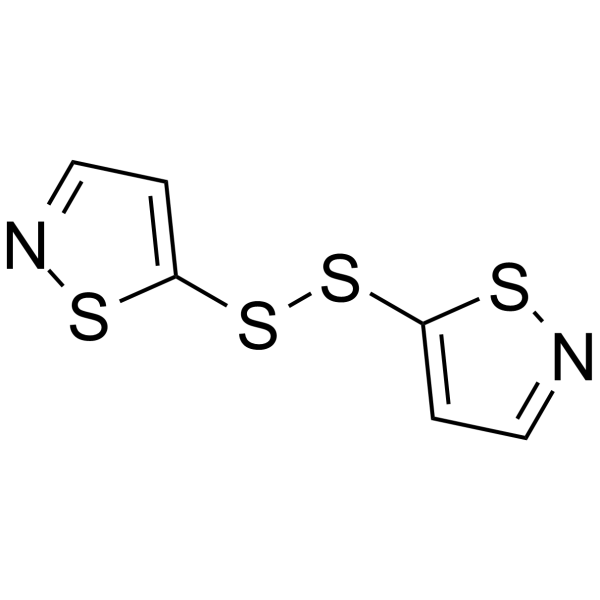
HY-110127
NU9056Tip60 Inhibitor -
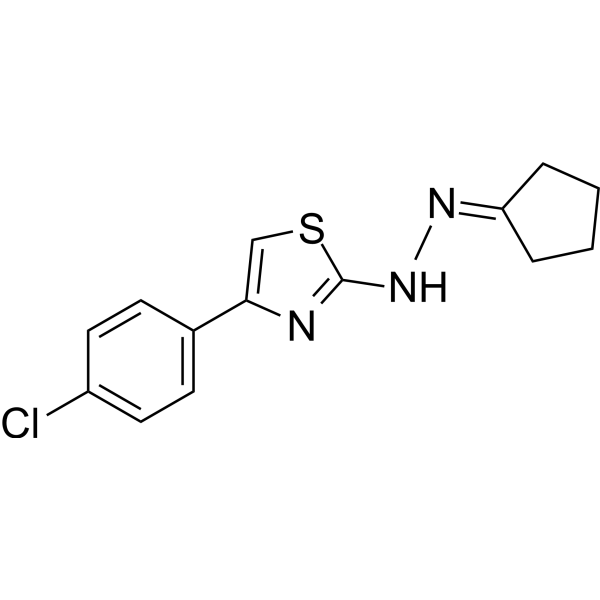
HY-W013274
CPTH2Histone Acetyltransferase Inhibitor -

HY-100734R
Histone Acetyltransferase Inhibitor II (Standard)p300 Histone Acetyltransferase Inhibitor


Biological Activity
Description
IC50 & Target
|
PCAF 662 μM (IC50) |


Chemical Information
-
CAS No. 1243583-88-1
-
Appearance Solid
-
Molecular Weight 326.39
-
Formula C20H22O4
-
Color White to off-white
-
SMILES
OC1=CC=CC(/C=C\C2=CC=C(C=C2)OCCCCC)=C1C(O)=O
-
Shipping
Room temperature in continental US; may vary elsewhere.
-
Storage
Powder -20°C 3 years In solvent -80°C 6 months -20°C 1 month

Protocols
-
RNA extraction experimental
By lysing cells, releasing RNA, and removing impurities such as proteins and DNA, high-purity RNA products are finally obtained. The commonly used traditional method is the guanidine isothiocyanate/phenol/chloroform method (Trizol), which is suitable for a variety of animal materials including animal tissues, microorganisms, cultured cells, etc., and most plant materials.
-
Cell Cytotoxicity Assay
Cytotoxicity assays are usually based on the assessment of cell membrane damage, which can also be indirectly detected by measuring cell viability. Detection methods include MTT assay, CKK-8 assay, LDH assay and ATP assay, etc.
-
Mammalian live/dead viability and cytotoxicity staining
Live/dead viability and cytotoxicity staining assays are based on the simultaneous detection of intracellular esterase activity in metabolically active (viable) cells and membrane integrity loss in non-viable cells. In commonly used dual-staining approaches, membrane-permeant fluorogenic substrates are converted by intracellular esterases into fluorescent products in live cells, while impermeant DNA-binding dyes selectively enter cells with compromised plasma membranes and label nucleic acids in dead or dying cells, enabling discrimination between viable and non-viable populations by fluorescence microscopy or flow cytometry.
-
Cell Viability Determination by MTT Colorimetric Assay
The following protocol uses the MTT colorimetric assay as a classic literature-established method for assessing cell viability/metabolic activity in cultured mammalian cells. MTT[3-(4,5-dimethylthiazol-2-yl)-2,5-diphenyltetrazolium bromide] is reduced by metabolically active cells to a colored formazan product; the amount of formazan is quantified spectrophotometrically and provides an indirect measure of metabolically active viable cells. Importantly, MTT reduction reflects cellular oxidoreductase/metabolic activity rather than an absolute direct count of living cells, so changes in cellular metabolism can alter the signal independently of cell number.


Purity & Documentation
-
Data Sheet (266 KB)
-
SDS (251 KB)
- English - EN (251 KB)
- Français - FR (251 KB)
- Deutsch - DE (251 KB)
- Norwegian - NO (251 KB)
- Español - ES (251 KB)
- Swedish - SV (251 KB)
- Italian - IT (251 KB)
- Korean - KR (251 KB)
- Portuguese - PT (251 KB)
-
Handling Instructions (2659 KB)
References
[1]. Ghizzoni M, et al., Improved inhibition of the histone acetyltransferase PCAF by an anacardic acid derivative. Bioorg Med Chem. 2010 Aug 15;18(16):5826-34. [Content Brief]
[2]. Farr GH 3rd, et al., A novel chemical-combination screen in zebrafish identifies epigenetic small molecule candidates for the treatment of Duchenne muscular dystrophy. Skelet Muscle. 2020 Oct 15;10(1):29. [Content Brief]
[3]. Christensen MD, et al., An inhibitor screen identifies histone-modifying enzymes as mediators of polymer-mediated transgene expression from plasmid DNA. J Control Release. 2018 Sep 28;286:210-223. [Content Brief]

Calculators
Concentration (start) × Volume (start) = Concentration (final) × Volume (final)


CAY10669 Related Classifications
HY-117617 Related Classifications
 Powered by Bioz