



Chloropyramine hydrochloride

Based on 1 Customer Validation
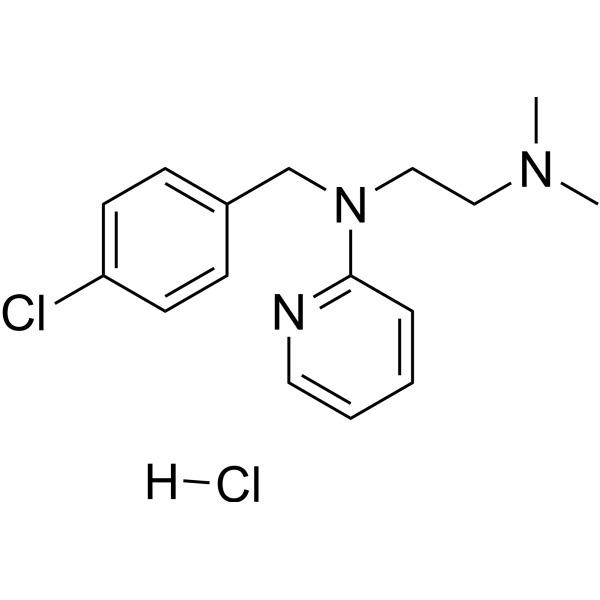
Chloropyramine hydrochloride is a histamine receptor H1 antagonist which can also inhibit the biochemical function of VEGFR-3 and FAK.
Nur für Forschungszwecke. Wir verkaufen nicht an Patienten.
- Reinheit : 99.64%
- CAS. Nr.: 6170-42-9
- Formel: C16H21Cl2N3
- Molecular Weight:326.26
-
Speicherung:
4°C, sealed storage, away from moisture
* In solvent : -80°C, 6 months; -20°C, 1 month (sealed storage, away from moisture)

To place orders, for customer services and technical support, please contact: MedChemExpress USA
Tel: 609-228-6898 E-mail: [email protected] [email protected]


-
 Biologische Aktivität
-
Chemical Information
-
Lösungsmittel & Löslichkeit
- Protokoll
- Reinheit & Dokumentation
- Verweise
-
 Help & FAQs


-
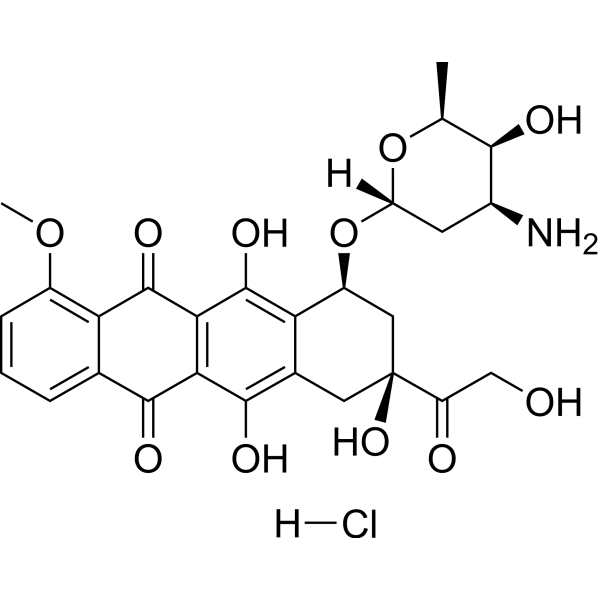
HY-15142
Doxorubicin hydrochlorideTopoisomerase Inhibitor -

HY-B1305R
Chloropyramine hydrochloride (Standard)VEGFR Inhibitor -
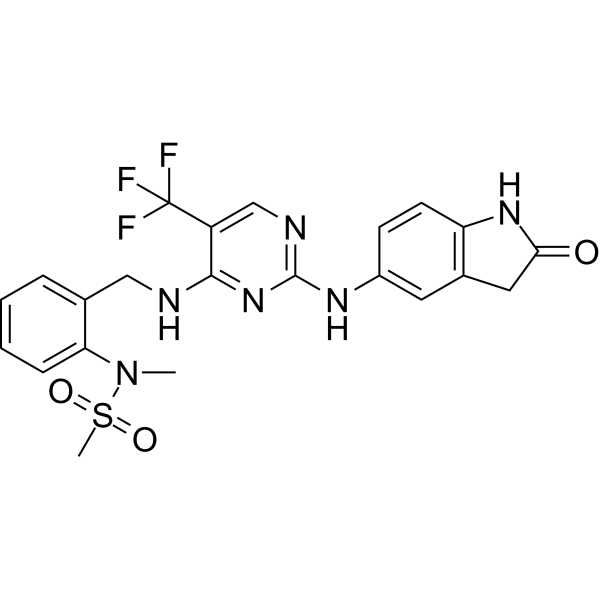
HY-10460
PF-431396Pyk2/FAK Inhibitor -
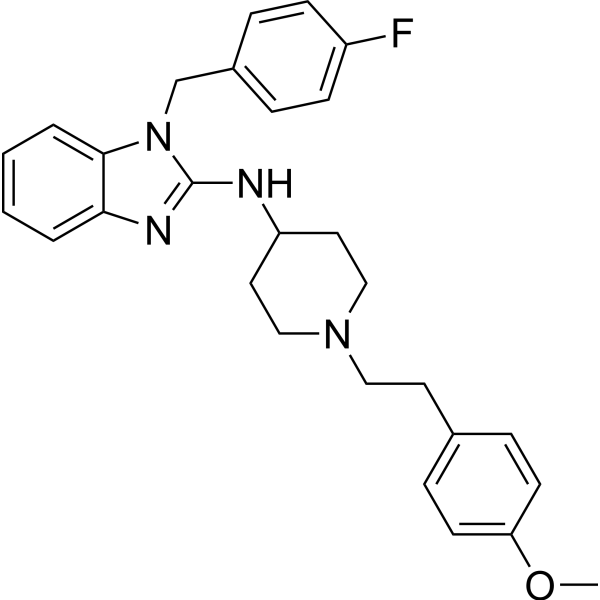
HY-12532
AstemizoleH1 Receptor Antagonist -
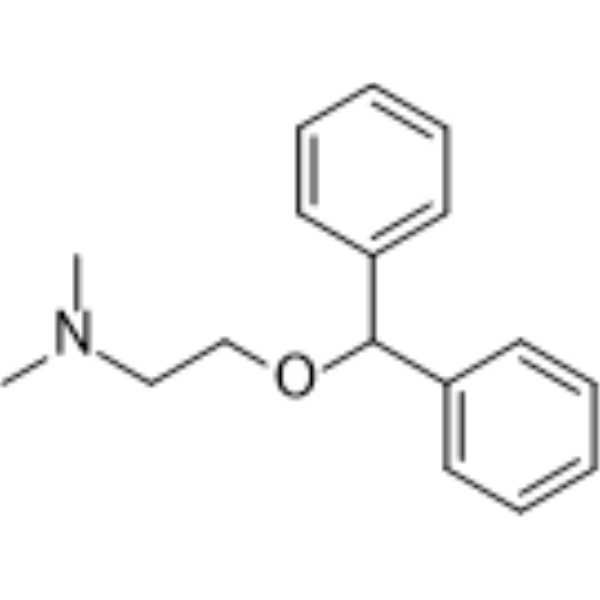
HY-B0303
DiphenhydramineAntihistamine -
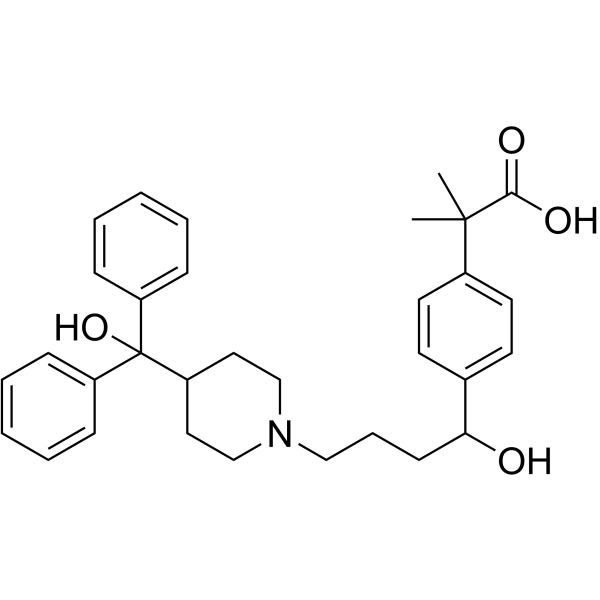
HY-B0801
FexofenadineH1R Antagonist -
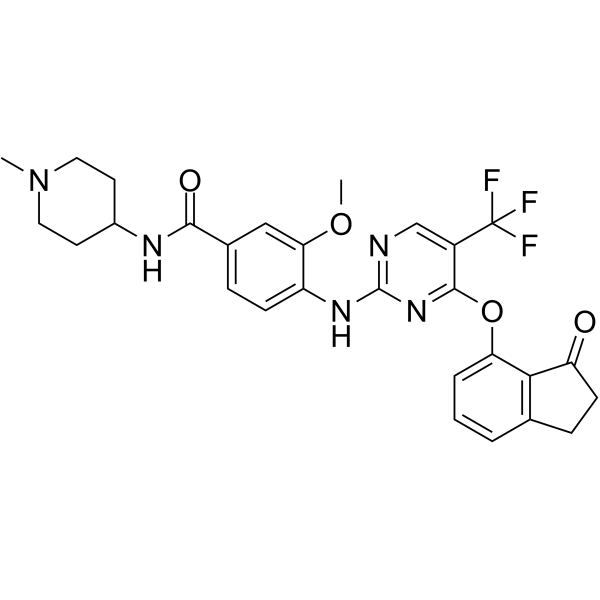
HY-124625
BI-4464PTK2/FAK Inhibitor -
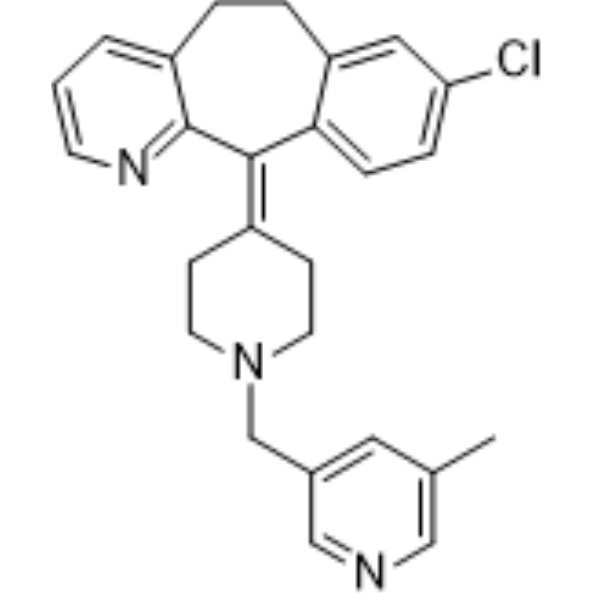
HY-13511
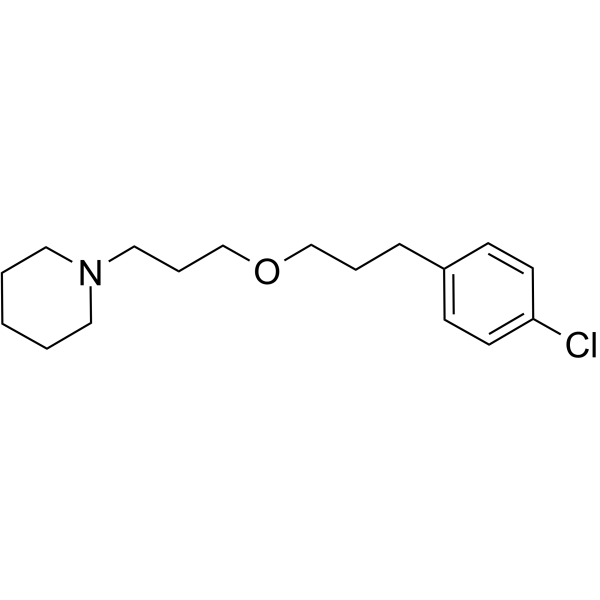
RupatadineDual PAF/H1 Antagonist -
HY-12199
PitolisantH3 Receptor Antagonist -

HY-B0303R
Diphenhydramine (Standard)Antihistamine -
HY-B0640
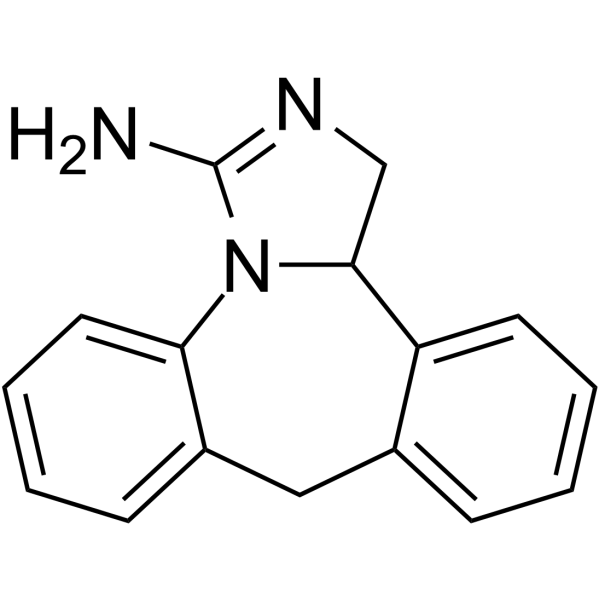
EpinastineHistamine H1 Receptor Antagonist -
HY-I0021
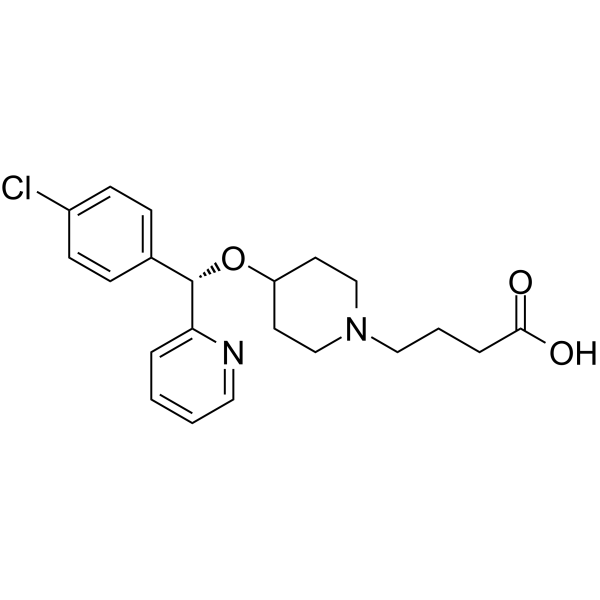
BepotastineHistamine H1 Receptor Antagonist
Alle Histamine Receptor Isoform-spezifische Produkte anzeigen
MoreAlle VEGFR Isoform-spezifische Produkte anzeigen
More

Biologische Aktivität
Beschreibung
IC50 & Target
[1]|
H1 Receptor |
VEGFR-3 |
Cellular Effect
|
Cell Line

|
Type | Value | Description | References |
|---|---|---|---|---|
| A-375 | IC50 |
1 μM
Compound: 1
|
Cytotoxicity against human A375 cells after 72 hrs by MTS assay
Cytotoxicity against human A375 cells after 72 hrs by MTS assay
|
[PMID: 19610651] |
| BT-474 | IC50 |
1 μM
Compound: 1
|
Cytotoxicity against human BT474 cells after 72 hrs by MTS assay
Cytotoxicity against human BT474 cells after 72 hrs by MTS assay
|
[PMID: 19610651] |
| COLO 205 | IC50 |
1 μM
Compound: 1
|
Cytotoxicity against human COLO205 cells assessed as cell viability after 72 hrs by MTS assay
Cytotoxicity against human COLO205 cells assessed as cell viability after 72 hrs by MTS assay
|
[PMID: 19610651] |
| HT-29 | IC50 |
1 μM
Compound: 1
|
Cytotoxicity against human HT-29 cells after 72 hrs by MTS assay
Cytotoxicity against human HT-29 cells after 72 hrs by MTS assay
|
[PMID: 19610651] |
| MDA-MB-231 | IC50 |
1 μM
Compound: 1
|
Cytotoxicity against human MDA-MB-231 cells after 72 hrs by MTS assay
Cytotoxicity against human MDA-MB-231 cells after 72 hrs by MTS assay
|
[PMID: 19610651] |
| MIA PaCa-2 | IC50 |
1 μM
Compound: 1
|
Cytotoxicity against human MIAPaCa2 cells after 72 hrs by MTS assay
Cytotoxicity against human MIAPaCa2 cells after 72 hrs by MTS assay
|
[PMID: 19610651] |
| PANC-1 | IC50 |
1 μM
Compound: 1
|
Cytotoxicity against human PANC1 cells after 72 hrs by MTS assay
Cytotoxicity against human PANC1 cells after 72 hrs by MTS assay
|
[PMID: 19610651] |
| SAOS-2 | IC50 |
1 μM
Compound: 1
|
Cytotoxicity against human Saos2 cells after 72 hrs by MTS assay
Cytotoxicity against human Saos2 cells after 72 hrs by MTS assay
|
[PMID: 19610651] |
| T47D | IC50 |
1 μM
Compound: 1
|
Cytotoxicity against human T47D cells after 72 hrs by MTS assay
Cytotoxicity against human T47D cells after 72 hrs by MTS assay
|
[PMID: 19610651] |
In Vitro
BT474 cells are highly sensitive to Chloropyramine hydrochloride (compound 1) treatment, whereby 1 µM concentrations cause a 40% reduction of viability after 48 h of treatment. It is found that at 1 µM concentrations of Chloropyramine hydrochloride, viability of control MCF7-pcDNA3 cells is significantly higher than the viability of MCF7-VEGFR-3 cells (P<0.01) and at 10 µM concentration this difference reaches twofold (P<0.001). In the BT474 cells treatment with Chloropyramine hydrochloride also leads to a concentration-dependent decrease of cell proliferation. When treatment with Chloropyramine hydrochloride is continued for 48 h, the breast cancer cells that overexpressed VEGFR-3 undergo apoptosis. This effect is dose-dependent, with 10 µM Chloropyramine hydrochloride inducing apoptosis in more than 60% of BT474 cells. In our model cell lines MCF7-pcDNA3 and MCF7-VEGFR-3, treatment with 10 µM Chloropyramine hydrochloride for 48 h leads to a 4-fold increase in apoptotic cell death in the cell line that overexpressed VEGFR-3 (18% versus 76 % respectively)[1].
MedChemExpress (MCE) has not independently confirmed the accuracy of these methods. They are for reference only.
In Vivo
MedChemExpress (MCE) has not independently confirmed the accuracy of these methods. They are for reference only.


Chemical Information
-
CAS. Nr. 6170-42-9
-
Appearance Solid
-
Molecular Weight 326.26
-
Formel C16H21Cl2N3
-
Color White to off-white
-
SMILES
CN(C)CCN(CC1=CC=C(Cl)C=C1)C2=NC=CC=C2.[H]Cl
-
Versand
Room temperature in continental US; may vary elsewhere.
-
Speicherung
4°C, sealed storage, away from moisture
* In solvent : -80°C, 6 months; -20°C, 1 month (sealed storage, away from moisture)


Lösungsmittel & Löslichkeit
In Vitro:
H2O : 100 mg/mL (306.50 mM; Need ultrasonic)
DMSO : 30 mg/mL (91.95 mM; Need ultrasonic and warming; Hygroscopic DMSO has a significant impact on the solubility of product, please use newly opened DMSO)
Please refer to the solubility information to select the appropriate solvent. Once prepared, please aliquot and store the solution to prevent product inactivation from repeated freeze-thaw cycles.
Storage method and period of stock solution: -80°C, 6 months; -20°C, 1 month (sealed storage, away from moisture). When stored at -80°C, please use it within 6 months. When stored at -20°C, please use it within 1 month.
* Note: If you choose water as the stock solution, please dilute it to the working solution, then filter and sterilize it with a 0.22 μm filter before use.
Please refer to the solubility information to select the appropriate solvent. Once prepared, please aliquot and store the solution to prevent product inactivation from repeated freeze-thaw cycles.
Storage method and period of stock solution: -80°C, 6 months; -20°C, 1 month (sealed storage, away from moisture). When stored at -80°C, please use it within 6 months. When stored at -20°C, please use it within 1 month.
* Note: If you choose water as the stock solution, please dilute it to the working solution, then filter and sterilize it with a 0.22 μm filter before use.
Konzentration (Stammlösung) × Volumen (Stammlösung) = Konzentration (Ziellösung) × Volumen (Ziellösung)
In Vivo:
Select the appropriate dissolution method based on your experimental animal and administration route.
- For the following dissolution methods, please ensure to first prepare a clear stock solution using an In Vitro approach and then sequentially add co-solvents:
- To ensure reliable experimental results, the clarified stock solution can be appropriately stored based on storage conditions. As for the working solution for In Vivo experiments, it is recommended to prepare freshly and use it on the same day.
- The percentages shown for the solvents indicate their volumetric ratio in the final prepared solution. If precipitation or phase separation occurs during preparation, heat and/or sonication can be used to aid dissolution.
Add each solvent one by one: 10% DMSO 40% PEG300 5% Tween-80 45% Saline
Solubility: ≥ 2.08 mg/mL (6.38 mM); Clear solution
This protocol yields a clear solution of ≥ 2.08 mg/mL (saturation unknown).
Taking 1 mL working solution as an example, add 100 μL DMSO stock solution (20.8 mg/mL) to 400 μL PEG300, and mix evenly; then add 50 μL Tween-80 and mix evenly; then add 450 μL Saline to adjust the volume to 1 mL.
Preparation of Saline: Dissolve 0.9 g sodium chloride in ddH₂O and dilute to 100 mL to obtain a clear Saline solution.
Add each solvent one by one: 10% DMSO 90% (20% SBE-β-CD in Saline)
Solubility: ≥ 2.08 mg/mL (6.38 mM); Clear solution
This protocol yields a clear solution of ≥ 2.08 mg/mL (saturation unknown).
Taking 1 mL working solution as an example, add 100 μL DMSO stock solution (20.8 mg/mL) to 900 μL 20% SBE-β-CD in Saline, and mix evenly.
Preparation of 20% SBE-β-CD in Saline (4°C, storage for one week): 2 g SBE-β-CD powder is dissolved in 10 mL Saline, completely dissolve until clear.
For the following dissolution methods, please prepare the working solution directly:
It is recommended to prepare fresh solutions and use them promptly within a short period of time.
The percentages shown for the solvents indicate their volumetric ratio in the final prepared solution. If precipitation or phase separation occurs during preparation, heat and/or sonication can be used to aid dissolution.
Add each solvent one by one: PBS
Solubility: 50 mg/mL (153.25 mM); Clear solution; Need ultrasonic
In Vivo Dissolution Calculator
Please enter the basic information of animal experiments:
-
-
-
-
Recommended: Prepare an additional quantity of animals to account for potential losses during experiments.
Working solution concentration: 0.22 mg/mL
This product has good water solubility, please refer to the measured solubility data in water/PBS/Saline for details.

Protokoll
Kinase Assay[1]
Cells are incubated in presence or absence of Chloropyramine hydrochloride and stained with anti-FAK antibody 4.47 or in combination with paxillin or VEGFR-3. Detection is done with Alexa Fluor 546 secondary antibody and for dual staining combination of Alexa Fluor 488 and Alexa Fluor 546 secondary antibody is used[1].
MedChemExpress (MCE) has not independently confirmed the accuracy of these methods. They are for reference only.
Cell Assay[1]
Cell survival is assayed in MTS assay by measuring mitochondrial dehydrogenase activity of metabolically active cells. 5.0×10³ (100 µL) cells are plated in 96-well plates and are allowed to attach overnight. One hundred microliters of fresh media with or without Chloropyramine hydrochloride is added to each well. Cells are treated for designated amount of time. MTS assay is performed according the manufacturers protocol[1].
MedChemExpress (MCE) has not independently confirmed the accuracy of these methods. They are for reference only.
Animal Administration[1]
BT474 and MCF7-VEGFR-3 cells at a concentration of 2 to 5×10⁶ cells per 200 µL are subcutaneously injected into the right flank of the 5 to 6 week old mice, 5 in each group. Treatment with Chloropyramine hydrochloride is started next day after cells injection via intraperitoneal injection (IP) once a day. Tumor size is measured thrice weekly and volume is calculated using the formula length×width2×0.5. Animals are sacrificed after 21 days of treatment or when tumor size reaches protocol end point. Tumor is excised, measured and preserved for protein and RNA preparation and cytochemistry[1].
MedChemExpress (MCE) has not independently confirmed the accuracy of these methods. They are for reference only.


Reinheit & Dokumentation
-
Data Sheet (275 KB)
-
SDS (393 KB)
- English - EN (393 KB)
- Français - FR (393 KB)
- Deutsch - DE (393 KB)
- Norwegian - NO (393 KB)
- Español - ES (393 KB)
- Swedish - SV (393 KB)
- Italian - IT (393 KB)
- Korean - KR (393 KB)
- Portuguese - PT (393 KB)
-
Handling Instructions (2659 KB)
Verweise


Complete Stock Solution Preparation Table
Please refer to the solubility information to select the appropriate solvent. Once prepared, please aliquot and store the solution to prevent product inactivation from repeated freeze-thaw cycles.
Storage method and period of stock solution: -80°C, 6 months; -20°C, 1 month (sealed storage, away from moisture). When stored at -80°C, please use it within 6 months. When stored at -20°C, please use it within 1 month.
| Optional Solvent | Concentration Solvent Mass | 1 mg | 5 mg | 10 mg | 25 mg |
|---|---|---|---|---|---|
| DMSO / H2O | 1 mM | 3.0650 mL | 15.3252 mL | 30.6504 mL | 76.6260 mL |
| 5 mM | 0.6130 mL | 3.0650 mL | 6.1301 mL | 15.3252 mL | |
| 10 mM | 0.3065 mL | 1.5325 mL | 3.0650 mL | 7.6626 mL | |
| 15 mM | 0.2043 mL | 1.0217 mL | 2.0434 mL | 5.1084 mL | |
| 20 mM | 0.1533 mL | 0.7663 mL | 1.5325 mL | 3.8313 mL | |
| 25 mM | 0.1226 mL | 0.6130 mL | 1.2260 mL | 3.0650 mL | |
| 30 mM | 0.1022 mL | 0.5108 mL | 1.0217 mL | 2.5542 mL | |
| 40 mM | 0.0766 mL | 0.3831 mL | 0.7663 mL | 1.9157 mL | |
| 50 mM | 0.0613 mL | 0.3065 mL | 0.6130 mL | 1.5325 mL | |
| 60 mM | 0.0511 mL | 0.2554 mL | 0.5108 mL | 1.2771 mL | |
| 80 mM | 0.0383 mL | 0.1916 mL | 0.3831 mL | 0.9578 mL | |
| H2O | 100 mM | 0.0307 mL | 0.1533 mL | 0.3065 mL | 0.7663 mL |
* Note: If you choose water as the stock solution, please dilute it to the working solution, then filter and sterilize it with a 0.22 μm filter before use.


Chloropyramine hydrochloride Related Classifications
HY-B1305 Related Classifications
 Powered by Bioz