



Lodapolimab

Based on 1 Customer Validation
Lodapolimab (LY3300054) is a fully human IgG1λ anti-PD-L1 monoclonal antibody, with an EC50 of 0.075 nM against hPD-L1 and an EC50 of 0.085 nM against cynomolgus monkey PD-L1. Lodapolimab induces naive T cell activation, enhances the T cell activation effect of anti-CTLA4 antibodies, promotes anti-tumor alloreactivity, regulates innate immune pathways, and induces characteristics of adaptive immune activation. Lodapolimab can be used in research related to high-grade serous ovarian cancer and other solid tumors.
Nos produits utilisent uniquement pour la recherche. Nous ne vendons pas aux patients.
- Pureté : 99.71%
- CAS No.: 2118349-31-6
-
Stockage:
Please store the product under the recommended conditions in the Certificate of Analysis.


To place orders, for customer services and technical support, please contact: MedChemExpress USA
Tel: 609-228-6898 E-mail: [email protected] [email protected]


-
 Activité biologique
-
Chemical Information
- Protocole
- Pureté et documentation
- Références
-
 Help & FAQs


-

HY-P9902
PembrolizumabPD-1 Inhibitor -

HY-P9904
AtezolizumabAnti-PD-L1 Antibody -
HY-P9903
NivolumabPD-1 Inhibitor -

HY-P9919
DurvalumabPD-L1 Blocking Antibody -

HY-P99052
TislelizumabPD-1 Inhibitor -

HY-P9978
ToripalimabPD-1 Inhibitor -

HY-108730
AvelumabAnti-PD-L1 Antibody -

HY-P99048
SintilimabPD-1/PD-L1 Inhibitor -
HY-P9919A
Durvalumab (anti-PD-L1)PD-1/PD-L1 Inhibitor -

HY-P9971
CamrelizumabPD-1 Neutralizing Antibody -

HY-P99203
CemiplimabPD-1 Inhibitor -

HY-P99785
OpucolimabAnti-PD-L1 Antibody


Activité biologique
Description
Isotype
Human IgG1 lambda
Recommend Isotype Controls
Species Reactivity
Human
IC50 & Target
B7-H1/PD-L1/CD274
In Vitro
Lodapolimab (0.001-100 nM; 2 h) binds specifically to hPD-L1 and cynomolgus monkey PD-L1 with high affinity (with EC50 values of 0.075 nM and 0.085 nM, respectively), and does not bind to mouse PD-L1 or other related immunoglobulin superfamily proteins[1].
Lodapolimab (pre-incubated for 1 h) potently blocks the interactions of PD-L1 with its cognate receptors PD-1 (IC50 = 0.95 nM) and CD80 (IC50 = 2.4 nM)[1].
Lodapolimab specifically binds to PD-L1 expressed on the surface of tumor cell lines (NCI-H292, HCC827, OV79), and does not bind to PD-L1-negative tumor cells (A204)[1].
Lodapolimab (0.01-100 nM; 6 h) enhances T cell activation in a PD-1/PD-L1-dependent manner, which is verified by the increased NFAT-driven luciferase activity in a co-culture system of PD-L1+ CHO-K1 cells and PD-1-expressing Jurkat cells[1].
MedChemExpress (MCE) has not independently confirmed the accuracy of these methods. They are for reference only.
In Vivo
Lodapolimab (10 mg/kg; i.p.; once weekly; 4 doses total) significantly enhances T cell-mediated anti-tumor activity in established NSG mouse lung cancer models[1].
Lodapolimab (10 mg/kg; intraperitoneal injection; once weekly; 4 doses total) induces potent anti-tumor activity and systemic T cell activation in the NOG mouse ovarian cancer model[1].
Lodapolimab (10 mg/kg; intraperitoneal injection; once weekly; 3 doses total) induces significant anti-tumor activity and T-cell inflammatory gene signatures in NSG mouse lung cancer models[1].
MedChemExpress (MCE) has not independently confirmed the accuracy of these methods. They are for reference only.
-
Animal Model:NOD.Cg-Prkdcscid Il2rgtm1Wjl/SzJ (NSG) (female, 6-7 weeks of age)[1]
-
Dosage:10 mg/kg
-
Administration:i.p.; weekly; 4 doses
-
Result:Induced significant tumor inhibition (p < 0.001) compared to human IgG1-treated controls.
Sustained suppression of tumor volume over 30 days post-implant.\nSignificantly enhanced the anti-tumor activity of infused human T cells, resulting in potent tumor growth inhibition (p < 0.001) compared to human IgG1-treated controls.
-
Animal Model:NOD.Cg-Prkdcscid Il2rgtm1Sug/JicTac (NOG) (female, 15-17 weeks of age, engrafted with cord blood-derived CD34+ human hematopoietic stem cells)[1]
-
Dosage:10 mg/kg
-
Administration:i.p.; weekly; 4 doses
-
Result:Resulted in significant tumor growth inhibition (p < 0.001) compared to human IgG1-treated controls.
Increased absolute human T cell counts by day 46.
Elevated the CD8:CD4 T cell ratio (p = 0.0001 by day 34).
Increased the frequency of PD-1+ CD4+ (p = 0.0009 by day 34) and PD-1+ CD8+ (p = 0.0008 by day 34) T cells, indicative of T cell activation.
-
Animal Model:NOD.Cg-Prkdcscid Il2rgtm1Wjl/SzJ (NSG) (female, 15-17 weeks of age, engrafted with fetal liver-derived CD34+ human hematopoietic stem cells)[1]
-
Dosage:10 mg/kg
-
Administration:i.p.; weekly; 3 doses
-
Result:Resulted in significant tumor growth inhibition (p < 0.001) compared to human IgG1-treated controls.
Upregulated genes associated with T cell infiltration and activation (CD3E, CD8B, CD4, PRF1, GZMB, TBX21), myeloid cell infiltration (ITGAM, ITGAX, CD14, CD68), co-stimulatory/co-inhibitory receptors (TNFRSF9, ICOS, PDCD1), cytokines (IFNG, IL2, CCL5), and antigen presentation (HLA-A, HLA-B) in tumor tissue.
Essai clinique
| NCT Number | Sponsor | Condition | Start Date |
Phase

|
|---|---|---|---|---|
| NCT01329991 | Plexxikon| | 2011-05 | PHASE1 |
Gene ID
Accession
Conjugated
Unconjugated
Reconsititution
The product can be reconstituted/diluted with sterile PBS or saline.
Format
-
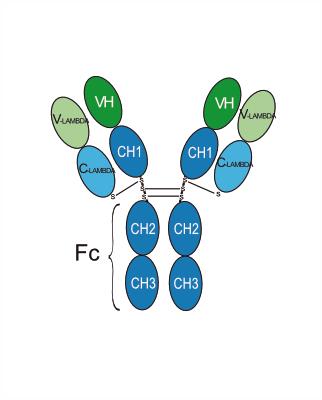
Human IgG1 lambda
Application
ELISA, FACS, Functional assay
Verified Bioactivity
-
 Immobilized PD-L1 Protein, Human (HEK293, HY-P73361) can bind Lodapolimab. The EC50 for this effect is 6.358 ng/mL.


Chemical Information
-
CAS No. 2118349-31-6
-
Appearance Liquid
-
Color Colorless to light yellow
-
SMILES
[Lodapolimab]
-
Synonyms
LY3300054
-
Livraison
Shipping with dry ice.
-
Formulation
Please refer to the lot-specific COA for specific buffer information.
-
Stockage
Please store the product under the recommended conditions in the Certificate of Analysis.


Pureté et documentation
-
Fiche technique (263 KB)
-
SDS (251 KB)
- English - EN (251 KB)
- Français - FR (251 KB)
- Deutsch - DE (251 KB)
- Norwegian - NO (251 KB)
- Español - ES (251 KB)
- Swedish - SV (251 KB)
- Italian - IT (251 KB)
- Korean - KR (251 KB)
- Portuguese - PT (251 KB)
-
Inhibitory Antibodies User Guide (603 KB)
Références
[1]. Li Y, et al. Discovery and preclinical characterization of the antagonist anti-PD-L1 monoclonal antibody LY3300054. Journal for immunotherapy of cancer. 2018 Apr 30;6(1):31. [Content Brief]
[3]. Do KT, et al. Immune modulating activity of the CHK1 inhibitor prexasertib and anti-PD-L1 antibody LY3300054 in patients with high-grade serous ovarian cancer and other solid tumors. Cancer immunology, immunotherapy : CII. 2021 Oct;70(10):2991-3000. [Content Brief]

Calculators
Concentration (start) × Volume (start) = Concentration (final) × Volume (final)


Lodapolimab Related Classifications
HY-P99709 Related Classifications
 Powered by Bioz