



CL075
Based on 3 publication(s) in Google Scholar
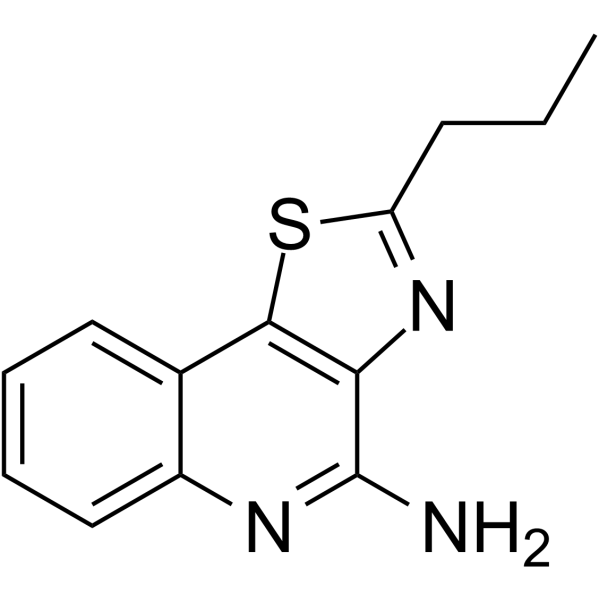
CL075 (3M002) is a selective TLR8 agonist with immunomodulating properties. CL075 triggers a MyD88-dependent signaling pathway to elicit production of inflammatory cytokines and type I interferons (IFNs) via activation of NF-κB and IRF7, respectively.
For research use only. We do not sell to patients.
- Purity : 99.18%
- CAS No.: 256922-53-9
- Formula: C13H13N3S
- Molecular Weight:243.33
-
Storage:Powder -20°C, 3 years , 4°C, 2 years ; In solvent -80°C, 6 months , -20°C, 1 month

To place orders, for customer services and technical support, please contact: MedChemExpress USA
Tel: 609-228-6898 E-mail: [email protected] [email protected]


-
 Biological Activity
-
Chemical Information
-
Solvent & Solubility
- Protocols
- Purity & Documentation
- References
-
 Help & FAQs


-
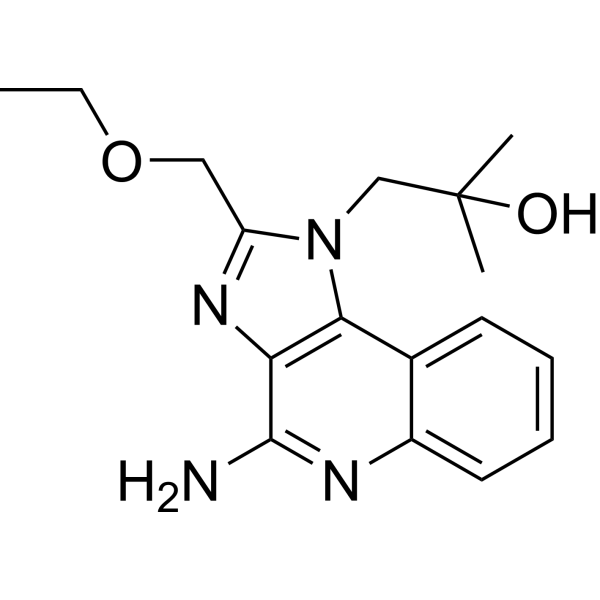
HY-13740
ResiquimodTLR7/8 Agonist -
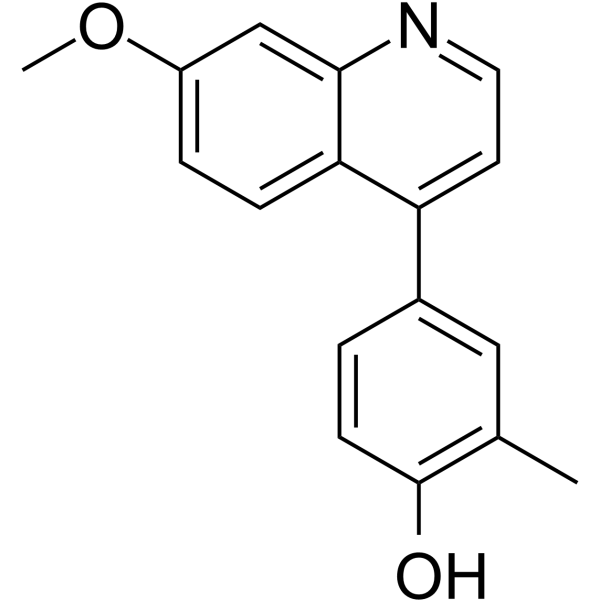
HY-112667
CU-CPT-9aToll-like Receptor (TLR) Antagonist -
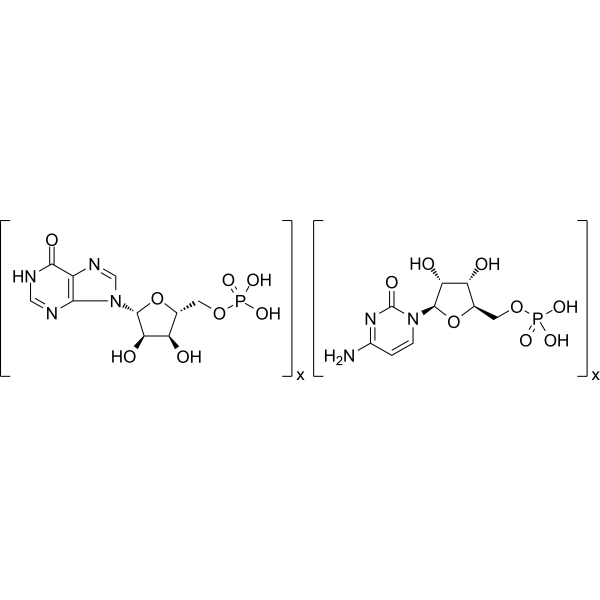
HY-107202
Polyinosinic-polycytidylic acidTLR-3 Agonist -
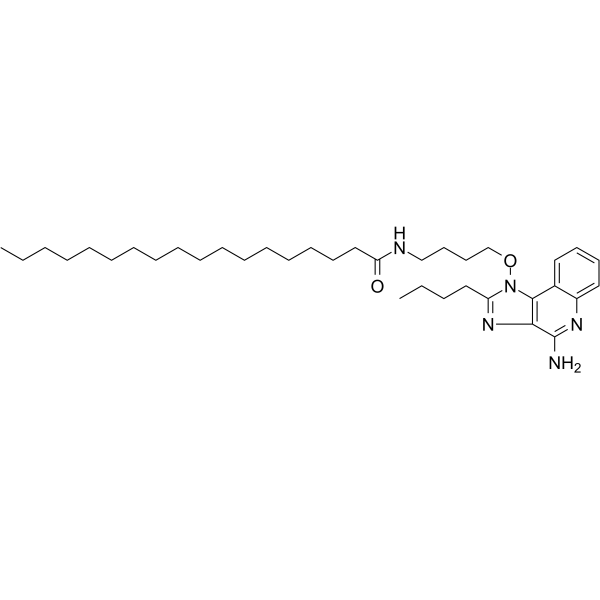
HY-109104
TelratolimodTLR7/8 Agonist -
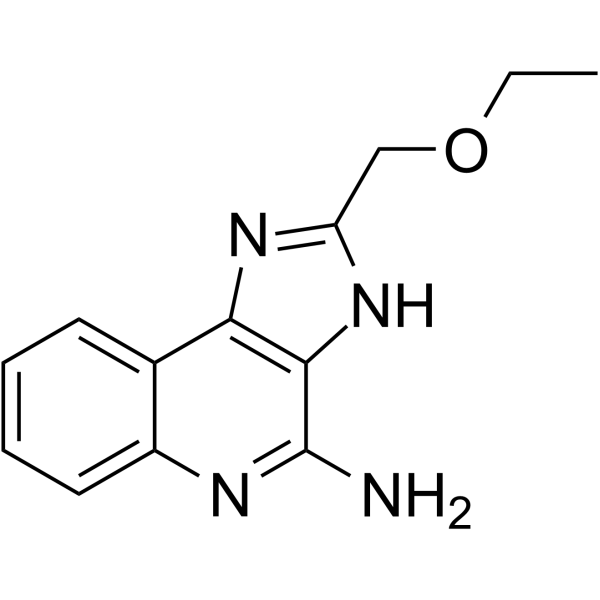
HY-128799
CL097TLR7/8 Agonist -
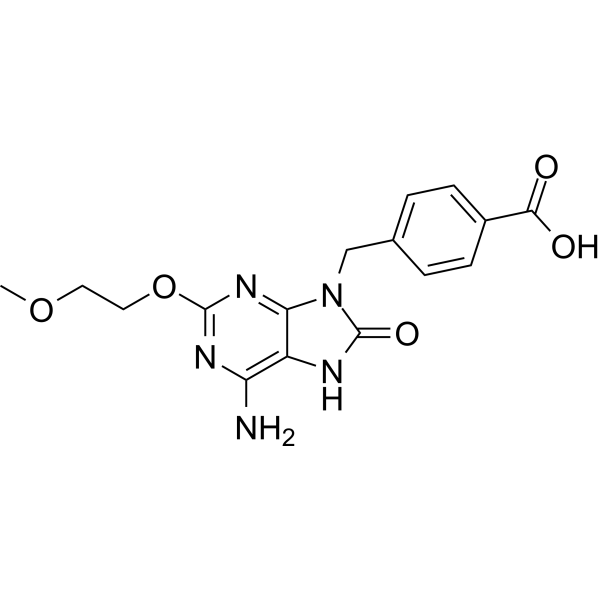
HY-115400
1V209TLR7 Agonist -
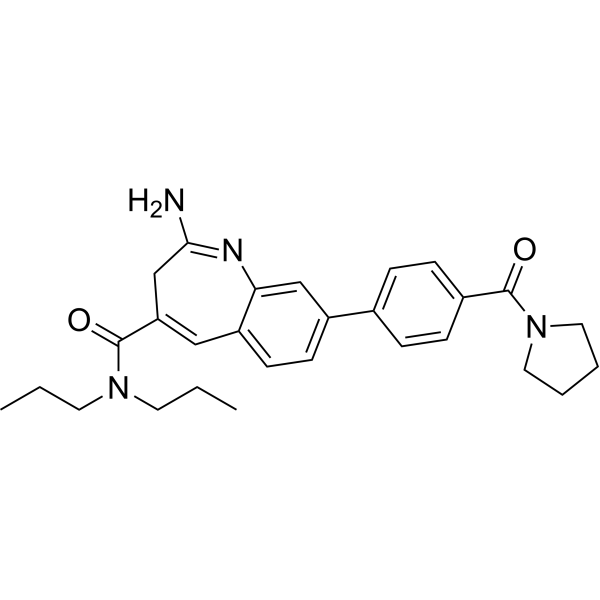
HY-13773
MotolimodTLR8 Agonist -

HY-W250113
Zymosan ATLR2 Agonist -
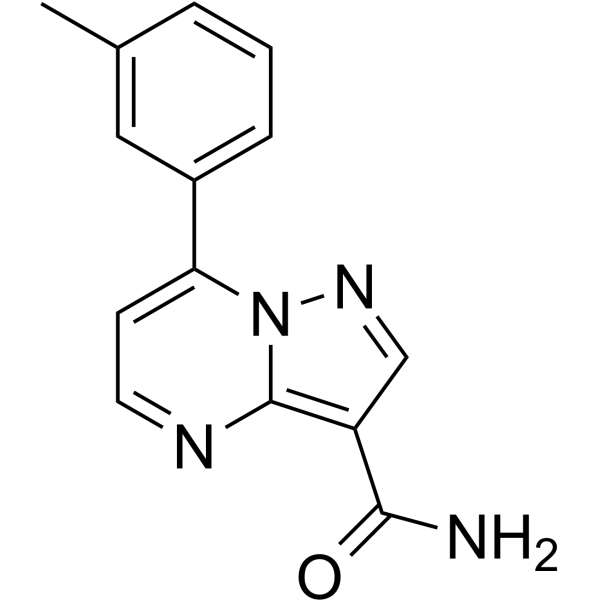
HY-112050
CU-CPT-8mTLR8 Antagonist -
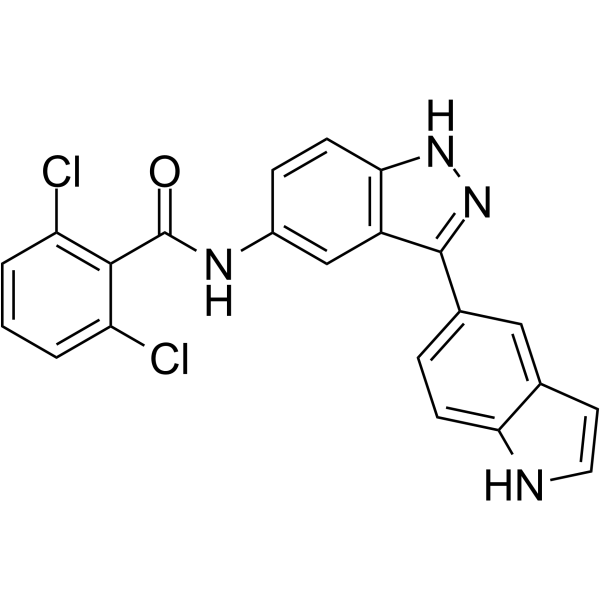
HY-128598
MD2-TLR4-IN-1MD2-TLR4 Complex Antagonist -
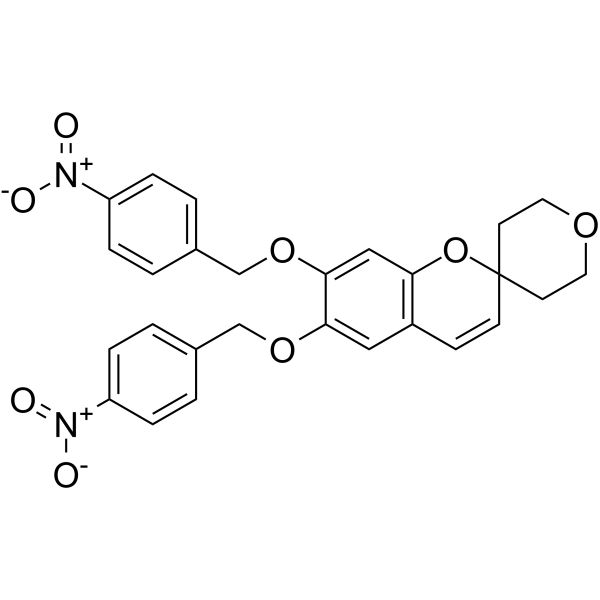
HY-101929
CU-CPT17eTLR Agonist -

HY-107202GL
Polyinosinic-polycytidylic acid (GMP Like)TLR-3 Agonist
Publications Citing Use of MedChemExpress (MCE) CL075
More

Biological Activity
Description
IC50 & Target
|
TLR8 |
Cellular Effect
|
Cell Line

|
Type | Value | Description | References |
|---|---|---|---|---|
| HEK293 | EC50 |
1.32 μM
Compound: 40, CL075
|
Agonist activity at human TLR8 expressed in HEK293 cells assessed as induction of NF-kappaB activity by measuring extracellular secreted alkaline phosphatase by HEK-blue reporter gene assay
Agonist activity at human TLR8 expressed in HEK293 cells assessed as induction of NF-kappaB activity by measuring extracellular secreted alkaline phosphatase by HEK-blue reporter gene assay
|
[PMID: 22924757] |
In Vitro
CL075 (2 μM; 4 h) induces the production of IL-6, IL-8, and IFN-γ in rabbit splenocytes[1].
?
CL075 (2 μM; 48 h) induces the total IgM production and cell proliferation in rabbit splenocytes[1].
?
CL075 (2 μM; 7 h) activates the rabTLR8 in 293 cells[1].
MedChemExpress (MCE) has not independently confirmed the accuracy of these methods. They are for reference only. Further protocols information, click here.
In Vivo
MedChemExpress (MCE) has not independently confirmed the accuracy of these methods. They are for reference only.


Chemical Information
-
CAS No. 256922-53-9
-
Appearance Solid
-
Molecular Weight 243.33
-
Formula C13H13N3S
-
Color White to off-white
-
SMILES
NC1=NC2=CC=CC=C2C(S3)=C1N=C3CCC
-
Synonyms
3M002
-
Shipping
Room temperature in continental US; may vary elsewhere.
-
Storage
Powder -20°C 3 years 4°C 2 years In solvent -80°C 6 months -20°C 1 month


Publications (3)
-
Journal Impact Factor
-
Most Recent
-
Neural Regen Res
Porcine decellularized nerve matrix hydrogel attenuates neuroinflammation after peripheral nerve injury by inhibiting the TLR4/MyD88/NF-κB axis. [Abstract]2026 Mar 1;21(3):1222-1235. PMID: 39589179 -
Burns
Lipopolysaccharide induces skin scarring through the TLR4/Myd88 inflammatory signaling pathway in dermal fibroblasts. [Abstract]2023 Dec;49(8):1997-2006. PMID: 37821278 -
J Biomater Appl
Stromal vascular fraction gel promoted wound healing and peripheral nerve repair in diabetic rats via TLRs/MyD88/NF-κB signaling pathway. [Abstract]2023 Jul;38(1):146-156. PMID: 37341245


Solvent & Solubility
In Vitro:
DMSO : 22 mg/mL (90.41 mM; Need ultrasonic and warming; Hygroscopic DMSO has a significant impact on the solubility of product, please use newly opened DMSO)
Please refer to the solubility information to select the appropriate solvent. Once prepared, please aliquot and store the solution to prevent product inactivation from repeated freeze-thaw cycles.
Storage method and period of stock solution: -80°C, 6 months; -20°C, 1 month. When stored at -80°C, please use it within 6 months. When stored at -20°C, please use it within 1 month.
Please refer to the solubility information to select the appropriate solvent. Once prepared, please aliquot and store the solution to prevent product inactivation from repeated freeze-thaw cycles.
Storage method and period of stock solution: -80°C, 6 months; -20°C, 1 month. When stored at -80°C, please use it within 6 months. When stored at -20°C, please use it within 1 month.
Concentration (start) × Volume (start) = Concentration (final) × Volume (final)

Protocols
-
LPS-Induced Endotoxemia/Systemic Inflammation
Lipopolysaccharide (LPS)-induced endotoxemia is a widely used in vivo model of acute systemic inflammation in which LPS, a Gram-negative bacterial endotoxin, activates innate immune signaling primarily through TLR4, leading to rapid and transient induction of pro-inflammatory cytokines such as TNF-α, IL-6, and IL-1β in circulation and tissues. This cytokine surge is commonly used as a measurable readout of systemic inflammatory activation and immune dysregulation, and is typically assessed within hours after intraperitoneal LPS administration in mouse models of endotoxemia. The model captures key features of systemic inflammatory response syndrome, including cytokine release, immune cell activation, and downstream tissue responses, and has been used to evaluate anti-inflammatory interventions such as cytokine modulation, lipid mediators, and immune cell-targeting therapies.
-
Research Protocol for Inflammation-related Diseases
The NLRP3 inflammasome is a cytosolic innate immune signaling platform that integrates priming signals and danger-signal activation to promote caspase-1 activation, maturation of IL-1β and IL-18, and gasdermin D-mediated pyroptotic cell death. The core experimental logic is to determine whether inflammatory disease phenotypes are driven by increased NLRP3 expression, ASC-containing inflammasome assembly, caspase-1 cleavage, GSDMD cleavage, and extracellular release of IL-1β/IL-18 rather than by nonspecific cell injury alone. The pathway is strongly linked to inflammation-related disease phenotypes because monosodium urate crystals activate NALP3/NLRP3 inflammasome signaling in gout-like crystal inflammation, cholesterol crystals activate NLRP3 inflammasomes in atherogenesis models, and DSS-induced intestinal inflammation has been reported to involve NLRP3 inflammasome activity. However, experimental colitis studies also show context-dependent protective effects of NLRP3 inflammasome co


Purity & Documentation
-
Data Sheet (278 KB)
-
SDS (393 KB)
- English - EN (393 KB)
- Français - FR (393 KB)
- Deutsch - DE (393 KB)
- Norwegian - NO (393 KB)
- Español - ES (393 KB)
- Swedish - SV (393 KB)
- Italian - IT (393 KB)
- Korean - KR (393 KB)
- Portuguese - PT (393 KB)
-
Handling Instructions (2659 KB)
References
[1]. Lai CY, et, al. TLR7/8 agonists activate a mild immune response in rabbits through TLR8 but not TLR7. Vaccine. 2014 Sep 29;32(43):5593-9. [Content Brief]
[2]. Spranger S, et, al. Generation of Th1-polarizing dendritic cells using the TLR7/8 agonist CL075. J Immunol. 2010 Jul 1;185(1):738-47. [Content Brief]
[3]. Maalej KM, et, al. TLR8, but not TLR7, induces the priming of the NADPH oxidase activation in human neutrophils. J Leukoc Biol. 2015 Jun;97(6):1081-7. [Content Brief]


Complete Stock Solution Preparation Table
Please refer to the solubility information to select the appropriate solvent. Once prepared, please aliquot and store the solution to prevent product inactivation from repeated freeze-thaw cycles.
Storage method and period of stock solution: -80°C, 6 months; -20°C, 1 month. When stored at -80°C, please use it within 6 months. When stored at -20°C, please use it within 1 month.
| Optional Solvent | Concentration Solvent Mass | 1 mg | 5 mg | 10 mg | 25 mg |
|---|---|---|---|---|---|
| DMSO | 1 mM | 4.1096 mL | 20.5482 mL | 41.0965 mL | 102.7411 mL |
| 5 mM | 0.8219 mL | 4.1096 mL | 8.2193 mL | 20.5482 mL | |
| 10 mM | 0.4110 mL | 2.0548 mL | 4.1096 mL | 10.2741 mL | |
| 15 mM | 0.2740 mL | 1.3699 mL | 2.7398 mL | 6.8494 mL | |
| 20 mM | 0.2055 mL | 1.0274 mL | 2.0548 mL | 5.1371 mL | |
| 25 mM | 0.1644 mL | 0.8219 mL | 1.6439 mL | 4.1096 mL | |
| 30 mM | 0.1370 mL | 0.6849 mL | 1.3699 mL | 3.4247 mL | |
| 40 mM | 0.1027 mL | 0.5137 mL | 1.0274 mL | 2.5685 mL | |
| 50 mM | 0.0822 mL | 0.4110 mL | 0.8219 mL | 2.0548 mL | |
| 60 mM | 0.0685 mL | 0.3425 mL | 0.6849 mL | 1.7124 mL | |
| 80 mM | 0.0514 mL | 0.2569 mL | 0.5137 mL | 1.2843 mL |


CL075 Related Classifications
HY-117066 Related Classifications
 Powered by Bioz