



Cyclic somatostatin acetate
Cyclic somatostatin (SRIF-14) acetate is a growth hormone-release inhibiting factor used in the research of severe, acute hemorrhages of gastroduodenal ulcers. Cyclic somatostatin acetate is a neuropeptide co-stored with acetylcholine in the cardiac parasympathetic innervation, exerts influences directly on contraction of ventricular cardiomyocytes. Cyclic somatostatin acetate inhibits the contractile response of isoprenaline with an IC50 value of 13 nM. Cyclic somatostatin acetate can be used for the research of cardiovascular disease.
For research use only. We do not sell to patients.
- CAS No.: 54472-66-1
- Formula: C78H108N18O21S2
- Molecular Weight:1697.93
-
Storage:
Please store the product under the recommended conditions in the Certificate of Analysis.


To place orders, for customer services and technical support, please contact: MedChemExpress USA
Tel: 609-228-6898 E-mail: [email protected] [email protected]


-
 Biological Activity
-
Chemical Information
- Protocols
- Purity & Documentation
- References
-
 Help & FAQs


-
HY-W539944
Argipressin acetateVasopressin Receptor Agonist -
HY-70037AS
Cinacalcet-d3 hydrochlorideStable Isotope -
HY-P3019
Urocortin III (human)CRF-R2 Activator -
HY-P0060A
Tetracosactide acetateMC4R Agonist -
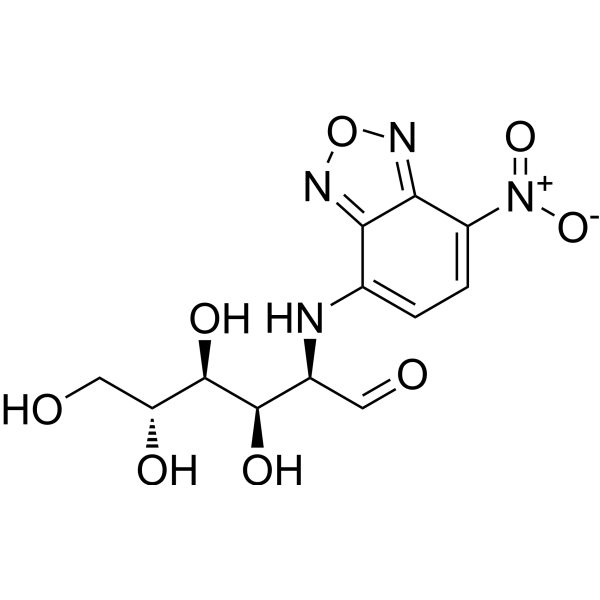
HY-116215
2-NBDGFluorescent Indicator -
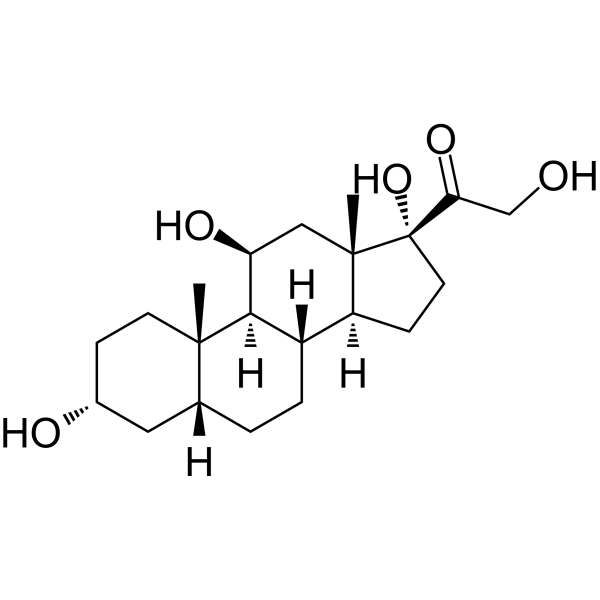
HY-129630
TetrahydrocortisolMetabolite of Hydrocortisone -
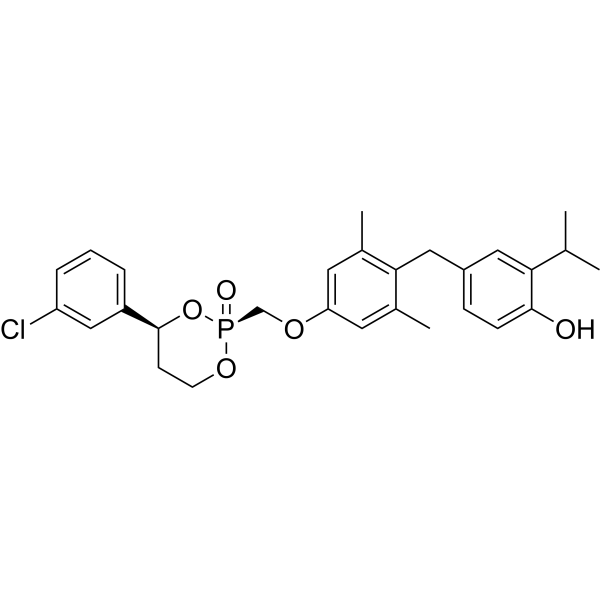
HY-111288
MB-07811 -

HY-DY1019
2-NBDG (solution)Fluorescent Indicator -
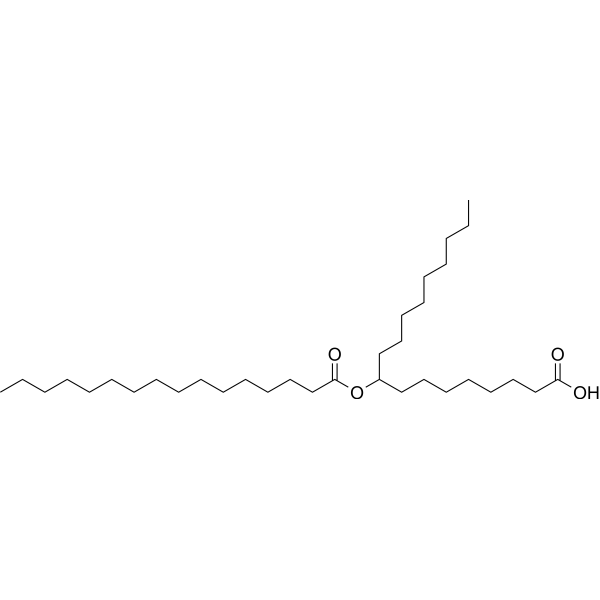
HY-120657
9-PAHSAGPR120 Agonist -

HY-153830
LacCer (d18:1/16:0)Sphingolipid -
HY-115403
FKGK18GVIA iPLA2 Inhibitor -

HY-156206
C24 Dihydro ceramide (d18:0/24:0)Ester Product
All Endogenous Metabolite Isoforms
More

Biological Activity
Description
In Vitro
Cyclic somatostatin (0-10 μM; 15 min) acetate dose-dependently inhibits the contractile response to isoprenaline in rat ventricular cardiomyocytes with an IC50 value of 13 nM[1].
MedChemExpress (MCE) has not independently confirmed the accuracy of these methods. They are for reference only. Further protocols information, click here.
In Vivo
MedChemExpress (MCE) has not independently confirmed the accuracy of these methods. They are for reference only.
-
Animal Model:Polypay sheeps[3]
-
Dosage:5 μg/kg
-
Administration:Intravenous injection; 5 μg/kg per hour once; for 18-22 hours
-
Result:Decreased net portal-drained viscera release of glucose, a-amino N, ammonia N, b-hydrox ybutyrate, oxygen consumption, liver oxygen consumption, and total splanchnic a-amino N release and oxygen consumption. Increased lactate release and net hepatic glucose output.


Chemical Information
-
CAS No. 54472-66-1
-
Molecular Weight 1697.93
-
Formula C78H108N18O21S2
-
Synonyms
SRIF-14 acetate; Somatostatin-14 acetate
-
Sequence
Ala-Gly-Cys-Lys-Asn-Phe-Phe-Trp-Lys-Thr-Phe-Thr-Ser-Cys (Disulfide bridge: Cys3-Cys14)
-
Sequence Shortening
AGCKNFFWKTFTSC-OH (Disulfide bridge: Cys3-Cys14)
-
Shipping
Room temperature in continental US; may vary elsewhere.
-
Storage
Please store the product under the recommended conditions in the Certificate of Analysis.

Protocols
-
Cell Cytotoxicity Assay
Cytotoxicity assays are usually based on the assessment of cell membrane damage, which can also be indirectly detected by measuring cell viability. Detection methods include MTT assay, CKK-8 assay, LDH assay and ATP assay, etc.
-
Research Protocol for Endocrine Diseases
Endocrine diseases often arise from disrupted hormone production, hormone signaling, or target-tissue responsiveness; for diabetes-focused endocrine disease models, insulin signaling regulates glucose uptake, hepatic glucose output, lipid metabolism, and β-cell compensation. Type 2 diabetes develops through interacting defects in insulin resistance, β-cell dysfunction, adipose inflammation, hepatic glucose overproduction, altered incretin signaling, and ectopic lipid metabolism. A major unresolved question is whether endocrine dysfunction is driven primarily by target-tissue insulin resistance, intrinsic β-cell failure, immune/inflammatory stress, or combined multi-organ failure that differs by disease stage.
-
Research Protocol for Cardiovascular Diseases
Cardiovascular disease can be modeled as maladaptive cardiac remodeling, where ischemic injury or pressure overload activates inflammatory signaling, fibroblast activation, extracellular-matrix deposition, cardiomyocyte hypertrophy, vascular remodeling, and progressive ventricular dysfunction. The TGF-β/SMAD axis is a central profibrotic pathway after myocardial injury and pressure overload, while innate immune and cytokine pathways regulate leukocyte recruitment, scar formation, and adverse remodeling. Key unresolved questions include which inflammatory signals are reparative versus harmful, when fibrosis is protective versus maladaptive, and whether pathway inhibition improves function without weakening necessary infarct healing or compensatory remodeling.


Purity & Documentation
References
[1]. Murray F, et al. Positive and negative contractile effects of somatostatin-14 on rat ventricular cardiomyocytes. J Cardiovasc Pharmacol. 2001 Mar;37(3):324-32. [Content Brief]
[2]. Bell D, et al. SRIF receptor subtype expression and involvement in positive and negative contractile effects of somatostatin-14 (SRIF-14) in ventricular cardiomyocytes. Cell Physiol Biochem. 2008;22(5-6):653-64. [Content Brief]
[3]. McLeod KR, et al. Effects of exogenous somatostatin and cysteamine on net nutrient flux across the portal-drained viscera and liver of sheep during intraduodenal infusion of starch hydrolysate and casein. J Anim Sci. 1997 Nov;75(11):3026-37. [Content Brief]

Calculators
Concentration (start) × Volume (start) = Concentration (final) × Volume (final)


Cyclic somatostatin acetate Related Classifications
HY-P0084A Related Classifications
 Powered by Bioz