



Dactylorhin A
Based on 1 publication(s) in Google Scholar
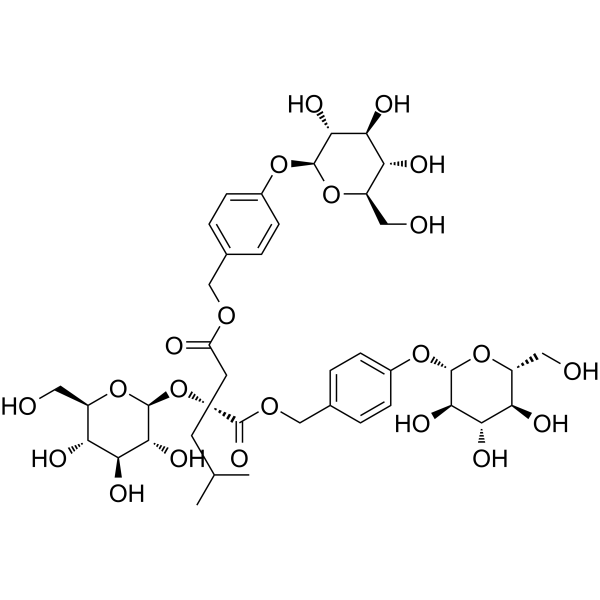
Dactylorhin A is a glucoside and succinate derivative ester inhibitor that can be found in Bletilla striata tubers and Gymnadenia conopsea rhizomes, with activity against nitric oxide production in macrophage cells.Dactylorhin A suppresses lipopolysaccharide-induced nitric oxide generation via a cytotoxicity-independent pathway.
For research use only. We do not sell to patients.
- Purity : 99.85%
- CAS No.: 256459-34-4
- Formula: C40H56O22
- Molecular Weight:888.86
-
Storage:
4°C, sealed storage, away from moisture and light
* In solvent : -80°C, 6 months; -20°C, 1 month (sealed storage, away from moisture and light)

To place orders, for customer services and technical support, please contact: MedChemExpress USA
Tel: 609-228-6898 E-mail: [email protected] [email protected]


-
 Biological Activity
-
Chemical Information
-
Solvent & Solubility
- Protocols
- Purity & Documentation
- References
-
 Help & FAQs


-
HY-N2031
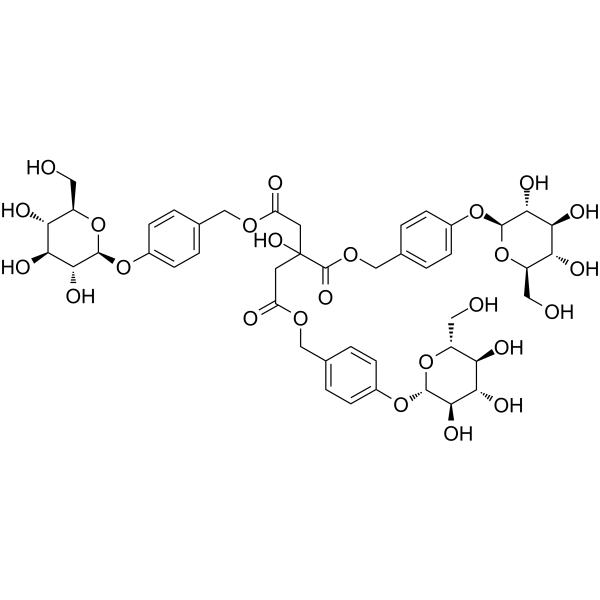
ParishinSir2/Uth1/TOR Modulator -
HY-P0283
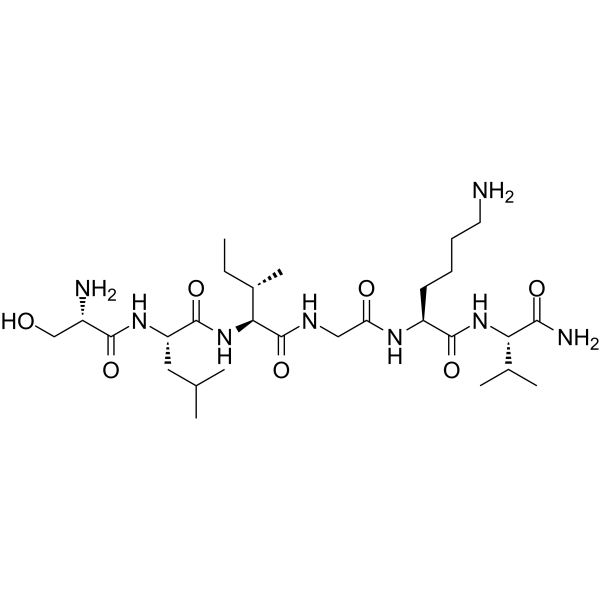
Protease-Activated Receptor-2, amidePAR2 Activator -
HY-111832
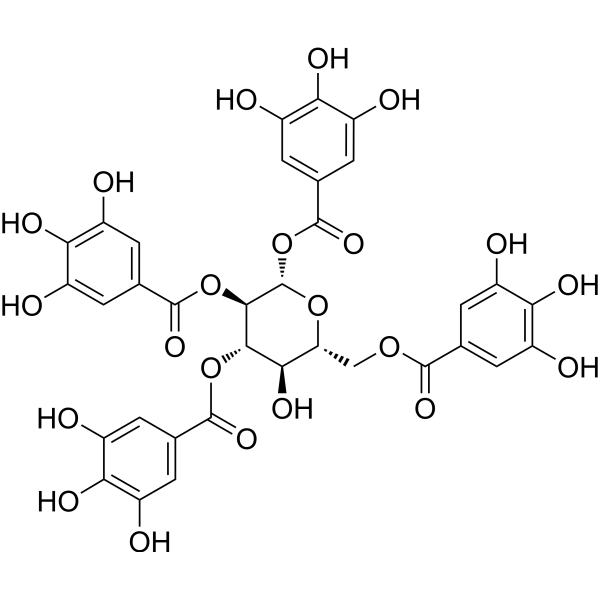
1,2,3,6-TetragalloylglucoseUGT1A1 Inhibitor -
HY-N0467
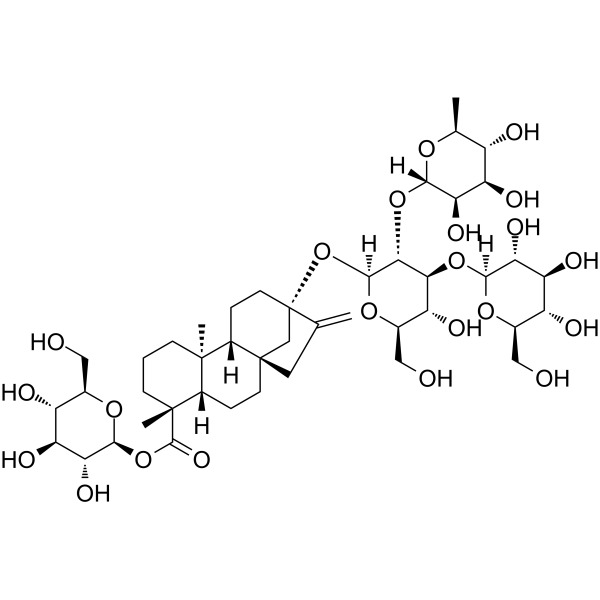
Rebaudioside CTAS1R2/TAS1R3 Activator -
HY-B0606
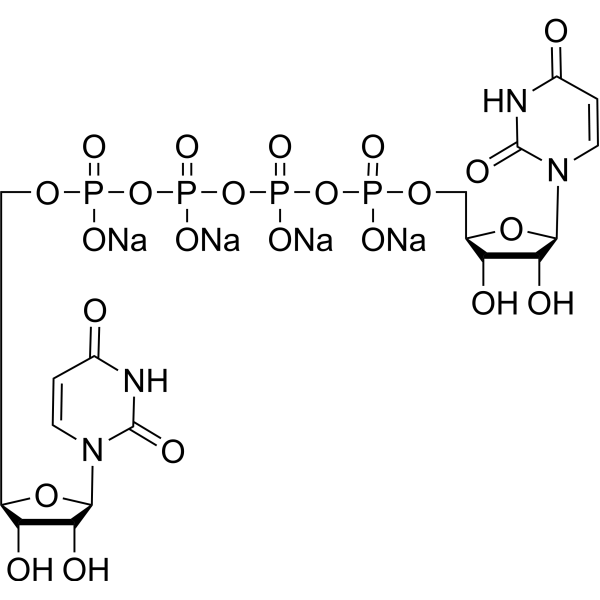
Diquafosol tetrasodiumP2Y2 Receptor Agonist -
HY-N7389A
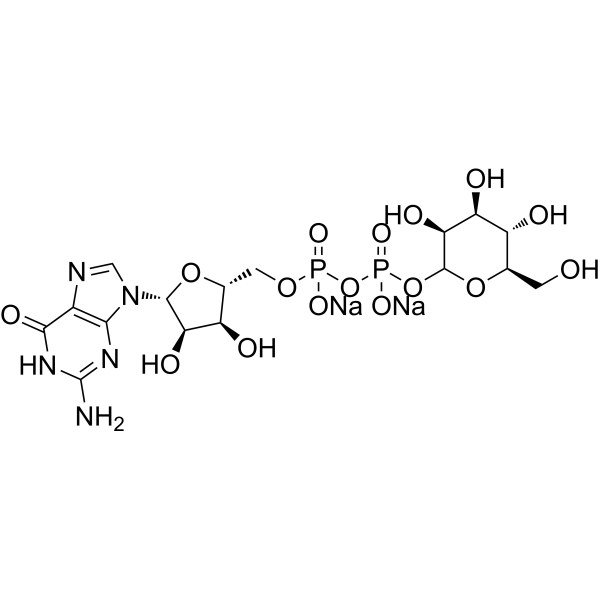
GDP-D-mannose disodiumGDP-L-fucose Precursor -
HY-113273A
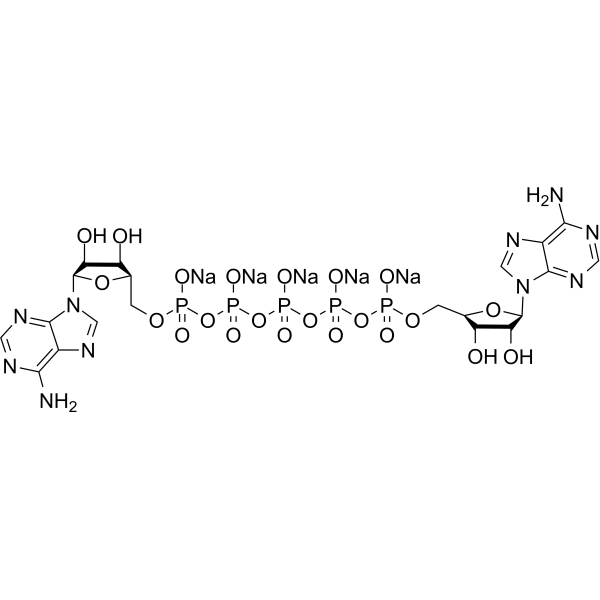
Diadenosine pentaphosphate pentasodiumDiadenosine Polyphosphate
Publications Citing Use of MedChemExpress (MCE) Dactylorhin A
More

Biological Activity
Description
Cellular Effect
|
Cell Line

|
Type | Value | Description | References |
|---|---|---|---|---|
| RAW264.7 | CC50 |
>240 μM
|
Cytotoxicity against RAW 264.7 macrophage cells incubated for 24 h assessed by MTT assay, with CC50 greater than 240 μM.
Cytotoxicity against RAW 264.7 macrophage cells incubated for 24 h assessed by MTT assay, with CC50 greater than 240 μM.
|
28617053 |
| RAW264.7 | IC50 |
51.7 μM
|
Inhibition of LPS-induced nitric oxide production in RAW 264.7 macrophage cells pre-incubated with dactylorhin A for 1 h prior to 24 h LPS stimulation, measured by Griess reagent assay.
Inhibition of LPS-induced nitric oxide production in RAW 264.7 macrophage cells pre-incubated with dactylorhin A for 1 h prior to 24 h LPS stimulation, measured by Griess reagent assay.
|
28617053 |
In Vitro
Dactylorhin A (Compound 5) (1 h pre-incubation + 24 h co-incubation with LPS) moderately inhibits LPS (HY-D1056)-induced NO production in RAW 264.7 macrophages with an IC50 of 51.7 μM, and this effect is independent of cytotoxicity[1].
MedChemExpress (MCE) has not independently confirmed the accuracy of these methods. They are for reference only. Further protocols information, click here.


Chemical Information
-
CAS No. 256459-34-4
-
Appearance Solid
-
Molecular Weight 888.86
-
Formula C40H56O22
-
Color White to off-white
-
SMILES
O=C(OCC1=CC=C(O[C@H]2[C@@H]([C@H]([C@@H]([C@@H](CO)O2)O)O)O)C=C1)C[C@@](CC(C)C)(O[C@H]3[C@@H]([C@H]([C@@H]([C@@H](CO)O3)O)O)O)C(OCC4=CC=C(O[C@H]5[C@@H]([C@H]([C@@H]([C@@H](CO)O5)O)O)O)C=C4)=O
-
Structure Classification
-
Shipping
Room temperature in continental US; may vary elsewhere.
-
Storage
4°C, sealed storage, away from moisture and light
* In solvent : -80°C, 6 months; -20°C, 1 month (sealed storage, away from moisture and light)


Publications (1)
-
Journal Impact Factor
-
Most Recent
-
Cell Death Dis
ANP32E drives lung adenocarcinoma progression via GSK3β-mediated glycolytic reprogramming. [Abstract]2026 Apr 14;17(1):503. PMID: 41980942


Solvent & Solubility
In Vitro:
DMSO : 100 mg/mL (112.50 mM; Need ultrasonic; Hygroscopic DMSO has a significant impact on the solubility of product, please use newly opened DMSO)
Please refer to the solubility information to select the appropriate solvent. Once prepared, please aliquot and store the solution to prevent product inactivation from repeated freeze-thaw cycles.
Storage method and period of stock solution: -80°C, 6 months; -20°C, 1 month (sealed storage, away from moisture and light). When stored at -80°C, please use it within 6 months. When stored at -20°C, please use it within 1 month.
Please refer to the solubility information to select the appropriate solvent. Once prepared, please aliquot and store the solution to prevent product inactivation from repeated freeze-thaw cycles.
Storage method and period of stock solution: -80°C, 6 months; -20°C, 1 month (sealed storage, away from moisture and light). When stored at -80°C, please use it within 6 months. When stored at -20°C, please use it within 1 month.
Concentration (start) × Volume (start) = Concentration (final) × Volume (final)
In Vivo:
Select the appropriate dissolution method based on your experimental animal and administration route.
- For the following dissolution methods, please ensure to first prepare a clear stock solution using an In Vitro approach and then sequentially add co-solvents:
- To ensure reliable experimental results, the clarified stock solution can be appropriately stored based on storage conditions. As for the working solution for In Vivo experiments, it is recommended to prepare freshly and use it on the same day.
- The percentages shown for the solvents indicate their volumetric ratio in the final prepared solution. If precipitation or phase separation occurs during preparation, heat and/or sonication can be used to aid dissolution.
Add each solvent one by one: 10% DMSO 40% PEG300 5% Tween-80 45% Saline
Solubility: ≥ 2.5 mg/mL (2.81 mM); Clear solution
This protocol yields a clear solution of ≥ 2.5 mg/mL (saturation unknown).
Taking 1 mL working solution as an example, add 100 μL DMSO stock solution (25.0 mg/mL) to 400 μL PEG300, and mix evenly; then add 50 μL Tween-80 and mix evenly; then add 450 μL Saline to adjust the volume to 1 mL.
Preparation of Saline: Dissolve 0.9 g sodium chloride in ddH₂O and dilute to 100 mL to obtain a clear Saline solution.
Add each solvent one by one: 10% DMSO 90% (20% SBE-β-CD in Saline)
Solubility: ≥ 2.5 mg/mL (2.81 mM); Clear solution
This protocol yields a clear solution of ≥ 2.5 mg/mL (saturation unknown).
Taking 1 mL working solution as an example, add 100 μL DMSO stock solution (25.0 mg/mL) to 900 μL 20% SBE-β-CD in Saline, and mix evenly.
Preparation of 20% SBE-β-CD in Saline (4°C, storage for one week): 2 g SBE-β-CD powder is dissolved in 10 mL Saline, completely dissolve until clear.
In Vivo Dissolution Calculator
Please enter the basic information of animal experiments:
-
-
-
-
Recommended: Prepare an additional quantity of animals to account for potential losses during experiments.
Please enter your animal formula composition:
-
%DMSO +
Recommended: Keep the proportion of DMSO in working solution below 2% if your animal is weak.
-
%+
-
+%Tween-80 + +
-
%Saline +
The co-solvents required include: DMSO, . All of co-solvents are available by MedChemExpress (MCE). , Tween 80. All of co-solvents are available by MedChemExpress (MCE).
Working solution concentration: 0.22 mg/mL
Method for preparing stock solution: mg drug dissolved in μL DMSO. Stock solution concentration: mg/mL. * In solvent : -80°C, 6 months; -20°C, 1 month (sealed storage, away from moisture and light)
1. Take μL DMSO stock solution;
2. Add μL .
μL , mix evenly;
3. Then add μL Tween 80, mix evenly;
4. Then add μL
Please ensure that the stock solution in the first step is dissolved to a clear state, and add co-solvents in sequence. You can use ultrasonic heating (ultrasonic cleaner, recommended frequency 20-40 kHz), vortexing, etc. to assist dissolution.

Protocols
-
Cell Cytotoxicity Assay
Cytotoxicity assays are usually based on the assessment of cell membrane damage, which can also be indirectly detected by measuring cell viability. Detection methods include MTT assay, CKK-8 assay, LDH assay and ATP assay, etc.
-
Mammalian live/dead viability and cytotoxicity staining
Live/dead viability and cytotoxicity staining assays are based on the simultaneous detection of intracellular esterase activity in metabolically active (viable) cells and membrane integrity loss in non-viable cells. In commonly used dual-staining approaches, membrane-permeant fluorogenic substrates are converted by intracellular esterases into fluorescent products in live cells, while impermeant DNA-binding dyes selectively enter cells with compromised plasma membranes and label nucleic acids in dead or dying cells, enabling discrimination between viable and non-viable populations by fluorescence microscopy or flow cytometry.
-
Cell Viability Determination by MTT Colorimetric Assay
The following protocol uses the MTT colorimetric assay as a classic literature-established method for assessing cell viability/metabolic activity in cultured mammalian cells. MTT[3-(4,5-dimethylthiazol-2-yl)-2,5-diphenyltetrazolium bromide] is reduced by metabolically active cells to a colored formazan product; the amount of formazan is quantified spectrophotometrically and provides an indirect measure of metabolically active viable cells. Importantly, MTT reduction reflects cellular oxidoreductase/metabolic activity rather than an absolute direct count of living cells, so changes in cellular metabolism can alter the signal independently of cell number.


Purity & Documentation
-
Data Sheet (278 KB)
-
SDS (393 KB)
- English - EN (393 KB)
- Français - FR (393 KB)
- Deutsch - DE (393 KB)
- Norwegian - NO (393 KB)
- Español - ES (393 KB)
- Swedish - SV (393 KB)
- Italian - IT (393 KB)
- Korean - KR (393 KB)
- Portuguese - PT (393 KB)
-
Handling Instructions (2659 KB)
References
[1]. Zhao Y, et al. Chemical constituents from Bletilla striata and their NO production suppression in RAW 264.7 macrophage cells. Journal of Asian natural products research. 2018 Apr;20(4):385-390. [Content Brief]
[2]. Cai M, et al. Chemical fingerprint analysis of rhizomes of Gymnadenia conopsea by HPLC-DAD-MSn. Journal of chromatography. B, Analytical technologies in the biomedical and life sciences. 2006 Dec 05;844(2):301-7. [Content Brief]


Complete Stock Solution Preparation Table
Please refer to the solubility information to select the appropriate solvent. Once prepared, please aliquot and store the solution to prevent product inactivation from repeated freeze-thaw cycles.
Storage method and period of stock solution: -80°C, 6 months; -20°C, 1 month (sealed storage, away from moisture and light). When stored at -80°C, please use it within 6 months. When stored at -20°C, please use it within 1 month.
| Optional Solvent | Concentration Solvent Mass | 1 mg | 5 mg | 10 mg | 25 mg |
|---|---|---|---|---|---|
| DMSO | 1 mM | 1.1250 mL | 5.6252 mL | 11.2504 mL | 28.1259 mL |
| 5 mM | 0.2250 mL | 1.1250 mL | 2.2501 mL | 5.6252 mL | |
| 10 mM | 0.1125 mL | 0.5625 mL | 1.1250 mL | 2.8126 mL | |
| 15 mM | 0.0750 mL | 0.3750 mL | 0.7500 mL | 1.8751 mL | |
| 20 mM | 0.0563 mL | 0.2813 mL | 0.5625 mL | 1.4063 mL | |
| 25 mM | 0.0450 mL | 0.2250 mL | 0.4500 mL | 1.1250 mL | |
| 30 mM | 0.0375 mL | 0.1875 mL | 0.3750 mL | 0.9375 mL | |
| 40 mM | 0.0281 mL | 0.1406 mL | 0.2813 mL | 0.7031 mL | |
| 50 mM | 0.0225 mL | 0.1125 mL | 0.2250 mL | 0.5625 mL | |
| 60 mM | 0.0188 mL | 0.0938 mL | 0.1875 mL | 0.4688 mL | |
| 80 mM | 0.0141 mL | 0.0703 mL | 0.1406 mL | 0.3516 mL | |
| 100 mM | 0.0113 mL | 0.0563 mL | 0.1125 mL | 0.2813 mL |


Dactylorhin A Related Classifications
HY-125531 Related Classifications
 Powered by Bioz
Keywords
- Dactylorhin A
- 256459-34-4
- Biochemical Assay Reagents
- Gymnadenia conopsea rhizomes
- cytotoxicity-independent pathway
- Bletilla striata tubers
- nitric oxide production
- HPLC fingerprint
- lipopolysaccharide
- glucoside
- RAW 264.7 macrophage cells
- macrophage cells
- succinate derivative ester inhibitor
- Inhibitor
- inhibitor
- inhibit