



L-NIO dihydrochloride
Based on 2 publication(s) in Google Scholar
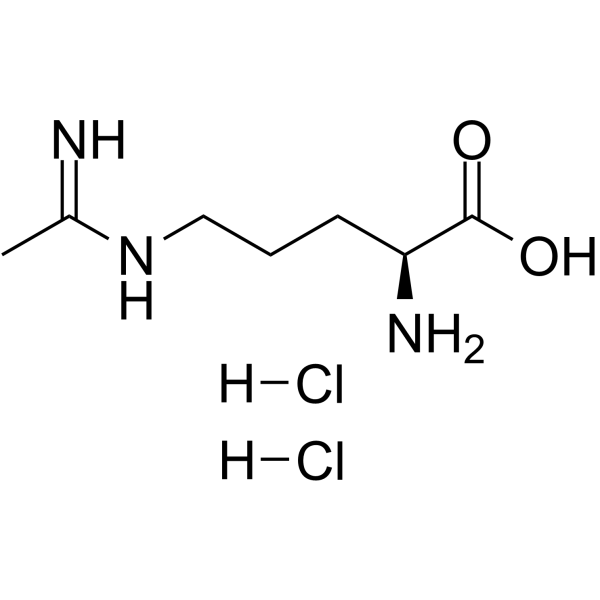
L-NIO dihydrochloride is a potent, non-selective and NADPH-dependent nitric oxide synthase (NOS) inhibitor, with Kis of 1.7, 3.9, 3.9 μM for neuronal (nNOS), endothelial (eNOS), and inducible (iNOS), respectively. L-NIO dihydrochloride induces a consistentfocal ischemic infarctin rats.
For research use only. We do not sell to patients.
- Purity : 99.17%
- CAS No.: 159190-44-0
- Formula: C7H17Cl2N3O2
- Molecular Weight:246.13
-
Storage:
-20°C, stored under nitrogen, away from moisture
* In solvent : -80°C, 6 months; -20°C, 1 month (stored under nitrogen, away from moisture)

To place orders, for customer services and technical support, please contact: MedChemExpress USA
Tel: 609-228-6898 E-mail: [email protected] [email protected]


-
 Biological Activity
-
Chemical Information
-
Solvent & Solubility
- Purity & Documentation
- References
-
 Help & FAQs


-
HY-12116
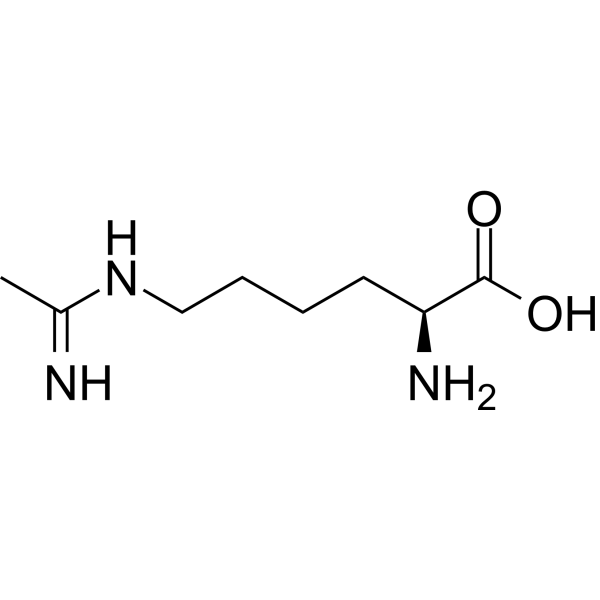
L-NILNO Synthase Inhibitor -
HY-18731
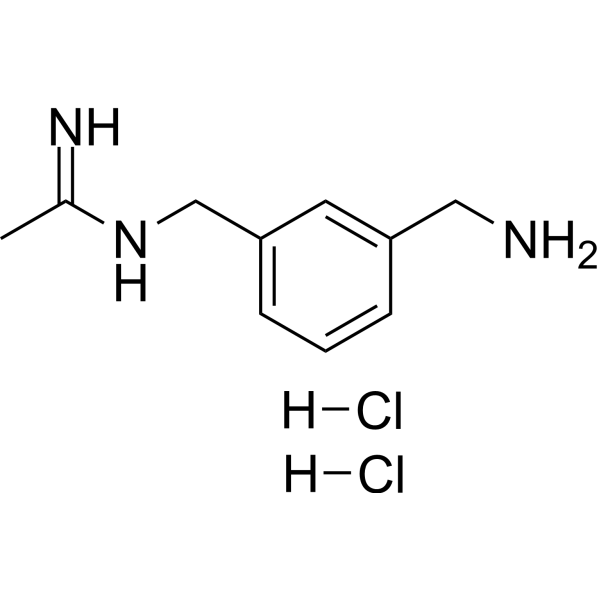
1400W DihydrochlorideNO Synthase Inhibitor -
HY-E70005D
Collagenase IV, Clostridium histolyticaZinc peptidase, Matrix metalloproteinases (MMPs) -
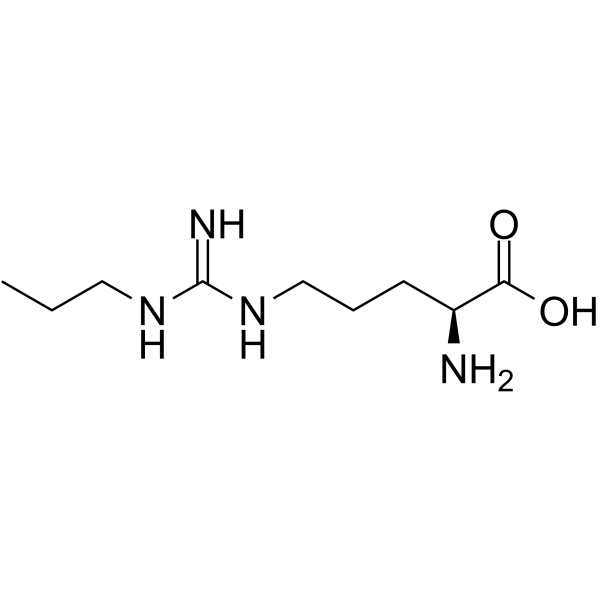
HY-102062
Nω-Propyl-L-argininenNOS Inhibitor -
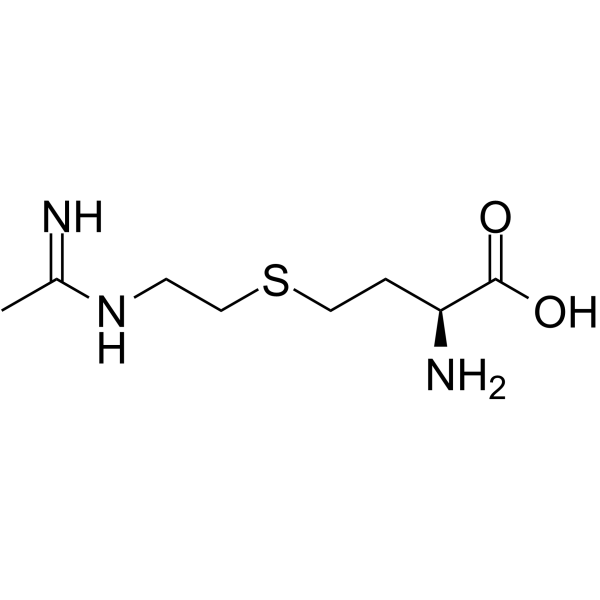
HY-12119
GW274150iNOS Inhibitor -
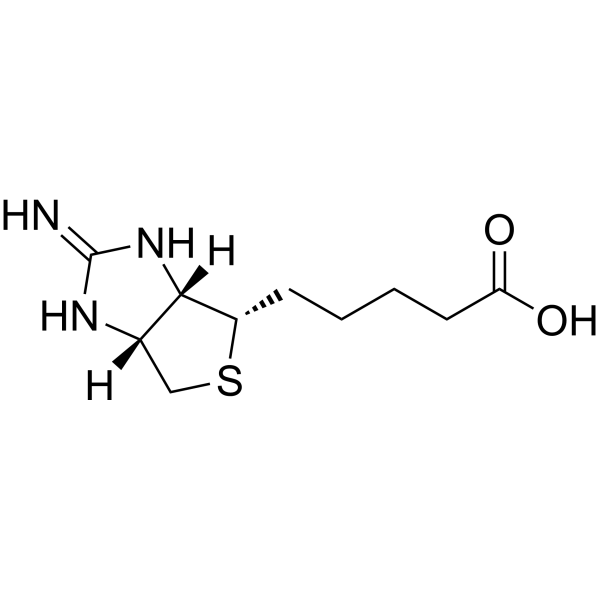
HY-118700
2-IminobiotinNitric Oxide Synthases Inhibitor -
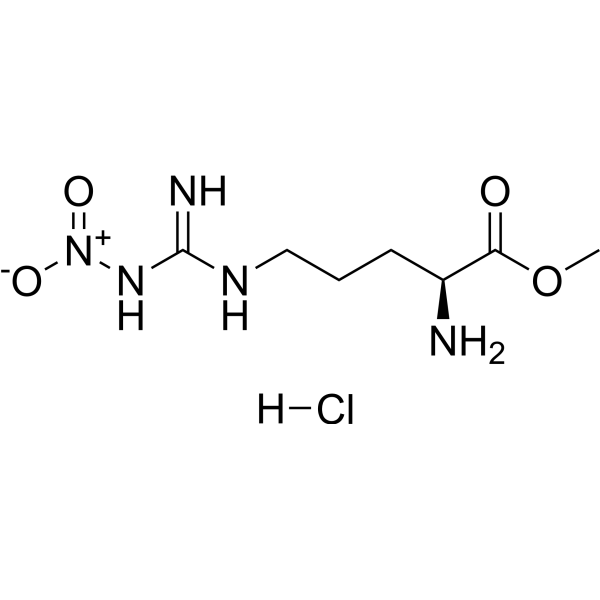
HY-18729A
L-NAME hydrochlorideNO Synthase Inhibitor -
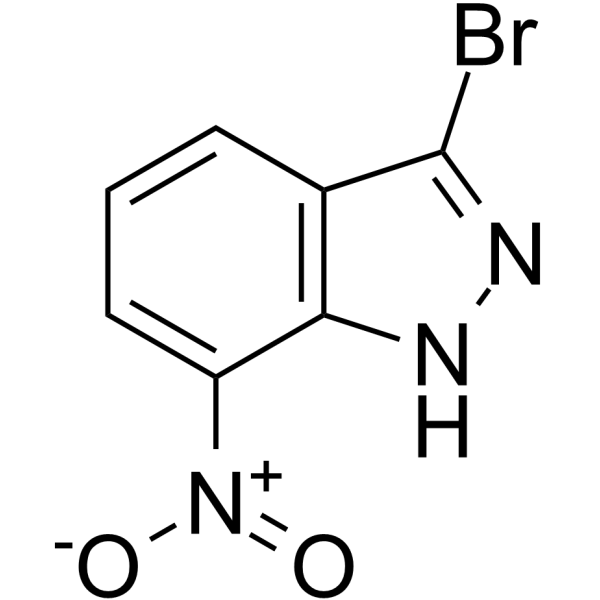
HY-101175
3-Bromo-7-nitroindazolenNOS Inhibitor -
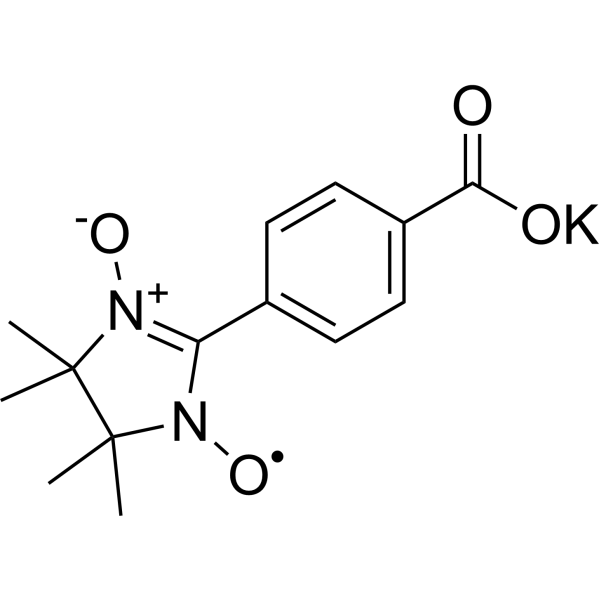
HY-18734A
Carboxy-PTIO potassiumNO Inhibitor -
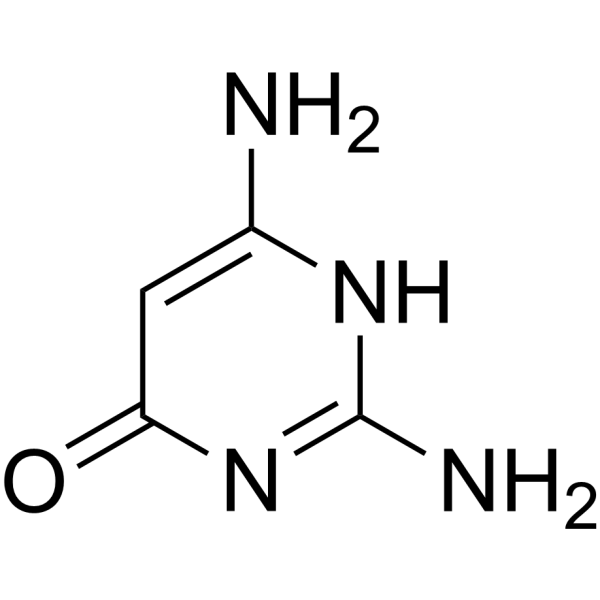
HY-100954
2,4-Diamino-6-hydroxypyrimidineGTP Cyclohydrolase I Inhibitor -
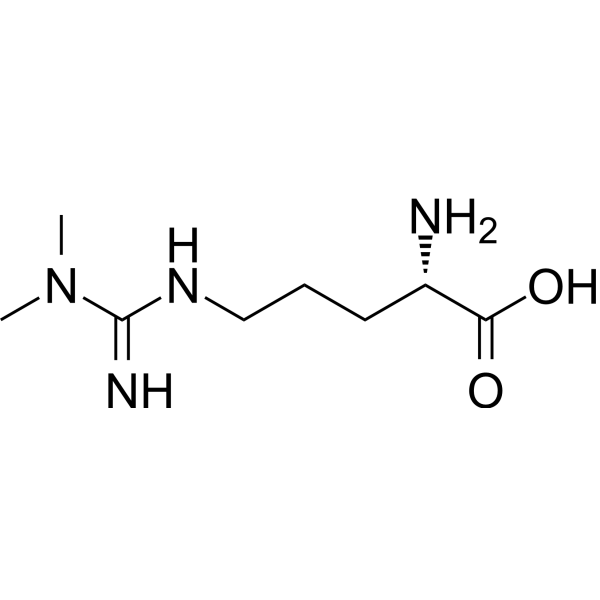
HY-113216
Asymmetric dimethylarginineEndogenous Metabolite -
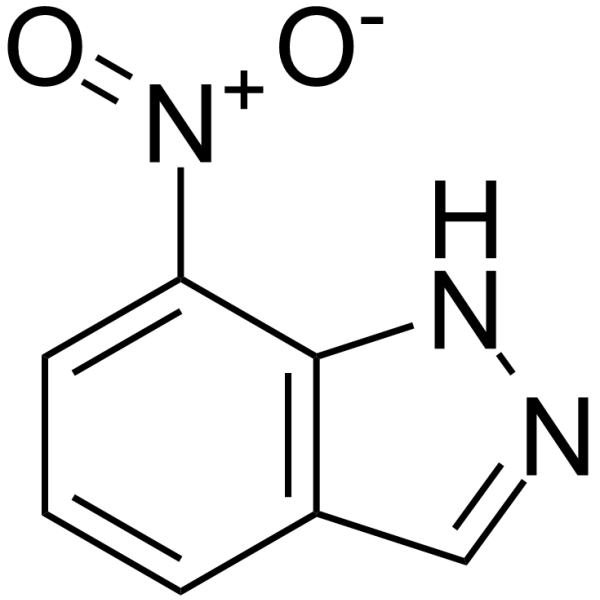
HY-69019
7-NitroindazoleNOS Inhibitor
Publications Citing Use of MedChemExpress (MCE) L-NIO dihydrochloride
More

Biological Activity
Description
IC50 & Target
|
eNOS |
iNOS |
nNOS |
In Vitro
L-NIO is a potent, non-selective and NADPH-dependent nitric oxide synthase (NOS) inhibitor, with Kis of 1.7, 3.9, 3.9 μM for neuronal (nNOS), endothelial (eNOS), and inducible (iNOS), respectively[1].
MedChemExpress (MCE) has not independently confirmed the accuracy of these methods. They are for reference only. .
In Vivo
MedChemExpress (MCE) has not independently confirmed the accuracy of these methods. They are for reference only.
-
Animal Model:Adult male Sprague Dawley rats (250-350 g)[2]
-
Dosage:0.04-2.0 μmol/(3.0-5.0 μL) per rat
-
Administration:Injected into striatum 3 days post-ischemia
-
Result:2.0 μmol L-NIO produced an infarct significantly different in volume from sham animals.


Chemical Information
-
CAS No. 159190-44-0
-
Appearance Solid-Liquid Mixture
-
Molecular Weight 246.13
-
Formula C7H17Cl2N3O2
-
Color Colorless to off-white
-
SMILES
N[C@@H](CCCNC(C)=N)C(O)=O.[H]Cl.[H]Cl
-
Shipping
Room temperature in continental US; may vary elsewhere.
-
Storage
-20°C, stored under nitrogen, away from moisture
* In solvent : -80°C, 6 months; -20°C, 1 month (stored under nitrogen, away from moisture)


Publications (2)
-
Journal Impact Factor
-
Most Recent
-
Cell Mol Gastroenterol Hepatol
2021;11(3):683-696. PMID: 33075564 -
Eur J Pharmacol
Bradykinin modulates endothelin-1-enhanced and monocrotaline-induced pulmonary arterial hypertension-associated arrhythmogenesis in rabbit right ventricular outflow tract via a nitric oxide-dependent pathway. [Abstract]2026 Apr 24:178896. PMID: 42035941


Solvent & Solubility
In Vitro:
H2O : 100 mg/mL (406.29 mM; Need ultrasonic)
Please refer to the solubility information to select the appropriate solvent. Once prepared, please aliquot and store the solution to prevent product inactivation from repeated freeze-thaw cycles.
Storage method and period of stock solution: -80°C, 6 months; -20°C, 1 month (stored under nitrogen, away from moisture). When stored at -80°C, please use it within 6 months. When stored at -20°C, please use it within 1 month.
* Note: If you choose water as the stock solution, please dilute it to the working solution, then filter and sterilize it with a 0.22 μm filter before use.
Please refer to the solubility information to select the appropriate solvent. Once prepared, please aliquot and store the solution to prevent product inactivation from repeated freeze-thaw cycles.
Storage method and period of stock solution: -80°C, 6 months; -20°C, 1 month (stored under nitrogen, away from moisture). When stored at -80°C, please use it within 6 months. When stored at -20°C, please use it within 1 month.
* Note: If you choose water as the stock solution, please dilute it to the working solution, then filter and sterilize it with a 0.22 μm filter before use.
Concentration (start) × Volume (start) = Concentration (final) × Volume (final)
In Vivo:
For the following dissolution methods, please prepare the working solution directly:
It is recommended to prepare fresh solutions and use them promptly within a short period of time.
The percentages shown for the solvents indicate their volumetric ratio in the final prepared solution. If precipitation or phase separation occurs during preparation, heat and/or sonication can be used to aid dissolution.
Add each solvent one by one: PBS
Solubility: 100 mg/mL (406.29 mM); Clear solution; Need ultrasonic


Purity & Documentation
-
Data Sheet (273 KB)
-
SDS (252 KB)
- English - EN (252 KB)
- Français - FR (252 KB)
- Deutsch - DE (252 KB)
- Norwegian - NO (252 KB)
- Español - ES (252 KB)
- Swedish - SV (252 KB)
- Italian - IT (252 KB)
- Korean - KR (252 KB)
- Portuguese - PT (252 KB)
-
Handling Instructions (2659 KB)
References
[1]. Babu BR, et al. N5-(1-Imino-3-butenyl)-L-ornithine. A neuronal isoform selective mechanism-based inactivator of nitric oxide synthase. J Biol Chem. 1998 Apr 10;273(15):8882-9. [Content Brief]
[2]. Van Slooten AR, et al. L-NIO as a novel mechanism for inducing focal cerebral ischemia in the adult rat brain. J Neurosci Methods. 2015 Apr 30;245:44-57. [Content Brief]


Complete Stock Solution Preparation Table
Please refer to the solubility information to select the appropriate solvent. Once prepared, please aliquot and store the solution to prevent product inactivation from repeated freeze-thaw cycles.
Storage method and period of stock solution: -80°C, 6 months; -20°C, 1 month (stored under nitrogen, away from moisture). When stored at -80°C, please use it within 6 months. When stored at -20°C, please use it within 1 month.
| Optional Solvent | Concentration Solvent Mass | 1 mg | 5 mg | 10 mg | 25 mg |
|---|---|---|---|---|---|
| H2O | 1 mM | 4.0629 mL | 20.3145 mL | 40.6289 mL | 101.5723 mL |
| 5 mM | 0.8126 mL | 4.0629 mL | 8.1258 mL | 20.3145 mL | |
| 10 mM | 0.4063 mL | 2.0314 mL | 4.0629 mL | 10.1572 mL | |
| 15 mM | 0.2709 mL | 1.3543 mL | 2.7086 mL | 6.7715 mL | |
| 20 mM | 0.2031 mL | 1.0157 mL | 2.0314 mL | 5.0786 mL | |
| 25 mM | 0.1625 mL | 0.8126 mL | 1.6252 mL | 4.0629 mL | |
| 30 mM | 0.1354 mL | 0.6771 mL | 1.3543 mL | 3.3857 mL | |
| 40 mM | 0.1016 mL | 0.5079 mL | 1.0157 mL | 2.5393 mL | |
| 50 mM | 0.0813 mL | 0.4063 mL | 0.8126 mL | 2.0314 mL | |
| 60 mM | 0.0677 mL | 0.3386 mL | 0.6771 mL | 1.6929 mL | |
| 80 mM | 0.0508 mL | 0.2539 mL | 0.5079 mL | 1.2697 mL | |
| 100 mM | 0.0406 mL | 0.2031 mL | 0.4063 mL | 1.0157 mL |
* Note: If you choose water as the stock solution, please dilute it to the working solution, then filter and sterilize it with a 0.22 μm filter before use.


L-NIO dihydrochloride Related Classifications
HY-100986 Related Classifications
 Powered by Bioz