



Eglumegad
Based on 4 publication(s) in Google Scholar
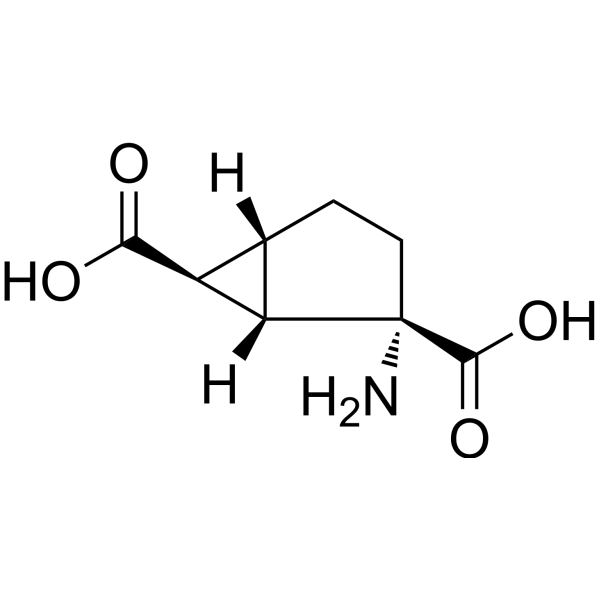
Eglumegad (LY354740) is a highly potent and selective group II (mGlu2/3) receptor agonist with IC50s of 5 nM and 24 nM on transfected human mGlu2 and mGlu3 receptors, respectively.
For research use only. We do not sell to patients.
- Purity : 99.94%
- CAS No.: 176199-48-7
- Formula: C8H11NO4
- Molecular Weight:185.18
-
Storage:Powder -20°C, 3 years , 4°C, 2 years ; In solvent -80°C, 2 years , -20°C, 1 year

To place orders, for customer services and technical support, please contact: MedChemExpress USA
Tel: 609-228-6898 E-mail: [email protected] [email protected]


-
 Biological Activity
-
Chemical Information
-
Solvent & Solubility
- Purity & Documentation
- References
-
 Help & FAQs


-
HY-70059
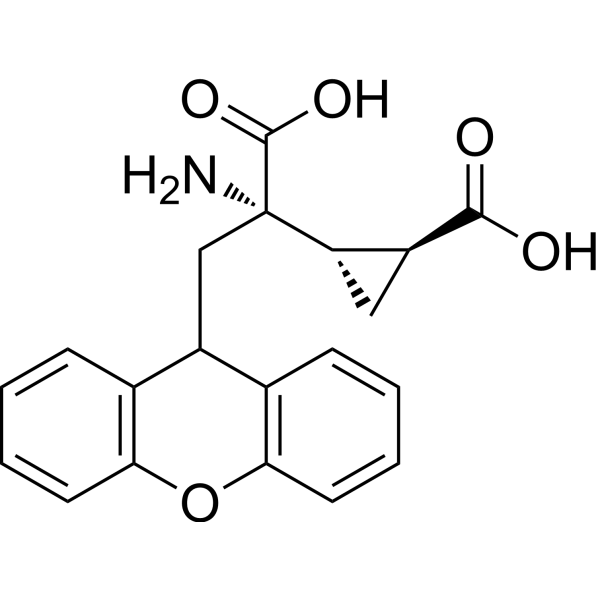
LY341495mGluR Antagonist -
HY-103558
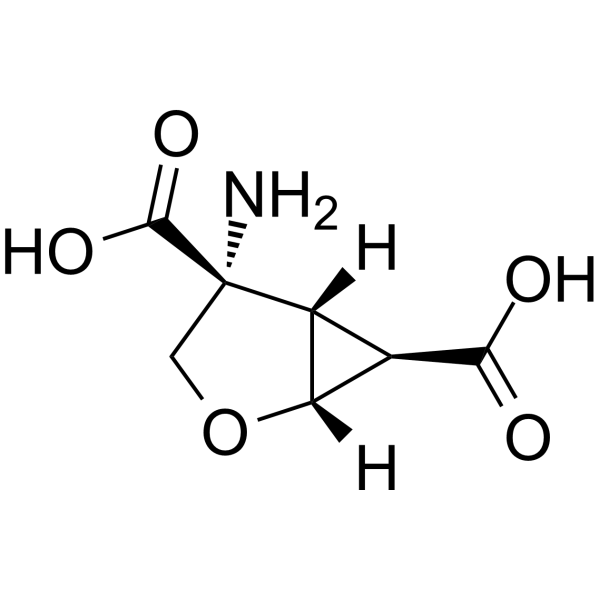
LY379268mGlu2/3R Agonist -
HY-15129
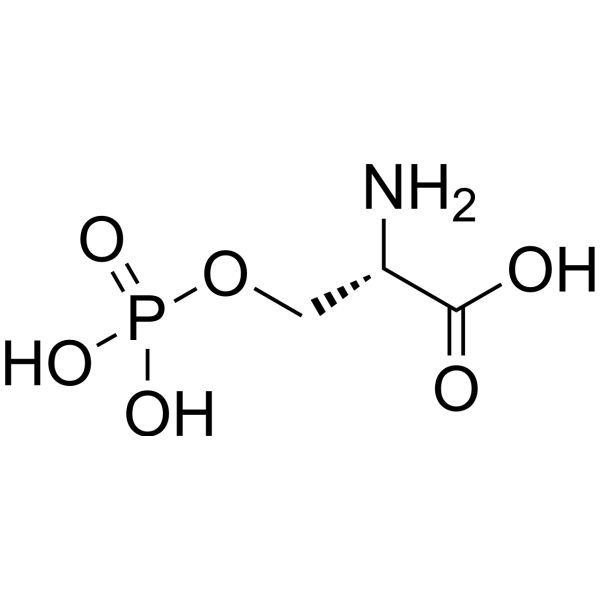
O-Phospho-L-serineEndogenous Metabolite -
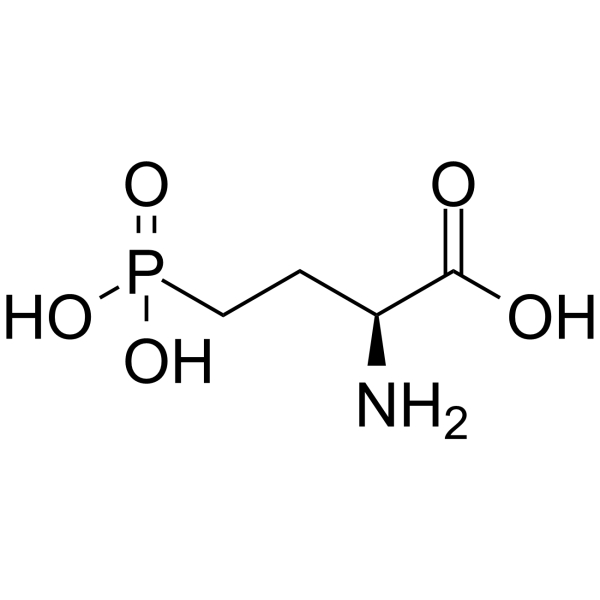
HY-100781A
L-AP4Group III mGluRs Agonist -
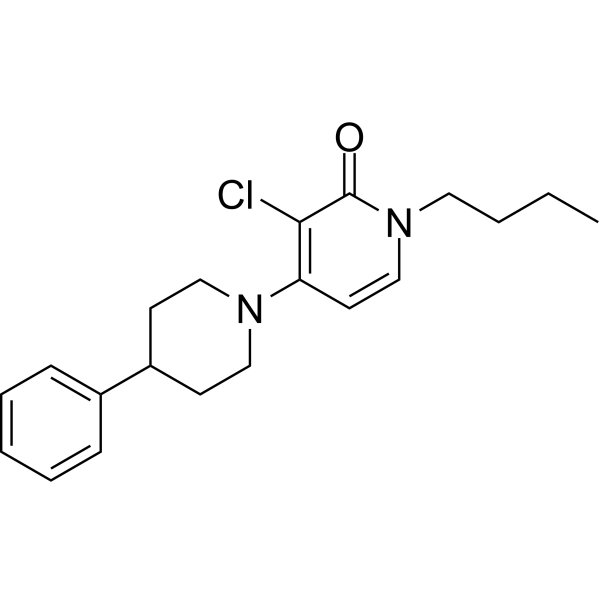
HY-15748
JNJ-40411813Glu2R Positive Allosteric Modulator -
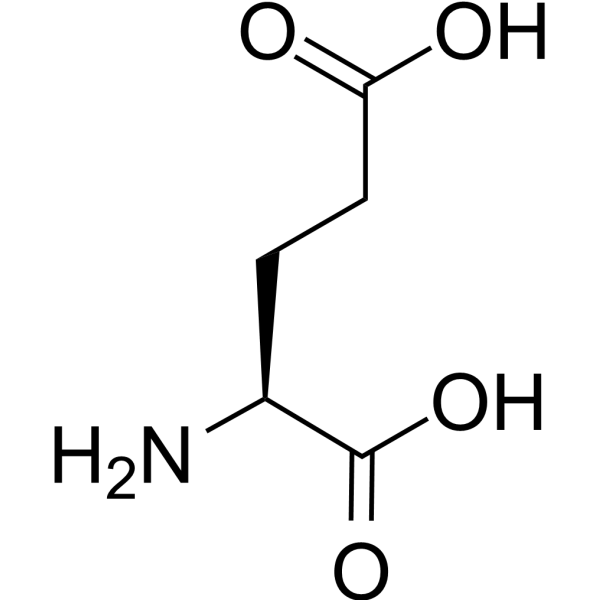
HY-14608
L-Glutamic acidGlutamate Receptors Agonist -

HY-15129R
O-Phospho-L-serine (Standard)Standard of O-Phospho-L-serine -
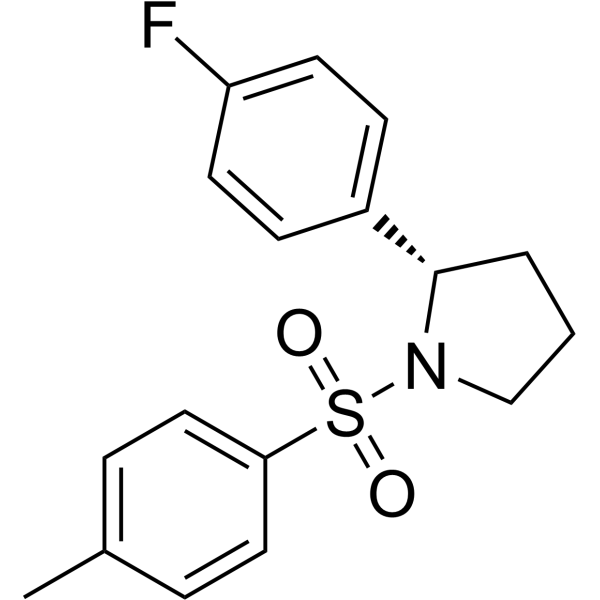
HY-100403
Ro 67-7476mGluR1 PAM -
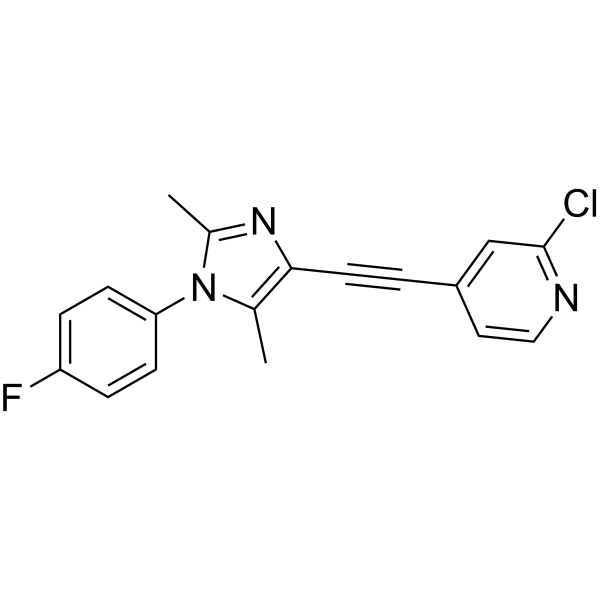
HY-15446
BasimglurantmGlu5 Negative Allosteric Modulator -
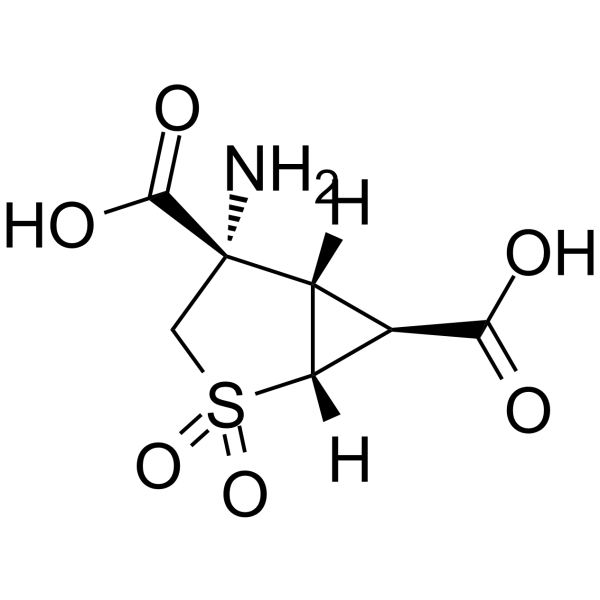
HY-50906
LY404039mGluR2/3 Agonist -
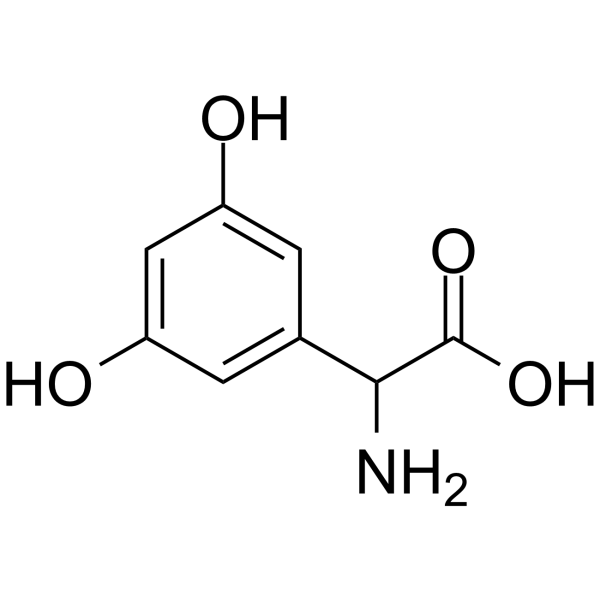
HY-12598A
DHPGmGluR1/5 Agonist -
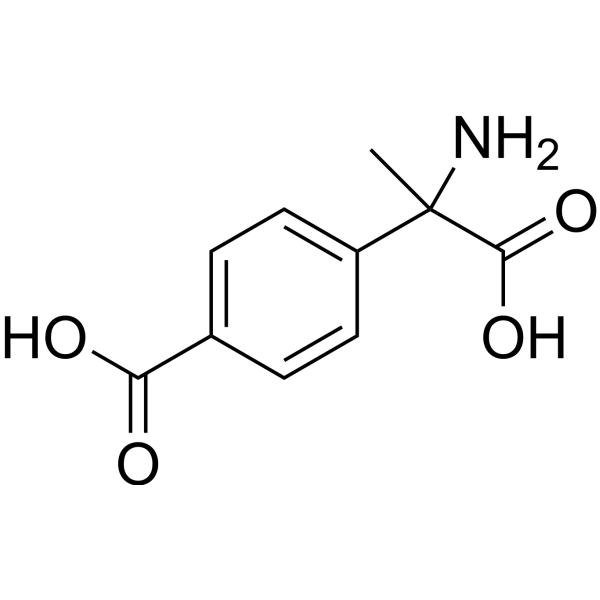
HY-100371
(RS)-MCPGmGluR Antagonist
Publications Citing Use of MedChemExpress (MCE) Eglumegad
More

Biological Activity
Description
IC50 & Target
[1]|
mGluR2R 5 nM (IC50) |
mGluR3R 24 nM (IC50) |
Cellular Effect
|
Cell Line

|
Type | Value | Description | References |
|---|---|---|---|---|
| Caco-2 | IC50 |
>10 mM
Compound: 1
|
Inhibition of radiolabeled glycylsarcosine (Gly-Sar) uptake into Caco-2 cells done for 15 min at 37 degree C with compound
Inhibition of radiolabeled glycylsarcosine (Gly-Sar) uptake into Caco-2 cells done for 15 min at 37 degree C with compound
|
[PMID: 16078848] |
| CHO | EC50 |
18.3 nM
Compound: 4, LY-354740
|
Agonist activity against Metabotropic glutamate receptor 2 expressed in CHO cells was evaluated by measuring forskolin-induced cyclic AMP formation
Agonist activity against Metabotropic glutamate receptor 2 expressed in CHO cells was evaluated by measuring forskolin-induced cyclic AMP formation
|
[PMID: 11123999] |
| HEK293 | EC50 |
>100 μM
Compound: 19
|
Stimulation of [3H]phosphatidylinositol accumulation by rat Metabotropic glutamate receptor 4 co-expressed with Gqi9 protein in HEK 293 cells; Inactive
Stimulation of [3H]phosphatidylinositol accumulation by rat Metabotropic glutamate receptor 4 co-expressed with Gqi9 protein in HEK 293 cells; Inactive
|
[PMID: 15801843] |
| HEK293 | IC50 |
458 μM
Compound: 17
|
Inhibitory activity against Metabotropic glutamate receptor 1 in the rat LLC-PK1/HEK 293 cells.
Inhibitory activity against Metabotropic glutamate receptor 1 in the rat LLC-PK1/HEK 293 cells.
|
[PMID: 10229625] |
In Vitro
Eglumegad (LY354740) down-regulates spots 1014, 1822 (hypoxia up-regulated protein 1), 4513 (an isoform of protein disulfide isomerase 3), 6204, 6312, 7306 (26S proteasome non-ATPase regulatory subunit 7) and protein spots 1013 and 6005 (destrin), and up-regulates spot 6507 (collapsin response mediator protein 1) in mouse cortical neurons[2].
MedChemExpress (MCE) has not independently confirmed the accuracy of these methods. They are for reference only. .
In Vivo
MedChemExpress (MCE) has not independently confirmed the accuracy of these methods. They are for reference only.


Chemical Information
-
CAS No. 176199-48-7
-
Appearance Solid
-
Molecular Weight 185.18
-
Formula C8H11NO4
-
Color White to off-white
-
SMILES
OC([C@]1([C@]2([H])[C@@H](C(O)=O)[C@]2([H])CC1)N)=O
-
Synonyms
LY354740; Eglumetad
-
Shipping
Room temperature in continental US; may vary elsewhere.
-
Storage
Powder -20°C 3 years 4°C 2 years In solvent -80°C 2 years -20°C 1 year


Publications (4)
-
Journal Impact Factor
-
Most Recent
-
Cell Res
2025 Mar;35(3):165-185. PMID: 39875551 -
Neurobiol Dis
Distinct anti-dyskinetic effects of amantadine and group II metabotropic glutamate receptor agonist LY354740 in a rodent model: An electrophysiological perspective. [Abstract]2020 Jun:139:104807. PMID: 32088382 -
Front Pharmacol
LY354740 Reduces Extracellular Glutamate Concentration, Inhibits Phosphorylation of Fyn/NMDARs, and Expression of PLK2/pS129 α-Synuclein in Mice Treated With Acute or Sub-Acute MPTP. [Abstract]2020 Feb 28:11:183. PMID: 32180729 -
Pharmacol Biochem Behav
Activation of mGlu2/3 receptors in the striatum alleviates L-DOPA-induced dyskinesia and inhibits abnormal postsynaptic molecular expression. [Abstract]2023 Oct:231:173637. PMID: 37714223


Solvent & Solubility
In Vitro:
H2O : 6.33 mg/mL (34.18 mM; Need ultrasonic and warming)
Please refer to the solubility information to select the appropriate solvent. Once prepared, please aliquot and store the solution to prevent product inactivation from repeated freeze-thaw cycles.
Storage method and period of stock solution: -80°C, 2 years; -20°C, 1 year. When stored at -80°C, please use it within 2 years. When stored at -20°C, please use it within 1 year.
* Note: If you choose water as the stock solution, please dilute it to the working solution, then filter and sterilize it with a 0.22 μm filter before use.
Please refer to the solubility information to select the appropriate solvent. Once prepared, please aliquot and store the solution to prevent product inactivation from repeated freeze-thaw cycles.
Storage method and period of stock solution: -80°C, 2 years; -20°C, 1 year. When stored at -80°C, please use it within 2 years. When stored at -20°C, please use it within 1 year.
* Note: If you choose water as the stock solution, please dilute it to the working solution, then filter and sterilize it with a 0.22 μm filter before use.
Concentration (start) × Volume (start) = Concentration (final) × Volume (final)
In Vivo:
Select the appropriate dissolution method based on your experimental animal and administration route.
- For the following dissolution methods, please ensure to first prepare a clear stock solution using an In Vitro approach and then sequentially add co-solvents:
- To ensure reliable experimental results, the clarified stock solution can be appropriately stored based on storage conditions. As for the working solution for In Vivo experiments, it is recommended to prepare freshly and use it on the same day.
- The percentages shown for the solvents indicate their volumetric ratio in the final prepared solution. If precipitation or phase separation occurs during preparation, heat and/or sonication can be used to aid dissolution.
For the following dissolution methods, please prepare the working solution directly:
It is recommended to prepare fresh solutions and use them promptly within a short period of time.
The percentages shown for the solvents indicate their volumetric ratio in the final prepared solution. If precipitation or phase separation occurs during preparation, heat and/or sonication can be used to aid dissolution.
Add each solvent one by one: PBS
Solubility: 2.86 mg/mL (15.44 mM); Clear solution; Need ultrasonic and warming and heat to 60°C
In Vivo Dissolution Calculator
Please enter the basic information of animal experiments:
-
-
-
-
Recommended: Prepare an additional quantity of animals to account for potential losses during experiments.
Working solution concentration: 0.22 mg/mL


Purity & Documentation
-
Data Sheet (279 KB)
-
SDS (393 KB)
- English - EN (393 KB)
- Français - FR (393 KB)
- Deutsch - DE (393 KB)
- Norwegian - NO (393 KB)
- Español - ES (393 KB)
- Swedish - SV (393 KB)
- Italian - IT (393 KB)
- Korean - KR (393 KB)
- Portuguese - PT (393 KB)
-
Handling Instructions (2659 KB)
References
[1]. Boerner T, et al. The group II metabotropic glutamate receptor agonist LY354740 and the D2 receptor antagonist haloperidol reduce locomotor hyperactivity but fail to rescue spatial working memory in GluA1 knockout mice. Eur J Neurosci. 2017 Apr;45(7):912- [Content Brief]
[2]. Orlando R, et al. Levels of the Rab GDP dissociation inhibitor (GDI) are altered in the prenatal restrain stress mouse model of schizophrenia and are differentially regulated by the mGlu2/3 receptor agonists, LY379268 and LY354740. Neuropharmacology. 2014 [Content Brief]
[3]. Procaccini C, et al. Reversal of novelty-induced hyperlocomotion and hippocampal c-Fos expression in GluA1 knockout male mice by the mGluR2/3 agonist LY354740. Neuroscience. 2013 Oct 10;250:189-200 [Content Brief]
[4]. Lee Y, et al. The mGlu2/3 receptor agonist LY354740 suppresses immobilization stress-induced increase in rat prefrontal cortical BDNF mRNA expression. Neurosci Lett. 2006 May 8;398(3):328-32. [Content Brief]


Complete Stock Solution Preparation Table
Please refer to the solubility information to select the appropriate solvent. Once prepared, please aliquot and store the solution to prevent product inactivation from repeated freeze-thaw cycles.
Storage method and period of stock solution: -80°C, 2 years; -20°C, 1 year. When stored at -80°C, please use it within 2 years. When stored at -20°C, please use it within 1 year.
| Optional Solvent | Concentration Solvent Mass | 1 mg | 5 mg | 10 mg | 25 mg |
|---|---|---|---|---|---|
| H2O | 1 mM | 5.4002 mL | 27.0008 mL | 54.0015 mL | 135.0038 mL |
| 5 mM | 1.0800 mL | 5.4002 mL | 10.8003 mL | 27.0008 mL | |
| 10 mM | 0.5400 mL | 2.7001 mL | 5.4002 mL | 13.5004 mL | |
| 15 mM | 0.3600 mL | 1.8001 mL | 3.6001 mL | 9.0003 mL | |
| 20 mM | 0.2700 mL | 1.3500 mL | 2.7001 mL | 6.7502 mL | |
| 25 mM | 0.2160 mL | 1.0800 mL | 2.1601 mL | 5.4002 mL | |
| 30 mM | 0.1800 mL | 0.9000 mL | 1.8001 mL | 4.5001 mL |
* Note: If you choose water as the stock solution, please dilute it to the working solution, then filter and sterilize it with a 0.22 μm filter before use.


Eglumegad Related Classifications
HY-18941 Related Classifications
 Powered by Bioz