



TUG-770
Based on 3 publication(s) in Google Scholar
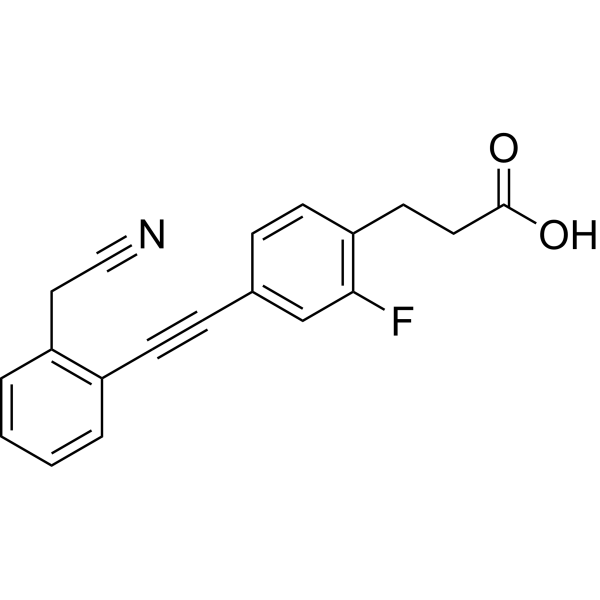
TUG-770 is a potent, selective and orally active GPR40/FFA1 agonist with an EC50 of 6 nM for human FFA1. TUG-770 shows a high selectivity for FFA1 over FFA2, FFA3, FFA4, PPARγ, other receptors, transporters, and enzymes. TUG-770 can be uesd for type 2 diabetes research. TUG-770 is a click chemistry reagent, it contains an Alkyne group and can undergo copper-catalyzed azide-alkyne cycloaddition (CuAAc) with molecules containing Azide groups.
For research use only. We do not sell to patients.
- Purity : 99.07%
- CAS No.: 1402601-82-4
- Formula: C19H14FNO2
- Molecular Weight:307.32
-
Storage:Powder -20°C, 3 years , 4°C, 2 years ; In solvent -80°C, 2 years , -20°C, 1 year

To place orders, for customer services and technical support, please contact: MedChemExpress USA
Tel: 609-228-6898 E-mail: [email protected] [email protected]


-
 Biological Activity
-
Chemical Information
-
Solvent & Solubility
- Protocols
- Purity & Documentation
- References
-
 Help & FAQs


-
HY-10480
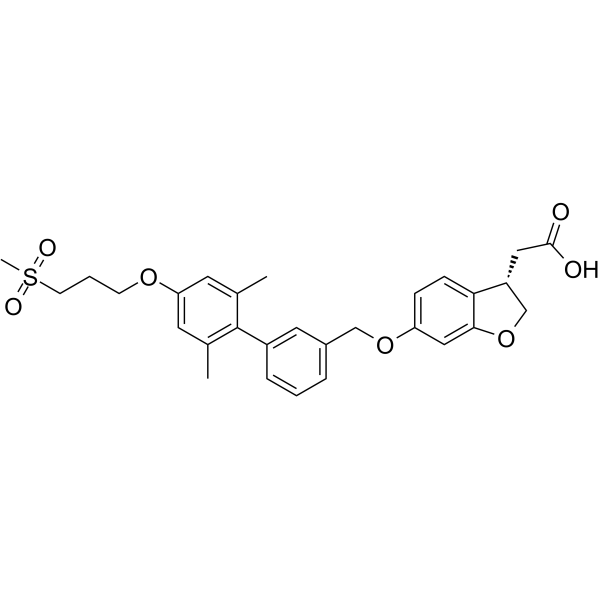
FasiglifamGPR40 Agonist -
HY-15589
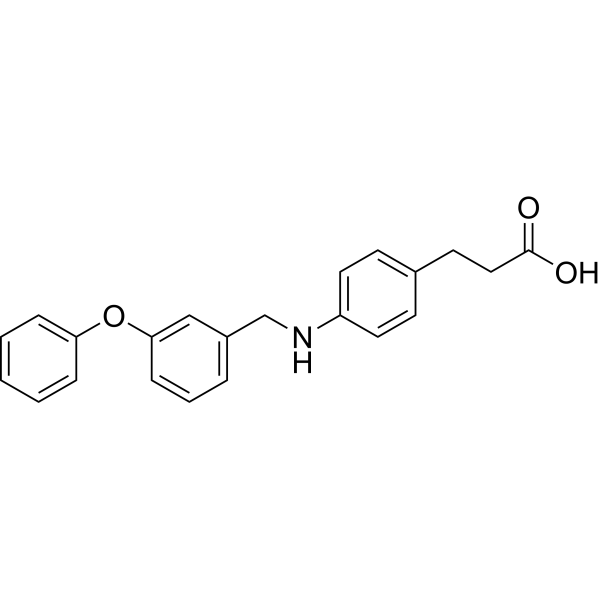
GW9508GPR40 Agonist -
HY-50691
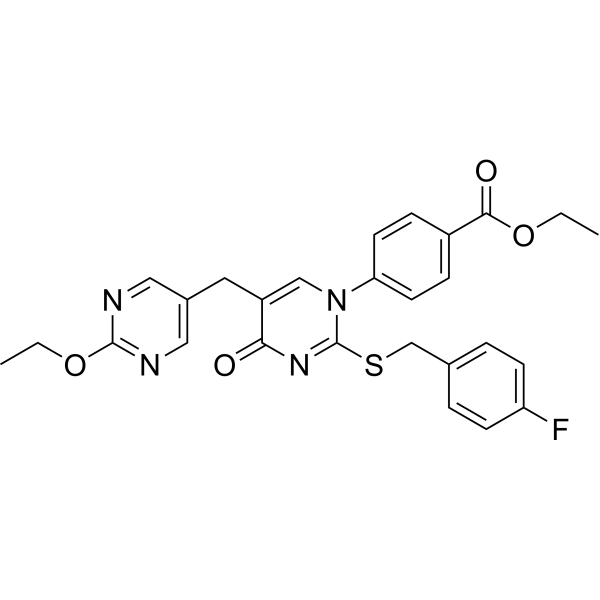
GW-1100Free Fatty Acid Receptor Antagonist -
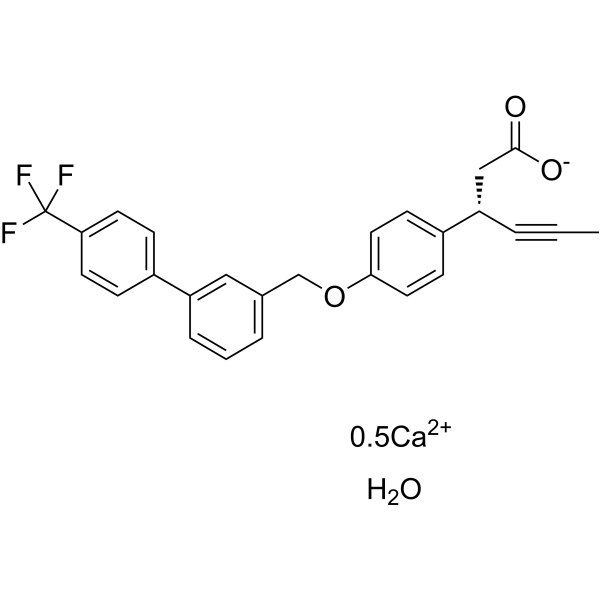
HY-13967B
AMG 837 calcium hydrateGPR40/FFA1 Agonist -
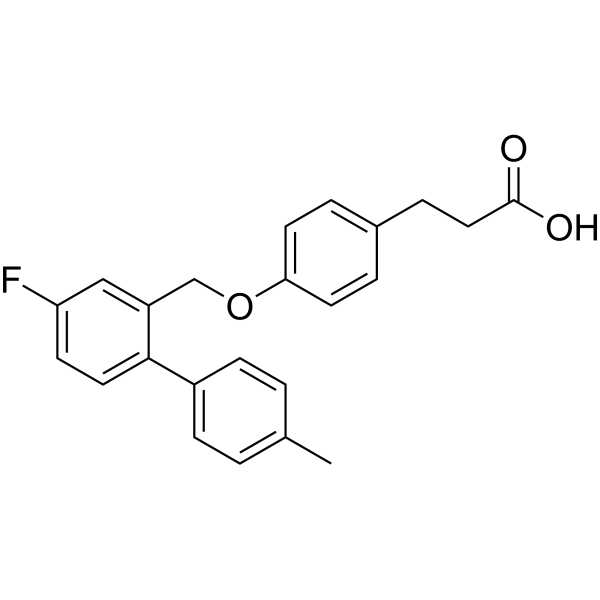
HY-100881
TUG-891FFA4/GPR120 Agonist -
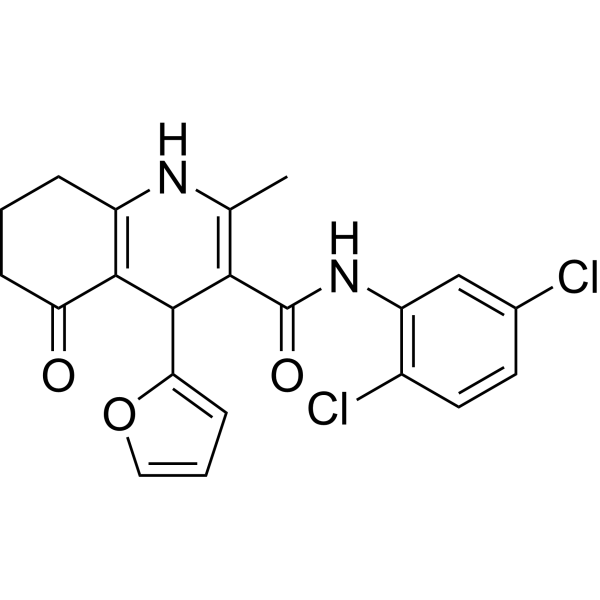
HY-116522
AR420626FFAR3 Agonist -
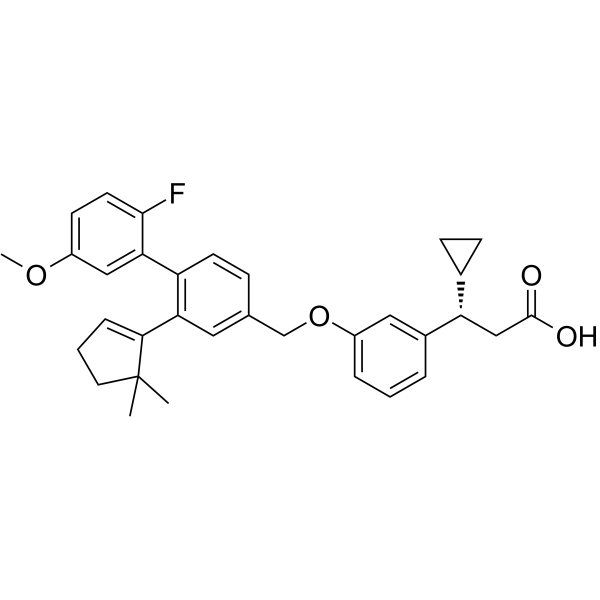
HY-13467
AM-1638GPR40/FFA1 Agonist -
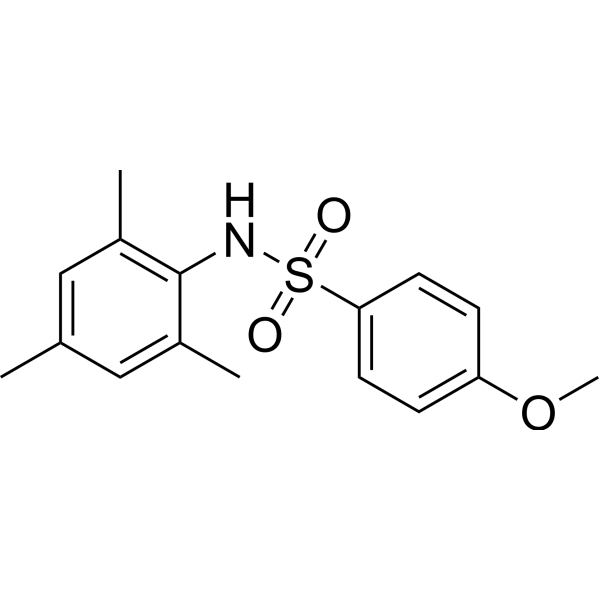
HY-19995
GSK137647AFFA4 Agonist -
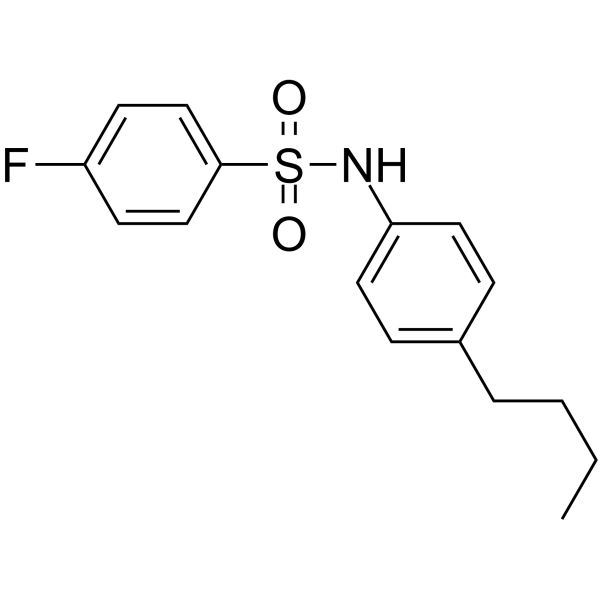
HY-101906
DC260126GPR40 antagonist -
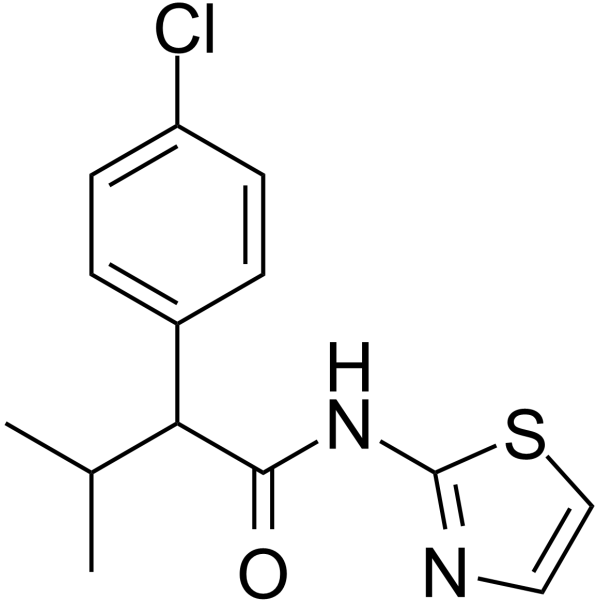
HY-P1125
4-CMTBFFA2 Agonist -
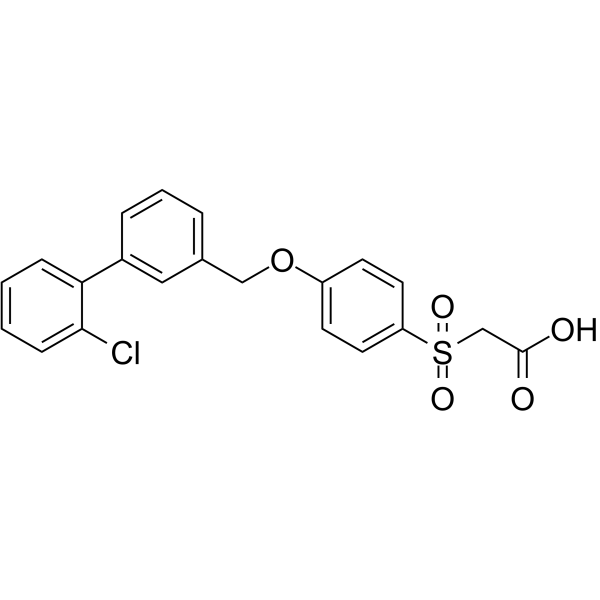
HY-103083
GPR40 agonist 4 -
HY-50162
GPR120 modulator 1GPR120 Modulator
Publications Citing Use of MedChemExpress (MCE) TUG-770
More

Biological Activity
Description
IC50 & Target
EC50: 6 nM (Human GPR40/FFA1)[1]
In Vitro
TUG-770 (Compound 22) displays excellent physicochemical and in vitro ADME properties, with good aqueous solubility, good chemical stability, low lipophilicity, and decreased plasma protein binding (PPB). TUG-770 shows excellent stability toward human liver microsomes (HLM), and good permeability in the Caco-2 cell assay[1].
TUG-770 exhibits lower potency on the rodent orthologs (mFFA1, pEC50 = 6.83; rFFA1, pEC50 = 6.49)[1].
In the rat INS-1E cell line, TUG-770 significantly increases insulin secretion (10.75% of total content with 10 μM 22 vs 8.74 with vehicle) at high glucose concentration (12.4 mM) and, no effect (4.14% of total content with 10 μM 22 vs 4.02 with vehicle) at low glucose concentration (2.8 mM)[1].
MedChemExpress (MCE) has not independently confirmed the accuracy of these methods. They are for reference only. Further protocols information, click here.
In Vivo
MedChemExpress (MCE) has not independently confirmed the accuracy of these methods. They are for reference only.
-
Animal Model:C56B1/6 male mice (5-6 weeks of age) fed on the 60% fat diet D12492[1]
-
Dosage:20 mg/kg
-
Administration:Oral administration; daily; for 28 days
-
Result:Significantly improved glucose tolerance.


Chemical Information
-
CAS No. 1402601-82-4
-
Appearance Solid
-
Molecular Weight 307.32
-
Formula C19H14FNO2
-
Color Light yellow to yellow
-
SMILES
FC1=C(CCC(O)=O)C=CC(C#CC2=C(CC#N)C=CC=C2)=C1
-
Shipping
Room temperature in continental US; may vary elsewhere.
-
Storage
Powder -20°C 3 years 4°C 2 years In solvent -80°C 2 years -20°C 1 year


Publications (3)
-
Journal Impact Factor
-
Most Recent
-
Chem Biol Interact
Comparative hepatic transcriptome analyses revealed possible pathogenic mechanisms of fasiglifam (TAK-875)-induced acute liver injury in mice. [Abstract]2018 Dec 25:296:185-197. PMID: 30243991 -
Biochem Biophys Res Commun
FFAR-mediated signaling drives migration of pancreatic cancer cells in hypoxic fibroblast co-cultures. [Abstract]2024 Oct 1:727:150322. PMID: 38945064 -
Biomed Pharmacother
2023 May:161:114509. PMID: 37002580


Solvent & Solubility
In Vitro:
DMSO : ≥ 100 mg/mL (325.39 mM; Hygroscopic DMSO has a significant impact on the solubility of product, please use newly opened DMSO)
* "≥" means soluble, but saturation unknown.
Please refer to the solubility information to select the appropriate solvent. Once prepared, please aliquot and store the solution to prevent product inactivation from repeated freeze-thaw cycles.
Storage method and period of stock solution: -80°C, 2 years; -20°C, 1 year. When stored at -80°C, please use it within 2 years. When stored at -20°C, please use it within 1 year.
Please refer to the solubility information to select the appropriate solvent. Once prepared, please aliquot and store the solution to prevent product inactivation from repeated freeze-thaw cycles.
Storage method and period of stock solution: -80°C, 2 years; -20°C, 1 year. When stored at -80°C, please use it within 2 years. When stored at -20°C, please use it within 1 year.
Concentration (start) × Volume (start) = Concentration (final) × Volume (final)
In Vivo:
Select the appropriate dissolution method based on your experimental animal and administration route.
- For the following dissolution methods, please ensure to first prepare a clear stock solution using an In Vitro approach and then sequentially add co-solvents:
- To ensure reliable experimental results, the clarified stock solution can be appropriately stored based on storage conditions. As for the working solution for In Vivo experiments, it is recommended to prepare freshly and use it on the same day.
- The percentages shown for the solvents indicate their volumetric ratio in the final prepared solution. If precipitation or phase separation occurs during preparation, heat and/or sonication can be used to aid dissolution.
Add each solvent one by one: 10% DMSO 40% PEG300 5% Tween-80 45% Saline
Solubility: ≥ 2.5 mg/mL (8.13 mM); Clear solution
This protocol yields a clear solution of ≥ 2.5 mg/mL (saturation unknown).
Taking 1 mL working solution as an example, add 100 μL DMSO stock solution (25.0 mg/mL) to 400 μL PEG300, and mix evenly; then add 50 μL Tween-80 and mix evenly; then add 450 μL Saline to adjust the volume to 1 mL.
Preparation of Saline: Dissolve 0.9 g sodium chloride in ddH₂O and dilute to 100 mL to obtain a clear Saline solution.
In Vivo Dissolution Calculator
Please enter the basic information of animal experiments:
-
-
-
-
Recommended: Prepare an additional quantity of animals to account for potential losses during experiments.
Please enter your animal formula composition:
-
%DMSO +
Recommended: Keep the proportion of DMSO in working solution below 2% if your animal is weak.
-
%+
-
+%Tween-80 + +
-
%Saline +
The co-solvents required include: DMSO, . All of co-solvents are available by MedChemExpress (MCE). , Tween 80. All of co-solvents are available by MedChemExpress (MCE).
Working solution concentration: 0.22 mg/mL
Method for preparing stock solution: mg drug dissolved in μL DMSO. Stock solution concentration: mg/mL.
1. Take μL DMSO stock solution;
2. Add μL .
μL , mix evenly;
3. Then add μL Tween 80, mix evenly;
4. Then add μL
Please ensure that the stock solution in the first step is dissolved to a clear state, and add co-solvents in sequence. You can use ultrasonic heating (ultrasonic cleaner, recommended frequency 20-40 kHz), vortexing, etc. to assist dissolution.

Protocols
-
EdU Incorporation Assay (Click Chemistry-Based DNA Synthesis Measurement)
The EdU incorporation assay measures DNA synthesis by adding the thymidine analog 5-ethynyl-2′-deoxyuridine to cells or tissues, where it is incorporated into newly synthesized DNA during S phase. Incorporated EdU is detected by copper-catalyzed azide-alkyne cycloaddition, in which a fluorescent azide covalently reacts with the ethynyl group on EdU, allowing S-phase cells to be detected by fluorescence microscopy, flow cytometry, or high-content imaging. EdU detection does not require DNA denaturation or anti-BrdU antibody access, which preserves sample structure and improves compatibility with immunostaining and multiparameter cytometry compared with BrdU-based detection. EdU can be cytotoxic in a cell-type- and exposure-dependent manner, so pulse duration, concentration, and continuous-labeling designs should be validated for each cell type.
-
Research Protocol for Metabolic Diseases
AMP-activated protein kinase, AMPK, is a conserved cellular energy sensor that responds to reduced cellular energy status and coordinates metabolism by increasing ATP-generating catabolic pathways while suppressing ATP-consuming anabolic processes. In metabolic disease research, the AMPK pathway is experimentally relevant because it regulates hepatic lipid synthesis, fatty acid oxidation, glucose production, skeletal-muscle glucose disposal, mTORC1-linked biosynthesis, autophagy, mitochondrial homeostasis, and whole-body energy balance. The central pathway logic is that energy stress, metformin, exercise-like stimulation, or direct AMPK activators increase AMPKα Thr172 phosphorylation and downstream substrate phosphorylation, including ACC and RAPTOR. Phosphorylation of ACC suppresses lipogenesis and supports fatty acid oxidation, whereas phosphorylation of RAPTOR suppresses mTORC1 signaling and links cellular energy status to growth and protein synthesis control. The pathway is linked


Purity & Documentation
-
Data Sheet (274 KB)
-
SDS (251 KB)
- English - EN (251 KB)
- Français - FR (251 KB)
- Deutsch - DE (251 KB)
- Norwegian - NO (251 KB)
- Español - ES (251 KB)
- Swedish - SV (251 KB)
- Italian - IT (251 KB)
- Korean - KR (251 KB)
- Portuguese - PT (251 KB)
-
Handling Instructions (2659 KB)
References


Complete Stock Solution Preparation Table
Please refer to the solubility information to select the appropriate solvent. Once prepared, please aliquot and store the solution to prevent product inactivation from repeated freeze-thaw cycles.
Storage method and period of stock solution: -80°C, 2 years; -20°C, 1 year. When stored at -80°C, please use it within 2 years. When stored at -20°C, please use it within 1 year.
| Optional Solvent | Concentration Solvent Mass | 1 mg | 5 mg | 10 mg | 25 mg |
|---|---|---|---|---|---|
| DMSO | 1 mM | 3.2539 mL | 16.2697 mL | 32.5394 mL | 81.3484 mL |
| 5 mM | 0.6508 mL | 3.2539 mL | 6.5079 mL | 16.2697 mL | |
| 10 mM | 0.3254 mL | 1.6270 mL | 3.2539 mL | 8.1348 mL | |
| 15 mM | 0.2169 mL | 1.0846 mL | 2.1693 mL | 5.4232 mL | |
| 20 mM | 0.1627 mL | 0.8135 mL | 1.6270 mL | 4.0674 mL | |
| 25 mM | 0.1302 mL | 0.6508 mL | 1.3016 mL | 3.2539 mL | |
| 30 mM | 0.1085 mL | 0.5423 mL | 1.0846 mL | 2.7116 mL | |
| 40 mM | 0.0813 mL | 0.4067 mL | 0.8135 mL | 2.0337 mL | |
| 50 mM | 0.0651 mL | 0.3254 mL | 0.6508 mL | 1.6270 mL | |
| 60 mM | 0.0542 mL | 0.2712 mL | 0.5423 mL | 1.3558 mL | |
| 80 mM | 0.0407 mL | 0.2034 mL | 0.4067 mL | 1.0169 mL | |
| 100 mM | 0.0325 mL | 0.1627 mL | 0.3254 mL | 0.8135 mL |


TUG-770 Related Classifications
HY-15697 Related Classifications
 Powered by Bioz