



DEPMPO

Based on 1 Customer Validation
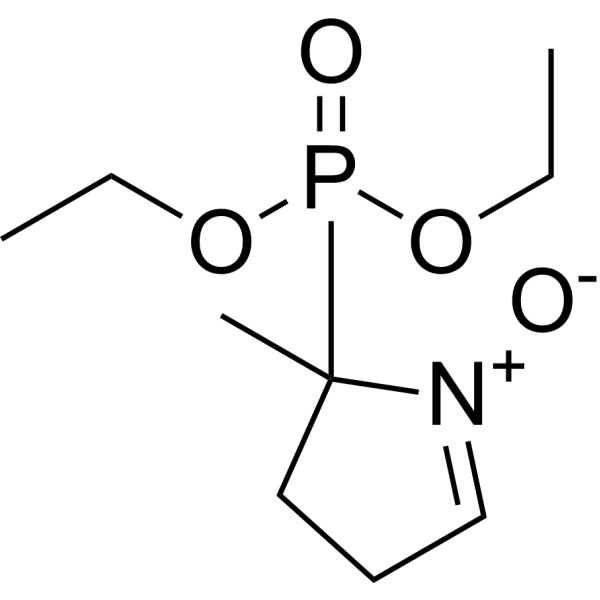
DEPMPO is a phosphorus-substituted nitrone spin trap probe that can capture superoxide anions and hydroxyl radicals. DEPMPO forms stable spin adducts with hydroxyl, aryl, sulfite and superoxide radicals, and the formation of these adducts can be inhibited by catalase or superoxide dismutase. DEPMPO is rapidly absorbed after intraperitoneal injection and distributes uniformly in the liver, heart and blood of mice. DEPMPO can be used in studies related to oxygen radical detection.
Para uso exclusivo en investigación. No vendemos a pacientes.
- Pureza : 99.84%
- No. CAS: 157230-67-6
- Fòrmula: C9H18NO4P
- Peso molecular:235.22
-
Almacenamiento:Pure form -20°C, 3 years ; In solvent -80°C, 6 months , -20°C, 1 month

To place orders, for customer services and technical support, please contact: MedChemExpress USA
Tel: 609-228-6898 E-mail: [email protected] [email protected]


-
 Actividad biológica
-
Chemical Information
-
Solvente y solubilidad
- Protocolo
- Pureza y Documentación
- Referencias
-
 Help & FAQs


-
HY-N8461
ReuterinAntimicrobial Agent -
HY-D0034
9,10-Anthracenediyl-bis(methylene)dimalonic acidSinglet Oxygen Indicator -
HY-132278
DAz-2Sulfonic Acid Probe -
HY-D0333
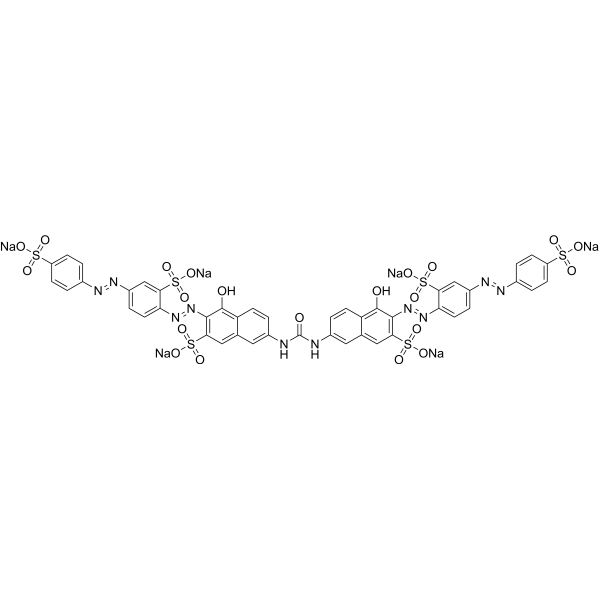
Direct Red 80Polyazo Dye/Low Toxicity Dye -
HY-116879
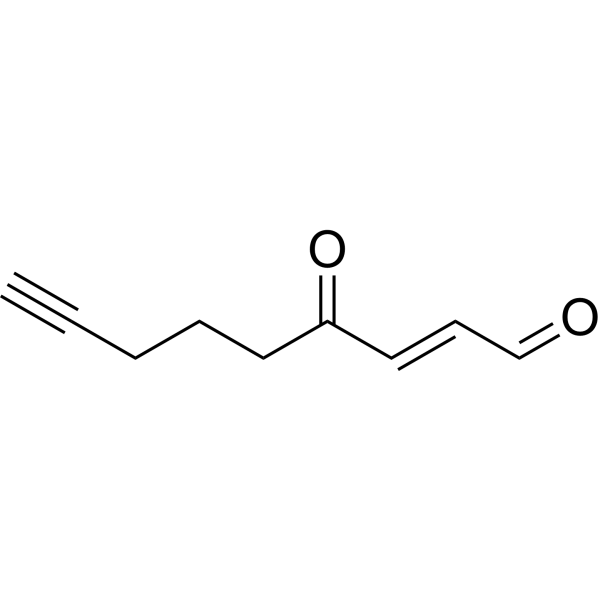
4-Oxo-2-Nonenal AlkyneClick Chemistry -
HY-137155
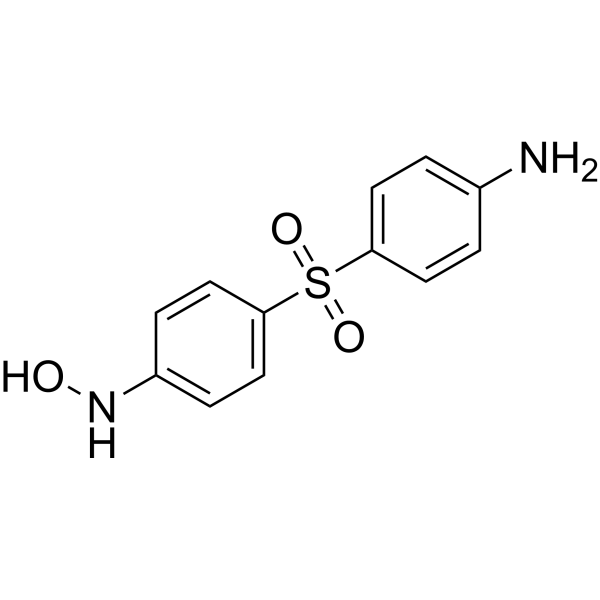
Dapsone hydroxylamineAnti-Inflammatory Compound -
HY-115402
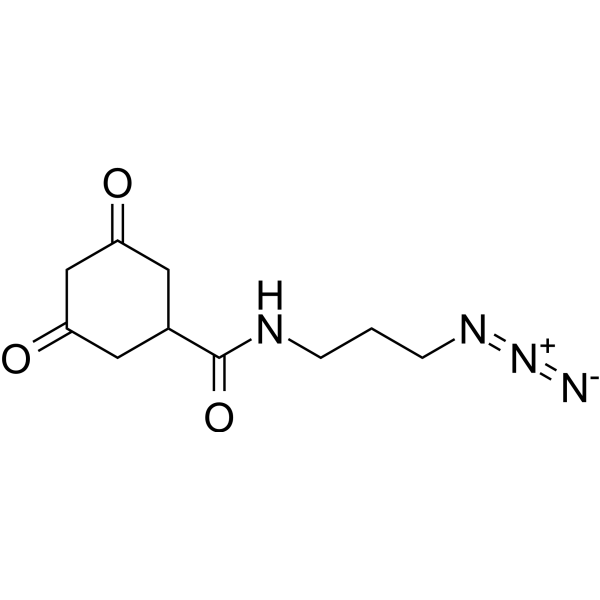
DAz-1Sulfonic Acid Probe


Actividad biológica
Descripciòn
In Vitro
DEPMPO displays concentration- and solvent-dependent radical trapping profiles; at 25 mM, only carbon-centered radicals generated by the reduction of compounds 1 and 2 are trapped; at 100/105 mM, ・OH can be captured additionally; at 250 mM, aryl, carbon-centered, and ・OH radicals from compound 2 reduction are simultaneously detected. When methanol or DMSO is supplemented into the reaction system, DEPMPO only traps solvent-originated or carbon-centered radicals[2].
DEPMPO (1 μM-100 mM, 16 h incubation) displays dose-dependent cytotoxicity toward CHO; concentrations ≤25 mM cause negligible cellular damage, 50 mM drastically reduces colony formation, and 100 mM completely abolishes colony growth[3].
DEPMPO (30 mM; decay monitored over time) forms the SO3•− spin adduct, which has a lifetime of 136 minutes in PBS in vitro and 22 minutes in the presence of 2 mM ascorbic acid[3].
DEPMPO solutions prepared in pure H2O or phosphate buffer at room temperature remain stable without artifactual nitroxide generation; DEPMPO efficiently captures ·OH and superoxide radicals, with respective second-order rate constants of 7.8×10⁹ dm3 mol-1 s-1 and 90 dm3 mol-1 s-1[5].
DEPMPO-OH remains stable under GSH exposure yet undergoes rapid decomposition by ascorbic acid, whereas DEPMPO-OOH is degraded by both ascorbic acid and GSH.[4].
DEPMPO exhibits lower efficiency than CYPMPO in capturing superoxide anions in human blood polymorphonuclear leukocytes stimulated by PMA (HY-18739)[4].
MedChemExpress (MCE) has not independently confirmed the accuracy of these methods. They are for reference only. Further protocols information, click here.
-
Cell Line:CHO cells
-
Concentration:1 μM, 10 μM, 100 μM, 1 mM, 10 mM, 25 mM, 50 mM, 100 mM
-
Incubation Time:16 h
-
Result:Showed no significant cytotoxicity to CHO cells at concentrations up to 25 mM, but drastically reduces plating efficiency at 50 mM and eliminates colony formation at 100 mM.
In Vivo
DEPMPO (5-15 mM; i.p.; single dose) successfully traps endogenously generated SO3•− in intact mice[3].
MedChemExpress (MCE) has not independently confirmed the accuracy of these methods. They are for reference only.
-
Animal Model:BALB/c mice (weight 18-20 g)[3]
-
Dosage:5 mM; 10 mM; 15 mM
-
Administration:i.p.; single dose
-
Result:Detected discernible EPR signal of DEPMPO/SO3•- at an in vivo concentration as low as 1 mM.
Increased signal intensity with DEPMPO concentration, gradually leveling off after 10 mM.
Reached maximum signal intensity between 10-15 minutes post-dichromate injection.
Produced higher peak signal intensities and slower overall decay rates at higher DEPMPO concentrations.


Chemical Information
-
No. CAS 157230-67-6
-
Appearance Liquid (Density: 1.141±0.10 g/cm3)
-
Peso molecular 235.22
-
Fòrmula C9H18NO4P
-
Color Colorless to light yellow
-
SMILES
[O-][N+]1=CCCC1(C)P(OCC)(OCC)=O
-
Envío
Room temperature in continental US; may vary elsewhere.
-
Almacenamiento
Pure form -20°C 3 years In solvent -80°C 6 months -20°C 1 month


Solvente y solubilidad
In Vitro:
DMSO : 100 mg/mL (425.13 mM; Need ultrasonic; Hygroscopic DMSO has a significant impact on the solubility of product, please use newly opened DMSO)
Please refer to the solubility information to select the appropriate solvent. Once prepared, please aliquot and store the solution to prevent product inactivation from repeated freeze-thaw cycles.
Storage method and period of stock solution: -80°C, 6 months; -20°C, 1 month. When stored at -80°C, please use it within 6 months. When stored at -20°C, please use it within 1 month.
Please refer to the solubility information to select the appropriate solvent. Once prepared, please aliquot and store the solution to prevent product inactivation from repeated freeze-thaw cycles.
Storage method and period of stock solution: -80°C, 6 months; -20°C, 1 month. When stored at -80°C, please use it within 6 months. When stored at -20°C, please use it within 1 month.
Concentration (start) × Volume (start) = Concentration (final) × Volume (final)
In Vivo:
Select the appropriate dissolution method based on your experimental animal and administration route.
- For the following dissolution methods, please ensure to first prepare a clear stock solution using an In Vitro approach and then sequentially add co-solvents:
- To ensure reliable experimental results, the clarified stock solution can be appropriately stored based on storage conditions. As for the working solution for In Vivo experiments, it is recommended to prepare freshly and use it on the same day.
- The percentages shown for the solvents indicate their volumetric ratio in the final prepared solution. If precipitation or phase separation occurs during preparation, heat and/or sonication can be used to aid dissolution.
Add each solvent one by one: 10% DMSO 40% PEG300 5% Tween-80 45% Saline
Solubility: ≥ 5 mg/mL (21.26 mM); Clear solution
This protocol yields a clear solution of ≥ 5 mg/mL (saturation unknown).
Taking 1 mL working solution as an example, add 100 μL DMSO stock solution (50.0 mg/mL) to 400 μL PEG300, and mix evenly; then add 50 μL Tween-80 and mix evenly; then add 450 μL Saline to adjust the volume to 1 mL.
Preparation of Saline: Dissolve 0.9 g sodium chloride in ddH₂O and dilute to 100 mL to obtain a clear Saline solution.
Add each solvent one by one: 10% DMSO 90% (20% SBE-β-CD in Saline)
Solubility: ≥ 5 mg/mL (21.26 mM); Clear solution
This protocol yields a clear solution of ≥ 5 mg/mL (saturation unknown).
Taking 1 mL working solution as an example, add 100 μL DMSO stock solution (50.0 mg/mL) to 900 μL 20% SBE-β-CD in Saline, and mix evenly.
Preparation of 20% SBE-β-CD in Saline (4°C, storage for one week): 2 g SBE-β-CD powder is dissolved in 10 mL Saline, completely dissolve until clear.
In Vivo Dissolution Calculator
Please enter the basic information of animal experiments:
-
-
-
-
Recommended: Prepare an additional quantity of animals to account for potential losses during experiments.
Please enter your animal formula composition:
-
%DMSO +
Recommended: Keep the proportion of DMSO in working solution below 2% if your animal is weak.
-
%+
-
+%Tween-80 + +
-
%Saline +
The co-solvents required include: DMSO, . All of co-solvents are available by MedChemExpress (MCE). , Tween 80. All of co-solvents are available by MedChemExpress (MCE).
Working solution concentration: 0.22 mg/mL
Method for preparing stock solution: mg drug dissolved in μL DMSO. Stock solution concentration: mg/mL.
1. Take μL DMSO stock solution;
2. Add μL .
μL , mix evenly;
3. Then add μL Tween 80, mix evenly;
4. Then add μL
Please ensure that the stock solution in the first step is dissolved to a clear state, and add co-solvents in sequence. You can use ultrasonic heating (ultrasonic cleaner, recommended frequency 20-40 kHz), vortexing, etc. to assist dissolution.

Protocolo
-
How to Select the Route of Administration for Mammals
Route-of-administration selection in mammals is a pharmacokinetic, pharmacodynamic, formulation, animal-welfare, and translational decision, not a default technical choice. The selected route should match the study goal: intravenous dosing is most useful when complete systemic exposure and rapid onset are required, oral dosing is most translational for orally intended medicines but is affected by absorption and first-pass metabolism, subcutaneous or intramuscular dosing can provide slower systemic exposure, and intraperitoneal dosing can be useful in rodent proof-of-concept studies but may have limited clinical translation. Published route-comparison studies show that the same compound can produce different exposure, onset, bioavailability, tissue distribution, and tolerability depending on route; therefore, route choice should be supported by pilot pharmacokinetic or pharmacodynamic evidence when the literature is insufficient. Unresolved questions include how to standardize route sel


Pureza y Documentación
-
Ficha de datos (298 KB)
-
SDS (252 KB)
- English - EN (252 KB)
- Français - FR (252 KB)
- Deutsch - DE (252 KB)
- Norwegian - NO (252 KB)
- Español - ES (252 KB)
- Swedish - SV (252 KB)
- Italian - IT (252 KB)
- Korean - KR (252 KB)
- Portuguese - PT (252 KB)
-
Instrucciones de manejo (2659 KB)
Referencias
[1]. Liu R, et al. Increased mitochondrial antioxidative activity or decreased oxygen free radical propagation prevent mutant SOD1-mediated motor neuron cell death and increase amyotrophic lateral sclerosis-like transgenic mouse survival. Journal of neurochemistry. 2002 Feb;80(3):488-500. [Content Brief]
[2]. Qi W, et al. Spin Trapping Hydroxyl and Aryl Radicals of One-Electron Reduced Anticancer Benzotriazine 1,4-Dioxides. Molecules (Basel, Switzerland). 2022 Jan 26;27(3):812. [Content Brief]
[3]. Liu KJ, et al. Evaluation of DEPMPO as a spin trapping agent in biological systems. Free radical biology & medicine. 1999 Mar;26(5-6):714-21. [Content Brief]
[4]. Saito K, et al. Comparison of superoxide detection abilities of newly developed spin traps in the living cells. Free radical research. 2009 Jul;43(7):668-76. [Content Brief]


Complete Stock Solution Preparation Table
Please refer to the solubility information to select the appropriate solvent. Once prepared, please aliquot and store the solution to prevent product inactivation from repeated freeze-thaw cycles.
Storage method and period of stock solution: -80°C, 6 months; -20°C, 1 month. When stored at -80°C, please use it within 6 months. When stored at -20°C, please use it within 1 month.
| Optional Solvent | Concentration Solvent Mass | 1 mg | 5 mg | 10 mg | 25 mg |
|---|---|---|---|---|---|
| DMSO | 1 mM | 4.2513 mL | 21.2567 mL | 42.5134 mL | 106.2835 mL |
| 5 mM | 0.8503 mL | 4.2513 mL | 8.5027 mL | 21.2567 mL | |
| 10 mM | 0.4251 mL | 2.1257 mL | 4.2513 mL | 10.6283 mL | |
| 15 mM | 0.2834 mL | 1.4171 mL | 2.8342 mL | 7.0856 mL | |
| 20 mM | 0.2126 mL | 1.0628 mL | 2.1257 mL | 5.3142 mL | |
| 25 mM | 0.1701 mL | 0.8503 mL | 1.7005 mL | 4.2513 mL | |
| 30 mM | 0.1417 mL | 0.7086 mL | 1.4171 mL | 3.5428 mL | |
| 40 mM | 0.1063 mL | 0.5314 mL | 1.0628 mL | 2.6571 mL | |
| 50 mM | 0.0850 mL | 0.4251 mL | 0.8503 mL | 2.1257 mL | |
| 60 mM | 0.0709 mL | 0.3543 mL | 0.7086 mL | 1.7714 mL | |
| 80 mM | 0.0531 mL | 0.2657 mL | 0.5314 mL | 1.3285 mL | |
| 100 mM | 0.0425 mL | 0.2126 mL | 0.4251 mL | 1.0628 mL |


DEPMPO Related Classifications
HY-120976 Related Classifications
 Powered by Bioz