



Diethyl phthalate-d4

Based on 1 Customer Validation
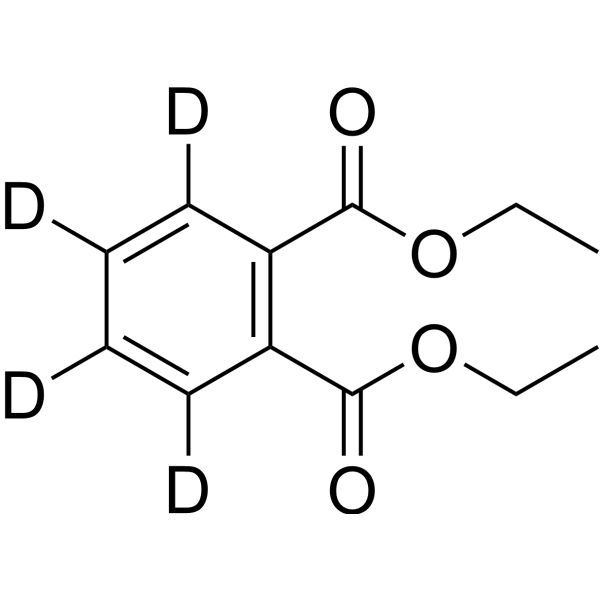
Diethyl phthalate-d4 is the d4 labeled Diethyl phthalate (HY-Y0284). Diethyl phthalate is an orally active plasticizer and detergent base. Diethyl phthalate increases the activities of ACP, ALP, SDH, and ALT in liver, muscle, or both tissues. Diethyl phthalate induces dose-dependent mortality and sluggish behavior in freshwater fish. Diethyl phthalate may induce male reproductive toxicity. Diethyl phthalate is added to plastic polymers to help maintain their flexibility.
For research use only. We do not sell to patients.
- Purity : 99.78%
- CAS No.: 93952-12-6
- Formula: C12H10D4O4
- Molecular Weight:226.26
-
Storage:Pure form -20°C, 3 years , 4°C, 2 years ; In solvent -80°C, 6 months , -20°C, 1 month

To place orders, for customer services and technical support, please contact: MedChemExpress USA
Tel: 609-228-6898 E-mail: [email protected] [email protected]


-
 Biological Activity
-
Chemical Information
-
Solvent & Solubility
- Protocols
- Purity & Documentation
- References
-
 Help & FAQs


-
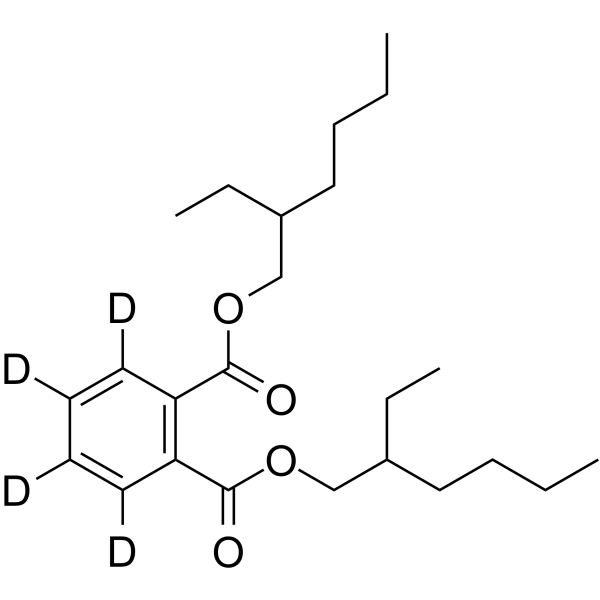
HY-B1945S
DEHP-d4Stable Isotope -
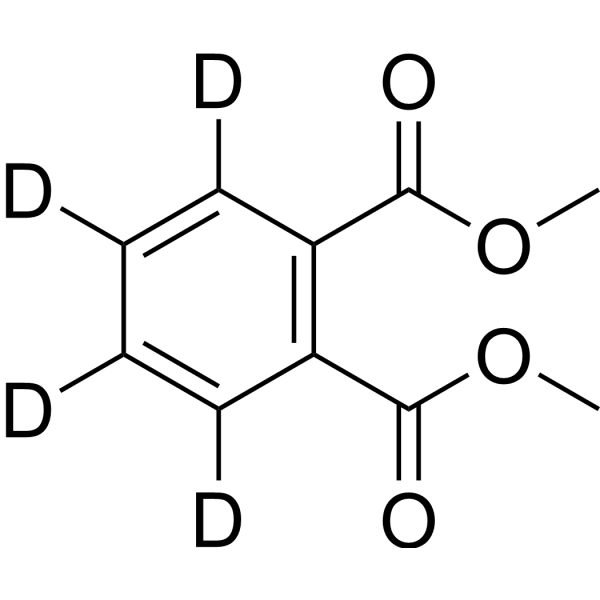
HY-N7106S
Dimethyl phthalate (Ring-d4)Stable Isotope -
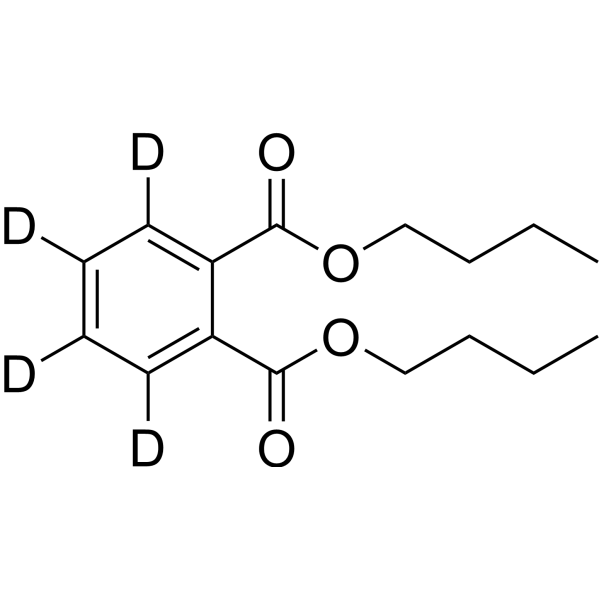
HY-Y0304S
Dibutyl phthalate-3,4,5,6-d4Stable Isotope -
![Benzo[a]pyrene](https://file.medchemexpress.com/product_pic/hy-107377.gif)
HY-107377
Benzo[a]pyreneNoxious Pollutant -
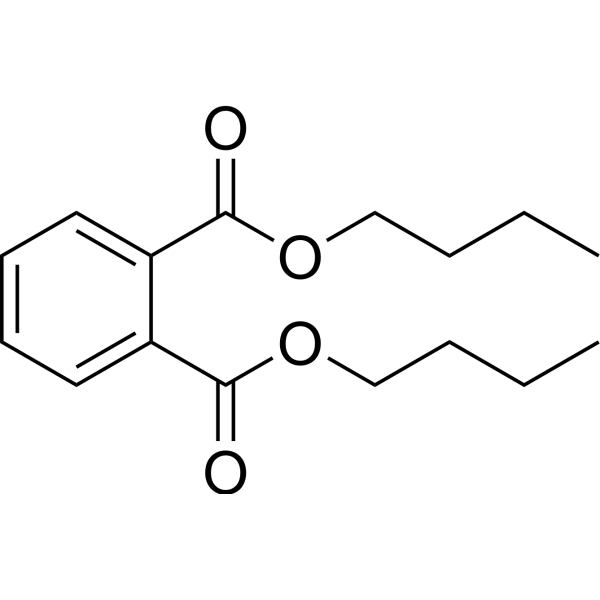
HY-Y0304
Dibutyl phthalatePlasticizer -
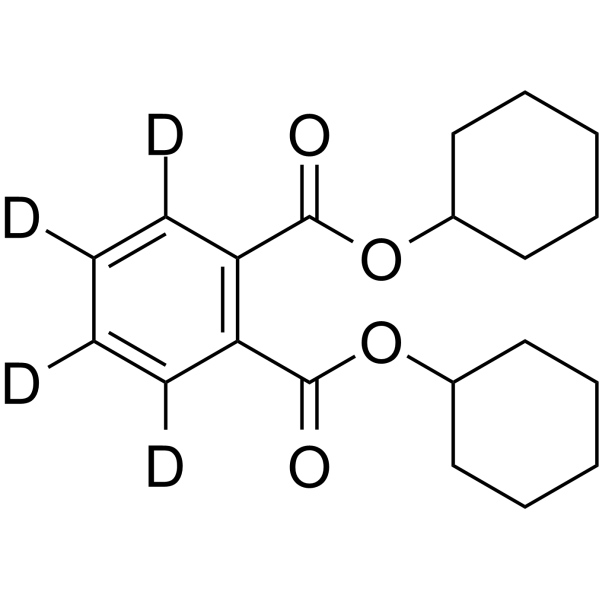
HY-W009142S
Dicyclohexyl phthalate-d4Stable Isotope -
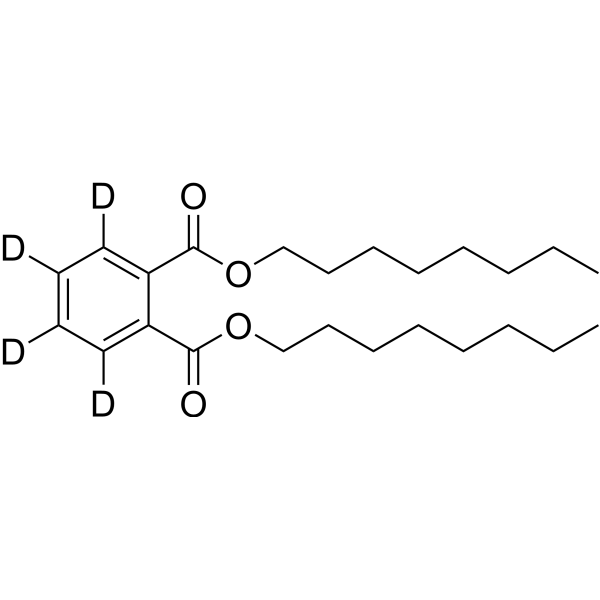
HY-W013755S
Dioctyl phthalate-d4Stable Isotope -
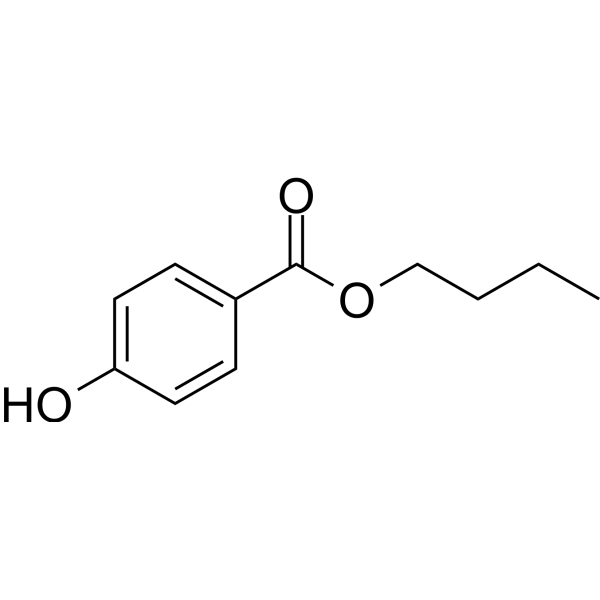
HY-B1431
ButylparabenBacterial Inhibitor -
![Benzo[a]pyrene (Standard)](https://file.medchemexpress.com/product_pic/hy-107377r.gif)
HY-107377R
Benzo[a]pyrene (Standard)Noxious Pollutant -
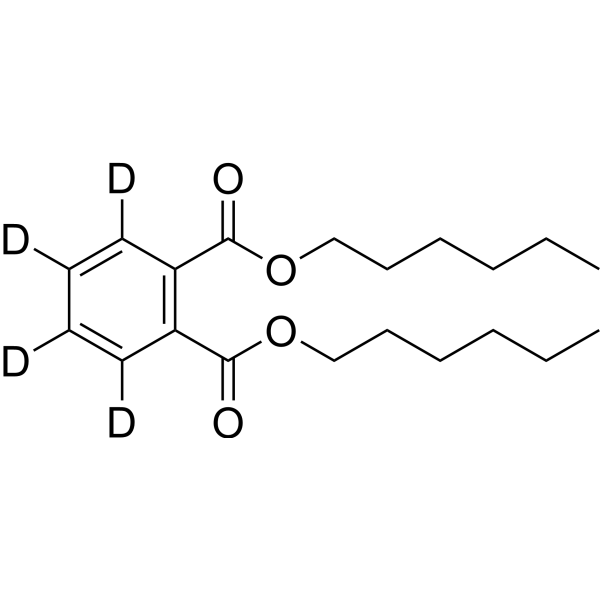
HY-W011215S
Dihexyl phthalate-3,4,5,6-d4Stable Isotope -
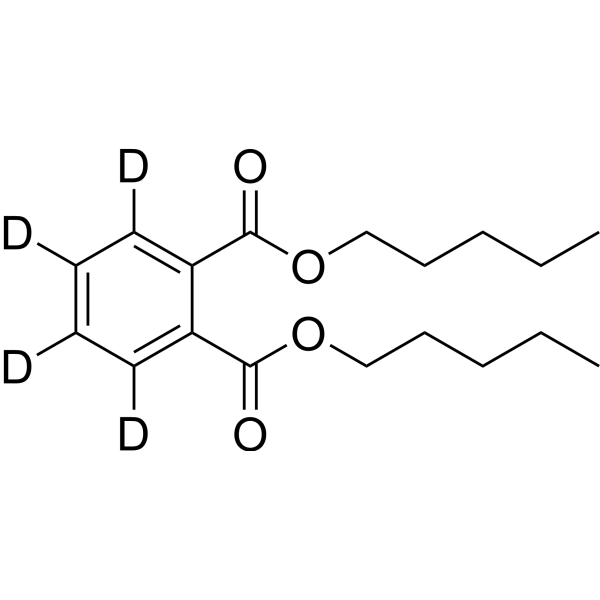
HY-W013816S
Dipentyl phthalate-3,4,5,6-d4Stable Isotope


Biological Activity
Description
Application
1. This compound can be used as a tracer
2. This compound can be used as an internal standard for quantitative analysis by NMR, GC-MS, or LC-MS.


Chemical Information
-
CAS No. 93952-12-6
-
Unlabeled CAS 84-66-2
-
Appearance Liquid (Density: 1.158 g/cm3)
-
Molecular Weight 226.26
-
Formula C12H10D4O4
-
Color Colorless to light yellow
-
SMILES
CCOC(C1=C(C([2H])=C([2H])C([2H])=C1[2H])C(OCC)=O)=O
-
Shipping
Room temperature in continental US; may vary elsewhere.
-
Storage
Pure form -20°C 3 years 4°C 2 years In solvent -80°C 6 months -20°C 1 month


Solvent & Solubility
In Vitro:
DMSO : 100 mg/mL (441.97 mM; Need ultrasonic; Hygroscopic DMSO has a significant impact on the solubility of product, please use newly opened DMSO)
Please refer to the solubility information to select the appropriate solvent. Once prepared, please aliquot and store the solution to prevent product inactivation from repeated freeze-thaw cycles.
Storage method and period of stock solution: -80°C, 6 months; -20°C, 1 month. When stored at -80°C, please use it within 6 months. When stored at -20°C, please use it within 1 month.
Please refer to the solubility information to select the appropriate solvent. Once prepared, please aliquot and store the solution to prevent product inactivation from repeated freeze-thaw cycles.
Storage method and period of stock solution: -80°C, 6 months; -20°C, 1 month. When stored at -80°C, please use it within 6 months. When stored at -20°C, please use it within 1 month.
Concentration (start) × Volume (start) = Concentration (final) × Volume (final)

Protocols
-
Reproductive and Developmental Toxicity Study
Reproductive and developmental toxicity studies detect adverse effects of prenatal or peri/postnatal exposure on maternal condition, pregnancy maintenance, embryo-fetal survival, fetal growth, structural development, and offspring reproductive or developmental endpoints; classic rat protocols generate readouts by comparing treated groups with vehicle, pair-fed, or untreated controls for implantation, resorption, fetal weight, crown-rump length, external morphology, visceral morphology, skeletal ossification, anogenital distance, nipple/areola retention, and postnatal cohort outcomes.
-
Mesenchymal stromal/stem cell osteogenic differentiation
Mesenchymal stromal/stem cells can be induced toward an osteoblast-like lineage in vitro by culture in osteogenic medium containing dexamethasone, ascorbic acid or ascorbate-2-phosphate, and β-glycerophosphate; the differentiation process is commonly evaluated by alkaline phosphatase activity, osteogenic marker expression, collagenous matrix formation, and calcium-rich matrix mineralization. The main readouts are alkaline phosphatase activity as an early osteogenic marker and Alizarin Red S staining as a calcium-deposit readout for mineralized extracellular matrix; Alizarin Red S can be inspected microscopically or extracted and measured colorimetrically at 405 nm.
-
Protocol for Fluorescence In Situ Hybridization (FISH)
Fluorescence in situ hybridization detects specific DNA or RNA sequences inside fixed cells or tissue sections by hybridizing fluorescently labeled nucleic-acid probes to complementary target sequences, allowing the target’s copy number, chromosomal position, spatial distribution, or transcript abundance to be visualized microscopically. DNA-FISH detects genomic loci, chromosomal gains/losses, amplifications, deletions, and rearrangements, while RNA-FISH detects RNA molecules or transcript localization; in cancer cells, mouse tumors, neurons, organoids, macrophages, or drug-screening samples, the readout is fluorescent puncta, fusion/split signals, or localized RNA signal interpreted relative to validated controls.
-
Hepatotoxicity Study
This protocol evaluates hepatotoxicity using complementary in vivo mouse APAP acute liver injury and in vitro hepatocyte-based cytotoxicity readouts. In vivo APAP injury is assessed by serum ALT/AST, liver histology, hepatic glutathione, protein adducts, necrosis, inflammation, and regeneration-related endpoints. In vitro hepatotoxicity is assessed by loss of viability, leakage of ALT/AST/LDH, oxidative-stress markers, mitochondrial function, nuclear morphology, intracellular calcium, and high-content imaging endpoints.


Purity & Documentation
-
Data Sheet (275 KB)
-
SDS (393 KB)
- English - EN (393 KB)
- Français - FR (393 KB)
- Deutsch - DE (393 KB)
- Norwegian - NO (393 KB)
- Español - ES (393 KB)
- Swedish - SV (393 KB)
- Italian - IT (393 KB)
- Korean - KR (393 KB)
- Portuguese - PT (393 KB)
-
Handling Instructions (2659 KB)
References
[1]. Ghorpade N, et al. Toxicity study of diethyl phthalate on freshwater fish Cirrhina mrigala. Ecotoxicol Environ Saf. 2002;53(2):255-258. [Content Brief]
[2]. Weaver JA, et al. Hazards of diethyl phthalate (DEP) exposure: A systematic review of animal toxicology studies. Environ Int. 2020;145:105848. [Content Brief]


Complete Stock Solution Preparation Table
Please refer to the solubility information to select the appropriate solvent. Once prepared, please aliquot and store the solution to prevent product inactivation from repeated freeze-thaw cycles.
Storage method and period of stock solution: -80°C, 6 months; -20°C, 1 month. When stored at -80°C, please use it within 6 months. When stored at -20°C, please use it within 1 month.
| Optional Solvent | Concentration Solvent Mass | 1 mg | 5 mg | 10 mg | 25 mg |
|---|---|---|---|---|---|
| DMSO | 1 mM | 4.4197 mL | 22.0985 mL | 44.1969 mL | 110.4924 mL |
| 5 mM | 0.8839 mL | 4.4197 mL | 8.8394 mL | 22.0985 mL | |
| 10 mM | 0.4420 mL | 2.2098 mL | 4.4197 mL | 11.0492 mL | |
| 15 mM | 0.2946 mL | 1.4732 mL | 2.9465 mL | 7.3662 mL | |
| 20 mM | 0.2210 mL | 1.1049 mL | 2.2098 mL | 5.5246 mL | |
| 25 mM | 0.1768 mL | 0.8839 mL | 1.7679 mL | 4.4197 mL | |
| 30 mM | 0.1473 mL | 0.7366 mL | 1.4732 mL | 3.6831 mL | |
| 40 mM | 0.1105 mL | 0.5525 mL | 1.1049 mL | 2.7623 mL | |
| 50 mM | 0.0884 mL | 0.4420 mL | 0.8839 mL | 2.2098 mL | |
| 60 mM | 0.0737 mL | 0.3683 mL | 0.7366 mL | 1.8415 mL | |
| 80 mM | 0.0552 mL | 0.2762 mL | 0.5525 mL | 1.3812 mL | |
| 100 mM | 0.0442 mL | 0.2210 mL | 0.4420 mL | 1.1049 mL |


Diethyl phthalate-d4 Related Classifications
HY-Y0284S Related Classifications
 Powered by Bioz
Keywords
- Diethyl phthalate-d4
- 93952-12-6
- Isotope-Labeled Compounds
- Apoptosis
- Biochemical Assay Reagents
- Phosphatase
- Environmental Pollutants
- Aminotransferases (Transaminases)
- Cirrhina mrigala
- succinate dehydrogenase
- brain
- acetylcholinesterase
- liver
- rats
- aspartate aminotransferase
- alkaline phosphatase
- alanine aminotransferase
- acid phosphatase
- Inhibitor
- inhibitor
- inhibit