



Aortic Aneurysm
-
Aortic Aneurysm (4)


- Formula: C58H94N14O18S
- Molecular Weight: 1307.51
DOTA-ECL1i is a conjugate of the CCR2 inhibitor ECL1i (HY-P11553) and DOTA. When radiolabeled with 68Ga, DOTA-ECL1i serves as a PET tracer that targets CCR2 expression. DOTA-ECL1i can be used in research related to pulmonary fibrosis, cardiac injury, abdominal aortic aneurysm inflammation, atherosclerosis, head and neck cancer, and pancreatic cancer.

- Formula: C68H118N26O28S2
- Molecular Weight: 1811.95
ADA2 is an ADAMTS4-binding peptide and imaging agent with a human ADAMTS4 Ka of 5.3 nM and reduced renal uptake compared to related tracers. ADA2 accumulates in dilated aortic regions in aortic aneurysm mouse models. ADA2 exhibits an in vivo safety profile. ADA2 can be used for the research of aortic aneurysm.

- Formula: C30H49ClN2O6
- Molecular Weight: 569.17
ABT-546 (A-216546) hydrochloride is an orally active ETA receptor antagonist, with Ki values of 0.46 nM and 13000 nM for human ETA and ETB receptors, respectively, and exhibits >25000-fold selectivity over the ETB receptor. ABT-546 hydrochloride effectively inhibits ET-1 (HY-P0202)-induced phosphoinositide hydrolysis (IC50 = 0.59 nM) and arachidonic acid release (IC50 = 3.03 nM), and antagonizes ET-1-induced contraction in isolated vascular rings. ABT-546 hydrochloride crosses the placental barrier but shows extremely low fetal exposure, with a favorable safety profile. ABT-546 hydrochloride inhibits ET-1-induced pressor response and downregulates the NLRP3/ROS/GSDMD-mediated pyroptosis pathway. ABT-546 hydrochloride can be used for research on abdominal aortic aneurysm.
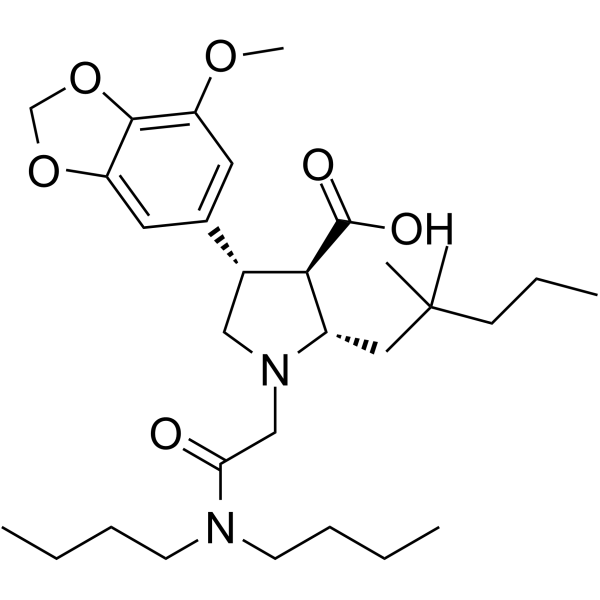
- Formula: C30H48N2O6
- Molecular Weight: 532.71
ABT-546 (A-216546) is an orally active ETA receptor antagonist, with Ki values of 0.46 nM and 13000 nM for human ETA and ETB receptors, respectively, and exhibits >25000-fold selectivity over the ETB receptor. ABT-546 effectively inhibits ET-1 (HY-P0202)-induced phosphoinositide hydrolysis (IC50 = 0.59 nM) and arachidonic acid release (IC50 = 3.03 nM), and antagonizes ET-1-induced contraction in isolated vascular rings. ABT-546 crosses the placental barrier but shows extremely low fetal exposure, with a favorable safety profile. ABT-546 inhibits ET-1-induced pressor response and downregulates the NLRP3/ROS/GSDMD-mediated pyroptosis pathway. ABT-546 can be used for research on abdominal aortic aneurysm.



