



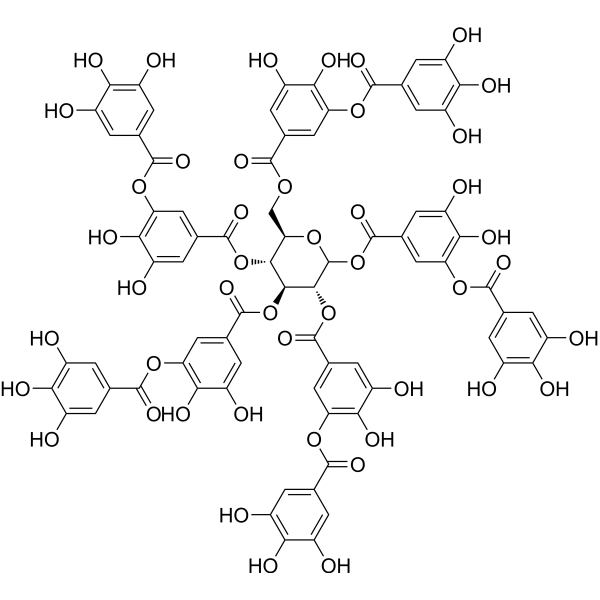
Tannic acid
Based on 8 publication(s) in Google Scholar
Tannic acid is a novel hERG channel blocker with IC50 of 3.4 μM.
For research use only. We do not sell to patients.
- Purity : 81.68%
- CAS No.: 1401-55-4
- Formula: C76H52O46
- Molecular Weight:1701.20
-
Storage:Powder -20°C, 3 years , 4°C, 2 years ; In solvent -80°C, 6 months , -20°C, 1 month

To place orders, for customer services and technical support, please contact: MedChemExpress USA
Tel: 609-228-6898 E-mail: [email protected] [email protected]


-
 Biological Activity
-
Chemical Information
-
Solvent & Solubility
- Protocols
- Purity & Documentation
- References
-
 Help & FAQs


-
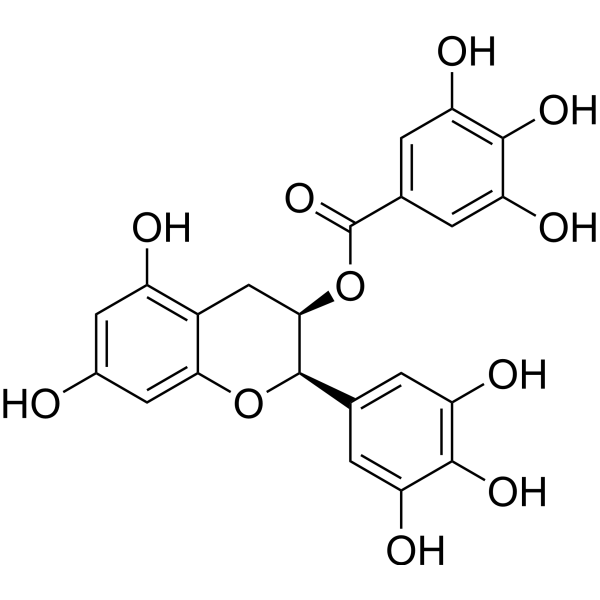
HY-13653
(-)-Epigallocatechin GallateAnticancer Agent -
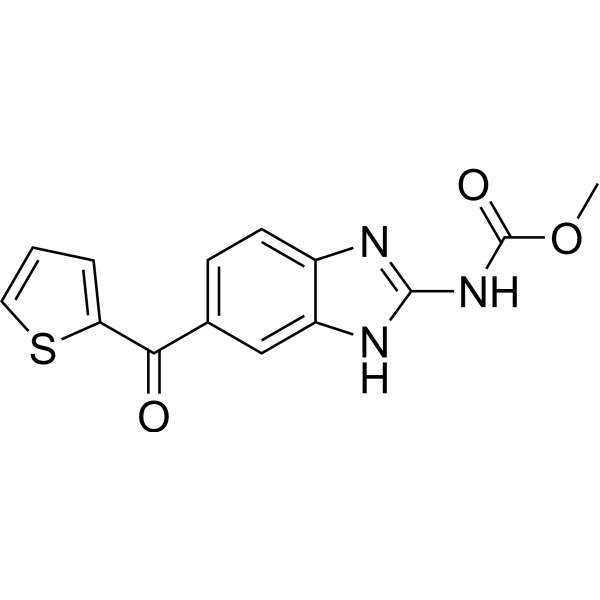
HY-13520
NocodazoleMicrotubule Inhibitor -
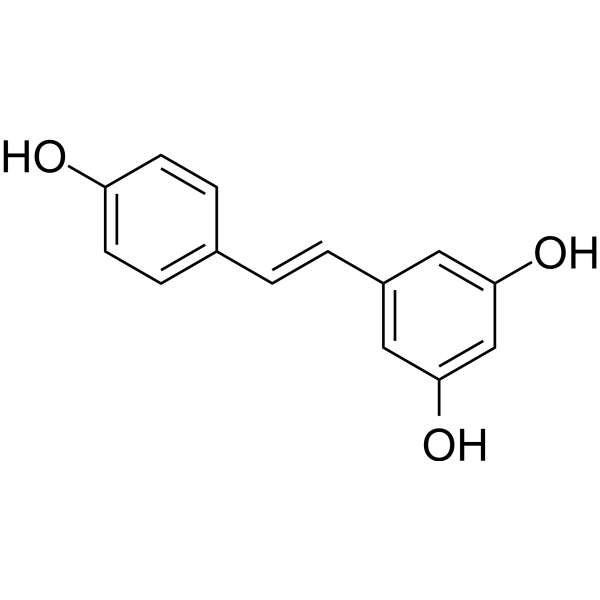
HY-16561
ResveratrolPolyphenolic Phytoalexin -
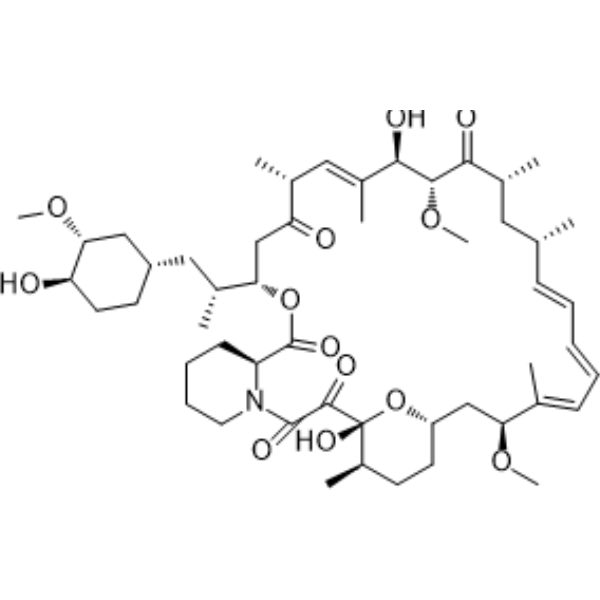
HY-10219
RapamycinmTOR Inhibitor -
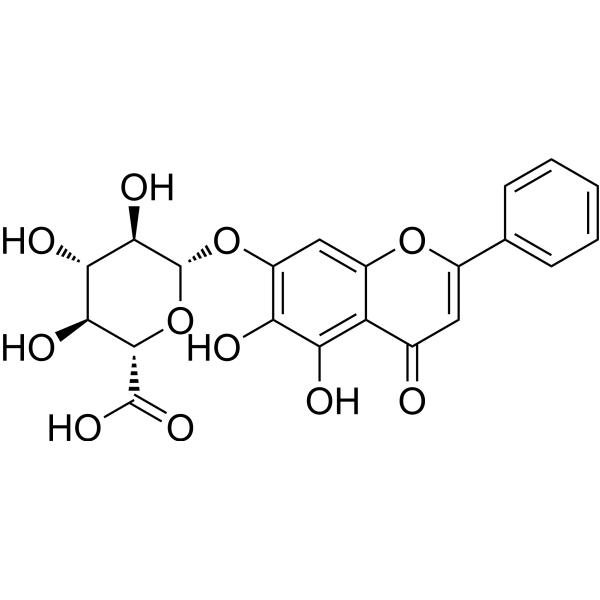
HY-N0197
BaicalinAutophagy Inducer -
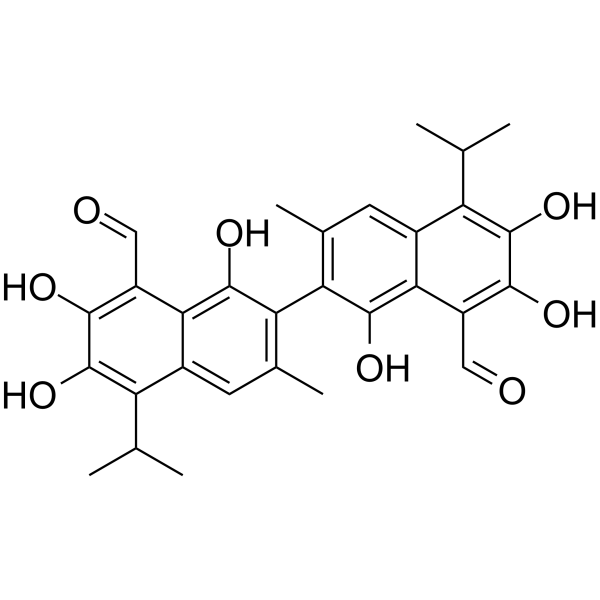
HY-13407
GossypolBcl-2 Family Antagonist -
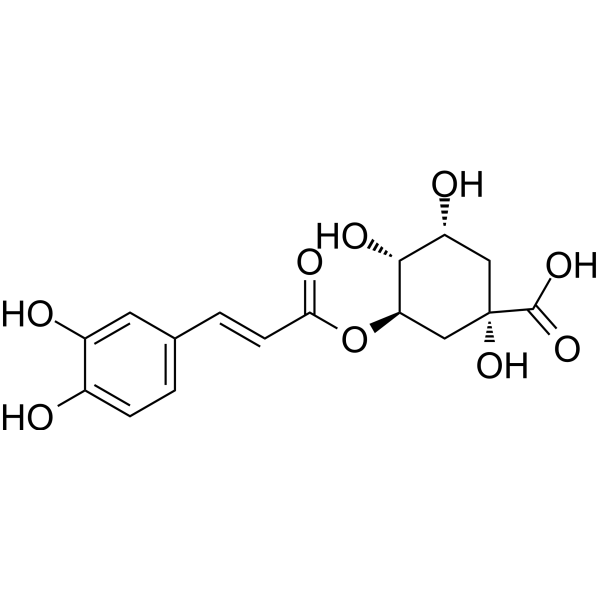
HY-N0055
Chlorogenic acidAntioxidant -
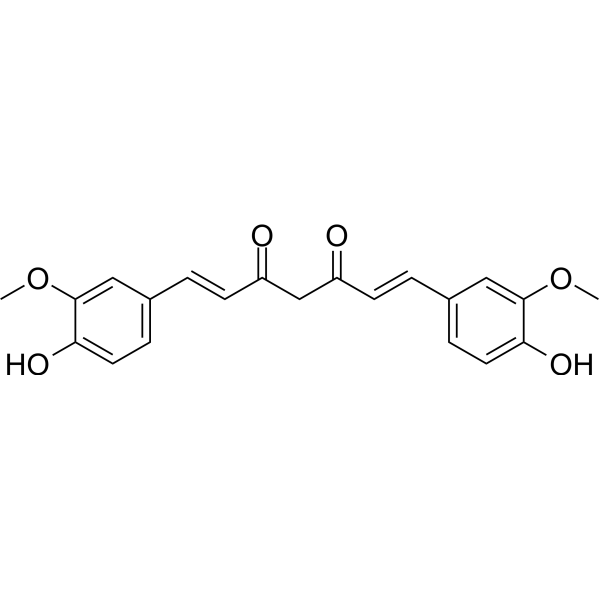
HY-N0005
Curcuminp300 Histone Acetylatransferase Inhibitor -
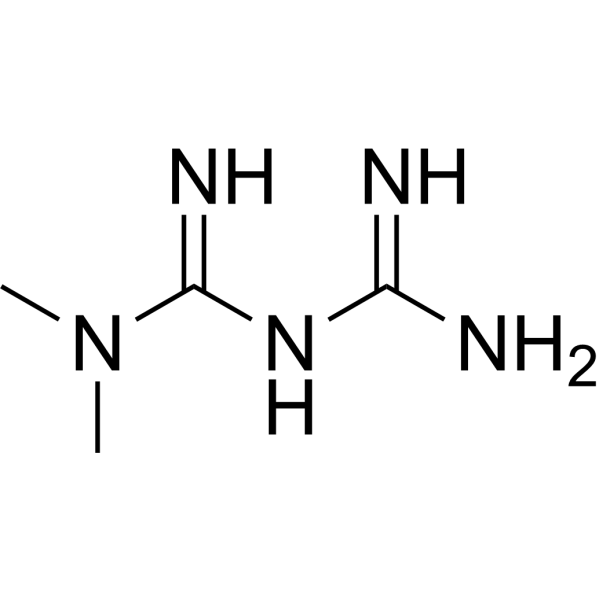
HY-B0627
MetforminAntihyperglycemic Agent -
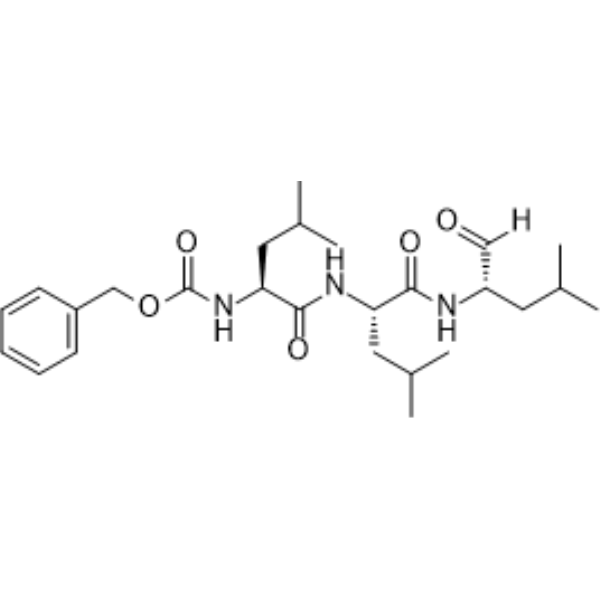
HY-13259
MG-132Proteasome Inhibitor -
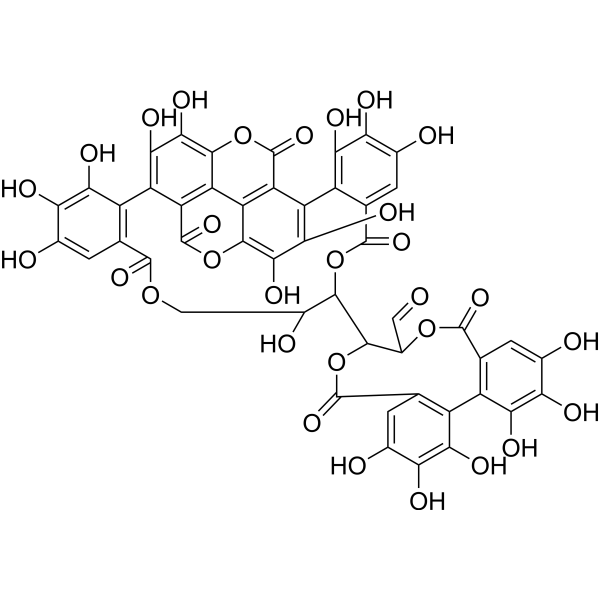
HY-N0063
Punicalagin3CLpro Inhibitor -
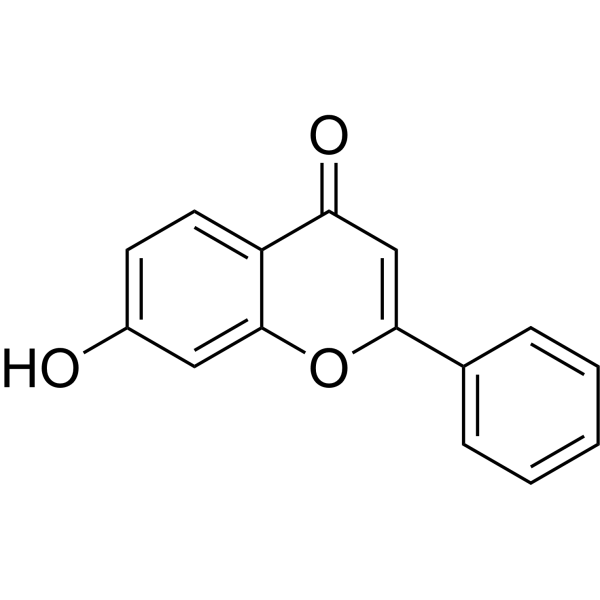
HY-N7108
7-HydroxyflavoneAnti-inflammatory Agent
Publications Citing Use of MedChemExpress (MCE) Tannic acid
More- Adv Sci (Weinh). 2022 Dec;9(34):e2203088. [Abstract]
- J Immunother Cancer. 2026 Jun 10;14(6):e015018. [Abstract]
- Acta Pharmacol Sin. 2025 Sep 3. [Abstract]
- Sep Purif Technol. 2024 Apr 3, 127357.
- Cell Rep. 2025 Apr 16;44(5):115572. [Abstract]
- RSC Adv. 2025 Aug 15;15(35):28965-28983. [Abstract]
- Viruses. 2023 Jul 28;15(8):1644. [Abstract]
- Forensic Sci Int. 2026 Jun:383:112858. [Abstract]
 Customer Validation & Images

-
In Vivo Efficacy Study
-
In Vivo Efficacy Study
-
WB


Biological Activity
Description
IC50 & Target
IC50: 3.4 μM (hERG channel)[1]
In Vivo
MedChemExpress (MCE) has not independently confirmed the accuracy of these methods. They are for reference only.


Chemical Information
-
CAS No. 1401-55-4
-
Appearance Solid
-
Molecular Weight 1701.20
-
Formula C76H52O46
-
Color Light yellow to yellow
-
SMILES
O=C(C1=CC(OC(C2=CC(O)=C(O)C(O)=C2)=O)=C(O)C(O)=C1)OC3[C@H](OC(C4=CC(OC(C5=CC(O)=C(O)C(O)=C5)=O)=C(O)C(O)=C4)=O)[C@@H](OC(C6=CC(OC(C7=CC(O)=C(O)C(O)=C7)=O)=C(O)C(O)=C6)=O)[C@H](OC(C8=CC(OC(C9=CC(O)=C(O)C(O)=C9)=O)=C(O)C(O)=C8)=O)[C@@H](COC(C%10=CC(OC(C%11=CC(O)=C(O)C(O)=C%11)=O)=C(O)C(O)=C%10)=O)O3
-
Structure Classification
-
Initial Source
-
Shipping
Room temperature in continental US; may vary elsewhere.
-
Storage
Powder -20°C 3 years 4°C 2 years In solvent -80°C 6 months -20°C 1 month


Publications (8)
-
Journal Impact Factor
-
Most Recent
-
Adv Sci (Weinh)
SRSF5-Mediated Alternative Splicing of M Gene is Essential for Influenza A Virus Replication: A Host-Directed Target Against Influenza Virus. [Abstract]2022 Dec;9(34):e2203088. PMID: 36257906 -
J Immunother Cancer
Tumor-derived HMGB2 induces M2-like macrophage polarization via TRIM65-mediated NLRP3 degradation to promote DLBCL progression. [Abstract]2026 Jun 10;14(6):e015018. PMID: 42270158 -
Acta Pharmacol Sin
Salvianolic acid A from Salvia miltiorrhiza identified as a cap-dependent endonuclease inhibitor for pathogenic arenaviruses. [Abstract]2025 Sep 3. PMID: 40903541
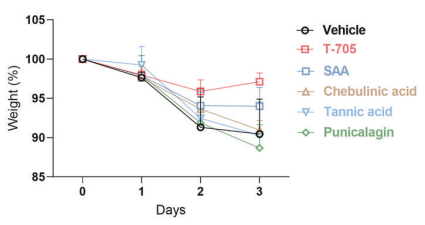
Tannic acid purchased from MedChemExpress. Usage Cited in: Acta Pharmacol Sin. 2025 Sep 3. [Abstract]
Body weight changes in Female BALB/c mice aged 6–8 weeks after treatment with 20 mg/kg of Salvianolic acid A (SAA), Chebulinic Acid, Tannic acid, or Punicalagin via i.g. upon challenge once daily for 3 days. 300 mg/kg T-705 administered via i.g. was used as a positive control.
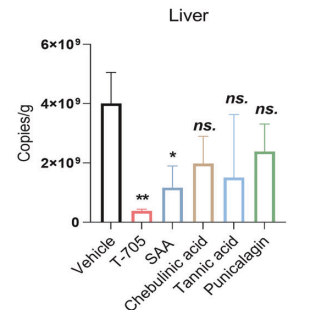
Tannic acid purchased from MedChemExpress. Usage Cited in: Acta Pharmacol Sin. 2025 Sep 3. [Abstract]
T-705 and SAA significantly reduced viral copies in the liver in Female BALB/c mice aged 6–8 weeks after treatment with 20 mg/kg of Salvianolic acid A (SAA), Chebulinic Acid, Tannic acid, or Punicalagin via i.g. upon challenge once daily for 3 days. 300 mg/kg T-705 administered via i.g. was used as a positive control.
-
-
Cell Rep
2025 Apr 16;44(5):115572. PMID: 40249703 -
RSC Adv
Novel self-assembled metal-phenolic nanoplatforms for triple-negative breast cancer treatment: photothermal-chemotherapy/ferroptosis synergy inducing immunogenic cell death. [Abstract]2025 Aug 15;15(35):28965-28983. PMID: 40861997 -
Viruses
Oxygen-Sensing Protein Cysteamine Dioxygenase from Mandarin Fish Involved in the Arg/N-Degron Pathway and Siniperca chuatsi Rhabdovirus Infection. [Abstract]2023 Jul 28;15(8):1644. PMID: 37631990
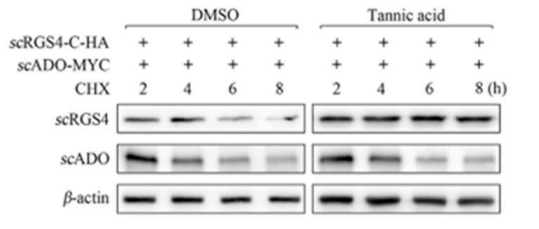
Tannic acid purchased from MedChemExpress. Usage Cited in: Viruses. 2023 Jul 28;15(8):1644. [Abstract]
scRGS4 protein levels after co-expression with scADO in FHM cells were treated with CHX and DMSO or tannic acid (100 μM).
-
Forensic Sci Int
An isothermal amplification-based field on-site rapid test for direct detection of male DNA via the Y-specific TSPY4 gene. [Abstract]2026 Jun:383:112858. PMID: 41702134


Solvent & Solubility
In Vitro:
DMSO : 100 mg/mL (58.78 mM; Need ultrasonic; Hygroscopic DMSO has a significant impact on the solubility of product, please use newly opened DMSO)
H2O : ≥ 100 mg/mL (58.78 mM)
* "≥" means soluble, but saturation unknown.
Please refer to the solubility information to select the appropriate solvent. Once prepared, please aliquot and store the solution to prevent product inactivation from repeated freeze-thaw cycles.
Storage method and period of stock solution: -80°C, 6 months; -20°C, 1 month. When stored at -80°C, please use it within 6 months. When stored at -20°C, please use it within 1 month.
* Note: If you choose water as the stock solution, please dilute it to the working solution, then filter and sterilize it with a 0.22 μm filter before use.
Please refer to the solubility information to select the appropriate solvent. Once prepared, please aliquot and store the solution to prevent product inactivation from repeated freeze-thaw cycles.
Storage method and period of stock solution: -80°C, 6 months; -20°C, 1 month. When stored at -80°C, please use it within 6 months. When stored at -20°C, please use it within 1 month.
* Note: If you choose water as the stock solution, please dilute it to the working solution, then filter and sterilize it with a 0.22 μm filter before use.
Concentration (start) × Volume (start) = Concentration (final) × Volume (final)
In Vivo:
Select the appropriate dissolution method based on your experimental animal and administration route.
- For the following dissolution methods, please ensure to first prepare a clear stock solution using an In Vitro approach and then sequentially add co-solvents:
- To ensure reliable experimental results, the clarified stock solution can be appropriately stored based on storage conditions. As for the working solution for In Vivo experiments, it is recommended to prepare freshly and use it on the same day.
- The percentages shown for the solvents indicate their volumetric ratio in the final prepared solution. If precipitation or phase separation occurs during preparation, heat and/or sonication can be used to aid dissolution.
Add each solvent one by one: 10% DMSO 40% PEG300 5% Tween-80 45% Saline
Solubility: ≥ 2.5 mg/mL (1.47 mM); Clear solution
This protocol yields a clear solution of ≥ 2.5 mg/mL (saturation unknown).
Taking 1 mL working solution as an example, add 100 μL DMSO stock solution (25.0 mg/mL) to 400 μL PEG300, and mix evenly; then add 50 μL Tween-80 and mix evenly; then add 450 μL Saline to adjust the volume to 1 mL.
Preparation of Saline: Dissolve 0.9 g sodium chloride in ddH₂O and dilute to 100 mL to obtain a clear Saline solution.
Add each solvent one by one: 10% DMSO 90% (20% SBE-β-CD in Saline)
Solubility: ≥ 2.5 mg/mL (1.47 mM); Clear solution
This protocol yields a clear solution of ≥ 2.5 mg/mL (saturation unknown).
Taking 1 mL working solution as an example, add 100 μL DMSO stock solution (25.0 mg/mL) to 900 μL 20% SBE-β-CD in Saline, and mix evenly.
Preparation of 20% SBE-β-CD in Saline (4°C, storage for one week): 2 g SBE-β-CD powder is dissolved in 10 mL Saline, completely dissolve until clear.
For the following dissolution methods, please prepare the working solution directly:
It is recommended to prepare fresh solutions and use them promptly within a short period of time.
The percentages shown for the solvents indicate their volumetric ratio in the final prepared solution. If precipitation or phase separation occurs during preparation, heat and/or sonication can be used to aid dissolution.
Add each solvent one by one: PBS
Solubility: 50 mg/mL (29.39 mM); Clear solution; Need ultrasonic
In Vivo Dissolution Calculator
Please enter the basic information of animal experiments:
-
-
-
-
Recommended: Prepare an additional quantity of animals to account for potential losses during experiments.
Working solution concentration: 0.22 mg/mL
This product has good water solubility, please refer to the measured solubility data in water/PBS/Saline for details.

Protocols
-
Cell Cytotoxicity Assay
Cytotoxicity assays are usually based on the assessment of cell membrane damage, which can also be indirectly detected by measuring cell viability. Detection methods include MTT assay, CKK-8 assay, LDH assay and ATP assay, etc.


Purity & Documentation
-
Data Sheet (288 KB)
-
SDS (396 KB)
- English - EN (396 KB)
- Français - FR (396 KB)
- Deutsch - DE (396 KB)
- Norwegian - NO (396 KB)
- Español - ES (396 KB)
- Swedish - SV (396 KB)
- Italian - IT (396 KB)
- Korean - KR (396 KB)
- Portuguese - PT (396 KB)
-
Handling Instructions (2659 KB)
References
[1]. Xi Chu, et al. Effects of Tannic Acid, Green Tea and Red Wine on hERG Channels Expressed in HEK293 Cells. PLoS One. 2015; 10(12): e0143797. [Content Brief]
[2]. Karuppagounder V, et al. Tannic acid modulates NFκB signaling pathway and skin inflammation in NC/Nga mice through PPARγ expression. Cytokine. 2015 Dec;76(2):206-13. [Content Brief]


Complete Stock Solution Preparation Table
Please refer to the solubility information to select the appropriate solvent. Once prepared, please aliquot and store the solution to prevent product inactivation from repeated freeze-thaw cycles.
Storage method and period of stock solution: -80°C, 6 months; -20°C, 1 month. When stored at -80°C, please use it within 6 months. When stored at -20°C, please use it within 1 month.
| Optional Solvent | Concentration Solvent Mass | 1 mg | 5 mg | 10 mg | 25 mg |
|---|---|---|---|---|---|
| DMSO / H2O | 1 mM | 0.5878 mL | 2.9391 mL | 5.8782 mL | 14.6955 mL |
| 5 mM | 0.1176 mL | 0.5878 mL | 1.1756 mL | 2.9391 mL | |
| 10 mM | 0.0588 mL | 0.2939 mL | 0.5878 mL | 1.4696 mL | |
| 15 mM | 0.0392 mL | 0.1959 mL | 0.3919 mL | 0.9797 mL | |
| 20 mM | 0.0294 mL | 0.1470 mL | 0.2939 mL | 0.7348 mL | |
| 25 mM | 0.0235 mL | 0.1176 mL | 0.2351 mL | 0.5878 mL | |
| 30 mM | 0.0196 mL | 0.0980 mL | 0.1959 mL | 0.4899 mL | |
| 40 mM | 0.0147 mL | 0.0735 mL | 0.1470 mL | 0.3674 mL | |
| 50 mM | 0.0118 mL | 0.0588 mL | 0.1176 mL | 0.2939 mL |
* Note: If you choose water as the stock solution, please dilute it to the working solution, then filter and sterilize it with a 0.22 μm filter before use.


Tannic acid Related Classifications
HY-B2136 Related Classifications
 Powered by Bioz