



DNA-PK-IN-6
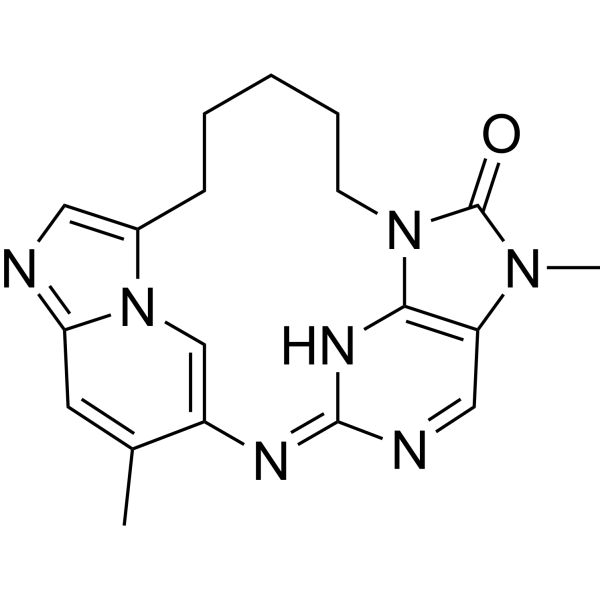
DNA-PK-IN-6 is a potent inhibitor of DNA-PK. DNA-PK-IN-6 inhibits DNA-PKcs activity, thus greatly reducing tumor DNA repair and inducing cells to enter the apoptotic program. DNA-PK-IN-6 enhances the sensitivity of tumor tissues to radiotherapy, overcomes the problem of agent resistance, and enhances the inhibitory effect on a variety of solid tumors and hematological tumors (extracted from patent WO2021197159A1, compound 6).
For research use only. We do not sell to patients.
- CAS No.: 2711810-41-0
- Formula: C19H21N7O
- Molecular Weight:363.42
-
Storage:
Please store the product under the recommended conditions in the Certificate of Analysis.

To place orders, for customer services and technical support, please contact: MedChemExpress USA
Tel: 609-228-6898 E-mail: [email protected] [email protected]


-
 Biological Activity
-
Chemical Information
- Protocols
- Purity & Documentation
- References
-
 Help & FAQs




Biological Activity
Description


Chemical Information
-
CAS No. 2711810-41-0
-
Molecular Weight 363.42
-
Formula C19H21N7O
-
SMILES
O=C1N(C)C2=C(N3)N1CCCCCC4=CN=C(C=C5C)N4C=C5/N=C3/N=C2
-
Shipping
Room temperature in continental US; may vary elsewhere.
-
Storage
Please store the product under the recommended conditions in the Certificate of Analysis.

Protocols
-
Apoptosis
Apoptosis, also called programmed cell death, is generally characterized by distinct morphological characteristics.
-
Apoptosis Solutions
Apoptosis is a regulated, generally non-lytic cell-death pathway that removes unwanted, damaged, infected, or abnormal cells through coordinated morphological changes, caspase activation, DNA fragmentation, and membrane remodeling. The intrinsic apoptosis pathway is controlled mainly by mitochondrial outer membrane permeabilization, BCL-2 family proteins, cytochrome c release, apoptosome formation, caspase-9 activation, and downstream executioner caspase-3/7 activation. The extrinsic apoptosis pathway is initiated by death receptors such as Fas, TNFR, and TRAIL receptors, which recruit adaptor proteins and activate caspase-8 before engaging executioner caspases or mitochondrial amplification through BID cleavage. Apoptosis is linked to many phenotypes, including cancer cell killing, tissue homeostasis, immune regulation, neurodegeneration, infection response, and treatment-induced cytotoxicity; unresolved questions include how apoptosis interacts with necroptosis, pyroptosis, ferroptos


Purity & Documentation
References

Calculators
Concentration (start) × Volume (start) = Concentration (final) × Volume (final)


DNA-PK-IN-6 Related Classifications
HY-144039 Related Classifications
 Powered by Bioz