



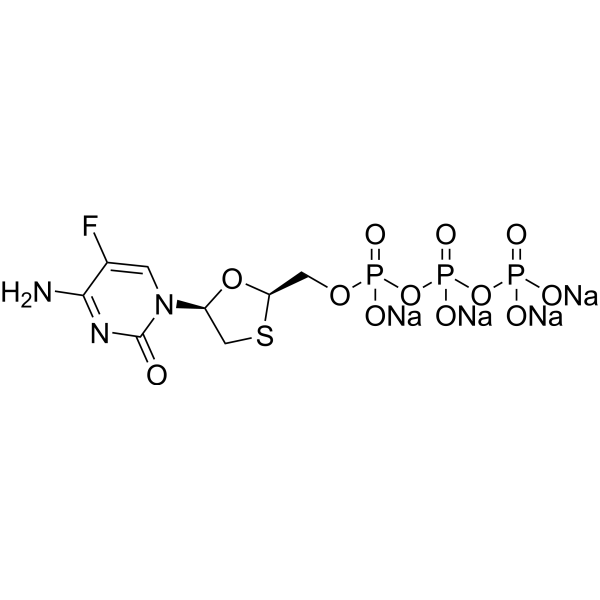
Emtricitabine triphosphate tetrasodium salt

Based on 1 Customer Validation
Emtricitabine triphosphate tetrasodium salt ((-)-Emtricitabine triphosphate tetrasodium salt) is the phosphorylated active metabolite of Emtricitabine (HY-17427). Emtricitabine triphosphate inhibits HIV-1 reverse transcriptase and incorporates into the nascent viral DNA chain, causing chain termination. Emtricitabine triphosphate tetrasodium salt can serve as a biomarker for assessing adherence to antiretroviral therapy. Emtricitabine triphosphate (tetrasodium salt) can be used in research related to HIV infection.
For research use only. We do not sell to patients.
- Purity : 99.20%
- CAS No.: 1188407-46-6
- Formula: C8H9FN3Na4O12P3S
- Molecular Weight:575.11
-
Storage:
Solution, -20°C, 2 years

To place orders, for customer services and technical support, please contact: MedChemExpress USA
Tel: 609-228-6898 E-mail: [email protected] [email protected]


-
 Biological Activity
-
Chemical Information
- Protocols
- Purity & Documentation
- References
-
 Help & FAQs


-
HY-136548B
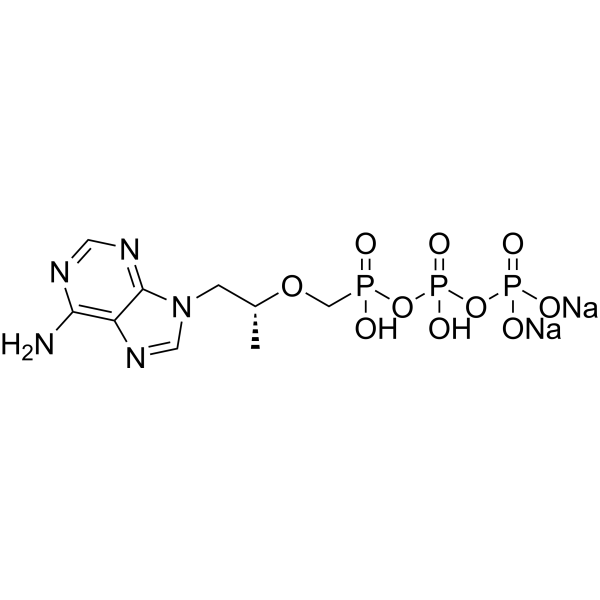
Tenofovir diphosphate disodiumHIV-1 RT Inhibitor -

HY-17413
ZidovudineNucleoside Reverse Transcriptase Inhibitor -

HY-B0250
LamivudineReverse Transcriptase Inhibitor -

HY-13910
TenofovirNucleotide Reverse Transcriptase Inhibitor -
HY-17427
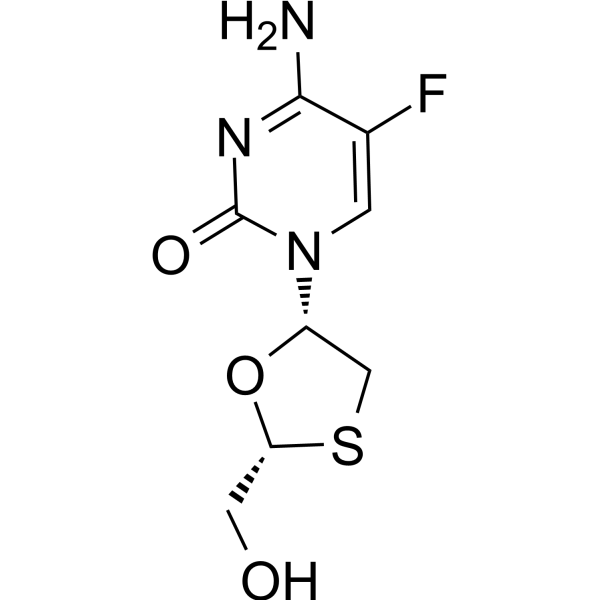
EmtricitabineNRT Inhibitor -

HY-10570
NevirapineHIV-1 Reverse Transcriptase Inhibitor -

HY-B0250R
Lamivudine (Standard)Reverse Transcriptase Inhibitor -
HY-17423A
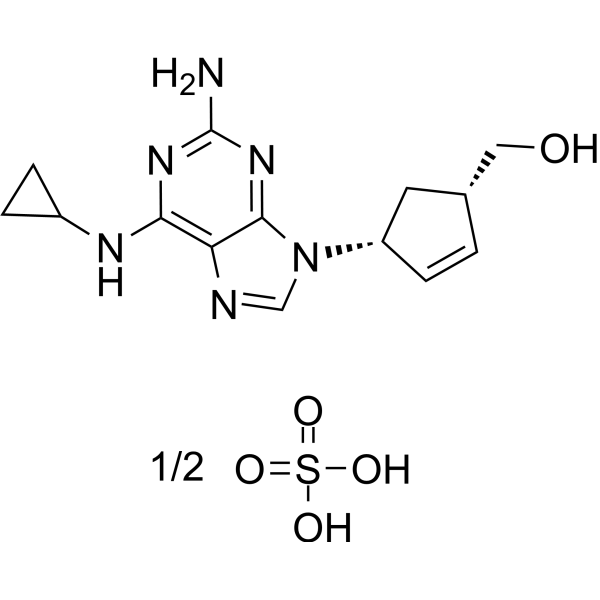
Abacavir sulfateReverse Transcriptase Inhibitor -

HY-17413R
Zidovudine (Standard)Standard of Zidovudine -

HY-10570R
Nevirapine (Standard)HIV-1 Reverse Transcriptase Inhibitor -

HY-W012313
2,2'-AnhydrouridineIntermediate -

HY-19851
Rovafovir etalafenamideNucleoside Reverse Transcriptase Inhibitor


Biological Activity
Description
In Vitro
Emtricitabine triphosphate tetrasodium salt competitively inhibits HIV-1 reverse transcriptase, incorporates into newly synthesized viral DNA, and causes DNA chain termination; it has weak activity against mammalian and mitochondrial DNA polymerases[1].
MedChemExpress (MCE) has not independently confirmed the accuracy of these methods. They are for reference only. Further protocols information, click here.


Chemical Information
-
CAS No. 1188407-46-6
-
Appearance Liquid
-
Molecular Weight 575.11
-
Formula C8H9FN3Na4O12P3S
-
Color Colorless to light yellow
-
SMILES
O=P(OP(OP(O[Na])(O[Na])=O)(O[Na])=O)(O[Na])OC[C@@H]1O[C@H](N2C=C(F)C(N)=NC2=O)CS1
-
Synonyms
(-)-Emtricitabine triphosphate tetrasodium salt
-
Shipping
Room temperature in continental US; may vary elsewhere.
-
Storage
Solution, -20°C, 2 years

Protocols
-
Research Protocol for Infectious Diseases
Infectious-disease experiments test how pathogens interact with host barriers, innate immune receptors, inflammatory signaling, pathogen replication, and tissue injury; pattern-recognition receptors such as TLRs, RIG-I-like receptors, NOD-like receptors, and inflammasomes detect microbial molecules and activate NF-κB, interferon, and cytokine responses. The central hypothesis is that infection severity reflects the balance between pathogen burden and host response: protective inflammation restricts pathogen growth, whereas excessive or mislocalized inflammation contributes to tissue damage and disease phenotype. Unresolved questions include which host pathways are protective versus pathogenic, why some infection models fail to translate to human disease, and which combined readouts best predict clinically relevant infection outcomes.


Purity & Documentation
-
Data Sheet (267 KB)
-
SDS (252 KB)
- English - EN (252 KB)
- Français - FR (252 KB)
- Deutsch - DE (252 KB)
- Norwegian - NO (252 KB)
- Español - ES (252 KB)
- Swedish - SV (252 KB)
- Italian - IT (252 KB)
- Korean - KR (252 KB)
- Portuguese - PT (252 KB)
-
Handling Instructions (2659 KB)
References

Calculators
Concentration (start) × Volume (start) = Concentration (final) × Volume (final)


Emtricitabine triphosphate tetrasodium salt Related Classifications
HY-131596B Related Classifications
 Powered by Bioz
Keywords
- Emtricitabine triphosphate tetrasodium
- 1188407-46-6
- (-)-Emtricitabine triphosphate tetrasodium
- Drug Isomer
- Drug Metabolite
- Reverse Transcriptase
- HIV
- HIV infection
- HIV-1 infection
- HIV-1 reverse transcriptase
- RNA-dependent DNA synthesis
- peripheral blood mononuclear cells
- reverse transcriptase
- Inhibitor
- inhibitor
- inhibit