



Esmolol-d7 hydrochloride
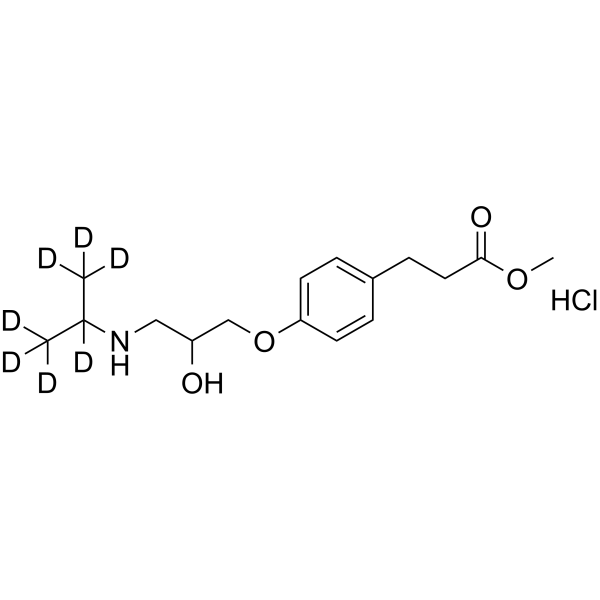
Esmolol-d7 hydrochloride is the deuterium labeled Esmolol hydrochloride (HY-B1392). Esmolol hydrochloride is an ultra-short-acting cardioselective β1-adrenergic blocker. Esmolol hydrochloride exerts its antiarrhythmic effect by activating Neurokinin 1 ReceptorEsmolol hydrochloride attenuates post resuscitation myocardial dysfunction. Esmolol hydrochloride improves diabetic wound healing by inhibiting (aldose reductase) and the production of advanced glycation end products and promoting fibroblast migration. Esmolol hydrochloride can be used to study cardiac diseases such as arrhythmias and diabetic foot ulcers.
For research use only. We do not sell to patients.
- CAS No.: 1346598-13-7
- Formula: C16H19D7ClNO4
- Molecular Weight:338.88
-
Storage:
Please store the product under the recommended conditions in the Certificate of Analysis.

To place orders, for customer services and technical support, please contact: MedChemExpress USA
Tel: 609-228-6898 E-mail: [email protected] [email protected]


-
 Biological Activity
-
Chemical Information
- Protocols
- Purity & Documentation
- References
-
 Help & FAQs


-
HY-17498S
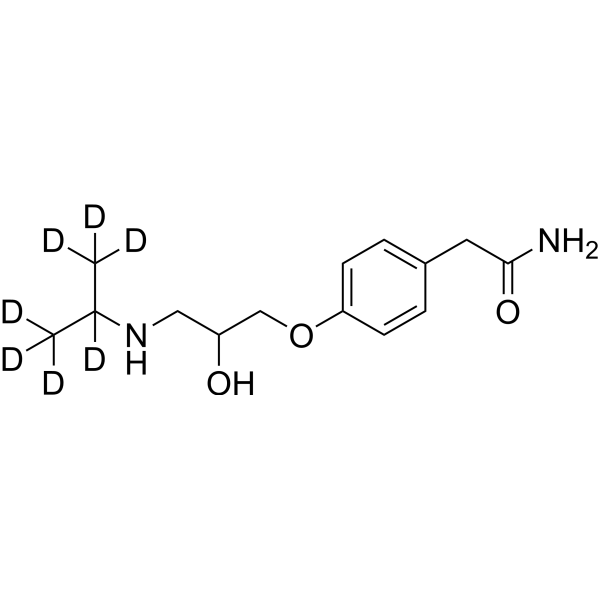
Atenolol-d7Stable Isotope -
HY-B0317S
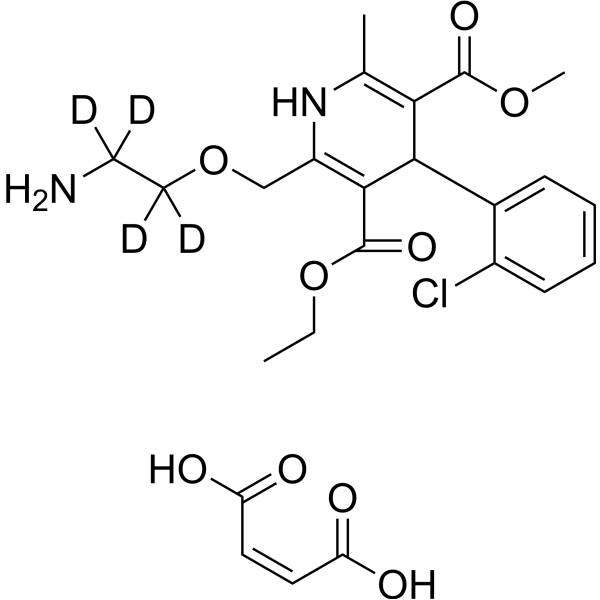
Amlodipine-1,1,2,2-d4 maleateStable Isotope -
HY-B0573S1
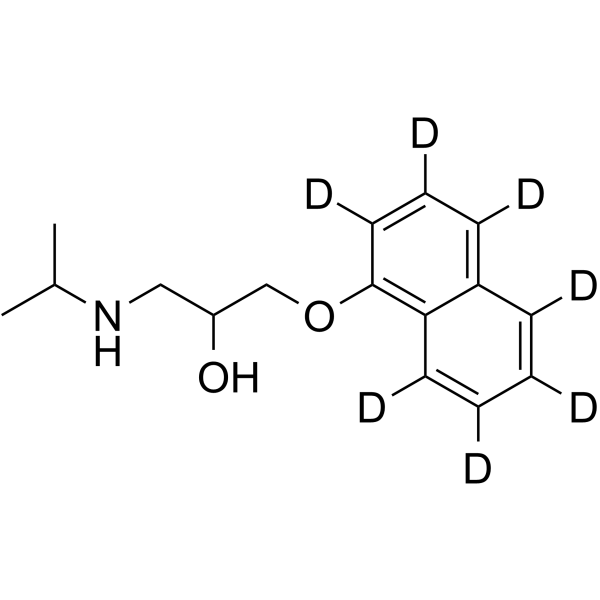
Propranolol-d7 (ring-d7)Stable Isotope -

HY-137387
Carvedilol GlucuronideDrug Metabolite -
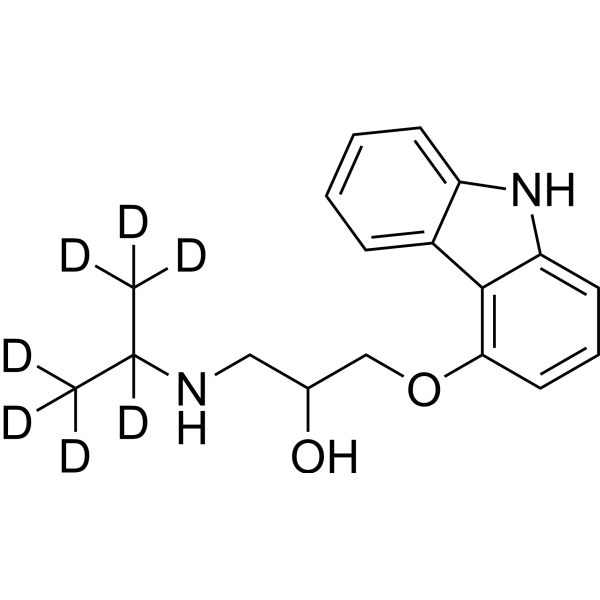
HY-107327S
Carazolol-d7Stable Isotope -
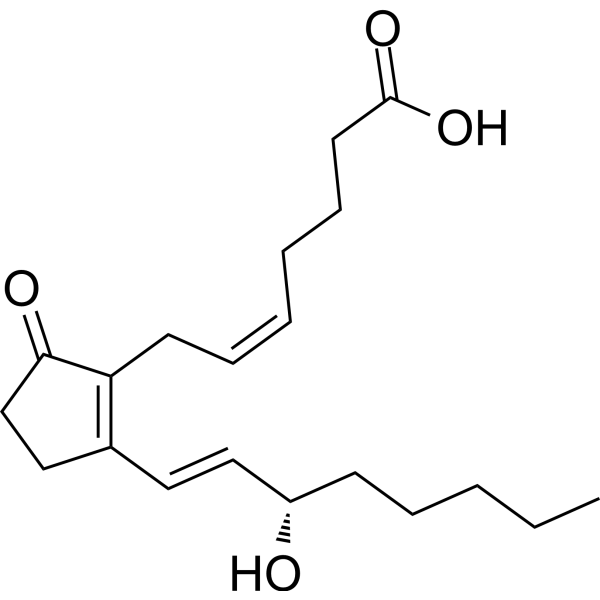
HY-113042
Prostaglandin B2Prostaglandin -
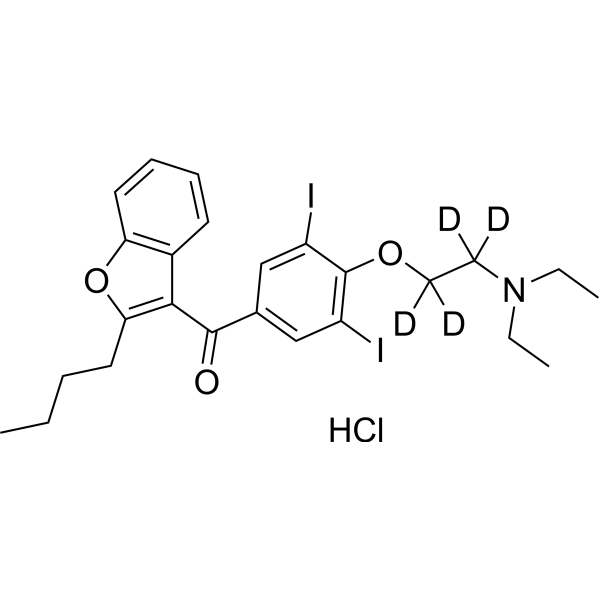
HY-14188S
Amiodarone-d4 hydrochlorideStable Isotope -
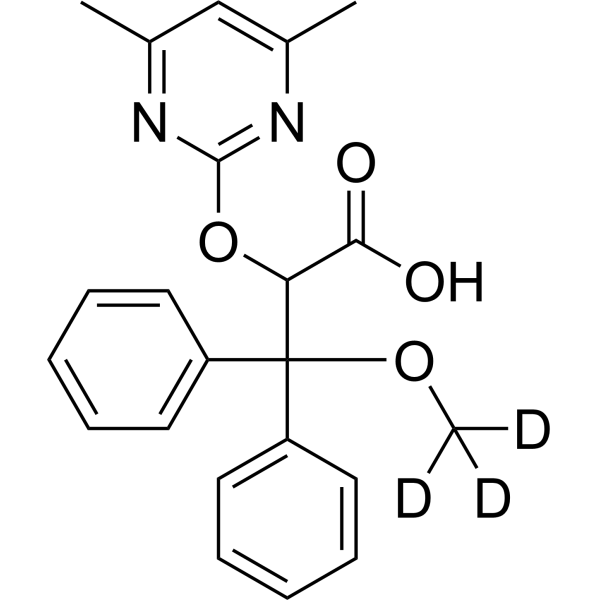
HY-13209BS
(Rac)-Ambrisentan-d3Stable Isotope -
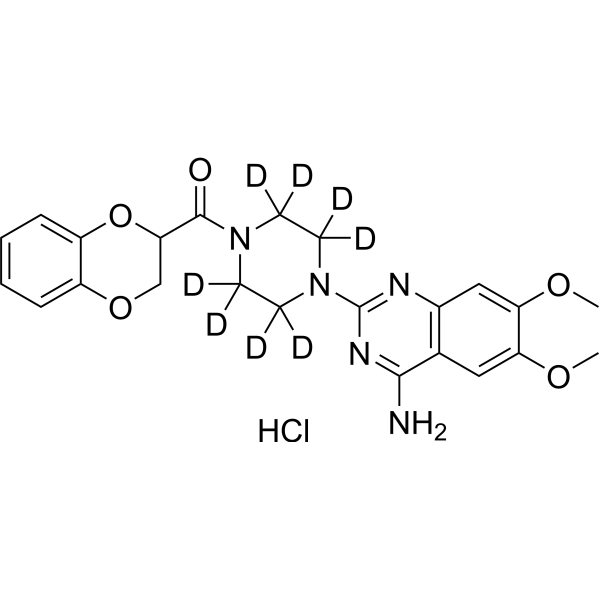
HY-B0098BS
Doxazosin-d8 hydrochlorideStable Isotope -
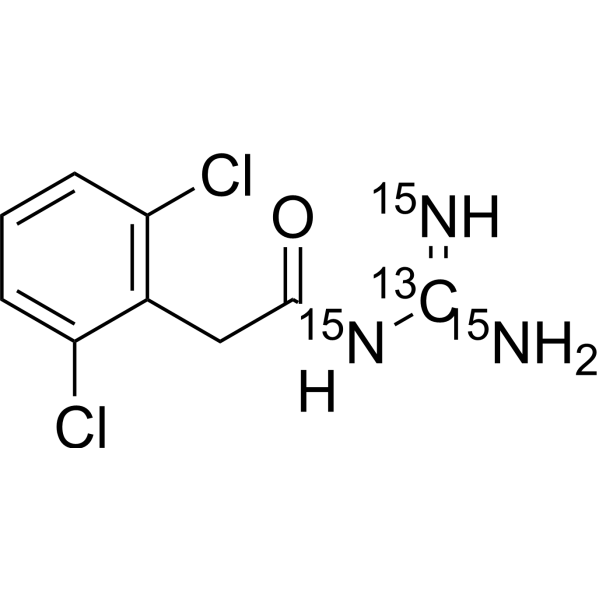
HY-17416AS
Guanfacine-13C,15N3Stable Isotope
All Adrenergic Receptor Isoforms
More

Biological Activity
Description
In Vitro
Stable heavy isotopes of hydrogen, carbon, and other elements have been incorporated into drug molecules, largely as tracers for quantitation during the drug development process. Deuteration has gained attention because of its potential to affect the pharmacokinetic and metabolic profiles of drugs[1].
MedChemExpress (MCE) has not independently confirmed the accuracy of these methods. They are for reference only. Further protocols information, click here.
Application
1. This compound can be used as a tracer
2. This compound can be used as an internal standard for quantitative analysis by NMR, GC-MS, or LC-MS.


Chemical Information
-
CAS No. 1346598-13-7
-
Unlabeled CAS 81161-17-3
-
Molecular Weight 338.88
-
Formula C16H19D7ClNO4
-
SMILES
O(CC(CNC(C([2H])([2H])[2H])(C([2H])([2H])[2H])[2H])O)C1=CC=C(CCC(OC)=O)C=C1.Cl
-
Shipping
Room temperature in continental US; may vary elsewhere.
-
Storage
Please store the product under the recommended conditions in the Certificate of Analysis.

Protocols
-
Cell migration
Cell migration is a method that plays an important role in wound healing, cell differentiation, embryonic development, etc.
-
Cell-Exclusion Zone Migration Assay
The Cell-Exclusion Zone (CEZ) migration assay is an in vitro 2D cell migration method in which a defined cell-free area is created using removable physical barriers such as silicone stoppers, allowing cells to be seeded around the barrier and subsequently migrate into the cleared zone after barrier removal. This approach enables quantification of collective cell migration by monitoring repopulation of the initially cell-free region over time using microscopy-based imaging. Compared with scratch-based wound healing assays, barrier-based exclusion methods are designed to avoid mechanical damage to the extracellular matrix and reduce injury-induced effects on boundary cells, thereby improving interpretability of migration behavior in vitro. The assay readout is typically the progressive reduction in the cell-free area or the number of cells invading the exclusion zone, reflecting coordinated cell motility relevant to physiological processes such as wound healing, epithelial repair, and ca


Purity & Documentation
References
[1]. Kulkarni SA, et al. Novel topical esmolol hydrochloride improves wound healing in diabetes by inhibiting aldose reductase, generation of advanced glycation end products, and facilitating the migration of fibroblasts. Front Endocrinol (Lausanne). 2022 Aug 23;13:926129. [Content Brief]
[2]. Wang LL, et al. Esmolol activates endogenous neurokinin activity inhibiting infarction-induced arrhythmias in rats: novel mechanisms of anti-arrhythmia. Regul Pept. 2013 Sep 10;186:116-22. [Content Brief]
[3]. Zhang Q, et al. Combination of epinephrine with esmolol attenuates post-resuscitation myocardial dysfunction in a porcine model of cardiac arrest. PLoS One. 2013 Dec 18;8(12):e82677. [Content Brief]

Calculators
Concentration (start) × Volume (start) = Concentration (final) × Volume (final)


Esmolol-d7 hydrochloride Related Classifications
HY-B1392S Related Classifications
 Powered by Bioz